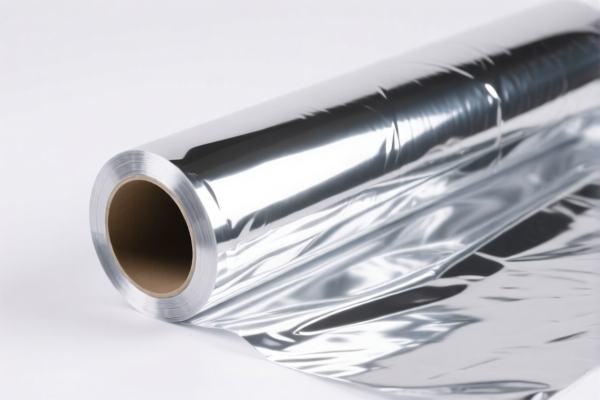
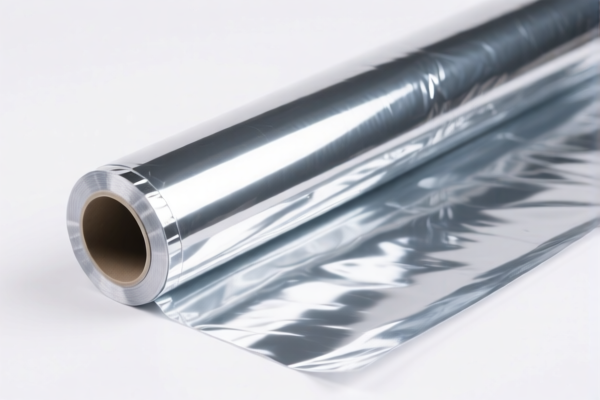
PET Aluminum Plated Reflective Film
CN → US| HS编码 | 关税税率 | 原产国 | 目的国 | 文档 |
|---|---|---|---|---|
| 7607201000 | 13.7% | CN | US | 官方文档 |
| 3926909989 | 22.8% | CN | US | 官方文档 |
| 7607205000 | 17.5% | CN | US | 官方文档 |
| 3926909400 | 35.0% | CN | US | 官方文档 |
| 7607201000 | 13.7% | CN | US | 官方文档 |
商品图片


AI分析
🎞️ PET Aluminum Plated Reflective Film (PET镀铝膜)
🌐 HS Code Reference & Customs Clearance Guide | 2026 Latest Tariff Analysis | Professional Strategy
📌 I. Product Definition & Classification: Do You Really Understand "PET Aluminized Film"?
PET Aluminum Plated Reflective Film (often called Aluminized PET) is a composite material consisting of a polyester (PET) base film coated with a thin layer of aluminum, often treated with anti-static or protective layers. In international trade, its classification is critical because it sits at the intersection of Plastics (Chapter 39) and Non-ferrous Metals (Chapter 76, specifically Aluminum foil).
The core dispute in customs classification is: Is it primarily a plastic film with a decorative/conductive coating? Or is it an aluminum foil with a plastic backing?
This distinction determines whether the duty rate is 13.7% or 35.0%, a massive difference in profit margins.
⚠️ Key Classification Logic: - If the Aluminum layer provides the primary reflective/metallic function and PET is merely a carrier → Chapter 76 (Aluminum Foil). - If the PET layer provides the primary structural/mechanical function and Aluminum is a surface treatment (decorative/conductive) → Chapter 39 (Plastics). - Anti-static feature: Usually does not change the HS Code but must be declared as a function/specification to avoid misclassification claims.
📦 II. Detailed HS Code Classification Matrix (2026 Tariff Data)
Based on the provided data, here are the four possible HS Codes, their logical justifications, and the corresponding tax rates.
| HS Code | Product Description Summary | Primary Logic for Classification | Total Tax Rate | Tax Breakdown Details |
|---|---|---|---|---|
| 7607.20.10.00 | Aluminum Foil with Plastic Backing | The product is viewed as Aluminum Foil (7607) where the PET serves as the backing material. The aluminum layer is considered the essential character. | 13.7% | Base Duty: 3.7% Section 301: 0.0% Section 122 (USIPEA): 10% |
| 3926.90.99.89 | Other Plastic Articles | The product is viewed as a Plastic Article (3926) where the aluminum plating is a secondary surface treatment. It falls under "Other plastic articles not elsewhere specified." | 22.8% | Base Duty: 5.3% Section 301: 7.5% Section 122 (USIPEA): 10% |
| 7607.20.50.00 | Aluminum Foil with Plastic Backing (Other) | Another classification under Aluminum Foil (7607), but categorized under a different subheading for "Other" aluminum foils with plastic backing, implying a different thickness or structure than 7607.20.10.00. | 17.5% | Base Duty: 0.0% Section 301: 7.5% Section 122 (USIPEA): 10% |
| 3926.90.94.00 | Plastic Sheets/Films (Other) | The product is viewed as a Plastic Sheet/Film (3926) where the aluminum plating does not alter its fundamental nature as a plastic sheet. No metal conflict exists in this classification view. | 35.0% | Base Duty: 0.0% Section 301: 25.0% Section 122 (USIPEA): 10% |
🔍 Critical Note on Duplication:
The input data lists7607.20.10.00twice with identical summaries and tax rates. This suggests it is the most standard/preferred classification for this product type if classified as aluminum foil.
💰 III. 2026 Latest Tariff Rate Detail (Including Surcharges)
✅ Applicable Country: United States (US)
✅ Origin: China (CN)
✅ Effective Time: Current trade policies (including Section 301 and Section 122)
🎯 1. The "Plastic" Route: Higher Risk, Higher Cost
HS Code: 3926.90.94.00 | Item | Detail | |------|--------| | Base Tariff | 0% (ad valorem) | | USITC (Section 301) Surcharge | +25% | | IEEPA (Section 122) Surcharge | +10% | | Total Tariff | 35.0% | | Impact | Extremely High. This is the most expensive classification. Avoid unless the product is indisputably a plastic sheet. |
HS Code: 3926.90.99.89 | Item | Detail | |------|--------| | Base Tariff | 5.3% | | USITC (Section 301) Surcharge | +7.5% | | IEEPA (Section 122) Surcharge | +10% | | Total Tariff | 22.8% | | Impact | High, but better than 3926.90.94.00. Still involves a 301 surcharge. |
📌 Explanation:
- The 25% Section 301 tariff on 3926.90.94.00 is the primary driver of the high cost.
- These codes classify the item as a Plastic Product, triggering the full weight of US trade restrictions on Chinese plastics.
🎯 2. The "Aluminum Foil" Route: Preferred Strategy
HS Code: 7607.20.10.00 | Item | Detail | |------|--------| | Base Tariff | 3.7% | | USITC (Section 301) Surcharge | 0.0% | | IEEPA (Section 122) Surcharge | +10% | | Total Tariff | 13.7% | | Impact | Lowest Risk & Cost. This is the optimal classification if supported by product specs. |
HS Code: 7607.20.50.00 | Item | Detail | |------|--------| | Base Tariff | 0.0% | | USITC (Section 301) Surcharge | +7.5% | | IEEPA (Section 122) Surcharge | +10% | | Total Tariff | 17.5% | | Impact | Moderate. Better than the plastic routes, but still has a Section 301 component. |
📌 Why is 7607.20.10.00 better?
- No Section 301 Surcharge (0%): This saves 7.5% - 25% depending on the alternative plastic code.
- Lower Base Duty: Only 3.7% vs 0% or 5.3%.
- Legal Basis: Relies on the principle that the aluminum layer defines the good’s essential character due to its reflectivity and metallic nature.
🛠️ IV. Customs Clearance Practical Advice (Avoid Pitfalls)
✅ 1. Key Documentation Checklist (Must Have)
| Document | Required? | Explanation |
|---|---|---|
| ✅ Product Specification Sheet | ✔️ | Must detail: Thickness of Aluminum Layer vs. Thickness of PET Layer. If Al is >5% of total thickness or provides essential function, lean towards 7607. |
| ✅ Structure Diagram | ✔️ | Show the layering: PET base / Adhesive (if any) / Aluminum / Protective Coating. |
| ✅ Function Declaration | ✔️ | State clearly: "Reflective," "Anti-static," "Barrier." Avoid vague terms like "Plastic Film" in the commercial invoice title. |
| ✅ Material Composition Report | ✔️ | Third-party lab report confirming % of Aluminum vs. PET. |
| ✅ Commercial Invoice | ✔️ | Description: "Aluminized PET Film for Reflective/Anti-static Use" (Do NOT just say "Plastic Film"). |
| ✅ Packing List | ✔️ | Ensure weight/volume matches invoice. |
✅ 2. Declaration Strategy (The Golden Rule)
🔥 "Aluminum Defines Function, PET Provides Structure"
| Scenario | Recommended HS Code | Reason |
|---|---|---|
| Thin Aluminum, Thick PET, Decorative Use | 3926.90.99.89 (22.8%) |
If the product is primarily a plastic carrier with a thin metallic coating. |
| Reflective/Metallic Function is Primary | 7607.20.10.00 (13.7%) |
Best Option. Argue that the aluminum provides the essential character (reflectivity/barrier). |
| Anti-static Property is Key | 7607.20.10.00 (13.7%) |
Anti-static is a functional add-on; it doesn't change the base material classification from Aluminum Foil. |
📌 Crucial Tip:
- If you declare as3926...(Plastic), you will face Section 301 tariffs (7.5% - 25%).
- If you declare as7607...(Aluminum), you only pay Section 122 (10%).
- Always advocate for7607.20.10.00unless the aluminum layer is negligible (e.g., <0.01mm) and clearly non-structural.
✅ 3. Special Case Handling
| Situation | Advice |
|---|---|
| Customs Questions "Is it Plastic or Metal?" | Provide a Technical Data Sheet emphasizing the aluminum layer's role in reflection/barrier properties. |
| Anti-static Coating | Declare as "Aluminized PET Film with Anti-static Surface Treatment." Do not let the "anti-static" feature push it to a random plastic code. |
| Pre-Ruling (Advance Ruling) | Highly Recommended. Apply for a US CBP Advance Ruling with samples and specs to lock in 7607.20.10.00 and avoid post-clearance audits. |
🌍 V. Global Market Comparison (2026)
| Market | Recommended HS Code | Estimated Duty (CN Origin) | Notes |
|---|---|---|---|
| 🇺🇸 USA | 7607.20.10.00 |
13.7% | Avoid 3926 codes due to 301 tariffs. |
| 🇨🇳 China | 3920.43.00.00 / 7607.20.00.00 |
0% - 9% | Check latest PRC tariff schedule. |
| 🇪🇺 EU | 3920.43.00 / 7607.21 |
4.5% - 6.5% | Usually no major surcharges, but VAT applies. |
| 🇬🇧 UK | 3920.43.00 / 7607.21 |
4.5% - 6.5% | Post-Brexit rules may vary slightly. |
📌 Conclusion:
The US market is the most critical for this product due to the Section 301 vs. Section 122 dichotomy. Misclassification can cost an additional 9.1% to 21.3% in tariffs.
📌 VI. Common Mistakes & Pitfalls (Blood & Tears Lessons)
❌ Mistake 1: Declaring as "Plastic Film" without mentioning Aluminum.
👉 Consequence: Customs may reclassify to 3926.90.94.00 (35%) and assess penalties.
Fix: Always specify "Aluminized" or "Metalized" in the description.
❌ Mistake 2: Claiming it's "Aluminum Foil" when the Al layer is ultra-thin (<0.01mm).
👉 Consequence: Customs may reject 7607 and force 3926.
Fix: Ensure technical specs support the "Aluminum Foil" classification (thickness, weight, function).
❌ Mistake 3: Ignoring the Anti-static feature.
👉 Consequence: May lead to additional regulatory scrutiny (EPA/FTC) if not declared.
Fix: Declare "Anti-static" as a performance feature, not the primary material type.
✅ Correct Declaration Example:
"Aluminized Polyester (PET) Film, Anti-static, for Reflective Applications, 12 Microns PET / 0.02 Microns Al, Model XYZ"
🎯 VII. Conclusion: Professional Declaration, Cost Optimization
🎯 Remember the Rule:
🔹 "Aluminum Defines Value, Plastic is Backing; Go for 7607, Save 21%!"
🔹 "3926 is a Trap, 7607 is the Key; Declare Aluminum First, Avoid the Fee!"
📌 Pro Tip:
If your product is exclusively for anti-static packaging and the aluminum layer is minimal, consider if a Plastic Code (3926.90.99.89 at 22.8%) is safer than risking a dispute on 7607. However, 7607.20.10.00 (13.7%) remains the most profitable and defensible option if the aluminum layer is functional.
📣 Immediate Action:
📞 Contact your customs broker BEFORE shipment.
📄 Submit a Product Technical Sheet highlighting Aluminum thickness and reflective function.
🚀 Apply for an Advance Ruling if volume is high.
✨ Precision in Classification, Precision in Profit!
💼 Don't let 21% tariffs eat your margin!
用户评价
关于 HS 编码归类
协调制度(HS)是由世界海关组织(WCO)制定的国际贸易商品分类标准。全球 200 多个国家采用 HS 系统作为海关关税、贸易统计和进出口监管的基础。
每个 HS 编码遵循以下层级结构:
- 章(2 位)——商品大类(例如:第 84 章:机器和机械设备)
- 品目(4 位)——章内的更具体分类
- 子目(6 位)——国际通用细分,所有 WCO 成员国统一使用
- 本国细分(8-10 位)——各国自行扩展的细分编码,如美国 HTSUS 10 位编码
正确的 HS 编码归类对于顺利通关、准确缴纳关税和遵守贸易法规至关重要。错误归类可能导致海关延误、多缴关税或罚款。
从CN进口到US时,适用的关税税率可能包括:
- 最惠国(MFN)税率——适用于 WTO 成员国的标准关税税率
- 普通税率——适用于无贸易协定国家
- 贸易救济关税——附加关税,如 301 条款(反倾销)、232 条款(国家安全)或反补贴税
本页内容仅供参考。如需正式归类,请咨询当地海关或持牌报关代理。