PET Aluminum Plated Reflective Film
CN → US| HS Code | Tariff Rate | Origin | Destination | Doc |
|---|---|---|---|---|
| 7607201000 | 13.7% | CN | US | Official Doc |
| 3926909989 | 22.8% | CN | US | Official Doc |
| 7607205000 | 17.5% | CN | US | Official Doc |
| 3926909400 | 35.0% | CN | US | Official Doc |
| 7607201000 | 13.7% | CN | US | Official Doc |
Product Images
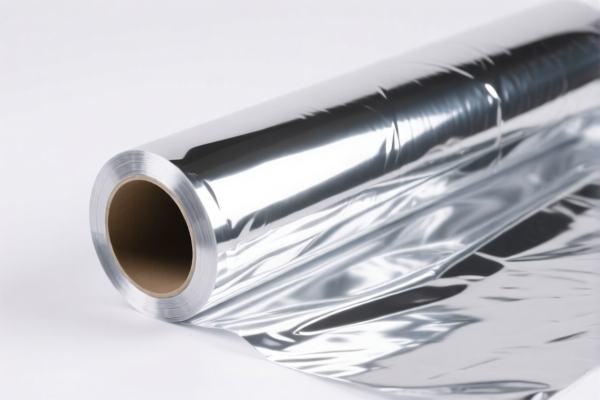
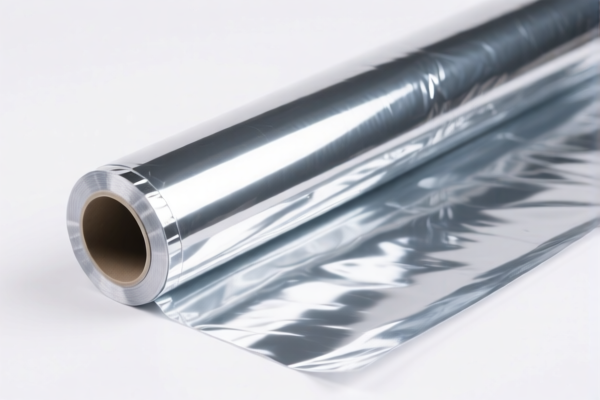


AI Analysis
🎞️ PET Aluminum Plated Reflective Film (PET镀铝膜)
🌐 HS Code Reference & Customs Clearance Guide | 2026 Latest Tariff Analysis | Professional Strategy
📌 I. Product Definition & Classification: Do You Really Understand "PET Aluminized Film"?
PET Aluminum Plated Reflective Film (often called Aluminized PET) is a composite material consisting of a polyester (PET) base film coated with a thin layer of aluminum, often treated with anti-static or protective layers. In international trade, its classification is critical because it sits at the intersection of Plastics (Chapter 39) and Non-ferrous Metals (Chapter 76, specifically Aluminum foil).
The core dispute in customs classification is: Is it primarily a plastic film with a decorative/conductive coating? Or is it an aluminum foil with a plastic backing?
This distinction determines whether the duty rate is 13.7% or 35.0%, a massive difference in profit margins.
⚠️ Key Classification Logic: - If the Aluminum layer provides the primary reflective/metallic function and PET is merely a carrier → Chapter 76 (Aluminum Foil). - If the PET layer provides the primary structural/mechanical function and Aluminum is a surface treatment (decorative/conductive) → Chapter 39 (Plastics). - Anti-static feature: Usually does not change the HS Code but must be declared as a function/specification to avoid misclassification claims.
📦 II. Detailed HS Code Classification Matrix (2026 Tariff Data)
Based on the provided data, here are the four possible HS Codes, their logical justifications, and the corresponding tax rates.
| HS Code | Product Description Summary | Primary Logic for Classification | Total Tax Rate | Tax Breakdown Details |
|---|---|---|---|---|
| 7607.20.10.00 | Aluminum Foil with Plastic Backing | The product is viewed as Aluminum Foil (7607) where the PET serves as the backing material. The aluminum layer is considered the essential character. | 13.7% | Base Duty: 3.7% Section 301: 0.0% Section 122 (USIPEA): 10% |
| 3926.90.99.89 | Other Plastic Articles | The product is viewed as a Plastic Article (3926) where the aluminum plating is a secondary surface treatment. It falls under "Other plastic articles not elsewhere specified." | 22.8% | Base Duty: 5.3% Section 301: 7.5% Section 122 (USIPEA): 10% |
| 7607.20.50.00 | Aluminum Foil with Plastic Backing (Other) | Another classification under Aluminum Foil (7607), but categorized under a different subheading for "Other" aluminum foils with plastic backing, implying a different thickness or structure than 7607.20.10.00. | 17.5% | Base Duty: 0.0% Section 301: 7.5% Section 122 (USIPEA): 10% |
| 3926.90.94.00 | Plastic Sheets/Films (Other) | The product is viewed as a Plastic Sheet/Film (3926) where the aluminum plating does not alter its fundamental nature as a plastic sheet. No metal conflict exists in this classification view. | 35.0% | Base Duty: 0.0% Section 301: 25.0% Section 122 (USIPEA): 10% |
🔍 Critical Note on Duplication:
The input data lists7607.20.10.00twice with identical summaries and tax rates. This suggests it is the most standard/preferred classification for this product type if classified as aluminum foil.
💰 III. 2026 Latest Tariff Rate Detail (Including Surcharges)
✅ Applicable Country: United States (US)
✅ Origin: China (CN)
✅ Effective Time: Current trade policies (including Section 301 and Section 122)
🎯 1. The "Plastic" Route: Higher Risk, Higher Cost
HS Code: 3926.90.94.00 | Item | Detail | |------|--------| | Base Tariff | 0% (ad valorem) | | USITC (Section 301) Surcharge | +25% | | IEEPA (Section 122) Surcharge | +10% | | Total Tariff | 35.0% | | Impact | Extremely High. This is the most expensive classification. Avoid unless the product is indisputably a plastic sheet. |
HS Code: 3926.90.99.89 | Item | Detail | |------|--------| | Base Tariff | 5.3% | | USITC (Section 301) Surcharge | +7.5% | | IEEPA (Section 122) Surcharge | +10% | | Total Tariff | 22.8% | | Impact | High, but better than 3926.90.94.00. Still involves a 301 surcharge. |
📌 Explanation:
- The 25% Section 301 tariff on 3926.90.94.00 is the primary driver of the high cost.
- These codes classify the item as a Plastic Product, triggering the full weight of US trade restrictions on Chinese plastics.
🎯 2. The "Aluminum Foil" Route: Preferred Strategy
HS Code: 7607.20.10.00 | Item | Detail | |------|--------| | Base Tariff | 3.7% | | USITC (Section 301) Surcharge | 0.0% | | IEEPA (Section 122) Surcharge | +10% | | Total Tariff | 13.7% | | Impact | Lowest Risk & Cost. This is the optimal classification if supported by product specs. |
HS Code: 7607.20.50.00 | Item | Detail | |------|--------| | Base Tariff | 0.0% | | USITC (Section 301) Surcharge | +7.5% | | IEEPA (Section 122) Surcharge | +10% | | Total Tariff | 17.5% | | Impact | Moderate. Better than the plastic routes, but still has a Section 301 component. |
📌 Why is 7607.20.10.00 better?
- No Section 301 Surcharge (0%): This saves 7.5% - 25% depending on the alternative plastic code.
- Lower Base Duty: Only 3.7% vs 0% or 5.3%.
- Legal Basis: Relies on the principle that the aluminum layer defines the good’s essential character due to its reflectivity and metallic nature.
🛠️ IV. Customs Clearance Practical Advice (Avoid Pitfalls)
✅ 1. Key Documentation Checklist (Must Have)
| Document | Required? | Explanation |
|---|---|---|
| ✅ Product Specification Sheet | ✔️ | Must detail: Thickness of Aluminum Layer vs. Thickness of PET Layer. If Al is >5% of total thickness or provides essential function, lean towards 7607. |
| ✅ Structure Diagram | ✔️ | Show the layering: PET base / Adhesive (if any) / Aluminum / Protective Coating. |
| ✅ Function Declaration | ✔️ | State clearly: "Reflective," "Anti-static," "Barrier." Avoid vague terms like "Plastic Film" in the commercial invoice title. |
| ✅ Material Composition Report | ✔️ | Third-party lab report confirming % of Aluminum vs. PET. |
| ✅ Commercial Invoice | ✔️ | Description: "Aluminized PET Film for Reflective/Anti-static Use" (Do NOT just say "Plastic Film"). |
| ✅ Packing List | ✔️ | Ensure weight/volume matches invoice. |
✅ 2. Declaration Strategy (The Golden Rule)
🔥 "Aluminum Defines Function, PET Provides Structure"
| Scenario | Recommended HS Code | Reason |
|---|---|---|
| Thin Aluminum, Thick PET, Decorative Use | 3926.90.99.89 (22.8%) |
If the product is primarily a plastic carrier with a thin metallic coating. |
| Reflective/Metallic Function is Primary | 7607.20.10.00 (13.7%) |
Best Option. Argue that the aluminum provides the essential character (reflectivity/barrier). |
| Anti-static Property is Key | 7607.20.10.00 (13.7%) |
Anti-static is a functional add-on; it doesn't change the base material classification from Aluminum Foil. |
📌 Crucial Tip:
- If you declare as3926...(Plastic), you will face Section 301 tariffs (7.5% - 25%).
- If you declare as7607...(Aluminum), you only pay Section 122 (10%).
- Always advocate for7607.20.10.00unless the aluminum layer is negligible (e.g., <0.01mm) and clearly non-structural.
✅ 3. Special Case Handling
| Situation | Advice |
|---|---|
| Customs Questions "Is it Plastic or Metal?" | Provide a Technical Data Sheet emphasizing the aluminum layer's role in reflection/barrier properties. |
| Anti-static Coating | Declare as "Aluminized PET Film with Anti-static Surface Treatment." Do not let the "anti-static" feature push it to a random plastic code. |
| Pre-Ruling (Advance Ruling) | Highly Recommended. Apply for a US CBP Advance Ruling with samples and specs to lock in 7607.20.10.00 and avoid post-clearance audits. |
🌍 V. Global Market Comparison (2026)
| Market | Recommended HS Code | Estimated Duty (CN Origin) | Notes |
|---|---|---|---|
| 🇺🇸 USA | 7607.20.10.00 |
13.7% | Avoid 3926 codes due to 301 tariffs. |
| 🇨🇳 China | 3920.43.00.00 / 7607.20.00.00 |
0% - 9% | Check latest PRC tariff schedule. |
| 🇪🇺 EU | 3920.43.00 / 7607.21 |
4.5% - 6.5% | Usually no major surcharges, but VAT applies. |
| 🇬🇧 UK | 3920.43.00 / 7607.21 |
4.5% - 6.5% | Post-Brexit rules may vary slightly. |
📌 Conclusion:
The US market is the most critical for this product due to the Section 301 vs. Section 122 dichotomy. Misclassification can cost an additional 9.1% to 21.3% in tariffs.
📌 VI. Common Mistakes & Pitfalls (Blood & Tears Lessons)
❌ Mistake 1: Declaring as "Plastic Film" without mentioning Aluminum.
👉 Consequence: Customs may reclassify to 3926.90.94.00 (35%) and assess penalties.
Fix: Always specify "Aluminized" or "Metalized" in the description.
❌ Mistake 2: Claiming it's "Aluminum Foil" when the Al layer is ultra-thin (<0.01mm).
👉 Consequence: Customs may reject 7607 and force 3926.
Fix: Ensure technical specs support the "Aluminum Foil" classification (thickness, weight, function).
❌ Mistake 3: Ignoring the Anti-static feature.
👉 Consequence: May lead to additional regulatory scrutiny (EPA/FTC) if not declared.
Fix: Declare "Anti-static" as a performance feature, not the primary material type.
✅ Correct Declaration Example:
"Aluminized Polyester (PET) Film, Anti-static, for Reflective Applications, 12 Microns PET / 0.02 Microns Al, Model XYZ"
🎯 VII. Conclusion: Professional Declaration, Cost Optimization
🎯 Remember the Rule:
🔹 "Aluminum Defines Value, Plastic is Backing; Go for 7607, Save 21%!"
🔹 "3926 is a Trap, 7607 is the Key; Declare Aluminum First, Avoid the Fee!"
📌 Pro Tip:
If your product is exclusively for anti-static packaging and the aluminum layer is minimal, consider if a Plastic Code (3926.90.99.89 at 22.8%) is safer than risking a dispute on 7607. However, 7607.20.10.00 (13.7%) remains the most profitable and defensible option if the aluminum layer is functional.
📣 Immediate Action:
📞 Contact your customs broker BEFORE shipment.
📄 Submit a Product Technical Sheet highlighting Aluminum thickness and reflective function.
🚀 Apply for an Advance Ruling if volume is high.
✨ Precision in Classification, Precision in Profit!
💼 Don't let 21% tariffs eat your margin!
Customer Reviews
About HS Code Classification
The Harmonized System (HS) is an internationally standardized nomenclature developed by the World Customs Organization (WCO) to classify traded products. Over 200 countries use the HS system as the basis for customs tariffs, trade statistics, and import/export regulations.
Each HS code follows a hierarchical structure:
- Chapter (2 digits) — Broad category of goods (e.g., Chapter 84: Machinery and Mechanical Appliances)
- Heading (4 digits) — More specific grouping within the chapter
- Subheading (6 digits) — Internationally standardized breakdown, used by all WCO member countries
- National subdivisions (8-10 digits) — Country-specific extensions for further classification, such as US HTSUS 10-digit codes
Correct HS code classification is essential for smooth customs clearance, accurate duty payment, and compliance with trade regulations. Misclassification can lead to customs delays, overpayment of duties, or penalties.
When importing from CN to US, the applicable tariff rates may include:
- Most-Favored-Nation (MFN) rate — The standard duty rate applied to WTO members
- General rate — Applied to countries without trade agreements
- Trade remedy duties — Additional tariffs such as Section 301 (anti-dumping), Section 232 (national security), or countervailing duties
The information provided on this page is for reference purposes only. For official classification, please consult with your local customs authority or a licensed customs broker.