PET Metallized High Transparency Film
CN → US| HS编码 | 关税税率 | 原产国 | 目的国 | 文档 |
|---|---|---|---|---|
| 3920620020 | 39.2% | CN | US | 官方文档 |
| 3921904090 | 39.2% | CN | US | 官方文档 |
| 3920620050 | 39.2% | CN | US | 官方文档 |
| 3921905050 | 39.8% | CN | US | 官方文档 |
| 3921190090 | 41.5% | CN | US | 官方文档 |
商品图片

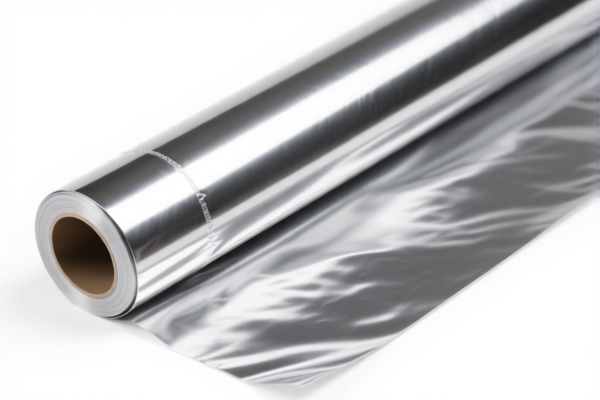
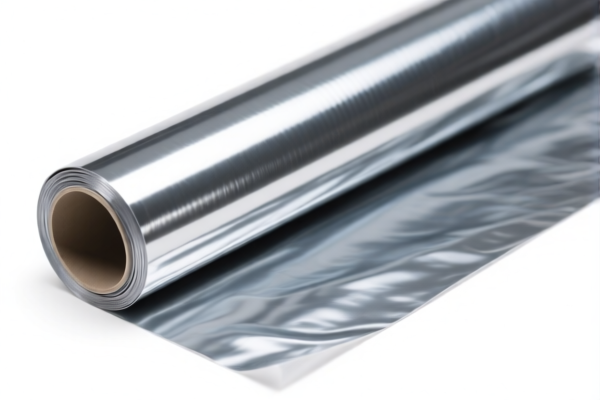
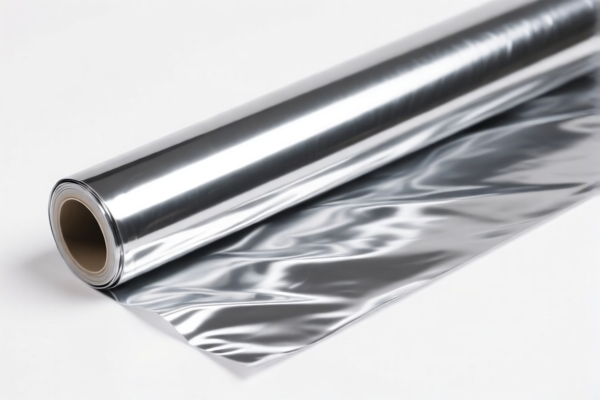
AI分析
🎬 PET Metallized High Transparency Film (PET Metallized Film)
🌐 HS Code Reference & Clearance Guide | 2026 Latest Tariff Analysis | Professional Customs Strategy
📌 I. Product Definition & Classification: What is "PET Metallized Film"?
PET Metallized High Transparency Film is a functional packaging and industrial material. It consists of a Polyethylene Terephthalate (PET) base film onto which a thin layer of metal (usually Aluminum) has been vacuum-deposited.
In international trade, its classification depends heavily on the degree of metallization, final application, and specific chemical composition. While all entries share the material "PET," they fall into different sub-categories based on whether they are treated as "Plastics" or "Specific Polyester Films."
⚠️ Key Classification Distinction:
- If it is a specific polyester film with precise metallization characteristics, it often falls under 3920.
- If it is considered a modified plastic film or falls into "Other" categories due to specific additives or processing, it may fall under 3921.
- Crucial: The high total tax rate (~39-41.5%) applies to Chinese-origin goods entering the US market due to Section 301 and IEEPA tariffs.
📦 II. HS Code Classification Details (2026 Latest Tariff Reference)
| HS Code | Product Description | Key Characteristics | Tax Category |
|---|---|---|---|
| 3920.62.00.20 | PET Metallized Film, Material: PET, Form: Film. Classified under specific polyester films. | Standard polyester classification. Often used for food packaging, electronics shielding. | Base: 4.2% Section 301: 25% IEEPA: 10% |
| 3921.90.40.90 | PET Metallized Film, Material: PET, Form: Film. Classified under "Other plastic films." | Broader category. Used when the specific "polyester" definition doesn't strictly apply to the finish or treatment. | Base: 4.2% Section 301: 25% IEEPA: 10% |
| 3920.62.00.50 | PET Metallized Film, Material: PET, Form: Metallized PET Film. Matches specific classification description. | High precision. Specifically identified as "Metallized" in the tariff heading. Preferred for high-transparency applications. | Base: 4.2% Section 301: 25% IEEPA: 10% |
| 3921.90.50.50 | PET Metallized Film, Material: PET, Form: Film. Classified under "Other plastic plates, sheets, film, foil, and strips." | "Other" category. May apply if the film has additional non-PET layers or specific modifications that move it out of standard polyester codes. | Base: 4.8% Section 301: 25% IEEPA: 10% |
| 3921.19.00.90 | PET Metallized Film, Material: PET, Form: Film. Classified under "Other plastic plates, sheets, film, foil, and strips." | Highest base rate. Used for PET films that do not fit other specific sub-headings in 3920 or 3921.10. | Base: 6.5% Section 301: 25% IEEPA: 10% |
🔍 Critical Reminder:
- All these HS codes incur Section 301 Tariffs (25%) and IEEPA Tariffs (10%).
- The Base Duty varies from 4.2% to 6.5% depending on the precise structural classification (3920 vs. 3921).
- Total Effective Rate: Ranges from 39.2% to 41.5%.
- Do not confuse with unmetallized PET film, which may have lower or zero additional tariffs depending on the exact code.
💰 III. 2026 Latest Tariff Rate Breakdown (Including Surcharges)
✅ Applicable Country: United States (US)
✅ Country of Origin: China (CN)
✅ Effective Date: Ongoing (Post-2025 policies included)
🎯 1. 3920.62.00.20 & 3921.90.40.90 & 3920.62.00.50 —— Standard PET Metallized Films
| Item | Detail |
|---|---|
| Base Duty Rate | 4.2% (Ad Valorem) |
| Section 301 Surcharge | +25% (USITC Footnote 9903.08.01 / 9903.01.25) |
| IEEPA Surcharge | +10% (Against Chinese products, effective Nov 10, 2025) |
| Total Tariff Rate | 39.2% |
| Tax Calculation | CIF Value × 39.2% |
| De Minimis Exemption | ❌ Not Applicable (Deny De Minimis) |
| Legal Basis Path | IEEPA:9903.01.25 → IEEPA:9903.01.24 → USITC:3920.62.00.20 → FOOTNOTE:9903.08.01 |
📌 Explanation:
- The 4.2% base rate reflects the standard MFN (Most Favored Nation) duty for PET films.
- The 25% Section 301 tariff is the primary penalty for Chinese-manufactured plastics.
- The 10% IEEPA tariff is an additional layer for specific strategic goods.
- Total Cost Impact: Nearly 40% of the product value is lost to tariffs. This significantly impacts profit margins for packaging and electronic components.
🎯 2. 3921.90.50.50 —— Other Plastic Films (Modified PET)
| Item | Detail |
|---|---|
| Base Duty Rate | 4.8% (Ad Valorem) |
| Section 301 Surcharge | +25% |
| IEEPA Surcharge | +10% |
| Total Tariff Rate | 39.8% |
| Tax Calculation | CIF Value × 39.8% |
| De Minimis Exemption | ❌ Not Applicable |
📌 Note:
- Slightly higher base rate (4.8%) compared to standard polyester codes.
- Usually applies if the film has composite layers or specific surface treatments that move it out of the "Petroleum-based polyester" strict definition.
🎯 3. 3921.19.00.90 —— Other Plastic Plates, Sheets, Film (Highest Base)
| Item | Detail |
|---|---|
| Base Duty Rate | 6.5% (Ad Valorem) |
| Section 301 Surcharge | +25% |
| IEEPA Surcharge | +10% |
| Total Tariff Rate | 41.5% |
| Tax Calculation | CIF Value × 41.5% |
| De Minimis Exemption | ❌ Not Applicable |
📌 Warning:
- This is the most expensive classification among the provided codes.
- Avoid this code unless the product strictly does not fit any other PET film category.
- Misclassification here can lead to overpayment or audits if a lower-rate code (like 3920.62.00.20) is actually applicable.
🛠️ IV. Customs Clearance Operational Advice (Practical Pitfall Guide)
✅ 1. Required Documentation Checklist (Mandatory)
| Document | Required? | Description |
|---|---|---|
| ✅ Product Specification Sheet | ✔️ | Must detail: Base material (PET), Metallization method (Vacuum Al), Thickness, Transparency % |
| ✅ Commercial Invoice | ✔️ | Must clearly state: "PET Metallized Film," Country of Origin (China), HS Code, Value |
| ✅ Packing List | ✔️ | Detail rolls per carton, total weight, dimensions |
| ✅ Certificate of Origin (CO) | ✔️ | Proves Chinese origin (triggers tariffs). If transshipped, rules of origin apply |
| ✅ Third-Party Test Report | ✔️ | Optional but helpful: ASTM standards for tensile strength, reflectivity, barrier properties |
| ✅ Bill of Lading / Air Waybill | ✔️ | Standard shipping documents |
✅ 2. Declaration Tips (Key Strategy)
🔥 "Describe Accurately, Classify Precisely, Avoid 'Other'!"
| Scenario | Correct Declaration | Wrong Practice |
|---|---|---|
| Standard High-Transparency PET Metallized Film | 3920.62.00.20 or 3920.62.00.50 |
Using 3921.19.00.90 → Higher Tax! |
| Composite Film (e.g., PET/Alu/PE) | Check if it's still "Plastic Film" (3920/3921) or becomes "Laminated Packaging" (different code) | Mislabeling as "Aluminum Foil" → Seizure Risk |
| Highly Translucent vs. Opaque | Specify "High Transparency" in description | Vague terms like "Metallic Film" → Customs Delay |
| Small Sample Shipments | Declare full value, even if low quantity | Using De Minimis (Section 321) → Illegal for China-origin goods subject to 301/IEEPA |
✅ 3. Special Circumstances Handling
| Situation | Handling Advice |
|---|---|
| OEM Custom Printing | If the film is printed, it may still be 3920/3921, but ensure the "printing" doesn't change its essential character. |
| Re-export from Vietnam/Mexico | If the PET film is only cut or re-rolled in a third country, it may still be considered Chinese origin. Rules of Origin are strict. |
| Application in Electronics | If used for EMI shielding, highlight "Metallized" for accurate HS Code. |
| Application in Food Packaging | Ensure compliance with FDA regulations (21 CFR) in addition to customs. |
🌍 V. Global Market Customs Comparison (2026 Latest)
| Country/Region | Recommended HS Code | Tariff Rate (China Origin) | Certification Requirements | Notes |
|---|---|---|---|---|
| 🇺🇸 USA | 3920.62.00.20 / 3920.62.00.50 |
39.2% (Total) | FDA (if food contact), RoHS (if electronics) | Highest cost due to 301+IEEPA tariffs |
| 🇨🇳 China | 3920.62.00.20 |
~5-10% (Import Duty) | N/A | Domestic production dominates |
| 🇪🇺 EU | 3920.62.00.90 |
~5-6% | REACH, RoHS | No Section 301/IEEPA equivalent. Much cheaper than US market. |
| 🇬🇧 UK | 3920.62.00.90 |
~5-6% | UKCA, UK REACH | Similar to EU post-Brexit. |
| 🇯🇵 Japan | 3920.62.00.90 |
~5-6% | JIS Standards | Low tariffs, high quality standards. |
📌 Conclusion:
- USA is the most expensive market for PET Metallized Film from China due to ~39-41.5% total tariffs.
- EU/UK/Japan offer significantly lower tariff barriers (~5-6%), making them more attractive for pricing competitiveness, though quality certifications are strict.
- Strategy: Consider supply chain diversification (e.g., sourcing from Vietnam/Thailand) to mitigate US tariffs, but be aware of Rules of Origin scrutiny.
📌 VI. Common Mistakes & Pitfall Guide (Lessons Learned)
❌ Mistake 1: Using "Aluminum Foil" as the product name
👉 Consequence: Customs may classify as 7607 (Aluminum) instead of plastic, leading to different duties and potential anti-dumping issues.
👉 Fix: Always use "PET Metallized Film".
❌ Mistake 2: Declaring De Minimis (Section 321) for small shipments from China
👉 Consequence: Seizure and penalties. Section 301 and IEEPA tariffs apply regardless of value for Chinese origin.
👉 Fix: Pay full tariffs, even for samples.
❌ Mistake 3: Misclassifying as 3921.19.00.90 (Highest Base Rate)
👉 Consequence: Overpaying 2.3% on the base rate unnecessarily.
👉 Fix: Ensure the film fits the specific "Polyester" definition (3920.62) if possible.
❌ Mistake 4: Ignoring "Metallized" in the description
👉 Consequence: Customs may suspect undervaluation or misclassification (e.g., as plain PET).
👉 Fix: Explicitly state "Vacuum Metallized" or "Aluminized" in the commercial invoice.
✅ Correct Declaration Example:
"PET METALLIZED HIGH TRANSPARENCY FILM, VACUUM ALUMINIZED, WIDE FORMAT, FOR ELECTRONIC PACKAGING, ORIGIN: CHINA, HS CODE: 3920.62.00.20"
🎯 VII. Conclusion: Professional Declaration, Cost Efficiency, Risk Mitigation
🎯 Key Takeaway:
🔹 "PET Metallized Film from China = ~39-41.5% Tariff in the US."
🔹 "Base Duty is 4.2-6.5%, but Section 301 (25%) and IEEPA (10%) dominate the cost."
🔹 "Accurate HS Code selection (3920 vs 3921) saves small amounts, but supply chain strategy saves big amounts."
📌 Pro Tip:
If you are importing into the USA, consider:
1. Advance Ruling: Apply for a Binding Tariff Information (BTI) or Advance Ruling from CBP to confirm the correct HS Code.
2. Supply Chain Audit: Ensure no transshipment fraud. If you ship from China to Vietnam and then to the US, the origin is likely still China, and tariffs still apply.
3. Cost-Benefit Analysis: Compare the 40% tariff cost vs. production cost savings in non-US markets.
📣 Immediate Action:
📞 Consult a Licensed Customs Broker: Provide product photos, specs, and intended use.
🚀 Optimize Your Supply Chain: Evaluate if shifting production or sourcing from non-China origins (e.g., Southeast Asia) can save ~35% in tariff costs.
💼 Your Bottom Line: Every percentage point of tariff is direct profit loss. Precision saves money.
✨ Professional Clearance Starts with Accurate Classification!
💼 Your Product Deserves the Right Code, Not the Expensive Guess!
用户评价
关于 HS 编码归类
协调制度(HS)是由世界海关组织(WCO)制定的国际贸易商品分类标准。全球 200 多个国家采用 HS 系统作为海关关税、贸易统计和进出口监管的基础。
每个 HS 编码遵循以下层级结构:
- 章(2 位)——商品大类(例如:第 84 章:机器和机械设备)
- 品目(4 位)——章内的更具体分类
- 子目(6 位)——国际通用细分,所有 WCO 成员国统一使用
- 本国细分(8-10 位)——各国自行扩展的细分编码,如美国 HTSUS 10 位编码
正确的 HS 编码归类对于顺利通关、准确缴纳关税和遵守贸易法规至关重要。错误归类可能导致海关延误、多缴关税或罚款。
从CN进口到US时,适用的关税税率可能包括:
- 最惠国(MFN)税率——适用于 WTO 成员国的标准关税税率
- 普通税率——适用于无贸易协定国家
- 贸易救济关税——附加关税,如 301 条款(反倾销)、232 条款(国家安全)或反补贴税
本页内容仅供参考。如需正式归类,请咨询当地海关或持牌报关代理。