PET Metallized High Transparency Film
CN → US| HS Code | Tariff Rate | Origin | Destination | Doc |
|---|---|---|---|---|
| 3920620020 | 39.2% | CN | US | Official Doc |
| 3921904090 | 39.2% | CN | US | Official Doc |
| 3920620050 | 39.2% | CN | US | Official Doc |
| 3921905050 | 39.8% | CN | US | Official Doc |
| 3921190090 | 41.5% | CN | US | Official Doc |
Product Images

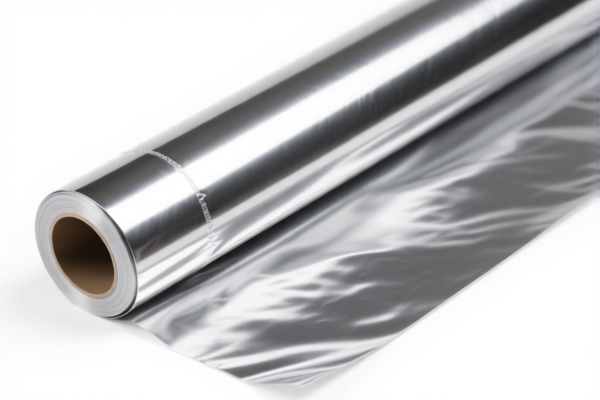
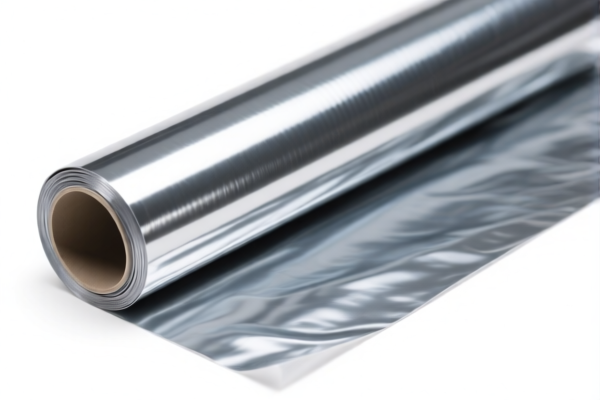
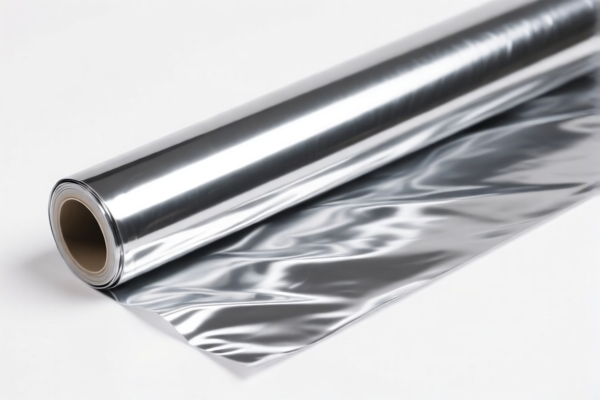
AI Analysis
🎬 PET Metallized High Transparency Film (PET Metallized Film)
🌐 HS Code Reference & Clearance Guide | 2026 Latest Tariff Analysis | Professional Customs Strategy
📌 I. Product Definition & Classification: What is "PET Metallized Film"?
PET Metallized High Transparency Film is a functional packaging and industrial material. It consists of a Polyethylene Terephthalate (PET) base film onto which a thin layer of metal (usually Aluminum) has been vacuum-deposited.
In international trade, its classification depends heavily on the degree of metallization, final application, and specific chemical composition. While all entries share the material "PET," they fall into different sub-categories based on whether they are treated as "Plastics" or "Specific Polyester Films."
⚠️ Key Classification Distinction:
- If it is a specific polyester film with precise metallization characteristics, it often falls under 3920.
- If it is considered a modified plastic film or falls into "Other" categories due to specific additives or processing, it may fall under 3921.
- Crucial: The high total tax rate (~39-41.5%) applies to Chinese-origin goods entering the US market due to Section 301 and IEEPA tariffs.
📦 II. HS Code Classification Details (2026 Latest Tariff Reference)
| HS Code | Product Description | Key Characteristics | Tax Category |
|---|---|---|---|
| 3920.62.00.20 | PET Metallized Film, Material: PET, Form: Film. Classified under specific polyester films. | Standard polyester classification. Often used for food packaging, electronics shielding. | Base: 4.2% Section 301: 25% IEEPA: 10% |
| 3921.90.40.90 | PET Metallized Film, Material: PET, Form: Film. Classified under "Other plastic films." | Broader category. Used when the specific "polyester" definition doesn't strictly apply to the finish or treatment. | Base: 4.2% Section 301: 25% IEEPA: 10% |
| 3920.62.00.50 | PET Metallized Film, Material: PET, Form: Metallized PET Film. Matches specific classification description. | High precision. Specifically identified as "Metallized" in the tariff heading. Preferred for high-transparency applications. | Base: 4.2% Section 301: 25% IEEPA: 10% |
| 3921.90.50.50 | PET Metallized Film, Material: PET, Form: Film. Classified under "Other plastic plates, sheets, film, foil, and strips." | "Other" category. May apply if the film has additional non-PET layers or specific modifications that move it out of standard polyester codes. | Base: 4.8% Section 301: 25% IEEPA: 10% |
| 3921.19.00.90 | PET Metallized Film, Material: PET, Form: Film. Classified under "Other plastic plates, sheets, film, foil, and strips." | Highest base rate. Used for PET films that do not fit other specific sub-headings in 3920 or 3921.10. | Base: 6.5% Section 301: 25% IEEPA: 10% |
🔍 Critical Reminder:
- All these HS codes incur Section 301 Tariffs (25%) and IEEPA Tariffs (10%).
- The Base Duty varies from 4.2% to 6.5% depending on the precise structural classification (3920 vs. 3921).
- Total Effective Rate: Ranges from 39.2% to 41.5%.
- Do not confuse with unmetallized PET film, which may have lower or zero additional tariffs depending on the exact code.
💰 III. 2026 Latest Tariff Rate Breakdown (Including Surcharges)
✅ Applicable Country: United States (US)
✅ Country of Origin: China (CN)
✅ Effective Date: Ongoing (Post-2025 policies included)
🎯 1. 3920.62.00.20 & 3921.90.40.90 & 3920.62.00.50 —— Standard PET Metallized Films
| Item | Detail |
|---|---|
| Base Duty Rate | 4.2% (Ad Valorem) |
| Section 301 Surcharge | +25% (USITC Footnote 9903.08.01 / 9903.01.25) |
| IEEPA Surcharge | +10% (Against Chinese products, effective Nov 10, 2025) |
| Total Tariff Rate | 39.2% |
| Tax Calculation | CIF Value × 39.2% |
| De Minimis Exemption | ❌ Not Applicable (Deny De Minimis) |
| Legal Basis Path | IEEPA:9903.01.25 → IEEPA:9903.01.24 → USITC:3920.62.00.20 → FOOTNOTE:9903.08.01 |
📌 Explanation:
- The 4.2% base rate reflects the standard MFN (Most Favored Nation) duty for PET films.
- The 25% Section 301 tariff is the primary penalty for Chinese-manufactured plastics.
- The 10% IEEPA tariff is an additional layer for specific strategic goods.
- Total Cost Impact: Nearly 40% of the product value is lost to tariffs. This significantly impacts profit margins for packaging and electronic components.
🎯 2. 3921.90.50.50 —— Other Plastic Films (Modified PET)
| Item | Detail |
|---|---|
| Base Duty Rate | 4.8% (Ad Valorem) |
| Section 301 Surcharge | +25% |
| IEEPA Surcharge | +10% |
| Total Tariff Rate | 39.8% |
| Tax Calculation | CIF Value × 39.8% |
| De Minimis Exemption | ❌ Not Applicable |
📌 Note:
- Slightly higher base rate (4.8%) compared to standard polyester codes.
- Usually applies if the film has composite layers or specific surface treatments that move it out of the "Petroleum-based polyester" strict definition.
🎯 3. 3921.19.00.90 —— Other Plastic Plates, Sheets, Film (Highest Base)
| Item | Detail |
|---|---|
| Base Duty Rate | 6.5% (Ad Valorem) |
| Section 301 Surcharge | +25% |
| IEEPA Surcharge | +10% |
| Total Tariff Rate | 41.5% |
| Tax Calculation | CIF Value × 41.5% |
| De Minimis Exemption | ❌ Not Applicable |
📌 Warning:
- This is the most expensive classification among the provided codes.
- Avoid this code unless the product strictly does not fit any other PET film category.
- Misclassification here can lead to overpayment or audits if a lower-rate code (like 3920.62.00.20) is actually applicable.
🛠️ IV. Customs Clearance Operational Advice (Practical Pitfall Guide)
✅ 1. Required Documentation Checklist (Mandatory)
| Document | Required? | Description |
|---|---|---|
| ✅ Product Specification Sheet | ✔️ | Must detail: Base material (PET), Metallization method (Vacuum Al), Thickness, Transparency % |
| ✅ Commercial Invoice | ✔️ | Must clearly state: "PET Metallized Film," Country of Origin (China), HS Code, Value |
| ✅ Packing List | ✔️ | Detail rolls per carton, total weight, dimensions |
| ✅ Certificate of Origin (CO) | ✔️ | Proves Chinese origin (triggers tariffs). If transshipped, rules of origin apply |
| ✅ Third-Party Test Report | ✔️ | Optional but helpful: ASTM standards for tensile strength, reflectivity, barrier properties |
| ✅ Bill of Lading / Air Waybill | ✔️ | Standard shipping documents |
✅ 2. Declaration Tips (Key Strategy)
🔥 "Describe Accurately, Classify Precisely, Avoid 'Other'!"
| Scenario | Correct Declaration | Wrong Practice |
|---|---|---|
| Standard High-Transparency PET Metallized Film | 3920.62.00.20 or 3920.62.00.50 |
Using 3921.19.00.90 → Higher Tax! |
| Composite Film (e.g., PET/Alu/PE) | Check if it's still "Plastic Film" (3920/3921) or becomes "Laminated Packaging" (different code) | Mislabeling as "Aluminum Foil" → Seizure Risk |
| Highly Translucent vs. Opaque | Specify "High Transparency" in description | Vague terms like "Metallic Film" → Customs Delay |
| Small Sample Shipments | Declare full value, even if low quantity | Using De Minimis (Section 321) → Illegal for China-origin goods subject to 301/IEEPA |
✅ 3. Special Circumstances Handling
| Situation | Handling Advice |
|---|---|
| OEM Custom Printing | If the film is printed, it may still be 3920/3921, but ensure the "printing" doesn't change its essential character. |
| Re-export from Vietnam/Mexico | If the PET film is only cut or re-rolled in a third country, it may still be considered Chinese origin. Rules of Origin are strict. |
| Application in Electronics | If used for EMI shielding, highlight "Metallized" for accurate HS Code. |
| Application in Food Packaging | Ensure compliance with FDA regulations (21 CFR) in addition to customs. |
🌍 V. Global Market Customs Comparison (2026 Latest)
| Country/Region | Recommended HS Code | Tariff Rate (China Origin) | Certification Requirements | Notes |
|---|---|---|---|---|
| 🇺🇸 USA | 3920.62.00.20 / 3920.62.00.50 |
39.2% (Total) | FDA (if food contact), RoHS (if electronics) | Highest cost due to 301+IEEPA tariffs |
| 🇨🇳 China | 3920.62.00.20 |
~5-10% (Import Duty) | N/A | Domestic production dominates |
| 🇪🇺 EU | 3920.62.00.90 |
~5-6% | REACH, RoHS | No Section 301/IEEPA equivalent. Much cheaper than US market. |
| 🇬🇧 UK | 3920.62.00.90 |
~5-6% | UKCA, UK REACH | Similar to EU post-Brexit. |
| 🇯🇵 Japan | 3920.62.00.90 |
~5-6% | JIS Standards | Low tariffs, high quality standards. |
📌 Conclusion:
- USA is the most expensive market for PET Metallized Film from China due to ~39-41.5% total tariffs.
- EU/UK/Japan offer significantly lower tariff barriers (~5-6%), making them more attractive for pricing competitiveness, though quality certifications are strict.
- Strategy: Consider supply chain diversification (e.g., sourcing from Vietnam/Thailand) to mitigate US tariffs, but be aware of Rules of Origin scrutiny.
📌 VI. Common Mistakes & Pitfall Guide (Lessons Learned)
❌ Mistake 1: Using "Aluminum Foil" as the product name
👉 Consequence: Customs may classify as 7607 (Aluminum) instead of plastic, leading to different duties and potential anti-dumping issues.
👉 Fix: Always use "PET Metallized Film".
❌ Mistake 2: Declaring De Minimis (Section 321) for small shipments from China
👉 Consequence: Seizure and penalties. Section 301 and IEEPA tariffs apply regardless of value for Chinese origin.
👉 Fix: Pay full tariffs, even for samples.
❌ Mistake 3: Misclassifying as 3921.19.00.90 (Highest Base Rate)
👉 Consequence: Overpaying 2.3% on the base rate unnecessarily.
👉 Fix: Ensure the film fits the specific "Polyester" definition (3920.62) if possible.
❌ Mistake 4: Ignoring "Metallized" in the description
👉 Consequence: Customs may suspect undervaluation or misclassification (e.g., as plain PET).
👉 Fix: Explicitly state "Vacuum Metallized" or "Aluminized" in the commercial invoice.
✅ Correct Declaration Example:
"PET METALLIZED HIGH TRANSPARENCY FILM, VACUUM ALUMINIZED, WIDE FORMAT, FOR ELECTRONIC PACKAGING, ORIGIN: CHINA, HS CODE: 3920.62.00.20"
🎯 VII. Conclusion: Professional Declaration, Cost Efficiency, Risk Mitigation
🎯 Key Takeaway:
🔹 "PET Metallized Film from China = ~39-41.5% Tariff in the US."
🔹 "Base Duty is 4.2-6.5%, but Section 301 (25%) and IEEPA (10%) dominate the cost."
🔹 "Accurate HS Code selection (3920 vs 3921) saves small amounts, but supply chain strategy saves big amounts."
📌 Pro Tip:
If you are importing into the USA, consider:
1. Advance Ruling: Apply for a Binding Tariff Information (BTI) or Advance Ruling from CBP to confirm the correct HS Code.
2. Supply Chain Audit: Ensure no transshipment fraud. If you ship from China to Vietnam and then to the US, the origin is likely still China, and tariffs still apply.
3. Cost-Benefit Analysis: Compare the 40% tariff cost vs. production cost savings in non-US markets.
📣 Immediate Action:
📞 Consult a Licensed Customs Broker: Provide product photos, specs, and intended use.
🚀 Optimize Your Supply Chain: Evaluate if shifting production or sourcing from non-China origins (e.g., Southeast Asia) can save ~35% in tariff costs.
💼 Your Bottom Line: Every percentage point of tariff is direct profit loss. Precision saves money.
✨ Professional Clearance Starts with Accurate Classification!
💼 Your Product Deserves the Right Code, Not the Expensive Guess!
Customer Reviews
About HS Code Classification
The Harmonized System (HS) is an internationally standardized nomenclature developed by the World Customs Organization (WCO) to classify traded products. Over 200 countries use the HS system as the basis for customs tariffs, trade statistics, and import/export regulations.
Each HS code follows a hierarchical structure:
- Chapter (2 digits) — Broad category of goods (e.g., Chapter 84: Machinery and Mechanical Appliances)
- Heading (4 digits) — More specific grouping within the chapter
- Subheading (6 digits) — Internationally standardized breakdown, used by all WCO member countries
- National subdivisions (8-10 digits) — Country-specific extensions for further classification, such as US HTSUS 10-digit codes
Correct HS code classification is essential for smooth customs clearance, accurate duty payment, and compliance with trade regulations. Misclassification can lead to customs delays, overpayment of duties, or penalties.
When importing from CN to US, the applicable tariff rates may include:
- Most-Favored-Nation (MFN) rate — The standard duty rate applied to WTO members
- General rate — Applied to countries without trade agreements
- Trade remedy duties — Additional tariffs such as Section 301 (anti-dumping), Section 232 (national security), or countervailing duties
The information provided on this page is for reference purposes only. For official classification, please consult with your local customs authority or a licensed customs broker.