PET Plastic Conductive Strip
CN → US| HS编码 | 关税税率 | 原产国 | 目的国 | 文档 |
|---|---|---|---|---|
| 3916905000 | 40.8% | CN | US | 官方文档 |
| 3926909905 | 22.8% | CN | US | 官方文档 |
| 3926909989 | 22.8% | CN | US | 官方文档 |
| 3916903000 | 41.5% | CN | US | 官方文档 |
| 5404198040 | 41.9% | CN | US | 官方文档 |
| 5404900000 | 35.0% | CN | US | 官方文档 |
商品图片
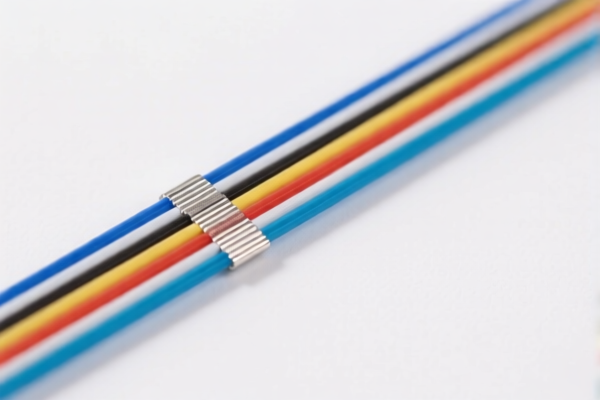
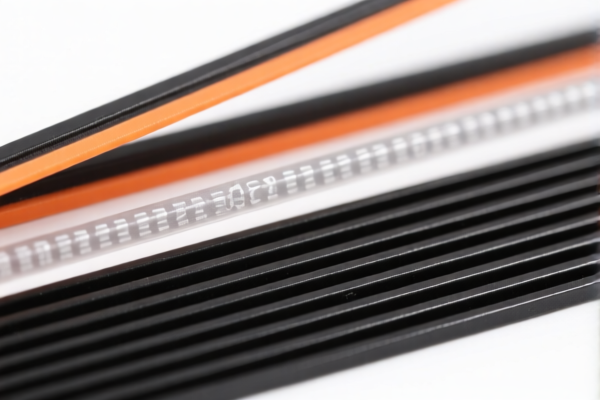
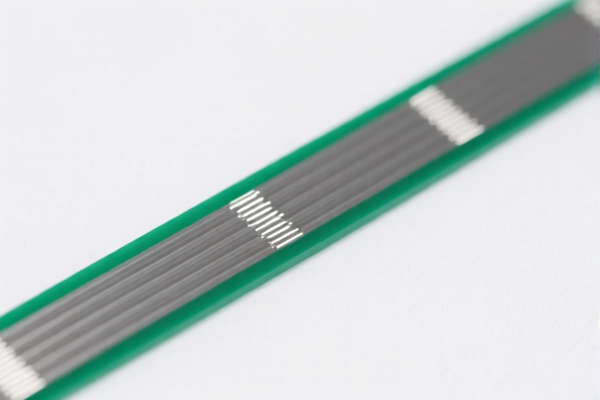
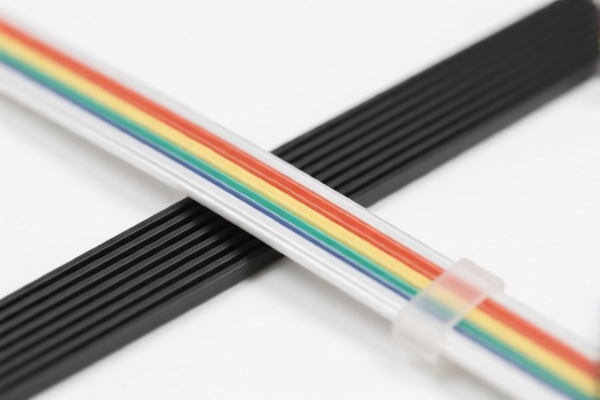
AI分析
🧩 PET Plastic Conductive Strip (PET Plastic Bar/Strip)
🌐 HS Code Reference & Customs Clearance Guide | 2026 Latest Tariff Analysis | Professional Customs Strategy
📌 Part 1: Product Definition & Classification: What exactly is a "PET Plastic Conductive Strip"?
PET (Polyethylene Terephthalate) plastic strips are rigid or semi-rigid plastic profiles. In international trade, the classification depends heavily on their physical form (whether they look like rods/bars/profiles vs. simple films/strips) and their material composition.
Key Distinction: * Extruded Profiles/Rods (3916): If the product has a solid cross-section (square, round, triangular) and is used as a structural component, it falls under "Bars, Rods, and Profiles." * Other Plastic Articles (3926): If the product is a flat strip, sheet, or does not fit the strict definition of a "rod/profile," it falls under "Other Articles of Plastics." * Monofilament/Filament (5404): If the "strip" is extremely thin, akin to a single thread or wire, it might be classified under synthetic filament.
⚠️ Critical Identification Point:
- If it is a solid plastic bar used for framing, structural support, or machinery parts → Chapter 3916
- If it is a flat strip or general plastic item without specific structural profile → Chapter 3926
- If it is woven or monofilament (very thin) → Chapter 5404
📦 Part 2: HS Code Classification Details (2026 Latest Tariff Authority Comparison)
Based on the provided data, here are the specific HS Codes, their descriptions, and the rationale for classification:
| HS Code | Product Description & Rationale | Total Tax Rate | Tax Breakdown |
|---|---|---|---|
3916.90.50.00 |
PET Plastic Bar/Profile: Classified as plastic material in strip/rod form, matching the characteristics of "bars, rods, and profiles." | 40.8% | Base: 5.8% Section 301: 25.0% Section 122: 10.0% |
3926.90.99.05 |
PET Plastic Strip (Other): Fully plastic, possessing strip/flat characteristics. Fits under "Other plastic articles." | 22.8% | Base: 5.3% Section 301: 7.5% Section 122: 10.0% |
3926.90.99.89 |
PET Plastic Strip (Other): Falls under the category of "Other plastic articles," with no material conflict. | 22.8% | Base: 5.3% Section 301: 7.5% Section 122: 10.0% |
3916.90.30.00 |
PET Plastic Bar/Profile: Form is a "strip" corresponding to monofilament/rod/profile. Fits under "Other plastics" in Chapter 3916. | 41.5% | Base: 6.5% Section 301: 25.0% Section 122: 10.0% |
5404.19.80.40 |
PET Monofilament/Strip: PET is polyester; the strip form matches monofilament/strip morphology. Classified as "Other." | 41.9% | Base: 6.9% Section 301: 25.0% Section 122: 10.0% |
5404.90.00.00 |
PET Synthetic Fiber/Plastic: PET belongs to synthetic fiber/plastic范畴; strip form matches the definition of strips. No obvious conflict. | 35.0% | Base: 0.0% Section 301: 25.0% Section 122: 10.0% |
🔍 Key Takeaway:
- The tax rate varies significantly from 22.8% to 41.9% depending on whether the item is deemed a "Profile" (3916), "Other Article" (3926), or "Monofilament" (5404). - Section 122 (10%) applies to all listed codes, likely due to specific trade actions or country-of-origin rules. - Section 301 (Trump Tariffs) ranges from 7.5% to 25%, heavily impacting the final cost.
💰 Part 3: 2026 Latest Tariff Rate Details (Including Additional Taxes & Policy Surcharges)
✅ Applicable Country: United States (US)
✅ Origin: China (CN)
✅ Effective Time: Current (2025-2026)
🎯 1. 3916.90.50.00 & 3916.90.30.00 —— Plastic Bars/Rods/Profiles
| Item | Details |
|---|---|
| Base Duty | 5.8% - 6.5% |
| Section 301 Duty | +25.0% (High tariff for plastic profiles from China) |
| Section 122 Duty | +10.0% |
| Total Effective Rate | 40.8% - 41.5% |
| Calculation | CIF Value × (Base + 301 + 122) |
| De Minimis Exemption | ❌ Not Eligible (Generally, Section 301 goods are excluded from de minimis relief) |
| Legal Basis | USITC HTS 3916 + Footnotes for Sec 301 & Sec 122 |
📌 Explanation:
- Items classified as "profiles" (3916) face the highest standard Section 301 rate (25%). - The base rate varies slightly between 5.8% and 6.5% depending on the specific sub-heading.
🎯 2. 3926.90.99.05 & 3926.90.99.89 —— Other Plastic Articles
| Item | Details |
|---|---|
| Base Duty | 5.3% |
| Section 301 Duty | +7.5% (Lower rate for certain other plastic articles) |
| Section 122 Duty | +10.0% |
| Total Effective Rate | 22.8% |
| Calculation | CIF Value × 22.8% |
| De Minimis Exemption | ❌ Not Eligible |
| Legal Basis | USITC HTS 3926 + Footnotes |
📌 Strategy:
- If your PET strip can be argued as a general "other plastic article" rather than a structural "profile," you can save ~18% in taxes (22.8% vs ~41%). - This requires strong documentation showing the item does not meet the GRI (General Rules of Interpretation) definition of a "rod/strip/profile" in Chapter 3916.
🎯 3. 5404.19.80.40 & 5404.90.00.00 —— Synthetic Filaments/Strips
| Item | Details |
|---|---|
| Base Duty | 6.9% (5404.19) / 0.0% (5404.90) |
| Section 301 Duty | +25.0% (5404.19) / +25.0% (5404.90) |
| Section 122 Duty | +10.0% |
| Total Effective Rate | 41.9% (5404.19) / 35.0% (5404.90) |
| Calculation | CIF Value × Rate |
| De Minimis Exemption | ❌ Not Eligible |
📌 Note:
-5404.90.00.00offers the lowest total rate among the higher-taxed categories (35.0%) due to a 0% base rate. - However, classification as a "synthetic filament" must be justified by the physical dimensions (diameter/thickness) of the strip.
🛠️ Part 4: Customs Clearance Practical Advice (Battle-Tested Pitfall Guide)
✅ 1. Required Documentation Checklist
| Document | Mandatory? | Purpose |
|---|---|---|
| ✅ Product Specification Sheet | ✔️ | Must define dimensions (thickness, width, cross-section) to determine if it's a "profile" or "strip." |
| ✅ Material Composition Report | ✔️ | Confirm 100% PET content. "Conductive" additives must be declared if they alter the plastic classification. |
| ✅ Product Photos (Cross-Section View) | ✔️ | Crucial! To visually prove if it's a square/round rod (3916) or a flat strip (3926/5404). |
| ✅ Commercial Invoice | ✔️ | Must clearly state "PET Plastic Strip/Bar," material, and dimensions. Avoid vague terms like "Plastic Part." |
| ✅ Packing List | ✔️ | Detail the quantity and weight. |
✅ 2. Classification Strategy (Key Tips)
🔥 "Form Determines Fate: Profile vs. Strip!"
| Scenario | Recommended HS Code | Reason |
|---|---|---|
| Solid Cross-Section (Square, Round, Triangular) | 3916.90.50.00 or 3916.90.30.00 |
Fits GRI definition of "Bars and Rods." High tax (40-41%). |
| Flat Strip/Film-like (No structural profile) | 3926.90.99.05 or 3926.90.99.89 |
Classified as "Other Plastic Articles." Lower tax (22.8%). |
| Very Thin/Wire-like (Monofilament) | 5404.19.80.40 or 5404.90.00.00 |
If diameter is <1mm, may qualify as filament. Tax 35-41%. |
| Composite Material | Check if PET is only a coating | If metal core, classification changes entirely (e.g., to metal articles). |
✅ 3. Special Circumstances & Handling
| Situation | Handling Advice |
|---|---|
| "Conductive" Additives | If the PET is loaded with carbon fiber or metal particles, ensure the plastic nature is predominant. If >50% by weight is plastic, Chapter 39 still applies. |
| Customs Inspection Trigger | Because PET strips can be dual-use (industrial vs. consumer), be prepared to provide use-case documentation. |
| Dispute on "Profile" Definition | If you want the lower 22.8% rate for 3926, you must argue that the strip does not have the "profile" shape defined in Chapter 39 Note 1. |
🌍 Part 5: Global Market Comparison (2026 Latest)
| Country/Region | Recommended HS Code | Est. Duty Rate (China Origin) | Remarks |
|---|---|---|---|
| 🇺🇸 USA | 3926.90.99.05 (Optimal) |
22.8% | Best rate if classified as "Other." Avoid 3916 if possible. |
| 🇨🇳 China | 3926.90.99.00 |
~5-6% | Low import duty, no Section 301/122. |
| 🇪🇺 EU | 3926.90.97 |
~4-6% | No Section 301 equivalent, but VAT applies. |
| 🇯🇵 Japan | 3926.90.90 |
~5-6% | CPTPP may offer reduced rates if eligible. |
📌 Conclusion:
- The USA is the most challenging market due to Section 301 and Section 122 tariffs. - Classification is key: Shifting from3916(41.5%) to3926(22.8%) saves 18.7% in duties. - Documentation must support the lower-taxed classification: Provide clear photos and specs proving the item is a "strip" or "other article," not a "profile."
📌 Part 6: Common Errors & Pitfall Guide (Lessons Learned)
❌ Error 1: Declaring a square PET rod as a "Plastic Strip" to avoid high tariffs.
👉 Consequence: Customs re-classes it as 3916, issues a demand for back-tariffs + penalties.
❌ Error 2: Ignoring the "Conductive" aspect.
👉 Consequence: If conductive fillers make it a composite, it might be scrutinized for chemical hazards or different electrical component codes.
❌ Error 3: Using vague descriptions like "Plastic Piece."
👉 Consequence: Customs will classify to the highest tariff or most restrictive code by default.
❌ Error 4: Assuming de minimis ($800) applies.
👉 Consequence: False. Section 301 goods from China are explicitly excluded from de minimis treatment. All duties apply.
✅ Correct Approach:
"PET Plastic Strip, Flat Profile, 2mm Thickness, 10mm Width, Industrial Use, 100% PET Material"
🎯 Part 7: Conclusion: Professional Classification, Cost Optimization!
🎯 Remember the Golden Rule:
🔹 "Profile = 40%+, Strip/Other = 22.8%. Form is King!"
🔹 "Section 122 + Section 301 = High Cost. Plan Ahead."
📌 Pro Tip:
If your PET strip is for non-industrial/consumer use, check if any specific HTS codes have lower base rates.
For USA imports, consider applying for a HTS Letter of Ruling before shipping to lock in the 22.8% rate if possible.
📣 Immediate Action:
📞 Consult a Customs Broker + Provide Cross-Section Photos + Verify Material Safety Data Sheet (MSDS)
🚀 Ensure your goods clear customs smoothly, efficiently, and at the lowest possible tax rate!
✨ Professional Customs Clearance Starts with Accurate Classification!
💼 Every percentage point matters in today's trade environment!
用户评价
关于 HS 编码归类
协调制度(HS)是由世界海关组织(WCO)制定的国际贸易商品分类标准。全球 200 多个国家采用 HS 系统作为海关关税、贸易统计和进出口监管的基础。
每个 HS 编码遵循以下层级结构:
- 章(2 位)——商品大类(例如:第 84 章:机器和机械设备)
- 品目(4 位)——章内的更具体分类
- 子目(6 位)——国际通用细分,所有 WCO 成员国统一使用
- 本国细分(8-10 位)——各国自行扩展的细分编码,如美国 HTSUS 10 位编码
正确的 HS 编码归类对于顺利通关、准确缴纳关税和遵守贸易法规至关重要。错误归类可能导致海关延误、多缴关税或罚款。
从CN进口到US时,适用的关税税率可能包括:
- 最惠国(MFN)税率——适用于 WTO 成员国的标准关税税率
- 普通税率——适用于无贸易协定国家
- 贸易救济关税——附加关税,如 301 条款(反倾销)、232 条款(国家安全)或反补贴税
本页内容仅供参考。如需正式归类,请咨询当地海关或持牌报关代理。