PET Plastic Conductive Strip
CN → US| HS Code | Tariff Rate | Origin | Destination | Doc |
|---|---|---|---|---|
| 3916905000 | 40.8% | CN | US | Official Doc |
| 3926909905 | 22.8% | CN | US | Official Doc |
| 3926909989 | 22.8% | CN | US | Official Doc |
| 3916903000 | 41.5% | CN | US | Official Doc |
| 5404198040 | 41.9% | CN | US | Official Doc |
| 5404900000 | 35.0% | CN | US | Official Doc |
Product Images
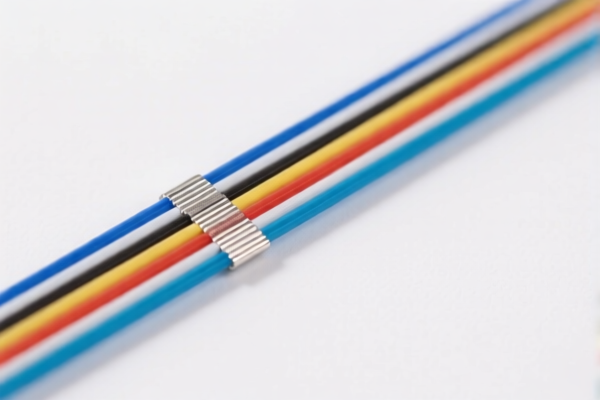
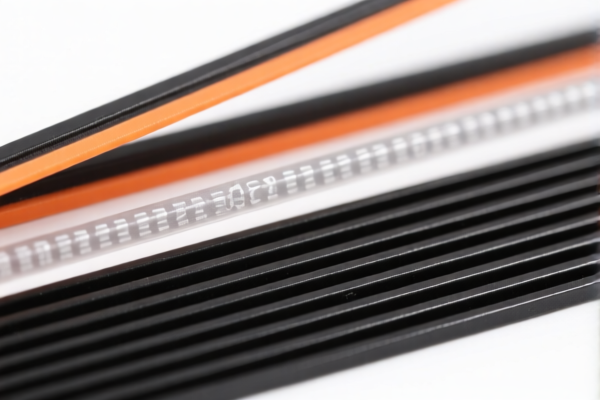
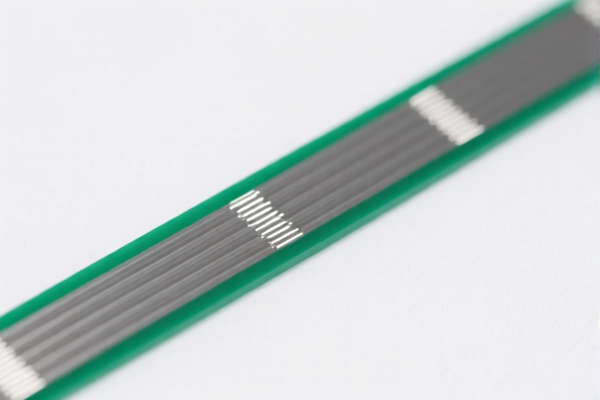
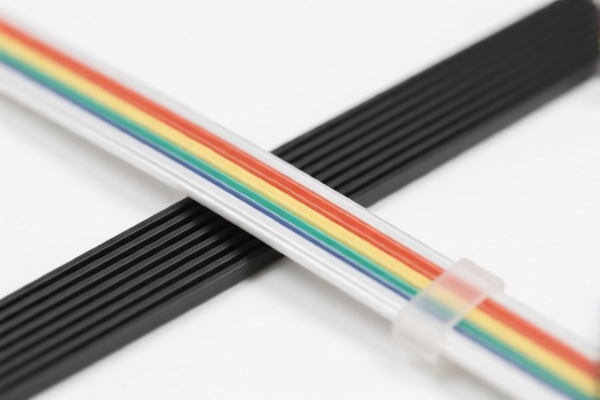
AI Analysis
🧩 PET Plastic Conductive Strip (PET Plastic Bar/Strip)
🌐 HS Code Reference & Customs Clearance Guide | 2026 Latest Tariff Analysis | Professional Customs Strategy
📌 Part 1: Product Definition & Classification: What exactly is a "PET Plastic Conductive Strip"?
PET (Polyethylene Terephthalate) plastic strips are rigid or semi-rigid plastic profiles. In international trade, the classification depends heavily on their physical form (whether they look like rods/bars/profiles vs. simple films/strips) and their material composition.
Key Distinction: * Extruded Profiles/Rods (3916): If the product has a solid cross-section (square, round, triangular) and is used as a structural component, it falls under "Bars, Rods, and Profiles." * Other Plastic Articles (3926): If the product is a flat strip, sheet, or does not fit the strict definition of a "rod/profile," it falls under "Other Articles of Plastics." * Monofilament/Filament (5404): If the "strip" is extremely thin, akin to a single thread or wire, it might be classified under synthetic filament.
⚠️ Critical Identification Point:
- If it is a solid plastic bar used for framing, structural support, or machinery parts → Chapter 3916
- If it is a flat strip or general plastic item without specific structural profile → Chapter 3926
- If it is woven or monofilament (very thin) → Chapter 5404
📦 Part 2: HS Code Classification Details (2026 Latest Tariff Authority Comparison)
Based on the provided data, here are the specific HS Codes, their descriptions, and the rationale for classification:
| HS Code | Product Description & Rationale | Total Tax Rate | Tax Breakdown |
|---|---|---|---|
3916.90.50.00 |
PET Plastic Bar/Profile: Classified as plastic material in strip/rod form, matching the characteristics of "bars, rods, and profiles." | 40.8% | Base: 5.8% Section 301: 25.0% Section 122: 10.0% |
3926.90.99.05 |
PET Plastic Strip (Other): Fully plastic, possessing strip/flat characteristics. Fits under "Other plastic articles." | 22.8% | Base: 5.3% Section 301: 7.5% Section 122: 10.0% |
3926.90.99.89 |
PET Plastic Strip (Other): Falls under the category of "Other plastic articles," with no material conflict. | 22.8% | Base: 5.3% Section 301: 7.5% Section 122: 10.0% |
3916.90.30.00 |
PET Plastic Bar/Profile: Form is a "strip" corresponding to monofilament/rod/profile. Fits under "Other plastics" in Chapter 3916. | 41.5% | Base: 6.5% Section 301: 25.0% Section 122: 10.0% |
5404.19.80.40 |
PET Monofilament/Strip: PET is polyester; the strip form matches monofilament/strip morphology. Classified as "Other." | 41.9% | Base: 6.9% Section 301: 25.0% Section 122: 10.0% |
5404.90.00.00 |
PET Synthetic Fiber/Plastic: PET belongs to synthetic fiber/plastic范畴; strip form matches the definition of strips. No obvious conflict. | 35.0% | Base: 0.0% Section 301: 25.0% Section 122: 10.0% |
🔍 Key Takeaway:
- The tax rate varies significantly from 22.8% to 41.9% depending on whether the item is deemed a "Profile" (3916), "Other Article" (3926), or "Monofilament" (5404). - Section 122 (10%) applies to all listed codes, likely due to specific trade actions or country-of-origin rules. - Section 301 (Trump Tariffs) ranges from 7.5% to 25%, heavily impacting the final cost.
💰 Part 3: 2026 Latest Tariff Rate Details (Including Additional Taxes & Policy Surcharges)
✅ Applicable Country: United States (US)
✅ Origin: China (CN)
✅ Effective Time: Current (2025-2026)
🎯 1. 3916.90.50.00 & 3916.90.30.00 —— Plastic Bars/Rods/Profiles
| Item | Details |
|---|---|
| Base Duty | 5.8% - 6.5% |
| Section 301 Duty | +25.0% (High tariff for plastic profiles from China) |
| Section 122 Duty | +10.0% |
| Total Effective Rate | 40.8% - 41.5% |
| Calculation | CIF Value × (Base + 301 + 122) |
| De Minimis Exemption | ❌ Not Eligible (Generally, Section 301 goods are excluded from de minimis relief) |
| Legal Basis | USITC HTS 3916 + Footnotes for Sec 301 & Sec 122 |
📌 Explanation:
- Items classified as "profiles" (3916) face the highest standard Section 301 rate (25%). - The base rate varies slightly between 5.8% and 6.5% depending on the specific sub-heading.
🎯 2. 3926.90.99.05 & 3926.90.99.89 —— Other Plastic Articles
| Item | Details |
|---|---|
| Base Duty | 5.3% |
| Section 301 Duty | +7.5% (Lower rate for certain other plastic articles) |
| Section 122 Duty | +10.0% |
| Total Effective Rate | 22.8% |
| Calculation | CIF Value × 22.8% |
| De Minimis Exemption | ❌ Not Eligible |
| Legal Basis | USITC HTS 3926 + Footnotes |
📌 Strategy:
- If your PET strip can be argued as a general "other plastic article" rather than a structural "profile," you can save ~18% in taxes (22.8% vs ~41%). - This requires strong documentation showing the item does not meet the GRI (General Rules of Interpretation) definition of a "rod/strip/profile" in Chapter 3916.
🎯 3. 5404.19.80.40 & 5404.90.00.00 —— Synthetic Filaments/Strips
| Item | Details |
|---|---|
| Base Duty | 6.9% (5404.19) / 0.0% (5404.90) |
| Section 301 Duty | +25.0% (5404.19) / +25.0% (5404.90) |
| Section 122 Duty | +10.0% |
| Total Effective Rate | 41.9% (5404.19) / 35.0% (5404.90) |
| Calculation | CIF Value × Rate |
| De Minimis Exemption | ❌ Not Eligible |
📌 Note:
-5404.90.00.00offers the lowest total rate among the higher-taxed categories (35.0%) due to a 0% base rate. - However, classification as a "synthetic filament" must be justified by the physical dimensions (diameter/thickness) of the strip.
🛠️ Part 4: Customs Clearance Practical Advice (Battle-Tested Pitfall Guide)
✅ 1. Required Documentation Checklist
| Document | Mandatory? | Purpose |
|---|---|---|
| ✅ Product Specification Sheet | ✔️ | Must define dimensions (thickness, width, cross-section) to determine if it's a "profile" or "strip." |
| ✅ Material Composition Report | ✔️ | Confirm 100% PET content. "Conductive" additives must be declared if they alter the plastic classification. |
| ✅ Product Photos (Cross-Section View) | ✔️ | Crucial! To visually prove if it's a square/round rod (3916) or a flat strip (3926/5404). |
| ✅ Commercial Invoice | ✔️ | Must clearly state "PET Plastic Strip/Bar," material, and dimensions. Avoid vague terms like "Plastic Part." |
| ✅ Packing List | ✔️ | Detail the quantity and weight. |
✅ 2. Classification Strategy (Key Tips)
🔥 "Form Determines Fate: Profile vs. Strip!"
| Scenario | Recommended HS Code | Reason |
|---|---|---|
| Solid Cross-Section (Square, Round, Triangular) | 3916.90.50.00 or 3916.90.30.00 |
Fits GRI definition of "Bars and Rods." High tax (40-41%). |
| Flat Strip/Film-like (No structural profile) | 3926.90.99.05 or 3926.90.99.89 |
Classified as "Other Plastic Articles." Lower tax (22.8%). |
| Very Thin/Wire-like (Monofilament) | 5404.19.80.40 or 5404.90.00.00 |
If diameter is <1mm, may qualify as filament. Tax 35-41%. |
| Composite Material | Check if PET is only a coating | If metal core, classification changes entirely (e.g., to metal articles). |
✅ 3. Special Circumstances & Handling
| Situation | Handling Advice |
|---|---|
| "Conductive" Additives | If the PET is loaded with carbon fiber or metal particles, ensure the plastic nature is predominant. If >50% by weight is plastic, Chapter 39 still applies. |
| Customs Inspection Trigger | Because PET strips can be dual-use (industrial vs. consumer), be prepared to provide use-case documentation. |
| Dispute on "Profile" Definition | If you want the lower 22.8% rate for 3926, you must argue that the strip does not have the "profile" shape defined in Chapter 39 Note 1. |
🌍 Part 5: Global Market Comparison (2026 Latest)
| Country/Region | Recommended HS Code | Est. Duty Rate (China Origin) | Remarks |
|---|---|---|---|
| 🇺🇸 USA | 3926.90.99.05 (Optimal) |
22.8% | Best rate if classified as "Other." Avoid 3916 if possible. |
| 🇨🇳 China | 3926.90.99.00 |
~5-6% | Low import duty, no Section 301/122. |
| 🇪🇺 EU | 3926.90.97 |
~4-6% | No Section 301 equivalent, but VAT applies. |
| 🇯🇵 Japan | 3926.90.90 |
~5-6% | CPTPP may offer reduced rates if eligible. |
📌 Conclusion:
- The USA is the most challenging market due to Section 301 and Section 122 tariffs. - Classification is key: Shifting from3916(41.5%) to3926(22.8%) saves 18.7% in duties. - Documentation must support the lower-taxed classification: Provide clear photos and specs proving the item is a "strip" or "other article," not a "profile."
📌 Part 6: Common Errors & Pitfall Guide (Lessons Learned)
❌ Error 1: Declaring a square PET rod as a "Plastic Strip" to avoid high tariffs.
👉 Consequence: Customs re-classes it as 3916, issues a demand for back-tariffs + penalties.
❌ Error 2: Ignoring the "Conductive" aspect.
👉 Consequence: If conductive fillers make it a composite, it might be scrutinized for chemical hazards or different electrical component codes.
❌ Error 3: Using vague descriptions like "Plastic Piece."
👉 Consequence: Customs will classify to the highest tariff or most restrictive code by default.
❌ Error 4: Assuming de minimis ($800) applies.
👉 Consequence: False. Section 301 goods from China are explicitly excluded from de minimis treatment. All duties apply.
✅ Correct Approach:
"PET Plastic Strip, Flat Profile, 2mm Thickness, 10mm Width, Industrial Use, 100% PET Material"
🎯 Part 7: Conclusion: Professional Classification, Cost Optimization!
🎯 Remember the Golden Rule:
🔹 "Profile = 40%+, Strip/Other = 22.8%. Form is King!"
🔹 "Section 122 + Section 301 = High Cost. Plan Ahead."
📌 Pro Tip:
If your PET strip is for non-industrial/consumer use, check if any specific HTS codes have lower base rates.
For USA imports, consider applying for a HTS Letter of Ruling before shipping to lock in the 22.8% rate if possible.
📣 Immediate Action:
📞 Consult a Customs Broker + Provide Cross-Section Photos + Verify Material Safety Data Sheet (MSDS)
🚀 Ensure your goods clear customs smoothly, efficiently, and at the lowest possible tax rate!
✨ Professional Customs Clearance Starts with Accurate Classification!
💼 Every percentage point matters in today's trade environment!
Customer Reviews
About HS Code Classification
The Harmonized System (HS) is an internationally standardized nomenclature developed by the World Customs Organization (WCO) to classify traded products. Over 200 countries use the HS system as the basis for customs tariffs, trade statistics, and import/export regulations.
Each HS code follows a hierarchical structure:
- Chapter (2 digits) — Broad category of goods (e.g., Chapter 84: Machinery and Mechanical Appliances)
- Heading (4 digits) — More specific grouping within the chapter
- Subheading (6 digits) — Internationally standardized breakdown, used by all WCO member countries
- National subdivisions (8-10 digits) — Country-specific extensions for further classification, such as US HTSUS 10-digit codes
Correct HS code classification is essential for smooth customs clearance, accurate duty payment, and compliance with trade regulations. Misclassification can lead to customs delays, overpayment of duties, or penalties.
When importing from CN to US, the applicable tariff rates may include:
- Most-Favored-Nation (MFN) rate — The standard duty rate applied to WTO members
- General rate — Applied to countries without trade agreements
- Trade remedy duties — Additional tariffs such as Section 301 (anti-dumping), Section 232 (national security), or countervailing duties
The information provided on this page is for reference purposes only. For official classification, please consult with your local customs authority or a licensed customs broker.