PET Plastic Photovoltaic Film
CN → US| HS编码 | 关税税率 | 原产国 | 目的国 | 文档 |
|---|---|---|---|---|
| 8541420080 | 60.0% | CN | US | 官方文档 |
| 8541430080 | 60.0% | CN | US | 官方文档 |
| 3920620090 | 39.2% | CN | US | 官方文档 |
| 3921905050 | 39.8% | CN | US | 官方文档 |
商品图片
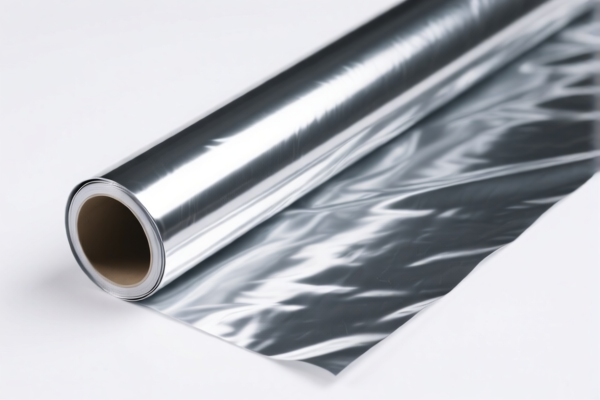
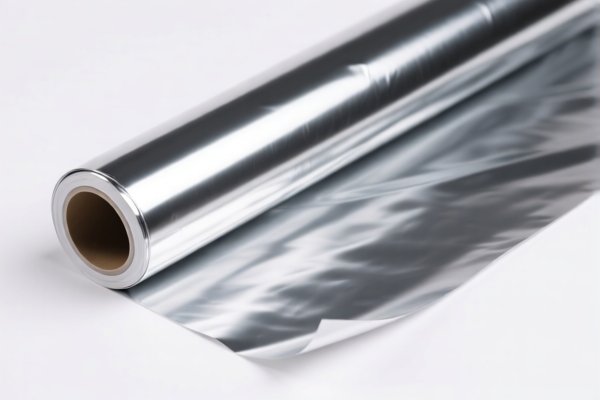

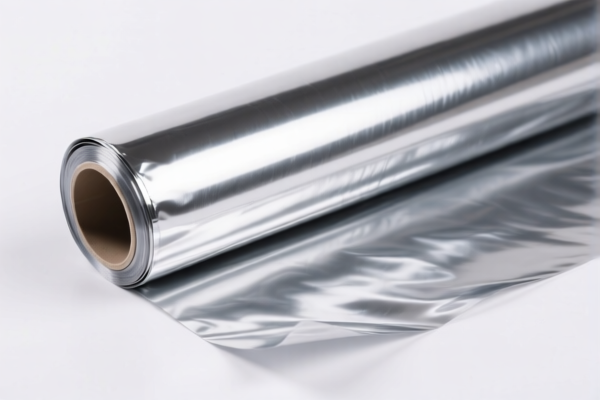
AI分析
🌞 PET Plastic Photovoltaic Film (Solar Membrane)
🌐 HS Code Classification & Customs Clearance Guide | 2026 Latest Tariff Analysis | Strategic Compliance for PV Materials
📌 I. Product Definition & Core Distinction: Is it a Battery or a Packaging Material?
"PET Solar Film" (PET Plastic Photovoltaic Film) is a tricky commodity in international trade because its classification depends entirely on its functional role and structural composition within the solar energy chain.
It is generally divided into two distinct categories: 1. As a Photovoltaic Cell Component: If the film contains active light-harnessing elements (like non-crystalline silicon), it is classified as a PV Cell. 2. As a Functional Encapsulant/Substrate: If the film is merely a passive PET plastic layer used for packaging or backing in the assembly process, it is classified as Plastic Film.
⚠️ Critical Distinction Point:
- If it has photosensitive properties (converts light to electricity) and uses non-crystalline silicon (amorphous/microcrystalline) → Classify under Chapter 85 (8541).
- If it is purely structural/insulative (PET material, no active conversion capability) → Classify under Chapter 39 (3920/3921).
📦 II. HS Code Classification Matrix (Based on Provided Data)
The following table details the four specific HS Codes derived from your data, explaining why each applies and the associated tax implications.
| HS Code | Product Description & Rationale | Key Classification Logic | Total Tax Rate (China Origin to US) |
|---|---|---|---|
8541.42.00.80 |
Other PV Cells/Modules (Non-Crystalline Silicon) | Reasoning: The film is treated as a "PV Cell" where the core function is light conversion. It explicitly excludes crystalline silicon. Suitable for thin-f电池 or related optoelectronic devices using non-crystalline structures. | 60.0% |
8541.43.00.80 |
PV Module Components/Packaging Materials | Reasoning: Treated as a "functional material used in the packaging/assembly环节 of PV modules." Although it is a film, it is categorized under PV components because of its specific application in the battery assembly process. | 60.0% |
3920.62.00.90 |
Other Plates, Sheets, Film... of PET (Not Metalized) | Reasoning: Classified strictly as a Plastic Film. Based on PET material and form factor. Specifically noted for applications like agricultural films or general plastic sheeting where it does not serve as the active PV element. | 39.2% |
3921.90.50.50 |
Other Plastic Plates, Sheets, Film... | Reasoning: Classified under "Other Plastic Plates/Sheets/Film." Fits the PET material and film form but falls into a broader "other" category for plastic sheets that don't fit the specific 3920 nuances or are treated as generic plastic sheets for industrial use. |
39.8% |
🔍 Key Insight:
-8541.42vs8541.43: Both result in a 60% tax rate. The difference is semantic: Is it the cell itself (.42) or a component of the module (.43)? In practice, for PET solar films, customs may scrutinize whether the "active layer" exists. If it's just a transparent PET backing,.43is often argued; if it has a thin-film silicon layer,.42is the default. -3920vs3921: Both result in ~39% tax rate. The difference is minor (39.2% vs 39.8%).3920is for non-cellulose sheets/films;3921is for other plastic sheets. Choose based on specific thickness, coating, or chemical composition details if available, but the tax impact is negligible (~0.6% difference).
💰 III. 2026 Tariff Breakdown & Legal Basis
✅ Applicable Country: United States (US)
✅ Country of Origin: China (CN)
✅ Effective Date: Post-November 2025 Policies
🎯 Category A: PV Cell/Module Related (8541.42.00.80 / 8541.43.00.80)
Total Tax Rate: 60.0%
| Component | Rate | Legal Basis / Explanation |
|---|---|---|
| Base Tariff | 0.0% | Standard Most Favored Nation (MFN) rate for these specific subheadings is often 0%. |
| Section 301 Tariff | 50.0% | High-tier tariff on Chinese goods under Section 301 of the Trade Act. |
| Section 122 / IEEPA | 10.0% | Additional tariff under International Emergency Economic Powers Act (or specific trade provisions). |
| TOTAL | 60.0% | High Cost Zone |
📌 Explanation:
- The 50% is the dominant cost driver.
- The 10% is a layer on top.
- No De Minimis Exemption: These goods are NOT eligible for the $800 de minimis exemption (Section 321). They must be formally declared.
🎯 Category B: General Plastic Film (3920.62.00.90 / 3921.90.50.50)
Total Tax Rate: ~39.5% (Avg 39.2% - 39.8%)
| Component | Rate (for 3920.62.00.90) |
Legal Basis / Explanation |
|---|---|---|
| Base Tariff | 4.2% | Standard MFN rate for plastic films. |
| Section 301 Tariff | 25.0% | Standard high-tier tariff for Chinese plastics. |
| Section 122 / IEEPA | 10.0% | Additional tariff. |
| TOTAL | 39.2% | Moderate Cost Zone |
📌 Explanation:
- The 4.2% base rate makes this category cheaper upfront than the 0% base for PV cells, but the 25% Section 301 applies.
- No De Minimis Exemption: Also NOT eligible for de minimis.
🛠️ IV. Customs Clearance Strategic Advice
✅ 1. Documentation Requirements (Must-Haves)
| Document | Requirement | Purpose |
|---|---|---|
| Technical Specification Sheet | ✔️ Critical | Must clearly state: Is it a PV Cell (generates electricity) or Passive Film (insulation/packaging)? |
| Composition Analysis | ✔️ Critical | Confirm presence/absence of Silicon. If Amorphous Silicon (a-Si) is present, 8541 is mandatory. |
| Commercial Invoice | ✔️ Essential | Description must match HS Code logic. e.g., "PET Solar Module Encapsulation Film" vs. "Amorphous Silicon Thin-Film PV Cell." |
| Certificate of Origin | ✔️ Essential | Proves China origin to apply correct 301/122 tariffs. |
| Product Photos | ✔️ Essential | Show layers. If you can see the "active" layer, customs will lean toward 8541. |
✅ 2. Classification Strategy (How to Optimize)
| Scenario | Recommended HS Code | Reasoning |
|---|---|---|
| Product has active silicon layer | 8541.42.00.80 |
It is a PV device. Cannot be misclassified as plastic. |
| Product is pure PET, used for PV assembly | 3920.62.00.90 or 3921.90.50.50 |
It is a material component, not the device itself. Saves ~20% tax compared to PV classification. |
| Product is used in Agriculture + Solar | 3920.62.00.90 |
Summary mentions "agricultural film" applicability. If dual-use, argue for plastic classification. |
⚠️ Risk Alert:
Misclassifying a8541PV Cell as3920Plastic Film to save 20% tax is high risk. Customs may demand technical proof. If caught, you face back taxes, penalties, and seizure. Only use3920/3921if the product is strictly passive (no light-to-electricity conversion).
✅ 3. Declaration Best Practices
-
For
8541Codes:Declare as: "Photovoltaic Cell, Amorphous Silicon, Non-Crystalline, for Solar Power Generation"
Do NOT use vague terms like "Solar Material." -
For
3920/3921Codes:Declare as: "PET Plastic Film, Non-Metalized, for Solar Module Encapsulation/Packaging"
Do NOT use terms like "PV Cell" or "Sunlight Converter."
🌍 V. Market Comparison & Cost Impact
| Market | HS Code (8541) Tax |
HS Code (3920/3921) Tax |
Difference |
|---|---|---|---|
| 🇺🇸 USA | 60.0% | 39.2% - 39.8% | ~20.5% Savings by classifying as Plastic |
| 🇨🇳 China (Export) | 0% (VAT refund applicable) | 0% (VAT refund applicable) | No difference at origin |
| 🇪🇺 EU | Varies (Check EUDR) | Varies | Similar disparity likely |
📌 Conclusion:
The 20% tax gap is significant.
- If your PET film does not generate electricity, aggressively pursue the3920or3921classification.
- If it does generate electricity, accept the854160% rate. There is no legal workaround.
📌 VI. Common Pitfalls & "Blood & Tears" Lessons
❌ Pitfall 1: Calling it "Solar Film" without specifying function.
👉 Result: Customs assigns the highest default rate or requests extensive technical review, causing 45-day delays.
❌ Pitfall 2: Misclassifying a PV Cell as "Plastic Sheet" (3920).
👉 Result: Audit Failure. Back taxes + 50% penalty. The 20% savings is not worth the risk if the product is active.
❌ Pitfall 3: Ignoring Section 122/IEEPA.
👉 Result: Under-declaring the 10% surcharge. Even with 0% base tax, the 60% total rate applies.
✅ Correct Action:
"If it converts light to current →
8541(60%). If it just covers/protects →3920/3921(39.2-39.8%). Document the chemistry!"
🎯 VII. Final Verdict & Recommendation
-
Analyze the Product: Does it contain Amorphous Silicon or other semiconductors?
- YES → Use
8541.42.00.80or8541.43.00.80. Tax: 60%. - NO (Pure PET) → Use
3920.62.00.90or3921.90.50.50. Tax: ~39.5%.
- YES → Use
-
Documentation: Ensure the Technical Data Sheet explicitly states the absence of photosensitive materials if you are claiming the lower 39% rate.
-
Compliance: Do not rely on de minimis. These are high-value industrial inputs. Pre-classification Ruling from US Customs (CBP) is highly recommended if the line is blurry.
✨ Smart Customs, Higher Margins!
💼 Accurate HS Classification is the difference between 39% profit erosion and 60% profit destruction!
用户评价
关于 HS 编码归类
协调制度(HS)是由世界海关组织(WCO)制定的国际贸易商品分类标准。全球 200 多个国家采用 HS 系统作为海关关税、贸易统计和进出口监管的基础。
每个 HS 编码遵循以下层级结构:
- 章(2 位)——商品大类(例如:第 84 章:机器和机械设备)
- 品目(4 位)——章内的更具体分类
- 子目(6 位)——国际通用细分,所有 WCO 成员国统一使用
- 本国细分(8-10 位)——各国自行扩展的细分编码,如美国 HTSUS 10 位编码
正确的 HS 编码归类对于顺利通关、准确缴纳关税和遵守贸易法规至关重要。错误归类可能导致海关延误、多缴关税或罚款。
从CN进口到US时,适用的关税税率可能包括:
- 最惠国(MFN)税率——适用于 WTO 成员国的标准关税税率
- 普通税率——适用于无贸易协定国家
- 贸易救济关税——附加关税,如 301 条款(反倾销)、232 条款(国家安全)或反补贴税
本页内容仅供参考。如需正式归类,请咨询当地海关或持牌报关代理。