PET Plastic Photovoltaic Film
CN → US| HS Code | Tariff Rate | Origin | Destination | Doc |
|---|---|---|---|---|
| 8541420080 | 60.0% | CN | US | Official Doc |
| 8541430080 | 60.0% | CN | US | Official Doc |
| 3920620090 | 39.2% | CN | US | Official Doc |
| 3921905050 | 39.8% | CN | US | Official Doc |
Product Images
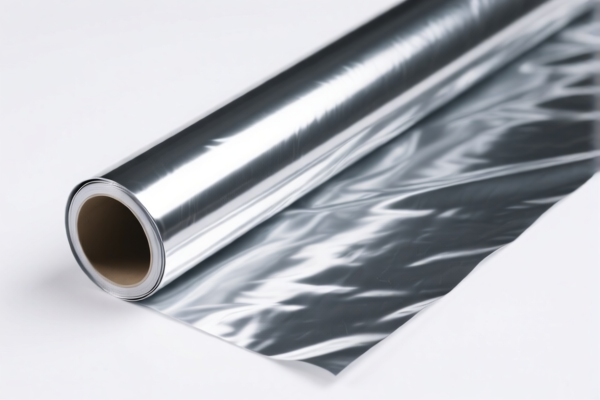
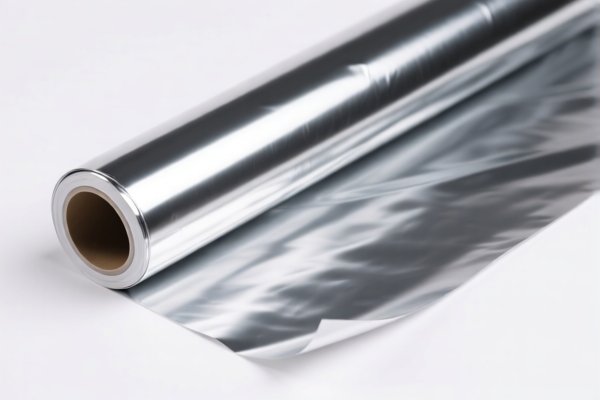

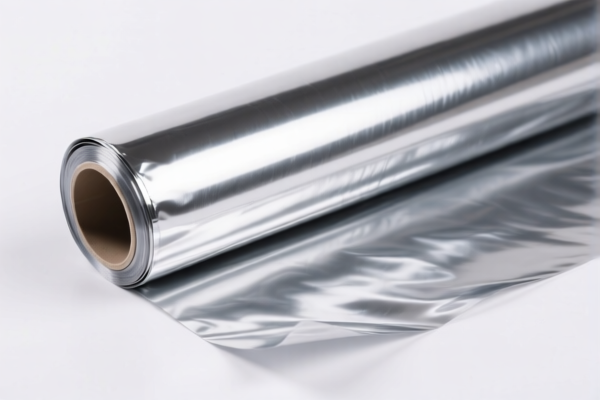
AI Analysis
🌞 PET Plastic Photovoltaic Film (Solar Membrane)
🌐 HS Code Classification & Customs Clearance Guide | 2026 Latest Tariff Analysis | Strategic Compliance for PV Materials
📌 I. Product Definition & Core Distinction: Is it a Battery or a Packaging Material?
"PET Solar Film" (PET Plastic Photovoltaic Film) is a tricky commodity in international trade because its classification depends entirely on its functional role and structural composition within the solar energy chain.
It is generally divided into two distinct categories: 1. As a Photovoltaic Cell Component: If the film contains active light-harnessing elements (like non-crystalline silicon), it is classified as a PV Cell. 2. As a Functional Encapsulant/Substrate: If the film is merely a passive PET plastic layer used for packaging or backing in the assembly process, it is classified as Plastic Film.
⚠️ Critical Distinction Point:
- If it has photosensitive properties (converts light to electricity) and uses non-crystalline silicon (amorphous/microcrystalline) → Classify under Chapter 85 (8541).
- If it is purely structural/insulative (PET material, no active conversion capability) → Classify under Chapter 39 (3920/3921).
📦 II. HS Code Classification Matrix (Based on Provided Data)
The following table details the four specific HS Codes derived from your data, explaining why each applies and the associated tax implications.
| HS Code | Product Description & Rationale | Key Classification Logic | Total Tax Rate (China Origin to US) |
|---|---|---|---|
8541.42.00.80 |
Other PV Cells/Modules (Non-Crystalline Silicon) | Reasoning: The film is treated as a "PV Cell" where the core function is light conversion. It explicitly excludes crystalline silicon. Suitable for thin-f电池 or related optoelectronic devices using non-crystalline structures. | 60.0% |
8541.43.00.80 |
PV Module Components/Packaging Materials | Reasoning: Treated as a "functional material used in the packaging/assembly环节 of PV modules." Although it is a film, it is categorized under PV components because of its specific application in the battery assembly process. | 60.0% |
3920.62.00.90 |
Other Plates, Sheets, Film... of PET (Not Metalized) | Reasoning: Classified strictly as a Plastic Film. Based on PET material and form factor. Specifically noted for applications like agricultural films or general plastic sheeting where it does not serve as the active PV element. | 39.2% |
3921.90.50.50 |
Other Plastic Plates, Sheets, Film... | Reasoning: Classified under "Other Plastic Plates/Sheets/Film." Fits the PET material and film form but falls into a broader "other" category for plastic sheets that don't fit the specific 3920 nuances or are treated as generic plastic sheets for industrial use. |
39.8% |
🔍 Key Insight:
-8541.42vs8541.43: Both result in a 60% tax rate. The difference is semantic: Is it the cell itself (.42) or a component of the module (.43)? In practice, for PET solar films, customs may scrutinize whether the "active layer" exists. If it's just a transparent PET backing,.43is often argued; if it has a thin-film silicon layer,.42is the default. -3920vs3921: Both result in ~39% tax rate. The difference is minor (39.2% vs 39.8%).3920is for non-cellulose sheets/films;3921is for other plastic sheets. Choose based on specific thickness, coating, or chemical composition details if available, but the tax impact is negligible (~0.6% difference).
💰 III. 2026 Tariff Breakdown & Legal Basis
✅ Applicable Country: United States (US)
✅ Country of Origin: China (CN)
✅ Effective Date: Post-November 2025 Policies
🎯 Category A: PV Cell/Module Related (8541.42.00.80 / 8541.43.00.80)
Total Tax Rate: 60.0%
| Component | Rate | Legal Basis / Explanation |
|---|---|---|
| Base Tariff | 0.0% | Standard Most Favored Nation (MFN) rate for these specific subheadings is often 0%. |
| Section 301 Tariff | 50.0% | High-tier tariff on Chinese goods under Section 301 of the Trade Act. |
| Section 122 / IEEPA | 10.0% | Additional tariff under International Emergency Economic Powers Act (or specific trade provisions). |
| TOTAL | 60.0% | High Cost Zone |
📌 Explanation:
- The 50% is the dominant cost driver.
- The 10% is a layer on top.
- No De Minimis Exemption: These goods are NOT eligible for the $800 de minimis exemption (Section 321). They must be formally declared.
🎯 Category B: General Plastic Film (3920.62.00.90 / 3921.90.50.50)
Total Tax Rate: ~39.5% (Avg 39.2% - 39.8%)
| Component | Rate (for 3920.62.00.90) |
Legal Basis / Explanation |
|---|---|---|
| Base Tariff | 4.2% | Standard MFN rate for plastic films. |
| Section 301 Tariff | 25.0% | Standard high-tier tariff for Chinese plastics. |
| Section 122 / IEEPA | 10.0% | Additional tariff. |
| TOTAL | 39.2% | Moderate Cost Zone |
📌 Explanation:
- The 4.2% base rate makes this category cheaper upfront than the 0% base for PV cells, but the 25% Section 301 applies.
- No De Minimis Exemption: Also NOT eligible for de minimis.
🛠️ IV. Customs Clearance Strategic Advice
✅ 1. Documentation Requirements (Must-Haves)
| Document | Requirement | Purpose |
|---|---|---|
| Technical Specification Sheet | ✔️ Critical | Must clearly state: Is it a PV Cell (generates electricity) or Passive Film (insulation/packaging)? |
| Composition Analysis | ✔️ Critical | Confirm presence/absence of Silicon. If Amorphous Silicon (a-Si) is present, 8541 is mandatory. |
| Commercial Invoice | ✔️ Essential | Description must match HS Code logic. e.g., "PET Solar Module Encapsulation Film" vs. "Amorphous Silicon Thin-Film PV Cell." |
| Certificate of Origin | ✔️ Essential | Proves China origin to apply correct 301/122 tariffs. |
| Product Photos | ✔️ Essential | Show layers. If you can see the "active" layer, customs will lean toward 8541. |
✅ 2. Classification Strategy (How to Optimize)
| Scenario | Recommended HS Code | Reasoning |
|---|---|---|
| Product has active silicon layer | 8541.42.00.80 |
It is a PV device. Cannot be misclassified as plastic. |
| Product is pure PET, used for PV assembly | 3920.62.00.90 or 3921.90.50.50 |
It is a material component, not the device itself. Saves ~20% tax compared to PV classification. |
| Product is used in Agriculture + Solar | 3920.62.00.90 |
Summary mentions "agricultural film" applicability. If dual-use, argue for plastic classification. |
⚠️ Risk Alert:
Misclassifying a8541PV Cell as3920Plastic Film to save 20% tax is high risk. Customs may demand technical proof. If caught, you face back taxes, penalties, and seizure. Only use3920/3921if the product is strictly passive (no light-to-electricity conversion).
✅ 3. Declaration Best Practices
-
For
8541Codes:Declare as: "Photovoltaic Cell, Amorphous Silicon, Non-Crystalline, for Solar Power Generation"
Do NOT use vague terms like "Solar Material." -
For
3920/3921Codes:Declare as: "PET Plastic Film, Non-Metalized, for Solar Module Encapsulation/Packaging"
Do NOT use terms like "PV Cell" or "Sunlight Converter."
🌍 V. Market Comparison & Cost Impact
| Market | HS Code (8541) Tax |
HS Code (3920/3921) Tax |
Difference |
|---|---|---|---|
| 🇺🇸 USA | 60.0% | 39.2% - 39.8% | ~20.5% Savings by classifying as Plastic |
| 🇨🇳 China (Export) | 0% (VAT refund applicable) | 0% (VAT refund applicable) | No difference at origin |
| 🇪🇺 EU | Varies (Check EUDR) | Varies | Similar disparity likely |
📌 Conclusion:
The 20% tax gap is significant.
- If your PET film does not generate electricity, aggressively pursue the3920or3921classification.
- If it does generate electricity, accept the854160% rate. There is no legal workaround.
📌 VI. Common Pitfalls & "Blood & Tears" Lessons
❌ Pitfall 1: Calling it "Solar Film" without specifying function.
👉 Result: Customs assigns the highest default rate or requests extensive technical review, causing 45-day delays.
❌ Pitfall 2: Misclassifying a PV Cell as "Plastic Sheet" (3920).
👉 Result: Audit Failure. Back taxes + 50% penalty. The 20% savings is not worth the risk if the product is active.
❌ Pitfall 3: Ignoring Section 122/IEEPA.
👉 Result: Under-declaring the 10% surcharge. Even with 0% base tax, the 60% total rate applies.
✅ Correct Action:
"If it converts light to current →
8541(60%). If it just covers/protects →3920/3921(39.2-39.8%). Document the chemistry!"
🎯 VII. Final Verdict & Recommendation
-
Analyze the Product: Does it contain Amorphous Silicon or other semiconductors?
- YES → Use
8541.42.00.80or8541.43.00.80. Tax: 60%. - NO (Pure PET) → Use
3920.62.00.90or3921.90.50.50. Tax: ~39.5%.
- YES → Use
-
Documentation: Ensure the Technical Data Sheet explicitly states the absence of photosensitive materials if you are claiming the lower 39% rate.
-
Compliance: Do not rely on de minimis. These are high-value industrial inputs. Pre-classification Ruling from US Customs (CBP) is highly recommended if the line is blurry.
✨ Smart Customs, Higher Margins!
💼 Accurate HS Classification is the difference between 39% profit erosion and 60% profit destruction!
Customer Reviews
About HS Code Classification
The Harmonized System (HS) is an internationally standardized nomenclature developed by the World Customs Organization (WCO) to classify traded products. Over 200 countries use the HS system as the basis for customs tariffs, trade statistics, and import/export regulations.
Each HS code follows a hierarchical structure:
- Chapter (2 digits) — Broad category of goods (e.g., Chapter 84: Machinery and Mechanical Appliances)
- Heading (4 digits) — More specific grouping within the chapter
- Subheading (6 digits) — Internationally standardized breakdown, used by all WCO member countries
- National subdivisions (8-10 digits) — Country-specific extensions for further classification, such as US HTSUS 10-digit codes
Correct HS code classification is essential for smooth customs clearance, accurate duty payment, and compliance with trade regulations. Misclassification can lead to customs delays, overpayment of duties, or penalties.
When importing from CN to US, the applicable tariff rates may include:
- Most-Favored-Nation (MFN) rate — The standard duty rate applied to WTO members
- General rate — Applied to countries without trade agreements
- Trade remedy duties — Additional tariffs such as Section 301 (anti-dumping), Section 232 (national security), or countervailing duties
The information provided on this page is for reference purposes only. For official classification, please consult with your local customs authority or a licensed customs broker.