PP Plastic Pipe
CN → US| HS编码 | 关税税率 | 原产国 | 目的国 | 文档 |
|---|---|---|---|---|
| 3926909989 | 22.8% | CN | US | 官方文档 |
| 3917220000 | 38.1% | CN | US | 官方文档 |
| 3926909987 | 22.8% | CN | US | 官方文档 |
| 3917290090 | 38.1% | CN | US | 官方文档 |
| 3917210000 | 38.1% | CN | US | 官方文档 |
商品图片


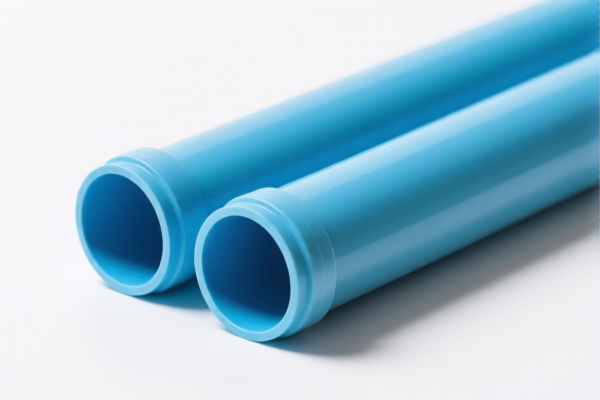

AI分析
🚰 PP Plastic Pipe (Polypropylene Pipe)
🌐 HS Code Reference & Customs Clearance Guide | 2026 Latest Tariff Analysis | Professional Compliance Strategy
📌 I. Product Definition & Classification: Do You Really Understand "PP Pipes"?
PP Plastic Pipes are thermoplastic polymers made from polypropylene. In international trade, the classification depends heavily on two factors: 1. Material Composition: Is it a pure homopolymer or a copolymer? 2. Physical Form: Is it a rigid tube (Hard Pipe) or a general plastic article?
⚠️ Critical Distinction Point:
- If the pipe is a rigid tube made of丙烯聚合物 (Propylene Polymer) → It likely falls under Chapter 3917 (Plastics Pipes).
- If the pipe is considered a general plastic article not specifically listed elsewhere → It falls under Chapter 3926 (Other plastic articles).
- Misclassification Risk: Confusing "Propylene Polymer Rigid Pipes" (3917) with "General Plastic Articles" (3926) can lead to massive tariff differences due to Section 301 and Section 122 duties.
📦 II. HS Code Classification Details (2026 Latest Authorized Reference)
Based on the provided data, here are the four possible HS Code classifications for PP Plastic Pipes:
| HS Code | Product Description (From Data) | Key Classification Criteria | Estimated Total Tax Rate |
|---|---|---|---|
3926.90.99.89 |
PP Pipe classified as plastic product, shape is other article not specifically mentioned elsewhere. | General plastic article; not classified as a specific polymer rigid pipe. | 22.8% |
3917.22.00.00 |
PP Pipe material is propylene polymer, shape is rigid pipe, fits definition of rigid pipe made of propylene polymer. | Specific: Propylene Polymer + Rigid Pipe. | 38.1% |
3926.90.99.87 |
PP Pipe material is plastic, shape is rigid pipe or tubing, use covers wire conduits, etc. | General plastic tube; used for specific purposes like wiring but not pure polymer pipe. | 22.8% |
3917.29.00.90 |
PP Pipe material is polypropylene (plastic), shape is tube, fits plastic tube classification features. | Specific: Polypropylene Tube (General category under 3917). | 38.1% |
3917.21.00.00 |
Plastic pipe material is plastic, shape is tube, fits basic classification requirements. | Specific: Plastic Tube (General category under 3917). | 38.1% |
🔍 Key Insight:
- Group A (Lower Tax ~22.8%): Codes ending in.99.89and.99.87(Chapter 3926). These are treated as "Other Plastic Articles".
- Group B (Higher Tax ~38.1%): Codes starting with3917.xx(Chapter 3917). These are treated as "Plastics Pipes/Tubes".
- Why the difference? Chapter 3917 is more specific to pipes, attracting higher "Section 301" additional duties (25%) compared to the general "Section 301" duty (7.5%) on general plastic articles in Chapter 3926.
💰 III. 2026 Latest Tariff Rate Breakdown (Including Surtaxes & Policy Additions)
✅ Applicable Country: United States (US)
✅ Origin: China (CN)
✅ Effective Time: Current Trade War Policies (Section 301 & Section 122)
🎯 1. The "Lower Tax" Route: 3926.90.99.89 & 3926.90.99.87
(Classification: General Plastic Article / Other Plastic Tube)
| Item | Detail |
|---|---|
| Base Tariff | 5.3% (MFN Rate for general plastic articles) |
| Section 301 Surtax | +7.5% (Specific rate for Chapter 3926 goods) |
| Section 122 Tariff | +10% (Specific "122 Clause" tariff applicable to certain plastics) |
| Total Rate | 22.8% |
| Tax Calculation | CIF Value × 22.8% |
| De Minimis Eligibility | ❌ No (Denied due to Section 301/122 applicability) |
| Legal Path | Base Tariff 5.3% → Section 301: 7.5% → Section 122: 10% |
📌 Explanation:
- This classification avoids the steeper 25% Section 301 rate applied to specific plastic pipes.
- However, it still carries the 10% Section 122 tariff and 7.5% Section 301 tariff.
🎯 2. The "Higher Tax" Route: 3917.22.00.00, 3917.29.00.90, 3917.21.00.00
(Classification: Propylene Polymer Rigid Pipe / Plastic Tube)
| Item | Detail |
|---|---|
| Base Tariff | 3.1% (MFN Rate for plastic pipes/tubes) |
| Section 301 Surtax | +25.0% (High-tier Section 301 duty for plastic pipes) |
| Section 122 Tariff | +10% (Specific "122 Clause" tariff applicable to certain plastics) |
| Total Rate | 38.1% |
| Tax Calculation | CIF Value × 38.1% |
| De Minimis Eligibility | ❌ No (Denied) |
| Legal Path | Base Tariff 3.1% → Section 301: 25.0% → Section 122: 10% |
📌 Explanation:
- Why so high? Chapter 3917 pipes are subject to the 25% Section 301 surtax, which is significantly higher than the 7.5% for general plastic articles.
- Material Specificity: If the pipe is clearly identified as "Propylene Polymer" (丙烯聚合物), customs may insist on Chapter 3917, leading to the 38.1% rate.
- Section 122: The 10% tariff is added on top, common to many plastic imports from China under current trade measures.
🛠️ IV. Customs Clearance Practical Advice (Real-World Pitfall Guide)
✅ 1. Documentation Checklist (Non-Negotiable)
| Document | Required? | Purpose |
|---|---|---|
| ✅ Product Spec Sheet | ✔️ | Must clearly state: "Polypropylene (PP)" vs. "Propylene Polymer". Specify if it's Homopolymer or Copolymer. |
| ✅ Material Safety Data Sheet (MSDS) | ✔️ | To confirm chemical composition and identify as PP. |
| ✅ Product Photos | ✔️ | Show the pipe's rigidity. Is it a hard pipe or flexible tubing? |
| ✅ Commercial Invoice | ✔️ | Describe as "PP Plastic Pipe" or "Plastic Tube for Wiring" depending on strategy. |
| ✅ Certificate of Origin (CO) | ✔️ | Essential for verifying Chinese origin to apply correct Section 301/122 rates. |
| ✅ Packing List | ✔️ | Detail net/gross weight and dimensions. |
✅ 2. Declaration Strategy (Key Mantras)
🔥 “Rigid Pipe? High Tax. General Article? Lower Tax. But Honesty Wins.”
| Scenario | Recommended HS Code | Risk Note |
|---|---|---|
| Pure PP Rigid Pipe (Industrial/Water) | 3917.22.00.00 or 3917.29.00.90 |
High tax (38.1%). Must prove it's a "Pipe" under Chapter 3917 notes. |
| PP Pipe for Wiring/Conduit | 3926.90.99.87 |
Lower tax (22.8%). Argue it's a "General Plastic Article" for specific use, not a standard plumbing pipe. |
| Generic PP Plastic Tube | 3926.90.99.89 |
Lower tax (22.8%). Broadest "catch-all" for plastic articles. |
| Misclassified: Calling Rigid Pipe "Article" | ⚠️ High Risk | If Customs inspects and finds it's clearly a rigid PP pipe, they will reclassify to 3917 and charge the difference + penalties. |
✅ 3. Special Case Handling
| Situation | Advice |
|---|---|
| PP Pipe with Inner Liner | If the core material is different, declare based on the primary material. |
| Extruded vs. Molded | Extruded tubes often fall under 3917. Molded parts may fall under 3926. |
| Sample for Testing | Provide a sample to a customs broker for pre-classification to avoid 38.1% surprise. |
| Mixed Containers | If mixed with other goods, ensure HS codes are clearly separated on the invoice. |
🌍 V. Global Market Comparison (2026 Latest)
| Country/Region | Recommended HS Code | Est. Tariff (China Origin) | Notes |
|---|---|---|---|
| 🇺🇸 USA | 3926.90.99.89 (Strategic) |
22.8% (vs 38.1%) | Critical to choose wisely. Section 301 + 122 applies. |
| 🇨🇳 China | 3917.22.00.00 |
Varies | Domestic trade. Import duties may differ. |
| 🇪🇺 EU | 3917.22.00.00 |
~0-6.5% | No Section 301/122. CE marking required. |
| 🇬🇧 UK | 3917.22.00.00 |
~0-6.5% | Post-Brexit rules. UKCA marking required. |
| 🇦🇺 Australia | 3917.22.00.00 |
~5% | No major trade war tariffs. |
📌 Conclusion:
- The USA is the most expensive market for PP pipes due to Section 301 (up to 25%) and Section 122 (10%).
- Strategy: If the pipe can be legally classified as a "General Plastic Article" (Chapter 3926) rather than a "Specific Pipe" (Chapter 3917), you save 15.3% in tariffs.
- Warning: This classification must be justifiable. Misuse leads to audits.
📌 VI. Common Errors & Pitfalls (Lessons Learned)
❌ Error 1: Declaring all PP pipes as 3917 without justification.
👉 Result: Unnecessarily paying 38.1% instead of 22.8%.
✅ Fix: If the pipe is used for electrical conduit or non-pressurized general purpose, consider 3926 with proper documentation.
❌ Error 2: Ignoring Section 122 Tariff.
👉 Result: Underpaying 10% on every shipment.
✅ Fix: Always include the 10% Section 122 calculation in your cost model, regardless of HS Code.
❌ Error 3: Using "Plastic Pipe" as a vague description.
👉 Result: Customs detention for lack of detail.
✅ Fix: Use precise terms: "Polypropylene (PP) Rigid Tube, 2-inch diameter, for wiring conduit."
❌ Error 4: Assuming De Minimis (800 USD) exemption applies.
👉 Result: Package seized or taxed.
✅ Fix: Section 301 and Section 122 tariffs do not allow De Minimis exemption. All shipments are subject to duty.
🎯 VII. Conclusion: Smart Classification Saves Money!
🎯 Remember the Mantra:
🔹 “Pipe vs. Article: 15.3% Difference!”
🔹 “Section 122: The Silent 10% Killer!”
🔹 “No De Minimis: Every Dollar Taxed!”
📌 Pro Tip:
- If your PP pipes are standard plumbing pipes, you likely must use 3917 (38.1%).
- If your PP pipes are conduits, casing, or general-purpose tubing, argue for 3926 (22.8%).
- Always provide technical data sheets proving the material is Polypropylene and the intended use supports your classification.
📣 Immediate Action:
📞 Consult a licensed customs broker to review your product specs.
🚀 Apply for an Advance Ruling if your volume is high to lock in the 22.8% rate safely.
✨ Precision in Classification, Profit in Clearance!
💼 Don’t let 15.3% slip away!
用户评价
关于 HS 编码归类
协调制度(HS)是由世界海关组织(WCO)制定的国际贸易商品分类标准。全球 200 多个国家采用 HS 系统作为海关关税、贸易统计和进出口监管的基础。
每个 HS 编码遵循以下层级结构:
- 章(2 位)——商品大类(例如:第 84 章:机器和机械设备)
- 品目(4 位)——章内的更具体分类
- 子目(6 位)——国际通用细分,所有 WCO 成员国统一使用
- 本国细分(8-10 位)——各国自行扩展的细分编码,如美国 HTSUS 10 位编码
正确的 HS 编码归类对于顺利通关、准确缴纳关税和遵守贸易法规至关重要。错误归类可能导致海关延误、多缴关税或罚款。
从CN进口到US时,适用的关税税率可能包括:
- 最惠国(MFN)税率——适用于 WTO 成员国的标准关税税率
- 普通税率——适用于无贸易协定国家
- 贸易救济关税——附加关税,如 301 条款(反倾销)、232 条款(国家安全)或反补贴税
本页内容仅供参考。如需正式归类,请咨询当地海关或持牌报关代理。