PP Plastic Pipe
CN → US| HS Code | Tariff Rate | Origin | Destination | Doc |
|---|---|---|---|---|
| 3926909989 | 22.8% | CN | US | Official Doc |
| 3917220000 | 38.1% | CN | US | Official Doc |
| 3926909987 | 22.8% | CN | US | Official Doc |
| 3917290090 | 38.1% | CN | US | Official Doc |
| 3917210000 | 38.1% | CN | US | Official Doc |
Product Images


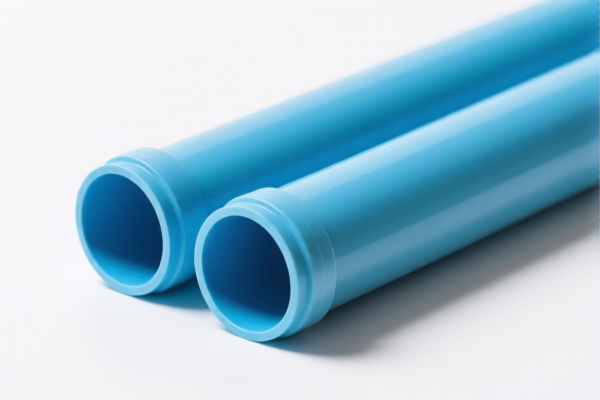

AI Analysis
🚰 PP Plastic Pipe (Polypropylene Pipe)
🌐 HS Code Reference & Customs Clearance Guide | 2026 Latest Tariff Analysis | Professional Compliance Strategy
📌 I. Product Definition & Classification: Do You Really Understand "PP Pipes"?
PP Plastic Pipes are thermoplastic polymers made from polypropylene. In international trade, the classification depends heavily on two factors: 1. Material Composition: Is it a pure homopolymer or a copolymer? 2. Physical Form: Is it a rigid tube (Hard Pipe) or a general plastic article?
⚠️ Critical Distinction Point:
- If the pipe is a rigid tube made of丙烯聚合物 (Propylene Polymer) → It likely falls under Chapter 3917 (Plastics Pipes).
- If the pipe is considered a general plastic article not specifically listed elsewhere → It falls under Chapter 3926 (Other plastic articles).
- Misclassification Risk: Confusing "Propylene Polymer Rigid Pipes" (3917) with "General Plastic Articles" (3926) can lead to massive tariff differences due to Section 301 and Section 122 duties.
📦 II. HS Code Classification Details (2026 Latest Authorized Reference)
Based on the provided data, here are the four possible HS Code classifications for PP Plastic Pipes:
| HS Code | Product Description (From Data) | Key Classification Criteria | Estimated Total Tax Rate |
|---|---|---|---|
3926.90.99.89 |
PP Pipe classified as plastic product, shape is other article not specifically mentioned elsewhere. | General plastic article; not classified as a specific polymer rigid pipe. | 22.8% |
3917.22.00.00 |
PP Pipe material is propylene polymer, shape is rigid pipe, fits definition of rigid pipe made of propylene polymer. | Specific: Propylene Polymer + Rigid Pipe. | 38.1% |
3926.90.99.87 |
PP Pipe material is plastic, shape is rigid pipe or tubing, use covers wire conduits, etc. | General plastic tube; used for specific purposes like wiring but not pure polymer pipe. | 22.8% |
3917.29.00.90 |
PP Pipe material is polypropylene (plastic), shape is tube, fits plastic tube classification features. | Specific: Polypropylene Tube (General category under 3917). | 38.1% |
3917.21.00.00 |
Plastic pipe material is plastic, shape is tube, fits basic classification requirements. | Specific: Plastic Tube (General category under 3917). | 38.1% |
🔍 Key Insight:
- Group A (Lower Tax ~22.8%): Codes ending in.99.89and.99.87(Chapter 3926). These are treated as "Other Plastic Articles".
- Group B (Higher Tax ~38.1%): Codes starting with3917.xx(Chapter 3917). These are treated as "Plastics Pipes/Tubes".
- Why the difference? Chapter 3917 is more specific to pipes, attracting higher "Section 301" additional duties (25%) compared to the general "Section 301" duty (7.5%) on general plastic articles in Chapter 3926.
💰 III. 2026 Latest Tariff Rate Breakdown (Including Surtaxes & Policy Additions)
✅ Applicable Country: United States (US)
✅ Origin: China (CN)
✅ Effective Time: Current Trade War Policies (Section 301 & Section 122)
🎯 1. The "Lower Tax" Route: 3926.90.99.89 & 3926.90.99.87
(Classification: General Plastic Article / Other Plastic Tube)
| Item | Detail |
|---|---|
| Base Tariff | 5.3% (MFN Rate for general plastic articles) |
| Section 301 Surtax | +7.5% (Specific rate for Chapter 3926 goods) |
| Section 122 Tariff | +10% (Specific "122 Clause" tariff applicable to certain plastics) |
| Total Rate | 22.8% |
| Tax Calculation | CIF Value × 22.8% |
| De Minimis Eligibility | ❌ No (Denied due to Section 301/122 applicability) |
| Legal Path | Base Tariff 5.3% → Section 301: 7.5% → Section 122: 10% |
📌 Explanation:
- This classification avoids the steeper 25% Section 301 rate applied to specific plastic pipes.
- However, it still carries the 10% Section 122 tariff and 7.5% Section 301 tariff.
🎯 2. The "Higher Tax" Route: 3917.22.00.00, 3917.29.00.90, 3917.21.00.00
(Classification: Propylene Polymer Rigid Pipe / Plastic Tube)
| Item | Detail |
|---|---|
| Base Tariff | 3.1% (MFN Rate for plastic pipes/tubes) |
| Section 301 Surtax | +25.0% (High-tier Section 301 duty for plastic pipes) |
| Section 122 Tariff | +10% (Specific "122 Clause" tariff applicable to certain plastics) |
| Total Rate | 38.1% |
| Tax Calculation | CIF Value × 38.1% |
| De Minimis Eligibility | ❌ No (Denied) |
| Legal Path | Base Tariff 3.1% → Section 301: 25.0% → Section 122: 10% |
📌 Explanation:
- Why so high? Chapter 3917 pipes are subject to the 25% Section 301 surtax, which is significantly higher than the 7.5% for general plastic articles.
- Material Specificity: If the pipe is clearly identified as "Propylene Polymer" (丙烯聚合物), customs may insist on Chapter 3917, leading to the 38.1% rate.
- Section 122: The 10% tariff is added on top, common to many plastic imports from China under current trade measures.
🛠️ IV. Customs Clearance Practical Advice (Real-World Pitfall Guide)
✅ 1. Documentation Checklist (Non-Negotiable)
| Document | Required? | Purpose |
|---|---|---|
| ✅ Product Spec Sheet | ✔️ | Must clearly state: "Polypropylene (PP)" vs. "Propylene Polymer". Specify if it's Homopolymer or Copolymer. |
| ✅ Material Safety Data Sheet (MSDS) | ✔️ | To confirm chemical composition and identify as PP. |
| ✅ Product Photos | ✔️ | Show the pipe's rigidity. Is it a hard pipe or flexible tubing? |
| ✅ Commercial Invoice | ✔️ | Describe as "PP Plastic Pipe" or "Plastic Tube for Wiring" depending on strategy. |
| ✅ Certificate of Origin (CO) | ✔️ | Essential for verifying Chinese origin to apply correct Section 301/122 rates. |
| ✅ Packing List | ✔️ | Detail net/gross weight and dimensions. |
✅ 2. Declaration Strategy (Key Mantras)
🔥 “Rigid Pipe? High Tax. General Article? Lower Tax. But Honesty Wins.”
| Scenario | Recommended HS Code | Risk Note |
|---|---|---|
| Pure PP Rigid Pipe (Industrial/Water) | 3917.22.00.00 or 3917.29.00.90 |
High tax (38.1%). Must prove it's a "Pipe" under Chapter 3917 notes. |
| PP Pipe for Wiring/Conduit | 3926.90.99.87 |
Lower tax (22.8%). Argue it's a "General Plastic Article" for specific use, not a standard plumbing pipe. |
| Generic PP Plastic Tube | 3926.90.99.89 |
Lower tax (22.8%). Broadest "catch-all" for plastic articles. |
| Misclassified: Calling Rigid Pipe "Article" | ⚠️ High Risk | If Customs inspects and finds it's clearly a rigid PP pipe, they will reclassify to 3917 and charge the difference + penalties. |
✅ 3. Special Case Handling
| Situation | Advice |
|---|---|
| PP Pipe with Inner Liner | If the core material is different, declare based on the primary material. |
| Extruded vs. Molded | Extruded tubes often fall under 3917. Molded parts may fall under 3926. |
| Sample for Testing | Provide a sample to a customs broker for pre-classification to avoid 38.1% surprise. |
| Mixed Containers | If mixed with other goods, ensure HS codes are clearly separated on the invoice. |
🌍 V. Global Market Comparison (2026 Latest)
| Country/Region | Recommended HS Code | Est. Tariff (China Origin) | Notes |
|---|---|---|---|
| 🇺🇸 USA | 3926.90.99.89 (Strategic) |
22.8% (vs 38.1%) | Critical to choose wisely. Section 301 + 122 applies. |
| 🇨🇳 China | 3917.22.00.00 |
Varies | Domestic trade. Import duties may differ. |
| 🇪🇺 EU | 3917.22.00.00 |
~0-6.5% | No Section 301/122. CE marking required. |
| 🇬🇧 UK | 3917.22.00.00 |
~0-6.5% | Post-Brexit rules. UKCA marking required. |
| 🇦🇺 Australia | 3917.22.00.00 |
~5% | No major trade war tariffs. |
📌 Conclusion:
- The USA is the most expensive market for PP pipes due to Section 301 (up to 25%) and Section 122 (10%).
- Strategy: If the pipe can be legally classified as a "General Plastic Article" (Chapter 3926) rather than a "Specific Pipe" (Chapter 3917), you save 15.3% in tariffs.
- Warning: This classification must be justifiable. Misuse leads to audits.
📌 VI. Common Errors & Pitfalls (Lessons Learned)
❌ Error 1: Declaring all PP pipes as 3917 without justification.
👉 Result: Unnecessarily paying 38.1% instead of 22.8%.
✅ Fix: If the pipe is used for electrical conduit or non-pressurized general purpose, consider 3926 with proper documentation.
❌ Error 2: Ignoring Section 122 Tariff.
👉 Result: Underpaying 10% on every shipment.
✅ Fix: Always include the 10% Section 122 calculation in your cost model, regardless of HS Code.
❌ Error 3: Using "Plastic Pipe" as a vague description.
👉 Result: Customs detention for lack of detail.
✅ Fix: Use precise terms: "Polypropylene (PP) Rigid Tube, 2-inch diameter, for wiring conduit."
❌ Error 4: Assuming De Minimis (800 USD) exemption applies.
👉 Result: Package seized or taxed.
✅ Fix: Section 301 and Section 122 tariffs do not allow De Minimis exemption. All shipments are subject to duty.
🎯 VII. Conclusion: Smart Classification Saves Money!
🎯 Remember the Mantra:
🔹 “Pipe vs. Article: 15.3% Difference!”
🔹 “Section 122: The Silent 10% Killer!”
🔹 “No De Minimis: Every Dollar Taxed!”
📌 Pro Tip:
- If your PP pipes are standard plumbing pipes, you likely must use 3917 (38.1%).
- If your PP pipes are conduits, casing, or general-purpose tubing, argue for 3926 (22.8%).
- Always provide technical data sheets proving the material is Polypropylene and the intended use supports your classification.
📣 Immediate Action:
📞 Consult a licensed customs broker to review your product specs.
🚀 Apply for an Advance Ruling if your volume is high to lock in the 22.8% rate safely.
✨ Precision in Classification, Profit in Clearance!
💼 Don’t let 15.3% slip away!
Customer Reviews
About HS Code Classification
The Harmonized System (HS) is an internationally standardized nomenclature developed by the World Customs Organization (WCO) to classify traded products. Over 200 countries use the HS system as the basis for customs tariffs, trade statistics, and import/export regulations.
Each HS code follows a hierarchical structure:
- Chapter (2 digits) — Broad category of goods (e.g., Chapter 84: Machinery and Mechanical Appliances)
- Heading (4 digits) — More specific grouping within the chapter
- Subheading (6 digits) — Internationally standardized breakdown, used by all WCO member countries
- National subdivisions (8-10 digits) — Country-specific extensions for further classification, such as US HTSUS 10-digit codes
Correct HS code classification is essential for smooth customs clearance, accurate duty payment, and compliance with trade regulations. Misclassification can lead to customs delays, overpayment of duties, or penalties.
When importing from CN to US, the applicable tariff rates may include:
- Most-Favored-Nation (MFN) rate — The standard duty rate applied to WTO members
- General rate — Applied to countries without trade agreements
- Trade remedy duties — Additional tariffs such as Section 301 (anti-dumping), Section 232 (national security), or countervailing duties
The information provided on this page is for reference purposes only. For official classification, please consult with your local customs authority or a licensed customs broker.