PVC Anti UV Profile
CN → US| HS编码 | 关税税率 | 原产国 | 目的国 | 文档 |
|---|---|---|---|---|
| 3921121100 | 39.2% | CN | US | 官方文档 |
| 6306192110 | 22.6% | CN | US | 官方文档 |
| 5903102090 | 35.0% | CN | US | 官方文档 |
| 3921121500 | 41.5% | CN | US | 官方文档 |
| 6306120000 | 18.8% | CN | US | 官方文档 |
商品图片
AI分析
🛡️ PVC Anti UV Profile (Textiles & Coated Materials)
🌐 HS Code Reference & Customs Clearance Guide | 2026 Latest Tariff Analysis | Professional Clearance Strategy
📌 I. Product Definition: What is "PVC Anti UV Profile"?
In international trade, "PVC Anti UV Profile" is not a single, standardized commodity. It is a functional description that can fall under multiple Harmonized System (HS) codes depending on its physical form, composition, and primary use.
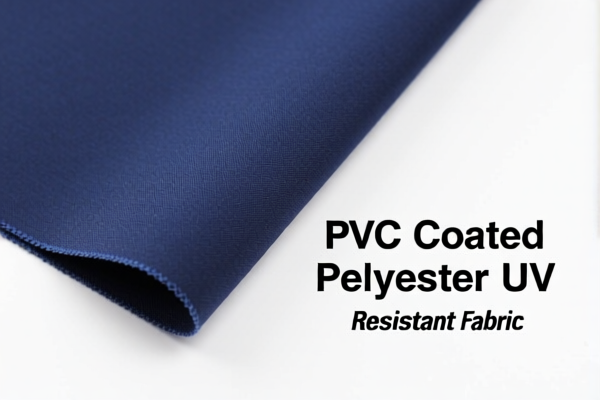
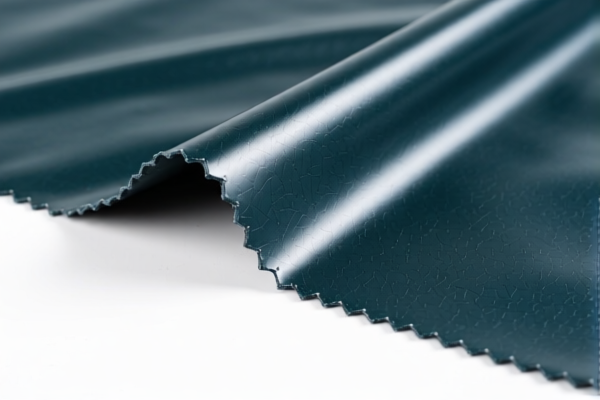
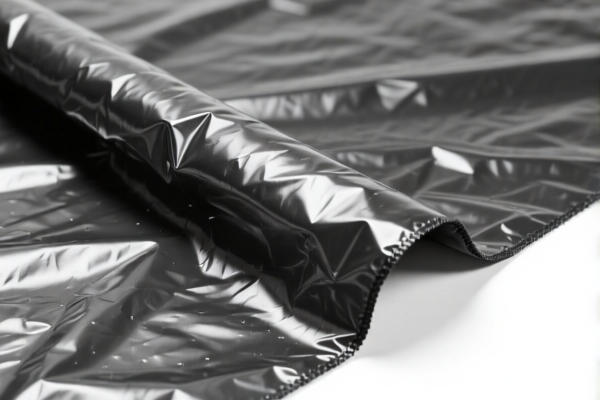
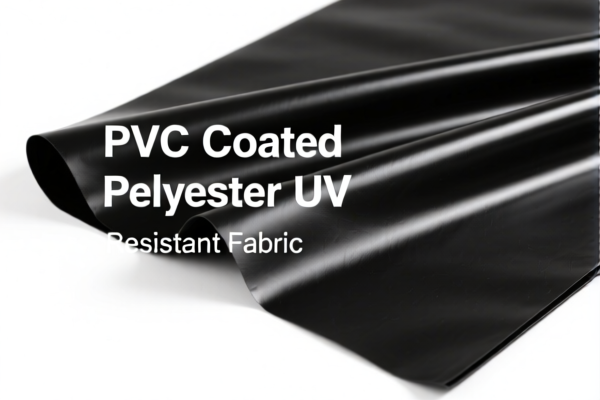
The core characteristic is: A textile or fabric material coated/impregnated with Polyvinyl Chloride (PVC) to provide UV resistance.
⚠️ Key Classification Distinction:
- Is it a finished tarpaulin/awning used directly? → Likely Chapter 63.
- Is it a composite material (PVC + Textile) primarily defined by the plastic coating? → Likely Chapter 39.
- Is it a fabric coated with PVC where the fabric is the essential character? → Likely Chapter 59.
📦 II. HS Code Classification Details (2026 Latest Tariff Authority Comparison)
Based on the specific characteristics provided in the data, here are the five possible HS Code classifications for "PVC Anti UV Profile."
| HS Code | Product Description | Application Scenario | Basis for Classification |
|---|---|---|---|
3921.12.11.00 |
PVC-coated anti-UV textile, material: PVC, form: Textile (Composite Material). Matches the feature of polyvinyl polymer composite with textile material. | Generic PVC-coated textile, composite sheets, industrial linings. | Primary characteristic is PVC composite. |
6306.19.21.10 |
PVC-coated anti-UV textile, form: Tarpaulin/Shading Material, material inferred as synthetic fiber, use: UV shading. | Outdoor awnings, shade sails, tarpaulins, sunshades. | Primary characteristic is End-use as shading/tarpaulin. |
5903.10.20.90 |
PVC-coated anti-UV textile, material: PVC, form: Coated Textile, matches impregnation/coating features. | General coated fabrics, PVC-laminated textiles for various uses. | Primary characteristic is Coating/Impregnation process. |
3921.12.15.00 |
PVC-coated anti-UV textile, material: PVC, form: Textile, matches the definition of polyvinyl polymer combined with textile material. | Similar to 3921.12.11.00, but different specific subheading nuance. |
Primary characteristic is PVC-Textile Combination. |
6306.12.00.00 |
PVC-coated anti-UV textile, form: Textile, use: Anti-UV, material: PVC, logically inferred as made of synthetic fibers. | Specific anti-UV textile products, synthetic fiber-based shading materials. | Primary characteristic is Synthetic Fiber + Anti-UV Use. |
🔍 Key Reminder:
- If the product is finished as an awning, tarp, or shade,6306(Chapter 63) is often more appropriate.
- If the product is a raw coated fabric or composite sheet for further manufacturing,3921or5903(Chapters 39/59) is more likely.
- Misclassification Risk: Declaring a finished awning as "coated fabric" (5903) may result in a higher tariff burden due to additional duties.
💰 III. 2026 Latest Tariff Rate Breakdown (Including Additional Duties)
✅ Applicable Country: United States (US)
✅ Country of Origin: China (CN)
✅ Effective Date: From November 10, 2025 (including subsequent imports)
🎯 1. 3921.12.11.00 – PVC Composite Textile
| Item | Content |
|---|---|
| Base Duty Rate | 4.2% (ad valorem) |
| Additional Duty (Section 301) | +25.0% |
| 122 Clause Duty (IEEPA) | +10.0% |
| Total Tax Rate | 39.2% |
| Tax Calculation | CIF Value × 39.2% |
| De Minimis Exemption | ❌ Not Eligible (deny_de_minimis) |
| Legal Basis Path | USITC:3921.12.11.00 → SECTION301:25% → IEEPA:122_CLAUSE:10% |
📌 Explanation:
- The 25% is the standard Section 301 tariff on Chinese goods.
- The 10% is the "122 Clause" tariff (part of IEEPA measures targeting specific Chinese imports).
- Total 39.2% is a significant cost factor.
🎯 2. 6306.19.21.10 – Tarpaulin/Shading Material
| Item | Content |
|---|---|
| Base Duty Rate | 5.1% (ad valorem) |
| Additional Duty (Section 301) | +7.5% |
| 122 Clause Duty (IEEPA) | +10.0% |
| Total Tax Rate | 22.6% |
| Tax Calculation | CIF Value × 22.6% |
| De Minimis Exemption | ❌ Not Eligible (deny_de_minimis) |
| Legal Basis Path | USITC:6306.19.21.10 → SECTION301:7.5% → IEEPA:122_CLAUSE:10% |
📌 Note:
- This classification has a much lower additional duty (7.5%) compared to other PVC composites.
- If your product qualifies as a tarpaulin or shading material, this is the most tax-efficient option.
- Ensure the product description explicitly mentions "shading," "awning," or "tarpaulin" to support this classification.
🎯 3. 5903.10.20.90 – Coated Textile (PVC)
| Item | Content |
|---|---|
| Base Duty Rate | 0.0% (ad valorem) |
| Additional Duty (Section 301) | +25.0% |
| 122 Clause Duty (IEEPA) | +10.0% |
| Total Tax Rate | 35.0% |
| Tax Calculation | CIF Value × 35.0% |
| De Minimis Exemption | ❌ Not Eligible (deny_de_minimis) |
| Legal Basis Path | USITC:5903.10.20.90 → SECTION301:25% → IEEPA:122_CLAUSE:10% |
📌 Explanation:
- While the base duty is 0%, the 25% Section 301 duty brings the total to 35.0%.
- This is a middle-ground option. Suitable if the product is a general coated fabric not specifically classified as a composite sheet (3921) or finished tarpaulin (6306).
🎯 4. 3921.12.15.00 – PVC-Textile Combination
| Item | Content |
|---|---|
| Base Duty Rate | 6.5% (ad valorem) |
| Additional Duty (Section 301) | +25.0% |
| 122 Clause Duty (IEEPA) | +10.0% |
| Total Tax Rate | 41.5% |
| Tax Calculation | CIF Value × 41.5% |
| De Minimis Exemption | ❌ Not Eligible (deny_de_minimis) |
| Legal Basis Path | USITC:3921.12.15.00 → SECTION301:25% → IEEPA:122_CLAUSE:10% |
📌 Note:
- This is the highest tax rate at 41.5%.
- Avoid this classification unless the product strictly fits the specific subheading definition that does not allow for6306or5903.
🎯 5. 6306.12.00.00 – Synthetic Fiber Anti-UV Textile
| Item | Content |
|---|---|
| Base Duty Rate | 8.8% (ad valorem) |
| Additional Duty (Section 301) | 0.0% |
| 122 Clause Duty (IEEPA) | +10.0% |
| Total Tax Rate | 18.8% |
| Tax Calculation | CIF Value × 18.8% |
| De Minimis Exemption | ❌ Not Eligible (deny_de_minimis) |
| Legal Basis Path | USITC:6306.12.00.00 → SECTION301:0% → IEEPA:122_CLAUSE:10% |
📌 Critical Advantage:
- This is the lowest total tax rate at 18.8%.
- Condition: The product must be classified as 6306.12 (Textile products of synthetic fibers, other than those of 6306.11), and no Section 301 additional duty (0%) applies to this specific subheading.
- Risk: Customs may challenge this if the PVC coating is deemed the essential character. You must prove it is primarily a synthetic fiber textile with anti-UV use, not a PVC composite.
🛠️ IV. Customs Clearance Practical Advice (Battle-Tested Pitfall Guide)
✅ 1. Essential Documentation Checklist
| Document | Required? | Explanation |
|---|---|---|
| ✅ Product Specification Sheet | ✔️ | Must detail: Material composition (PVC%, Fiber type), Coating weight, UV resistance rating, Dimensions. |
| ✅ Product Photos (Clear & Detailed) | ✔️ | Show texture, coating surface, edge finishes, and any labels/markings. |
| ✅ Commercial Invoice | ✔️ | Description must be precise: e.g., "PVC-Coated Synthetic Fiber Shading Fabric, Anti-UV, 300gsm." Avoid vague terms like "Profile." |
| ✅ Packing List | ✔️ | Clearly state net/gross weight and number of rolls/sheets. |
| ✅ Certificate of Origin (CO) | ✔️ | Required for origin verification (China). |
| ✅ Third-Party Test Report | ✔️ | UV resistance test results (e.g., ISO 4892) can support the "Anti-UV" claim and specific use case. |
✅ 2. Declaration Tips (Key Strategy)
🔥 "Define Use First, Then Character!"
| Scenario | Correct Declaration | Incorrect Practice |
|---|---|---|
| Finished Awning/Shade | Use 6306.19.21.10 (22.6%) or 6306.12.00.00 (18.8%). Describe as "Outdoor Shading Material." |
Declaring as "Coated Fabric" (5903) → Higher tax (35%). |
| Raw Coated Roll | Use 3921.12.11.00 (39.2%) or 5903.10.20.90 (35.0%). Describe as "PVC-Coated Composite Fabric." |
Declaring as "Finished Product" → Risk of misclassification penalty. |
| High-Value Anti-UV Textile | Attempt to classify under 6306.12.00.00 (18.8%) if it is primarily synthetic fiber. |
Blindly using 3921 (41.5%) → Overpaying tax. |
✅ 3. Special Handling
| Situation | Recommendation |
|---|---|
| OEM Custom Orders | Provide design specs and customer POs. Clarify if it's a "component" or "finished good." |
| Mixed Containers | If shipping with other goods, ensure accurate segregation. Misdeclaring "Profiles" as general goods can lead to audits. |
| Dispute on "Essential Character" | If Customs challenges 6306 vs 3921, provide technical data showing the textile fiber provides the structural integrity, while PVC is just a coating. |
| De Minimis (Section 321) | ❌ Not Available. All HS Codes listed above are denied de minimis for Chinese origin goods. Each shipment must be formally entered. |
🌍 V. Global Market Clearance Comparison (2026 Latest)
| Country/Region | Recommended HS Code | Tariff Rate (China Origin) | Certification Requirements | Notes |
|---|---|---|---|---|
| 🇺🇸 USA | 6306.12.00.00 or 6306.19.21.10 |
18.8% - 22.6% | None specific for textiles | Highest Priority: Choose 6306 to minimize Section 301 impact. |
| 🇨🇳 China | 5903.10.20.90 |
5% - 10% (Varies) | CCC (if applicable) | Domestic consumption has lower barriers. |
| 🇪🇺 EU | 5903.10.20.90 |
0% - 4% | CE (if consumer goods) | No anti-dumping on PVC textiles generally. |
| 🇦🇺 Australia | 5903.10.20.90 |
5% | RCM (if electrical components involved) | Low tariff environment. |
| 🇯🇵 Japan | 5903.10.20.90 |
0% - 3% | PSE (if applicable) | FTA benefits may apply with CPTPP. |
📌 Conclusion:
- USA is the most challenging market due to Section 301 and IEEPA duties.
- Strategy: Aim for Chapter 63 (6306) to benefit from 0% Section 301 on some subheadings (like6306.12), resulting in a 18.8% total rate, versus 39.2%+ for Chapter 39.
- Do not assume all PVC-coated textiles are treated equally. Product Use is the key to lower tariffs in the US.
📌 VI. Common Mistakes & Pitfalls (Lessons Learned)
❌ Mistake 1: Calling it "PVC Profile" (generic term)
👉 Consequence: Customs may default to the highest duty rate or demand extensive clarification, causing delays.
Fix: Use precise terms like "PVC-Coated Synthetic Shading Fabric."
❌ Mistake 2: Declaring as "Textile Accessories" (6307)
👉 Consequence: If it's a raw material or composite, this is incorrect and may be flagged for duty evasion.
Fix: Ensure the HS Code matches the primary material/use.
❌ Mistake 3: Ignoring the "122 Clause"
👉 Consequence: Underestimating costs. The 10% IEEPA duty applies to almost all Chinese textile/PVC imports.
Fix: Budget for Base + 301 + 122.
❌ Mistake 4: Using "De Minimis" for B2B Shipments
👉 Consequence: Package seized or returned.
Fix: Formal Entry is required. No de minimis for Chinese PVC/Textile goods.
🎯 VII. Conclusion: Precise Classification, Cost Control!
🎯 Key Takeaway:
🔹 "Use Determines Duty, Material Determines Code."
🔹 Chapter 63 (6306) is your best friend for lower tariffs (18.8% - 22.6%) if the product is a shading/tarpaulin item.
🔹 Chapter 39 (3921) and 5903 are riskier (35% - 41.5%) due to higher Section 301 duties.
📌 Pro Tip:
If you are exporting to the USA, consider:
1. Product Design: If possible, market the item as a "Shading Textile" (6306) rather than a "PVC Composite" (3921).
2. Pre-Ruling: Apply for an Advance Ruling from US Customs (CBP) to lock in the correct HS Code and duty rate.
3. Supply Chain: Explore sourcing from non-China countries (Vietnam, Mexico) for IEEPA/Section 301 exemptions.
📣 Immediate Action:
📞 Contact a licensed customs broker to review your product samples.
📄 Prepare technical datasheets highlighting "Anti-UV" and "Synthetic Fiber" content.
🚀 Optimize your HS Code selection to save 10-20% in duty costs!
✨ Professional clearance starts with accurate classification!
💼 Every percentage point counts in international trade!
用户评价
关于 HS 编码归类
协调制度(HS)是由世界海关组织(WCO)制定的国际贸易商品分类标准。全球 200 多个国家采用 HS 系统作为海关关税、贸易统计和进出口监管的基础。
每个 HS 编码遵循以下层级结构:
- 章(2 位)——商品大类(例如:第 84 章:机器和机械设备)
- 品目(4 位)——章内的更具体分类
- 子目(6 位)——国际通用细分,所有 WCO 成员国统一使用
- 本国细分(8-10 位)——各国自行扩展的细分编码,如美国 HTSUS 10 位编码
正确的 HS 编码归类对于顺利通关、准确缴纳关税和遵守贸易法规至关重要。错误归类可能导致海关延误、多缴关税或罚款。
从CN进口到US时,适用的关税税率可能包括:
- 最惠国(MFN)税率——适用于 WTO 成员国的标准关税税率
- 普通税率——适用于无贸易协定国家
- 贸易救济关税——附加关税,如 301 条款(反倾销)、232 条款(国家安全)或反补贴税
本页内容仅供参考。如需正式归类,请咨询当地海关或持牌报关代理。