PVC Anti UV Profile
CN → US| HS Code | Tariff Rate | Origin | Destination | Doc |
|---|---|---|---|---|
| 3921121100 | 39.2% | CN | US | Official Doc |
| 6306192110 | 22.6% | CN | US | Official Doc |
| 5903102090 | 35.0% | CN | US | Official Doc |
| 3921121500 | 41.5% | CN | US | Official Doc |
| 6306120000 | 18.8% | CN | US | Official Doc |
Product Images
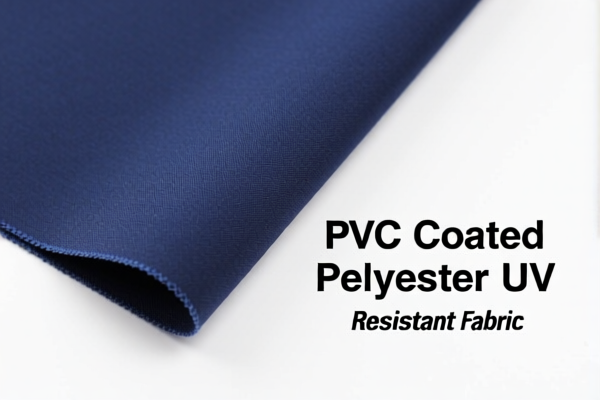
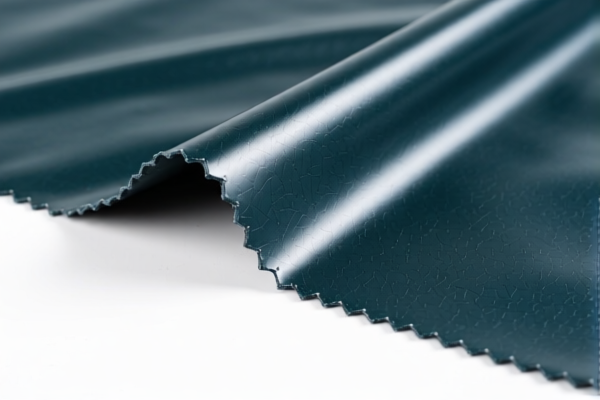
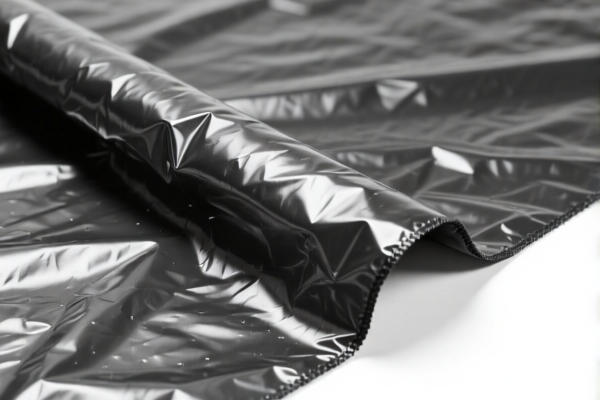
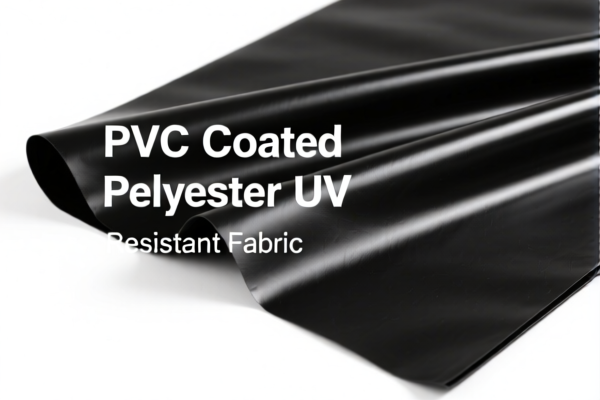
AI Analysis
🛡️ PVC Anti UV Profile (Textiles & Coated Materials)
🌐 HS Code Reference & Customs Clearance Guide | 2026 Latest Tariff Analysis | Professional Clearance Strategy
📌 I. Product Definition: What is "PVC Anti UV Profile"?
In international trade, "PVC Anti UV Profile" is not a single, standardized commodity. It is a functional description that can fall under multiple Harmonized System (HS) codes depending on its physical form, composition, and primary use.
The core characteristic is: A textile or fabric material coated/impregnated with Polyvinyl Chloride (PVC) to provide UV resistance.
⚠️ Key Classification Distinction:
- Is it a finished tarpaulin/awning used directly? → Likely Chapter 63.
- Is it a composite material (PVC + Textile) primarily defined by the plastic coating? → Likely Chapter 39.
- Is it a fabric coated with PVC where the fabric is the essential character? → Likely Chapter 59.
📦 II. HS Code Classification Details (2026 Latest Tariff Authority Comparison)
Based on the specific characteristics provided in the data, here are the five possible HS Code classifications for "PVC Anti UV Profile."
| HS Code | Product Description | Application Scenario | Basis for Classification |
|---|---|---|---|
3921.12.11.00 |
PVC-coated anti-UV textile, material: PVC, form: Textile (Composite Material). Matches the feature of polyvinyl polymer composite with textile material. | Generic PVC-coated textile, composite sheets, industrial linings. | Primary characteristic is PVC composite. |
6306.19.21.10 |
PVC-coated anti-UV textile, form: Tarpaulin/Shading Material, material inferred as synthetic fiber, use: UV shading. | Outdoor awnings, shade sails, tarpaulins, sunshades. | Primary characteristic is End-use as shading/tarpaulin. |
5903.10.20.90 |
PVC-coated anti-UV textile, material: PVC, form: Coated Textile, matches impregnation/coating features. | General coated fabrics, PVC-laminated textiles for various uses. | Primary characteristic is Coating/Impregnation process. |
3921.12.15.00 |
PVC-coated anti-UV textile, material: PVC, form: Textile, matches the definition of polyvinyl polymer combined with textile material. | Similar to 3921.12.11.00, but different specific subheading nuance. |
Primary characteristic is PVC-Textile Combination. |
6306.12.00.00 |
PVC-coated anti-UV textile, form: Textile, use: Anti-UV, material: PVC, logically inferred as made of synthetic fibers. | Specific anti-UV textile products, synthetic fiber-based shading materials. | Primary characteristic is Synthetic Fiber + Anti-UV Use. |
🔍 Key Reminder:
- If the product is finished as an awning, tarp, or shade,6306(Chapter 63) is often more appropriate.
- If the product is a raw coated fabric or composite sheet for further manufacturing,3921or5903(Chapters 39/59) is more likely.
- Misclassification Risk: Declaring a finished awning as "coated fabric" (5903) may result in a higher tariff burden due to additional duties.
💰 III. 2026 Latest Tariff Rate Breakdown (Including Additional Duties)
✅ Applicable Country: United States (US)
✅ Country of Origin: China (CN)
✅ Effective Date: From November 10, 2025 (including subsequent imports)
🎯 1. 3921.12.11.00 – PVC Composite Textile
| Item | Content |
|---|---|
| Base Duty Rate | 4.2% (ad valorem) |
| Additional Duty (Section 301) | +25.0% |
| 122 Clause Duty (IEEPA) | +10.0% |
| Total Tax Rate | 39.2% |
| Tax Calculation | CIF Value × 39.2% |
| De Minimis Exemption | ❌ Not Eligible (deny_de_minimis) |
| Legal Basis Path | USITC:3921.12.11.00 → SECTION301:25% → IEEPA:122_CLAUSE:10% |
📌 Explanation:
- The 25% is the standard Section 301 tariff on Chinese goods.
- The 10% is the "122 Clause" tariff (part of IEEPA measures targeting specific Chinese imports).
- Total 39.2% is a significant cost factor.
🎯 2. 6306.19.21.10 – Tarpaulin/Shading Material
| Item | Content |
|---|---|
| Base Duty Rate | 5.1% (ad valorem) |
| Additional Duty (Section 301) | +7.5% |
| 122 Clause Duty (IEEPA) | +10.0% |
| Total Tax Rate | 22.6% |
| Tax Calculation | CIF Value × 22.6% |
| De Minimis Exemption | ❌ Not Eligible (deny_de_minimis) |
| Legal Basis Path | USITC:6306.19.21.10 → SECTION301:7.5% → IEEPA:122_CLAUSE:10% |
📌 Note:
- This classification has a much lower additional duty (7.5%) compared to other PVC composites.
- If your product qualifies as a tarpaulin or shading material, this is the most tax-efficient option.
- Ensure the product description explicitly mentions "shading," "awning," or "tarpaulin" to support this classification.
🎯 3. 5903.10.20.90 – Coated Textile (PVC)
| Item | Content |
|---|---|
| Base Duty Rate | 0.0% (ad valorem) |
| Additional Duty (Section 301) | +25.0% |
| 122 Clause Duty (IEEPA) | +10.0% |
| Total Tax Rate | 35.0% |
| Tax Calculation | CIF Value × 35.0% |
| De Minimis Exemption | ❌ Not Eligible (deny_de_minimis) |
| Legal Basis Path | USITC:5903.10.20.90 → SECTION301:25% → IEEPA:122_CLAUSE:10% |
📌 Explanation:
- While the base duty is 0%, the 25% Section 301 duty brings the total to 35.0%.
- This is a middle-ground option. Suitable if the product is a general coated fabric not specifically classified as a composite sheet (3921) or finished tarpaulin (6306).
🎯 4. 3921.12.15.00 – PVC-Textile Combination
| Item | Content |
|---|---|
| Base Duty Rate | 6.5% (ad valorem) |
| Additional Duty (Section 301) | +25.0% |
| 122 Clause Duty (IEEPA) | +10.0% |
| Total Tax Rate | 41.5% |
| Tax Calculation | CIF Value × 41.5% |
| De Minimis Exemption | ❌ Not Eligible (deny_de_minimis) |
| Legal Basis Path | USITC:3921.12.15.00 → SECTION301:25% → IEEPA:122_CLAUSE:10% |
📌 Note:
- This is the highest tax rate at 41.5%.
- Avoid this classification unless the product strictly fits the specific subheading definition that does not allow for6306or5903.
🎯 5. 6306.12.00.00 – Synthetic Fiber Anti-UV Textile
| Item | Content |
|---|---|
| Base Duty Rate | 8.8% (ad valorem) |
| Additional Duty (Section 301) | 0.0% |
| 122 Clause Duty (IEEPA) | +10.0% |
| Total Tax Rate | 18.8% |
| Tax Calculation | CIF Value × 18.8% |
| De Minimis Exemption | ❌ Not Eligible (deny_de_minimis) |
| Legal Basis Path | USITC:6306.12.00.00 → SECTION301:0% → IEEPA:122_CLAUSE:10% |
📌 Critical Advantage:
- This is the lowest total tax rate at 18.8%.
- Condition: The product must be classified as 6306.12 (Textile products of synthetic fibers, other than those of 6306.11), and no Section 301 additional duty (0%) applies to this specific subheading.
- Risk: Customs may challenge this if the PVC coating is deemed the essential character. You must prove it is primarily a synthetic fiber textile with anti-UV use, not a PVC composite.
🛠️ IV. Customs Clearance Practical Advice (Battle-Tested Pitfall Guide)
✅ 1. Essential Documentation Checklist
| Document | Required? | Explanation |
|---|---|---|
| ✅ Product Specification Sheet | ✔️ | Must detail: Material composition (PVC%, Fiber type), Coating weight, UV resistance rating, Dimensions. |
| ✅ Product Photos (Clear & Detailed) | ✔️ | Show texture, coating surface, edge finishes, and any labels/markings. |
| ✅ Commercial Invoice | ✔️ | Description must be precise: e.g., "PVC-Coated Synthetic Fiber Shading Fabric, Anti-UV, 300gsm." Avoid vague terms like "Profile." |
| ✅ Packing List | ✔️ | Clearly state net/gross weight and number of rolls/sheets. |
| ✅ Certificate of Origin (CO) | ✔️ | Required for origin verification (China). |
| ✅ Third-Party Test Report | ✔️ | UV resistance test results (e.g., ISO 4892) can support the "Anti-UV" claim and specific use case. |
✅ 2. Declaration Tips (Key Strategy)
🔥 "Define Use First, Then Character!"
| Scenario | Correct Declaration | Incorrect Practice |
|---|---|---|
| Finished Awning/Shade | Use 6306.19.21.10 (22.6%) or 6306.12.00.00 (18.8%). Describe as "Outdoor Shading Material." |
Declaring as "Coated Fabric" (5903) → Higher tax (35%). |
| Raw Coated Roll | Use 3921.12.11.00 (39.2%) or 5903.10.20.90 (35.0%). Describe as "PVC-Coated Composite Fabric." |
Declaring as "Finished Product" → Risk of misclassification penalty. |
| High-Value Anti-UV Textile | Attempt to classify under 6306.12.00.00 (18.8%) if it is primarily synthetic fiber. |
Blindly using 3921 (41.5%) → Overpaying tax. |
✅ 3. Special Handling
| Situation | Recommendation |
|---|---|
| OEM Custom Orders | Provide design specs and customer POs. Clarify if it's a "component" or "finished good." |
| Mixed Containers | If shipping with other goods, ensure accurate segregation. Misdeclaring "Profiles" as general goods can lead to audits. |
| Dispute on "Essential Character" | If Customs challenges 6306 vs 3921, provide technical data showing the textile fiber provides the structural integrity, while PVC is just a coating. |
| De Minimis (Section 321) | ❌ Not Available. All HS Codes listed above are denied de minimis for Chinese origin goods. Each shipment must be formally entered. |
🌍 V. Global Market Clearance Comparison (2026 Latest)
| Country/Region | Recommended HS Code | Tariff Rate (China Origin) | Certification Requirements | Notes |
|---|---|---|---|---|
| 🇺🇸 USA | 6306.12.00.00 or 6306.19.21.10 |
18.8% - 22.6% | None specific for textiles | Highest Priority: Choose 6306 to minimize Section 301 impact. |
| 🇨🇳 China | 5903.10.20.90 |
5% - 10% (Varies) | CCC (if applicable) | Domestic consumption has lower barriers. |
| 🇪🇺 EU | 5903.10.20.90 |
0% - 4% | CE (if consumer goods) | No anti-dumping on PVC textiles generally. |
| 🇦🇺 Australia | 5903.10.20.90 |
5% | RCM (if electrical components involved) | Low tariff environment. |
| 🇯🇵 Japan | 5903.10.20.90 |
0% - 3% | PSE (if applicable) | FTA benefits may apply with CPTPP. |
📌 Conclusion:
- USA is the most challenging market due to Section 301 and IEEPA duties.
- Strategy: Aim for Chapter 63 (6306) to benefit from 0% Section 301 on some subheadings (like6306.12), resulting in a 18.8% total rate, versus 39.2%+ for Chapter 39.
- Do not assume all PVC-coated textiles are treated equally. Product Use is the key to lower tariffs in the US.
📌 VI. Common Mistakes & Pitfalls (Lessons Learned)
❌ Mistake 1: Calling it "PVC Profile" (generic term)
👉 Consequence: Customs may default to the highest duty rate or demand extensive clarification, causing delays.
Fix: Use precise terms like "PVC-Coated Synthetic Shading Fabric."
❌ Mistake 2: Declaring as "Textile Accessories" (6307)
👉 Consequence: If it's a raw material or composite, this is incorrect and may be flagged for duty evasion.
Fix: Ensure the HS Code matches the primary material/use.
❌ Mistake 3: Ignoring the "122 Clause"
👉 Consequence: Underestimating costs. The 10% IEEPA duty applies to almost all Chinese textile/PVC imports.
Fix: Budget for Base + 301 + 122.
❌ Mistake 4: Using "De Minimis" for B2B Shipments
👉 Consequence: Package seized or returned.
Fix: Formal Entry is required. No de minimis for Chinese PVC/Textile goods.
🎯 VII. Conclusion: Precise Classification, Cost Control!
🎯 Key Takeaway:
🔹 "Use Determines Duty, Material Determines Code."
🔹 Chapter 63 (6306) is your best friend for lower tariffs (18.8% - 22.6%) if the product is a shading/tarpaulin item.
🔹 Chapter 39 (3921) and 5903 are riskier (35% - 41.5%) due to higher Section 301 duties.
📌 Pro Tip:
If you are exporting to the USA, consider:
1. Product Design: If possible, market the item as a "Shading Textile" (6306) rather than a "PVC Composite" (3921).
2. Pre-Ruling: Apply for an Advance Ruling from US Customs (CBP) to lock in the correct HS Code and duty rate.
3. Supply Chain: Explore sourcing from non-China countries (Vietnam, Mexico) for IEEPA/Section 301 exemptions.
📣 Immediate Action:
📞 Contact a licensed customs broker to review your product samples.
📄 Prepare technical datasheets highlighting "Anti-UV" and "Synthetic Fiber" content.
🚀 Optimize your HS Code selection to save 10-20% in duty costs!
✨ Professional clearance starts with accurate classification!
💼 Every percentage point counts in international trade!
Customer Reviews
About HS Code Classification
The Harmonized System (HS) is an internationally standardized nomenclature developed by the World Customs Organization (WCO) to classify traded products. Over 200 countries use the HS system as the basis for customs tariffs, trade statistics, and import/export regulations.
Each HS code follows a hierarchical structure:
- Chapter (2 digits) — Broad category of goods (e.g., Chapter 84: Machinery and Mechanical Appliances)
- Heading (4 digits) — More specific grouping within the chapter
- Subheading (6 digits) — Internationally standardized breakdown, used by all WCO member countries
- National subdivisions (8-10 digits) — Country-specific extensions for further classification, such as US HTSUS 10-digit codes
Correct HS code classification is essential for smooth customs clearance, accurate duty payment, and compliance with trade regulations. Misclassification can lead to customs delays, overpayment of duties, or penalties.
When importing from CN to US, the applicable tariff rates may include:
- Most-Favored-Nation (MFN) rate — The standard duty rate applied to WTO members
- General rate — Applied to countries without trade agreements
- Trade remedy duties — Additional tariffs such as Section 301 (anti-dumping), Section 232 (national security), or countervailing duties
The information provided on this page is for reference purposes only. For official classification, please consult with your local customs authority or a licensed customs broker.