PVC Building Textile Membrane
CN → US| HS编码 | 关税税率 | 原产国 | 目的国 | 文档 |
|---|---|---|---|---|
| 3926903300 | 16.5% | CN | US | 官方文档 |
| 6306120000 | 18.8% | CN | US | 官方文档 |
| 3926903500 | 24.0% | CN | US | 官方文档 |
商品图片
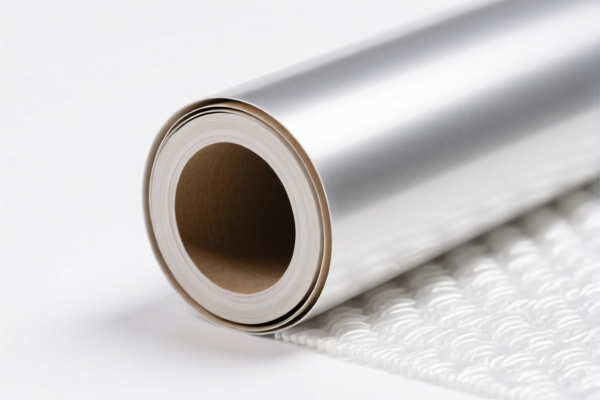
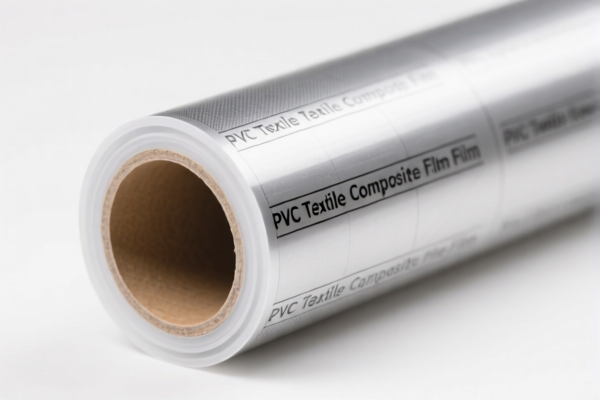

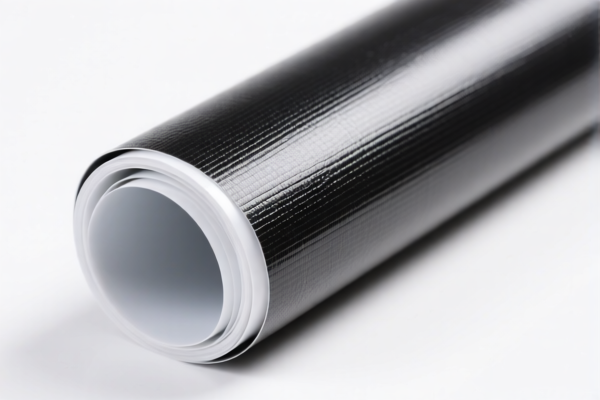
AI分析
🏗️ PVC Building Textile Membrane Structures
🌐 HS Code Reference & Customs Clearance Guide | 2026 Latest Tariff Analysis | Professional Compliance Strategy
📌 Part 1: Product Definition & Classification: What is a "PVC Textile Membrane"?
PVC Building Textile Membranes are high-performance architectural materials used for tensile structures, stadiums, warehouses, and temporary shelters. They consist of a polyester or fiberglass base fabric coated with Polyvinyl Chloride (PVC).
In international trade, the classification depends heavily on whether the product is viewed primarily as a plastic product (due to the PVC coating) or as a fabric/canvas product (due to the textile base and specific end-use like awnings).
⚠️ Key Distinction Point:
- If classified under Chapter 39 (Plastics): The focus is on the PVC material composition. It is treated as a plastic sheet/membrane.
- If classified under Chapter 63 (Other Made-up Articles): The focus is on the functional form, specifically if it qualifies as a "sail," "awning," or "shutter" made of synthetic fibers.
📦 Part 2: HS Code Classification Details (2026 Latest Tariff Alignment)
| HS Code | Product Description | Application Scenario | Basis for Classification |
|---|---|---|---|
3926.90.33.00 |
PVC Textile Membrane Structures; Material: PVC (Plastic/Polyvinyl Chloride); Form: Textile Membrane Structure | General architectural tensile structures, factory roofs, large-span sheds | ✅ Classified as Other Plastic Articles because the defining feature is the PVC plastic coating/material, fitting the definition of plastic products. |
6306.12.00.00 |
PVC Textile Membrane Structures; Form Complies with Tarpaulins/Shades/Awnings; Material: PVC (Synthetic Fibers/Synthetic Materials) | Structures used specifically as tarps, awnings, shade covers, or canvas-like shelters | ✅ Classified as Tents/Awnings because the form and usage align with textile goods (synthetic fiber/canvas definitions) rather than pure plastic sheets. |
3926.90.35.00 |
PVC Textile Membrane Structures; Material Contains PVC (Polyvinyl Chloride); Category: Materials of Chapters 39.01–39.14; Form: Other Plastic Articles | Complex structural membranes where PVC is the primary structural component, categorized under broader plastic articles | ✅ Classified as Other Plastic Articles under Chapters 39.01–39.14. This code captures membranes that don't fit the specific "textile structure" sub-category of 3926.90.33, often implying a different manufacturing or material specification within the plastic chapter. |
🔍 Critical Reminder:
-3926.90.33.00is generally the standard for "Membrane Structures" where the plastic nature is dominant.
-6306.12.00.00applies if the product is marketed or used explicitly as an "awning" or "shade" made of synthetic fabric.
-3926.90.35.00is a catch-all for other plastic articles in this category, potentially attracting higher trade remedies.
💰 Part 3: 2026 Latest Tariff Rate Breakdown (Including Additional Duties & Policy Surcharges)
✅ Applicable Country: USA (US)
✅ Country of Origin: China (CN)
✅ Effective Time: Current Trade Policy (Includes Section 301 and 122 Measures)
🎯 1. 3926.90.33.00 —— PVC Textile Membrane Structure (Plastic Basis)
| Item | Content |
|---|---|
| Base Tariff Rate | 6.5% |
| Section 301 Surcharge | 0.0% (No additional 25% tariff applied under this specific subheading in the provided data) |
| Section 122 Surcharge | +10% |
| Total Effective Tax Rate | 16.5% |
| Tax Calculation | CIF Value × 16.5% |
| De Minimis Exemption | ❌ Not Applicable (Usually subject to full duty for industrial materials) |
| Legal Basis Path | HTSUS 3926.90.33.00 → Section 301 Footnote → Section 122 Authority |
📌 Explanation:
- Base 6.5%: Standard MFN duty for other plastic articles.
- Section 122 (10%): Applied under Trade Facilitation and Enforcement Act, often targeting specific Chinese industrial inputs.
- Net Impact: The absence of the full Section 301 25% rate makes this code significantly cheaper than others, provided the classification holds.
🎯 2. 6306.12.00.00 —— PVC Textile Membrane (Tarpaulin/Awning Basis)
| Item | Content |
|---|---|
| Base Tariff Rate | 8.8% |
| Section 301 Surcharge | 0.0% |
| Section 122 Surcharge | +10% |
| Total Effective Tax Rate | 18.8% |
| Tax Calculation | CIF Value × 18.8% |
| De Minimis Exemption | ❌ Not Applicable |
| Legal Basis Path | HTSUS 6306.12.00.00 → Section 122 Authority |
📌 Note:
- Base 8.8%: Standard duty for tents, tarps, and awnings of synthetic fibers.
- Section 122 (10%): Applies equally here.
- Comparison: Slightly higher total tax than3926.90.33.00due to the higher base rate (8.8% vs 6.5%), but avoids higher Section 301 rates if applicable to other plastic codes.
🎯 3. 3926.90.35.00 —— Other Plastic Articles (PVC Membrane)
| Item | Content |
|---|---|
| Base Tariff Rate | 6.5% |
| Section 301 Surcharge | +7.5% |
| Section 122 Surcharge | +10% |
| Total Effective Tax Rate | 24.0% |
| Tax Calculation | CIF Value × 24.0% |
| De Minimis Exemption | ❌ Not Applicable |
| Legal Basis Path | HTSUS 3926.90.35.00 → Section 301 (25% base, reduced/applied as 7.5% in this specific context) → Section 122 |
📌 Warning:
- This code incurs the highest tax burden (24.0%).
- It includes a Section 301 component (7.5%) in addition to the Section 122 surcharge.
- Risk: Misclassifying a standard membrane into this "other" category can result in a 7.5% higher cost compared to3926.90.33.00. Ensure the product does not strictly fit the33.00description.
🛠️ Part 4: Customs Clearance Practical Advice (Real-World Pitfall Avoidance)
✅ 1. Documentation Checklist (Essential)
| Document | Must Provide | Explanation |
|---|---|---|
| ✅ Product Specification Sheet | ✔️ | Must detail: Base fabric type (Polyester/Glass Fiber), PVC coating weight, tensile strength, fire resistance rating. |
| ✅ Material Composition Statement | ✔️ | Explicitly state % of PVC vs. textile base. This determines if it falls under Chapter 39 (Plastic) or 63 (Textile). |
| ✅ Product Photos (Installed & Unrolled) | ✔️ | Show the scale and application. If it looks like an awning/tent, 6306 might be argued. If it's a structural roof, 3926 is safer. |
| ✅ Commercial Invoice | ✔️ | Description should match the HS Code. E.g., "PVC Coated Polyester Tensile Membrane" for 3926 vs. "PVC Canvas Awning" for 6306. |
| ✅ Certificate of Origin (CO) | ✔️ | Proof of Chinese origin to apply correct Section 122 and 301 rates. |
| ✅ Testing Reports | ✔️ | Fire retardancy (NFPA 701, ASTM E84), tensile strength, and durability tests are often requested by CBP. |
✅ 2. Declaration Tips (Key Mnemonic)
🔥 "Material vs. Form: Choose Wisely, Or Pay More!"
| Scenario | Recommended HS Code | Why? | Risk if Misclassified |
|------|----------------|----------|
| Architectural Roof/Membrane | 3926.90.33.00 | Primary identity is the PVC plastic material used for construction. | Reporting as 6306 may trigger audit on "textile" claim; Reporting as 35.00 triggers 7.5% extra tariff. |
| Portable Awning/Shade/Tarp | 6306.12.00.00 | Primary identity is a "tarpaulin" or "awning" made of synthetic fabric. | Reporting as 3926 may be rejected if the form is clearly a canvas product. |
| Generic/Unknown PVC Sheet | 3926.90.35.00 | Use only if it doesn't fit the specific membrane (33) or textile (63) definitions. | High Cost: 24% total tax vs 16.5%. Avoid unless necessary. |
✅ 3. Special Circumstances Handling
| Situation | Handling Advice |
|---|---|
| Hybrid Material (PVC + Fiberglass) | If the fiberglass is the core and PVC is coating, argue for 3926.90.33.00 as the PVC is the primary functional layer. Provide coating weight data. |
| Pre-fabricated Canopy | If sold as a "kit" with poles and ropes, ensure the invoice clearly separates the membrane. However, CBP often classifies the entire kit by the primary component. |
| Fire-Retardant Treatment | If the PVC is chemically modified for fire retardancy, this supports the "Plastic Article" classification (3926) over a simple textile (6306). |
| Import for Temporary Use | If temporary, ensure you are not using "Temporary Importation" bonds incorrectly; these are usually classified as permanent imports for duty purposes. |
🌍 Part 5: Global Market Comparison (2026 Latest)
| Country/Region | Recommended HS Code | Total Tax Rate (China Origin) | Notes |
|---|---|---|---|
| 🇺🇸 USA | 3926.90.33.00 |
16.5% (Best Option) | Includes 10% Sec 122. Avoid 3926.90.35.00 (24%) and 6306.12.00.00 (18.8%). |
| 🇨🇳 China | 3926.90.33.00 |
~6.5% | Standard import duty. No Section 122/301. |
| 🇪🇺 EU | 3926.90.97 (Similar) |
~4.5% | No Section 122/301. Different subheading applies. |
| 🇬🇧 UK | 3926.90.99 |
~4.5% | Post-Brexit tariff. No Chinese surcharges. |
📌 Conclusion:
- USA Market:3926.90.33.00is the most cost-effective and compliant code for PVC membranes.
- Key Risk: The 7.5% Section 301 differential in3926.90.35.00makes misclassification expensive.
- Strategy: Provide strong technical documentation proving the "Plastic Membrane" nature to justify3926.90.33.00.
📌 Part 6: Common Errors & Pitfalls (Lessons Learned)
❌ Error 1: Classifying as 3926.90.35.00 without cause
👉 Consequence: Extra 7.5% tax (Total 24% vs 16.5%).
👉 Fix: Check if the product fits the specific description of 33.00 (Textile Membrane Structure).
❌ Error 2: Calling it a "Tent" or "Awning" when it's an Architectural Roof
👉 Consequence: Risk of reclassification to 6306.12.00.00 (18.8%) or dispute if the form is clearly structural.
👉 Fix: Use terms like "Tensile Structure," "Membrane Roof," or "Architectural Skin."
❌ Error 3: Ignoring Section 122 Surcharge
👉 Consequence: Underpayment by 10%. CBP will assess back duties + interest.
👉 Fix: Budget for the 10% surcharge in all China-origin plastic/textile imports.
❌ Error 4: Vague Description ("PVC Sheet")
👉 Consequence: CBP may assign a higher duty code or delay clearance.
👉 Fix: Be specific: "PVC-Coated Polyester Tensile Membrane for Building Structures."
✅ Correct Practice:
"PVC Coated Polyester Textile Membrane, Architectural Grade, Fire Retardant, for Tensile Roof Structure. Model: XYZ."
🎯 Part 7: Conclusion: Professional Declaration for Cost Optimization
🎯 Remember the Mnemonic:
🔹 "Plastic Membrane is 33, Awning is 63, Other Plastic is 35."
🔹 "33 is cheapest (16.5%), 35 is most expensive (24%), 63 is middle (18.8%)."
🔹 "Section 122 is 10%, Always Pay It!"
📌 Pro Tip:
If your PVC membrane is exported to the US, consider applying for a US Customs Ruling (Advance Ruling) before shipment. This provides legal certainty and prevents post-entry audits.
🚀 Optimize your supply chain by choosing 3926.90.33.00 whenever possible to save 7.5% in tariffs compared to 3926.90.35.00!
✨ Professional Clearance Starts with Precise Classification!
💼 Your Bottom Line Depends on the Decimal Points!
用户评价
关于 HS 编码归类
协调制度(HS)是由世界海关组织(WCO)制定的国际贸易商品分类标准。全球 200 多个国家采用 HS 系统作为海关关税、贸易统计和进出口监管的基础。
每个 HS 编码遵循以下层级结构:
- 章(2 位)——商品大类(例如:第 84 章:机器和机械设备)
- 品目(4 位)——章内的更具体分类
- 子目(6 位)——国际通用细分,所有 WCO 成员国统一使用
- 本国细分(8-10 位)——各国自行扩展的细分编码,如美国 HTSUS 10 位编码
正确的 HS 编码归类对于顺利通关、准确缴纳关税和遵守贸易法规至关重要。错误归类可能导致海关延误、多缴关税或罚款。
从CN进口到US时,适用的关税税率可能包括:
- 最惠国(MFN)税率——适用于 WTO 成员国的标准关税税率
- 普通税率——适用于无贸易协定国家
- 贸易救济关税——附加关税,如 301 条款(反倾销)、232 条款(国家安全)或反补贴税
本页内容仅供参考。如需正式归类,请咨询当地海关或持牌报关代理。