PVC Ceiling Molding Board
CN → US| HS编码 | 关税税率 | 原产国 | 目的国 | 文档 |
|---|---|---|---|---|
| 3921125000 | 41.5% | CN | US | 官方文档 |
| 3925900000 | 40.3% | CN | US | 官方文档 |
| 3916200091 | 40.8% | CN | US | 官方文档 |
| 3921121100 | 39.2% | CN | US | 官方文档 |
| 3916200010 | 40.8% | CN | US | 官方文档 |
商品图片
AI分析
🏠 PVC Ceiling Molding Board (PVC Stone-Textured Ceiling Panels)
🌐 HS Code Reference & Customs Clearance Guide | 2026 Latest Tariff Analysis | Professional Customs Strategy
📌 I. Product Definition & Classification: Do You Really Know "PVC Ceiling Molding Boards"?
PVC Ceiling Molding Boards, specifically those with a stone-textured surface, are decorative construction materials widely used for interior ceiling finishes. In international trade, they are classified based on their material composition (PVC/Polyvinyl Chloride) and form (Plates/Sheets vs. Profiles).
Key Distinction:
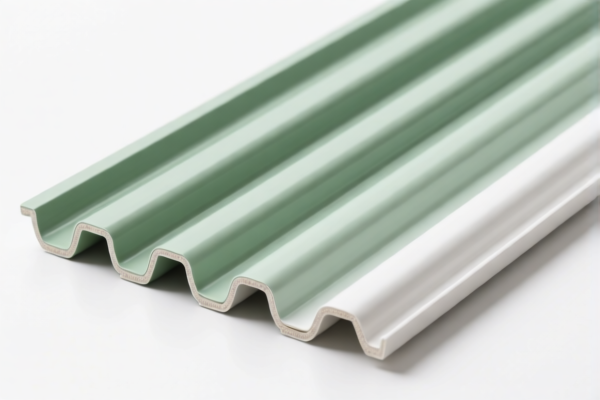
- Plates/Sheets (3921/3925): Flat panels, sheets, or films, often used as surface coverings.
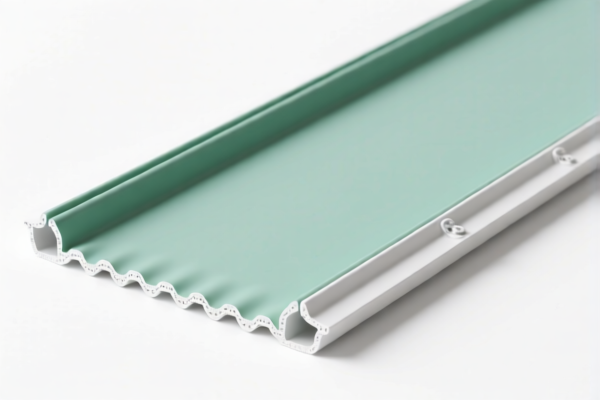
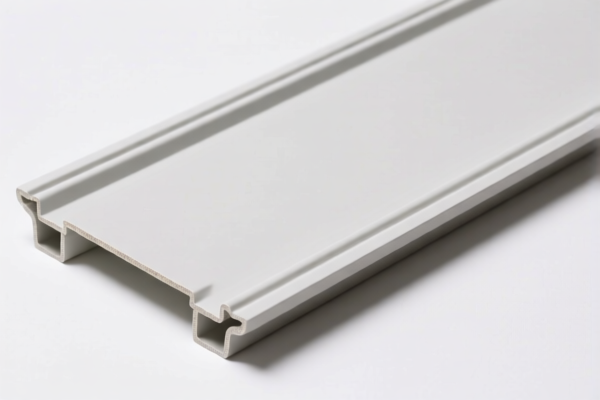
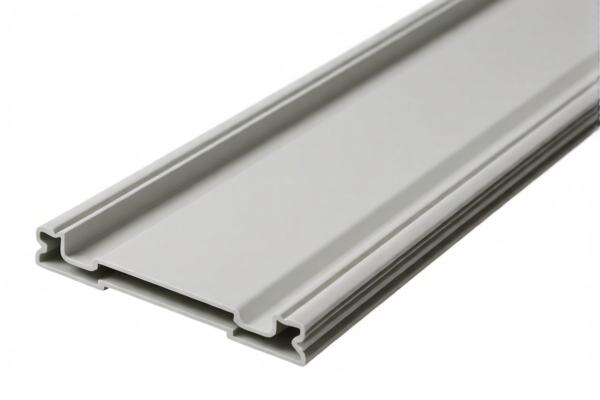
- Profiles/Extrusions (3916): Long, shaped pieces with a uniform cross-section, typically used for molding, trim, or structural integration.
⚠️ Critical Classification Point:
- If the product is a flat panel (even if it has a textured surface), it generally falls under Chapter 39.21 or 39.25.
- If the product is an extruded profile (e.g., L-shape, U-shape, or specific molding shapes), it falls under Chapter 39.16.
- Misclassification Risk: Declaring a flat panel as a "profile" or vice versa can lead to significant tariff differences and customs delays.
📦 II. HS Code Classification Details (2026 Latest Tariff Authority Comparison)
| HS Code | Product Description | Applicable Scenario | Key Classification Feature |
|---|---|---|---|
3921.12.50.00 |
PVC Stone-Textured Ceiling Board; Material: PVC; Form: Plate | Standard flat ceiling panels with stone texture | Plates/Sheets made of chlorinated polymer |
3925.90.00.00 |
PVC Stone-Textured Ceiling Board; Material: PVC; Form: Plate | Plastic building components/constructions | Building Components (Broad category) |
3916.20.00.91 |
PVC Stone-Textured Ceiling Board; Material: PVC; Form: Plate | Chlorinated polymer profiles for decoration | Profiles/Extrusions (Uniform cross-section) |
3921.12.11.00 |
PVC Stone-Textured Ceiling Board; Material: PVC; Form: Plate/Sheet | Polyvinyl chloride plates/sheets/films | Specific Sub-category of PVC plates |
3916.20.00.10 |
PVC Stone-Textured Ceiling Board; Material: PVC; Form: Plate | Building decorative profiles | Building Decorative Profiles |
🔍 Key Insight:
- The total tax rates for these codes range from 39.2% to 41.5%, primarily due to the combination of base tariffs and additional levies.
- The difference lies in the "Base Tariff":3921.12.11.00has the lowest base (4.2%), while3921.12.50.00has the highest (6.5%). All share the same additional tariffs.
💰 III. 2026 Latest Tariff Rate Breakdown (Including Additional Levies)
✅ Applicable Country: United States (US)
✅ Country of Origin: China (CN)
✅ Effective Date: 2025 November 10 (for subsequent imports)
The tax structure is consistent across all five HS codes in the provided data, comprising three parts: 1. Base Tariff (Varies by HS Code) 2. Section 301 Additional Tariff: 25.0% 3. Section 122 Additional Tariff: 10.0%
🎯 1. 3921.12.50.00 — PVC Stone-Textured Ceiling Board (Plate)
| Item | Detail |
|---|---|
| Base Tariff | 6.5% |
| Section 301 Additional Tariff | +25.0% |
| Section 122 Additional Tariff | +10.0% |
| Total Tax Rate | 41.5% |
| Tax Calculation | CIF Value × 41.5% |
| De Minimis Exemption | ❌ Not Eligible (Denied for China-origin goods under these sections) |
| Legal Basis Path | Base Tariff → Section 301 (25%) → Section 122 (10%) |
📌 Explanation:
- Section 301 (25%): Imposed under U.S. Trade Law Section 301 on specific Chinese goods.
- Section 122 (10%): Specific additional tariff for this category of plastic building materials from China.
- Total 41.5%: This is a high-duty classification. Cost-saving strategies must focus on accurate classification to avoid overpayment or underpayment penalties.
🎯 2. 3925.90.00.00 — PVC Stone-Textured Ceiling Board (Building Component)
| Item | Detail |
|---|---|
| Base Tariff | 5.3% |
| Section 301 Additional Tariff | +25.0% |
| Section 122 Additional Tariff | +10.0% |
| Total Tax Rate | 40.3% |
| Tax Calculation | CIF Value × 40.3% |
| De Minimis Exemption | ❌ Not Eligible |
| Legal Basis Path | Base Tariff → Section 301 (25%) → Section 122 (10%) |
📌 Note:
- This code is slightly cheaper than3921.12.50.00due to a lower base tariff (5.3% vs. 6.5%).
- It classifies the product broadly as a "Plastic Building Component." Ensure the product truly fits the "building component" definition rather than just a "plate."
🎯 3. 3916.20.00.91 & 3916.20.00.10 — PVC Stone-Textured Ceiling Board (Profile)
| Item | Detail |
|---|---|
| Base Tariff | 5.8% |
| Section 301 Additional Tariff | +25.0% |
| Section 122 Additional Tariff | +10.0% |
| Total Tax Rate | 40.8% |
| Tax Calculation | CIF Value × 40.8% |
| De Minimis Exemption | ❌ Not Eligible |
| Legal Basis Path | Base Tariff → Section 301 (25%) → Section 122 (10%) |
📌 Note:
- Both profile-related codes (3916.20.00.91and3916.20.00.10) have the same total rate of 40.8%.
-3916.20.00.10specifies "Building Decorative Profiles," while3916.20.00.91is a more general "Other" profile.
- Use3916.20.00.10if the product is explicitly designed as a decorative molding/profile.
🎯 4. 3921.12.11.00 — PVC Stone-Textured Ceiling Board (Plate/Sheet)
| Item | Detail |
|---|---|
| Base Tariff | 4.2% |
| Section 301 Additional Tariff | +25.0% |
| Section 122 Additional Tariff | +10.0% |
| Total Tax Rate | 39.2% |
| Tax Calculation | CIF Value × 39.2% |
| De Minimis Exemption | ❌ Not Eligible |
| Legal Basis Path | Base Tariff → Section 301 (25%) → Section 122 (10%) |
📌 Highlight:
- Lowest Total Tax Rate: 39.2%.
- This code has the lowest base tariff (4.2%).
- Strategy: If the product is a standard flat plate/sheet, prioritize this classification to minimize duty costs by 2.3% compared to3921.12.50.00.
🛠️ IV. Customs Clearance Practical Advice (Pitfall Avoidance Guide)
✅ 1. Required Documentation Checklist
| Document | Mandatory? | Explanation |
|---|---|---|
| ✅ Product Specification Sheet | ✔️ | Must specify: Material (PVC 100%), Surface Texture (Stone), Dimensions, Thickness, Fire Rating. |
| ✅ Product Photos | ✔️ | Clear images of the cross-section (to prove if it's a plate or profile) and surface texture. |
| ✅ Commercial Invoice | ✔️ | Describe accurately: "PVC Ceiling Panel, Stone Textured, Flat Sheet" or "PVC Ceiling Molding Profile." Do not just write "Plastic Board." |
| ✅ Packing List | ✔️ | Include net/gross weight, volume, and number of pieces. |
| ✅ Bill of Lading/Air Waybill | ✔️ | Standard shipping document. |
| ✅ Certificate of Origin | ✔️ | Essential for proving China origin (triggers 301/122 tariffs). |
| ✅ Test Report (Optional but Recommended) | ✔️ | Fire resistance (ASTM E84), Toxicity (RoHS/REACH) to support building material classification. |
✅ 2. Classification Strategy (Key Mnemonics)
🔥 "Profile vs. Plate: Cross-Section is King!"
| Scenario | Correct HS Code | Tax Rate | Risk if Misclassified |
|---|---|---|---|
| Flat, rectangular panel (even with texture) | 3921.12.11.00 |
39.2% (Lowest) | If declared as profile → Higher base tariff or delay |
| Flat panel (generic description) | 3921.12.50.00 |
41.5% (Highest) | Overpayment of 2.3% |
| Extruded L/U-shape molding | 3916.20.00.10 |
40.8% | If declared as plate → Potential underpayment or audit |
| Building Component (broad) | 3925.90.00.00 |
40.3% | Less common for simple panels; use only if complex assembly |
📌 Important:
- Do NOT split shipments to avoid Section 301/122 tariffs. The U.S. CBP aggressively investigates fragmentation.
- Accurate Naming: Use "PVC Ceiling Panel" for plates and "PVC Ceiling Molding" for profiles. Avoid vague terms like "Plastic Decoration."
✅ 3. Special Circumstances Handling
| Situation | Handling Advice |
|---|---|
| Mixed Containers | If containers include both PVC panels and other goods, ensure the invoice clearly separates quantities and values to avoid bulk tariff application on incorrect items. |
| Customs Examination | Be prepared for physical inspection. Provide cross-section diagrams to prove whether it's a plate (3921) or profile (3916). |
| Tariff Engineering | Consider if adding a non-PVC layer (e.g., aluminum foil backing) changes the classification. However, this may trigger new HS codes with different tariffs. Consult a specialist. |
| Third-Country Transshipment | Warning: Do not attempt to route through Vietnam/Mexico to avoid China origin. U.S. CBP tracks supply chains closely. Misrepresentation can lead to severe penalties. |
🌍 V. Global Market Comparison (2026 Latest)
| Country/Region | Recommended HS Code | Base Tariff | Additional Tariffs | Total Est. Tax | Notes |
|---|---|---|---|---|---|
| 🇺🇸 USA | 3921.12.11.00 |
4.2% | 35% (301+122) | 39.2% | Highest cost market due to 301/122 |
| 🇨🇳 China | 3921.12.11.00 |
~5-8% | 0% | ~5-8% | Low entry barrier |
| 🇪🇺 EU | 3921.12.10 |
~3-6% | 0% | ~3-6% | No 301/122 equivalent |
| 🇬🇧 UK | 3921.12.10 |
~3-6% | 0% | ~3-6% | Post-Brexit rules apply |
| 🇦🇺 Australia | 3921.12.10 |
~5% | 0% | ~5% | FTA may apply |
📌 Conclusion:
- The U.S. market is the most challenging for PVC ceiling boards from China due to the 35% combined additional tariff.
- For other markets, the total tax is significantly lower, making them more competitive.
- Cost Optimization: Focus on3921.12.11.00(39.2% total) in the U.S. instead of3921.12.50.00(41.5%) to save 2.3% on every $1,000 shipment.
📌 VI. Common Errors & Pitfall Guide (Lessons Learned)
❌ Error 1: Declaring "PVC Plate" as "Plastic Building Material" (3925.90.00.00) without justification
👉 Consequence: Customs may reject or reclassify, causing delays. If accepted, you pay 40.3% instead of 39.2%.
❌ Error 2: Claiming "De Minimis" Exemption (Section 321) for shipments under $800
👉 Consequence: Denied. China-origin goods under Section 301/122 are not eligible for de minimis. Seizure risk.
❌ Error 3: Not specifying "Stone Textured" in the description
👉 Consequence: Customs may assume plain PVC, leading to further examination or misclassification.
❌ Error 4: Using incorrect HS Code for Profiles (3916) when products are Plates (3921)
👉 Consequence: Underpayment or overpayment. If underpaid, penalties and interest apply.
✅ Correct Practice:
"PVC Stone-Textured Ceiling Panel, Flat Sheet, 12mm Thickness, Fire Rated, Model XYZ, Made in China"
🎯 VII. Conclusion: Precise Classification, Cost Control, Efficient Clearance!
🎯 Remember the Mnemonic:
🔹 "Plate vs. Profile: Check the Cross-Section!"
🔹 "Lowest Base is3921.12.11.00at 39.2%!"
🔹 "No De Minimis for China PVC! Plan Your Costs!"
📌 Pro Tip:
- Always request HS Code Pre-Ruling from U.S. CBP before shipping large volumes.
- Keep product samples and cross-section diagrams ready for customs inspection.
- Consider supply chain diversification if U.S. duties remain high, but ensure genuine origin compliance.
📣 Action Required:
📞 Consult a Licensed Customs Broker to confirm the HS Code based on your product's exact physical characteristics.
📄 Prepare Detailed Specifications including material composition, dimensions, and intended use.
🚀 Optimize Your Landed Cost by selecting the most favorable HS Code within legal boundaries!
✨ Professional Customs Clearance Starts with Accurate Classification!
💼 Your Profit Margin Depends on Every Percentage Point of Duty!
用户评价
关于 HS 编码归类
协调制度(HS)是由世界海关组织(WCO)制定的国际贸易商品分类标准。全球 200 多个国家采用 HS 系统作为海关关税、贸易统计和进出口监管的基础。
每个 HS 编码遵循以下层级结构:
- 章(2 位)——商品大类(例如:第 84 章:机器和机械设备)
- 品目(4 位)——章内的更具体分类
- 子目(6 位)——国际通用细分,所有 WCO 成员国统一使用
- 本国细分(8-10 位)——各国自行扩展的细分编码,如美国 HTSUS 10 位编码
正确的 HS 编码归类对于顺利通关、准确缴纳关税和遵守贸易法规至关重要。错误归类可能导致海关延误、多缴关税或罚款。
从CN进口到US时,适用的关税税率可能包括:
- 最惠国(MFN)税率——适用于 WTO 成员国的标准关税税率
- 普通税率——适用于无贸易协定国家
- 贸易救济关税——附加关税,如 301 条款(反倾销)、232 条款(国家安全)或反补贴税
本页内容仅供参考。如需正式归类,请咨询当地海关或持牌报关代理。