PVC Ceiling Molding Board
CN → US| HS Code | Tariff Rate | Origin | Destination | Doc |
|---|---|---|---|---|
| 3921125000 | 41.5% | CN | US | Official Doc |
| 3925900000 | 40.3% | CN | US | Official Doc |
| 3916200091 | 40.8% | CN | US | Official Doc |
| 3921121100 | 39.2% | CN | US | Official Doc |
| 3916200010 | 40.8% | CN | US | Official Doc |
Product Images
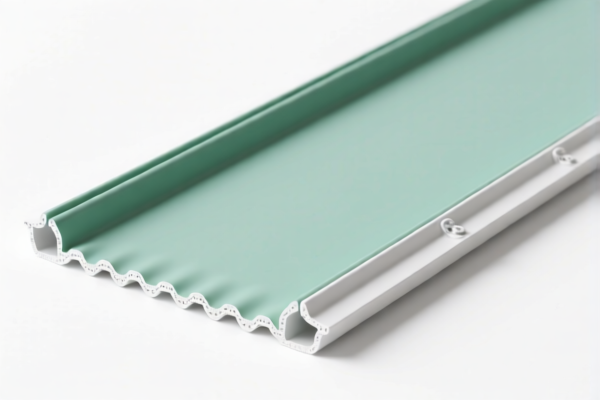
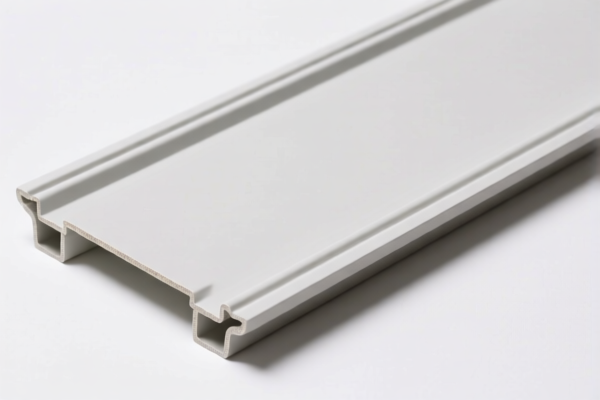
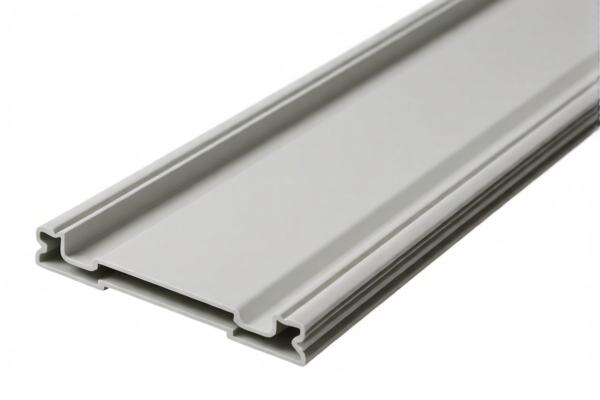
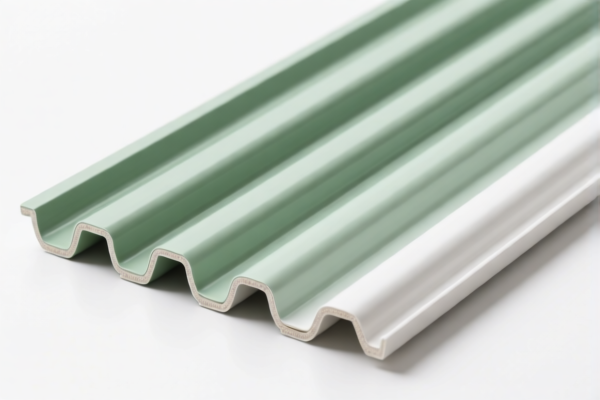
AI Analysis
🏠 PVC Ceiling Molding Board (PVC Stone-Textured Ceiling Panels)
🌐 HS Code Reference & Customs Clearance Guide | 2026 Latest Tariff Analysis | Professional Customs Strategy
📌 I. Product Definition & Classification: Do You Really Know "PVC Ceiling Molding Boards"?
PVC Ceiling Molding Boards, specifically those with a stone-textured surface, are decorative construction materials widely used for interior ceiling finishes. In international trade, they are classified based on their material composition (PVC/Polyvinyl Chloride) and form (Plates/Sheets vs. Profiles).
Key Distinction:
- Plates/Sheets (3921/3925): Flat panels, sheets, or films, often used as surface coverings.
- Profiles/Extrusions (3916): Long, shaped pieces with a uniform cross-section, typically used for molding, trim, or structural integration.
⚠️ Critical Classification Point:
- If the product is a flat panel (even if it has a textured surface), it generally falls under Chapter 39.21 or 39.25.
- If the product is an extruded profile (e.g., L-shape, U-shape, or specific molding shapes), it falls under Chapter 39.16.
- Misclassification Risk: Declaring a flat panel as a "profile" or vice versa can lead to significant tariff differences and customs delays.
📦 II. HS Code Classification Details (2026 Latest Tariff Authority Comparison)
| HS Code | Product Description | Applicable Scenario | Key Classification Feature |
|---|---|---|---|
3921.12.50.00 |
PVC Stone-Textured Ceiling Board; Material: PVC; Form: Plate | Standard flat ceiling panels with stone texture | Plates/Sheets made of chlorinated polymer |
3925.90.00.00 |
PVC Stone-Textured Ceiling Board; Material: PVC; Form: Plate | Plastic building components/constructions | Building Components (Broad category) |
3916.20.00.91 |
PVC Stone-Textured Ceiling Board; Material: PVC; Form: Plate | Chlorinated polymer profiles for decoration | Profiles/Extrusions (Uniform cross-section) |
3921.12.11.00 |
PVC Stone-Textured Ceiling Board; Material: PVC; Form: Plate/Sheet | Polyvinyl chloride plates/sheets/films | Specific Sub-category of PVC plates |
3916.20.00.10 |
PVC Stone-Textured Ceiling Board; Material: PVC; Form: Plate | Building decorative profiles | Building Decorative Profiles |
🔍 Key Insight:
- The total tax rates for these codes range from 39.2% to 41.5%, primarily due to the combination of base tariffs and additional levies.
- The difference lies in the "Base Tariff":3921.12.11.00has the lowest base (4.2%), while3921.12.50.00has the highest (6.5%). All share the same additional tariffs.
💰 III. 2026 Latest Tariff Rate Breakdown (Including Additional Levies)
✅ Applicable Country: United States (US)
✅ Country of Origin: China (CN)
✅ Effective Date: 2025 November 10 (for subsequent imports)
The tax structure is consistent across all five HS codes in the provided data, comprising three parts: 1. Base Tariff (Varies by HS Code) 2. Section 301 Additional Tariff: 25.0% 3. Section 122 Additional Tariff: 10.0%
🎯 1. 3921.12.50.00 — PVC Stone-Textured Ceiling Board (Plate)
| Item | Detail |
|---|---|
| Base Tariff | 6.5% |
| Section 301 Additional Tariff | +25.0% |
| Section 122 Additional Tariff | +10.0% |
| Total Tax Rate | 41.5% |
| Tax Calculation | CIF Value × 41.5% |
| De Minimis Exemption | ❌ Not Eligible (Denied for China-origin goods under these sections) |
| Legal Basis Path | Base Tariff → Section 301 (25%) → Section 122 (10%) |
📌 Explanation:
- Section 301 (25%): Imposed under U.S. Trade Law Section 301 on specific Chinese goods.
- Section 122 (10%): Specific additional tariff for this category of plastic building materials from China.
- Total 41.5%: This is a high-duty classification. Cost-saving strategies must focus on accurate classification to avoid overpayment or underpayment penalties.
🎯 2. 3925.90.00.00 — PVC Stone-Textured Ceiling Board (Building Component)
| Item | Detail |
|---|---|
| Base Tariff | 5.3% |
| Section 301 Additional Tariff | +25.0% |
| Section 122 Additional Tariff | +10.0% |
| Total Tax Rate | 40.3% |
| Tax Calculation | CIF Value × 40.3% |
| De Minimis Exemption | ❌ Not Eligible |
| Legal Basis Path | Base Tariff → Section 301 (25%) → Section 122 (10%) |
📌 Note:
- This code is slightly cheaper than3921.12.50.00due to a lower base tariff (5.3% vs. 6.5%).
- It classifies the product broadly as a "Plastic Building Component." Ensure the product truly fits the "building component" definition rather than just a "plate."
🎯 3. 3916.20.00.91 & 3916.20.00.10 — PVC Stone-Textured Ceiling Board (Profile)
| Item | Detail |
|---|---|
| Base Tariff | 5.8% |
| Section 301 Additional Tariff | +25.0% |
| Section 122 Additional Tariff | +10.0% |
| Total Tax Rate | 40.8% |
| Tax Calculation | CIF Value × 40.8% |
| De Minimis Exemption | ❌ Not Eligible |
| Legal Basis Path | Base Tariff → Section 301 (25%) → Section 122 (10%) |
📌 Note:
- Both profile-related codes (3916.20.00.91and3916.20.00.10) have the same total rate of 40.8%.
-3916.20.00.10specifies "Building Decorative Profiles," while3916.20.00.91is a more general "Other" profile.
- Use3916.20.00.10if the product is explicitly designed as a decorative molding/profile.
🎯 4. 3921.12.11.00 — PVC Stone-Textured Ceiling Board (Plate/Sheet)
| Item | Detail |
|---|---|
| Base Tariff | 4.2% |
| Section 301 Additional Tariff | +25.0% |
| Section 122 Additional Tariff | +10.0% |
| Total Tax Rate | 39.2% |
| Tax Calculation | CIF Value × 39.2% |
| De Minimis Exemption | ❌ Not Eligible |
| Legal Basis Path | Base Tariff → Section 301 (25%) → Section 122 (10%) |
📌 Highlight:
- Lowest Total Tax Rate: 39.2%.
- This code has the lowest base tariff (4.2%).
- Strategy: If the product is a standard flat plate/sheet, prioritize this classification to minimize duty costs by 2.3% compared to3921.12.50.00.
🛠️ IV. Customs Clearance Practical Advice (Pitfall Avoidance Guide)
✅ 1. Required Documentation Checklist
| Document | Mandatory? | Explanation |
|---|---|---|
| ✅ Product Specification Sheet | ✔️ | Must specify: Material (PVC 100%), Surface Texture (Stone), Dimensions, Thickness, Fire Rating. |
| ✅ Product Photos | ✔️ | Clear images of the cross-section (to prove if it's a plate or profile) and surface texture. |
| ✅ Commercial Invoice | ✔️ | Describe accurately: "PVC Ceiling Panel, Stone Textured, Flat Sheet" or "PVC Ceiling Molding Profile." Do not just write "Plastic Board." |
| ✅ Packing List | ✔️ | Include net/gross weight, volume, and number of pieces. |
| ✅ Bill of Lading/Air Waybill | ✔️ | Standard shipping document. |
| ✅ Certificate of Origin | ✔️ | Essential for proving China origin (triggers 301/122 tariffs). |
| ✅ Test Report (Optional but Recommended) | ✔️ | Fire resistance (ASTM E84), Toxicity (RoHS/REACH) to support building material classification. |
✅ 2. Classification Strategy (Key Mnemonics)
🔥 "Profile vs. Plate: Cross-Section is King!"
| Scenario | Correct HS Code | Tax Rate | Risk if Misclassified |
|---|---|---|---|
| Flat, rectangular panel (even with texture) | 3921.12.11.00 |
39.2% (Lowest) | If declared as profile → Higher base tariff or delay |
| Flat panel (generic description) | 3921.12.50.00 |
41.5% (Highest) | Overpayment of 2.3% |
| Extruded L/U-shape molding | 3916.20.00.10 |
40.8% | If declared as plate → Potential underpayment or audit |
| Building Component (broad) | 3925.90.00.00 |
40.3% | Less common for simple panels; use only if complex assembly |
📌 Important:
- Do NOT split shipments to avoid Section 301/122 tariffs. The U.S. CBP aggressively investigates fragmentation.
- Accurate Naming: Use "PVC Ceiling Panel" for plates and "PVC Ceiling Molding" for profiles. Avoid vague terms like "Plastic Decoration."
✅ 3. Special Circumstances Handling
| Situation | Handling Advice |
|---|---|
| Mixed Containers | If containers include both PVC panels and other goods, ensure the invoice clearly separates quantities and values to avoid bulk tariff application on incorrect items. |
| Customs Examination | Be prepared for physical inspection. Provide cross-section diagrams to prove whether it's a plate (3921) or profile (3916). |
| Tariff Engineering | Consider if adding a non-PVC layer (e.g., aluminum foil backing) changes the classification. However, this may trigger new HS codes with different tariffs. Consult a specialist. |
| Third-Country Transshipment | Warning: Do not attempt to route through Vietnam/Mexico to avoid China origin. U.S. CBP tracks supply chains closely. Misrepresentation can lead to severe penalties. |
🌍 V. Global Market Comparison (2026 Latest)
| Country/Region | Recommended HS Code | Base Tariff | Additional Tariffs | Total Est. Tax | Notes |
|---|---|---|---|---|---|
| 🇺🇸 USA | 3921.12.11.00 |
4.2% | 35% (301+122) | 39.2% | Highest cost market due to 301/122 |
| 🇨🇳 China | 3921.12.11.00 |
~5-8% | 0% | ~5-8% | Low entry barrier |
| 🇪🇺 EU | 3921.12.10 |
~3-6% | 0% | ~3-6% | No 301/122 equivalent |
| 🇬🇧 UK | 3921.12.10 |
~3-6% | 0% | ~3-6% | Post-Brexit rules apply |
| 🇦🇺 Australia | 3921.12.10 |
~5% | 0% | ~5% | FTA may apply |
📌 Conclusion:
- The U.S. market is the most challenging for PVC ceiling boards from China due to the 35% combined additional tariff.
- For other markets, the total tax is significantly lower, making them more competitive.
- Cost Optimization: Focus on3921.12.11.00(39.2% total) in the U.S. instead of3921.12.50.00(41.5%) to save 2.3% on every $1,000 shipment.
📌 VI. Common Errors & Pitfall Guide (Lessons Learned)
❌ Error 1: Declaring "PVC Plate" as "Plastic Building Material" (3925.90.00.00) without justification
👉 Consequence: Customs may reject or reclassify, causing delays. If accepted, you pay 40.3% instead of 39.2%.
❌ Error 2: Claiming "De Minimis" Exemption (Section 321) for shipments under $800
👉 Consequence: Denied. China-origin goods under Section 301/122 are not eligible for de minimis. Seizure risk.
❌ Error 3: Not specifying "Stone Textured" in the description
👉 Consequence: Customs may assume plain PVC, leading to further examination or misclassification.
❌ Error 4: Using incorrect HS Code for Profiles (3916) when products are Plates (3921)
👉 Consequence: Underpayment or overpayment. If underpaid, penalties and interest apply.
✅ Correct Practice:
"PVC Stone-Textured Ceiling Panel, Flat Sheet, 12mm Thickness, Fire Rated, Model XYZ, Made in China"
🎯 VII. Conclusion: Precise Classification, Cost Control, Efficient Clearance!
🎯 Remember the Mnemonic:
🔹 "Plate vs. Profile: Check the Cross-Section!"
🔹 "Lowest Base is3921.12.11.00at 39.2%!"
🔹 "No De Minimis for China PVC! Plan Your Costs!"
📌 Pro Tip:
- Always request HS Code Pre-Ruling from U.S. CBP before shipping large volumes.
- Keep product samples and cross-section diagrams ready for customs inspection.
- Consider supply chain diversification if U.S. duties remain high, but ensure genuine origin compliance.
📣 Action Required:
📞 Consult a Licensed Customs Broker to confirm the HS Code based on your product's exact physical characteristics.
📄 Prepare Detailed Specifications including material composition, dimensions, and intended use.
🚀 Optimize Your Landed Cost by selecting the most favorable HS Code within legal boundaries!
✨ Professional Customs Clearance Starts with Accurate Classification!
💼 Your Profit Margin Depends on Every Percentage Point of Duty!
Customer Reviews
About HS Code Classification
The Harmonized System (HS) is an internationally standardized nomenclature developed by the World Customs Organization (WCO) to classify traded products. Over 200 countries use the HS system as the basis for customs tariffs, trade statistics, and import/export regulations.
Each HS code follows a hierarchical structure:
- Chapter (2 digits) — Broad category of goods (e.g., Chapter 84: Machinery and Mechanical Appliances)
- Heading (4 digits) — More specific grouping within the chapter
- Subheading (6 digits) — Internationally standardized breakdown, used by all WCO member countries
- National subdivisions (8-10 digits) — Country-specific extensions for further classification, such as US HTSUS 10-digit codes
Correct HS code classification is essential for smooth customs clearance, accurate duty payment, and compliance with trade regulations. Misclassification can lead to customs delays, overpayment of duties, or penalties.
When importing from CN to US, the applicable tariff rates may include:
- Most-Favored-Nation (MFN) rate — The standard duty rate applied to WTO members
- General rate — Applied to countries without trade agreements
- Trade remedy duties — Additional tariffs such as Section 301 (anti-dumping), Section 232 (national security), or countervailing duties
The information provided on this page is for reference purposes only. For official classification, please consult with your local customs authority or a licensed customs broker.