PVC Coated High Temperature Resistant Protective Fabric
CN → US| HS编码 | 关税税率 | 原产国 | 目的国 | 文档 |
|---|---|---|---|---|
| 5911102000 | 38.8% | CN | US | 官方文档 |
| 3921121500 | 41.5% | CN | US | 官方文档 |
| 3921121100 | 39.2% | CN | US | 官方文档 |
| 5911101000 | 37.9% | CN | US | 官方文档 |
| 5903102010 | 35.0% | CN | US | 官方文档 |
商品图片
AI分析
🛡️ PVC Coated High Temperature Resistant Protective Fabric
🌐 HS Code Reference & Customs Clearance Guide | 2026 Latest Tariff Analysis | Professional Clearance Strategy
📌 I. Product Definition & Classification: Do You Really Understand "PVC Coated Fabric"?
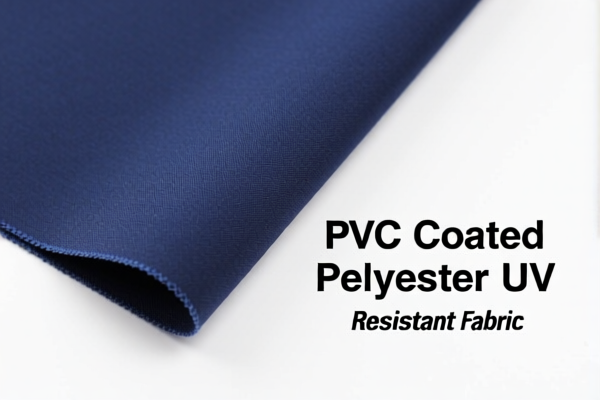
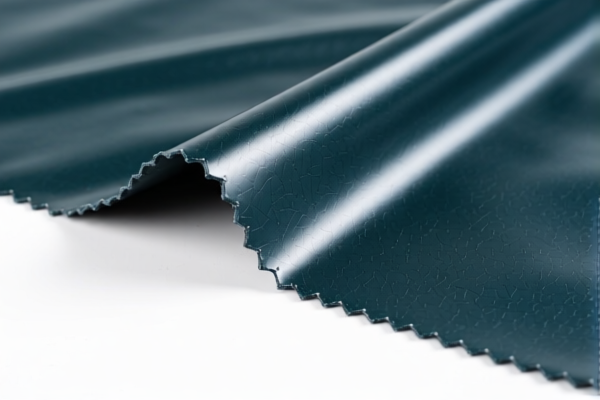
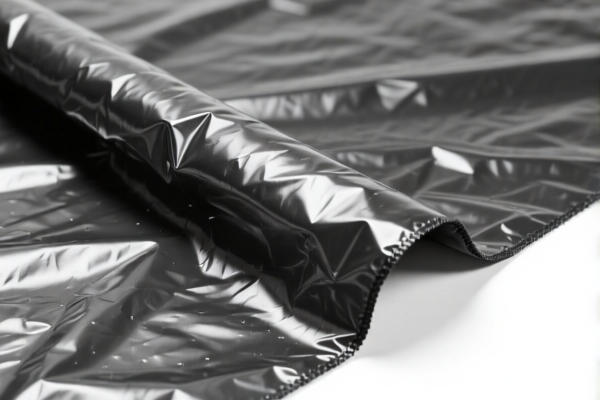
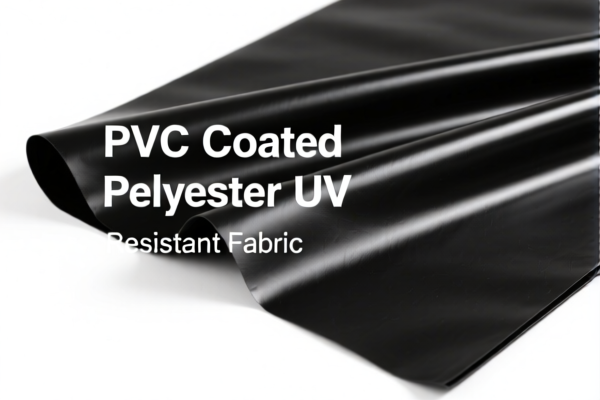
PVC (Polyvinyl Chloride) coated high-temperature resistant protective fabric is a composite textile material widely used in industrial insulation, fire protection, and heavy-duty protective gear. In international trade, its classification depends heavily on whether it is viewed primarily as a textile or a plastic product.
Key Distinction: * Textile-Based (Chapter 59): If the fabric structure is dominant and PVC is applied as a coating/impregnation for protection/insulation. * Plastic-Based (Chapter 39): If the PVC layer is dominant, forming a sheet/film structure with textile reinforcement.
⚠️ Critical Classification Point:
- If the fabric retains its textile identity and the coating is for "imperviousness" or "protection" → Chapter 59
- If the product is essentially a plastic sheet with textile backing → Chapter 39
- High-Temperature Resistance alone does not change the HS code; it is a functional characteristic, not a material determinant.
📦 II. HS Code Classification Details (2026 Latest Tariff Authority Match)
Based on your provided data, here are the five potential HS Codes and their specific rationales. Note: All codes listed below are subject to US Import Tariffs (Base + Section 301 + IEEPA 122).
| HS Code | Summary / Rationale from Data | Total Tax Rate | Tax Detail Breakdown |
|---|---|---|---|
| 5911.10.20.00 | PVC Coated Shockproof Fabric: Material is PVC, form is fabric. Fits the description of textile fabrics coated with rubber or similar materials. | 38.8% | Base: 3.8% + Sec 301: 25.0% + IEEPA 122: 10% |
| 3921.12.15.00 | PVC Coated Shockproof Fabric: Material is PVC, form is fabric, purpose is shockproof. Fits the description of fiber-bonded attributes. | 41.5% | Base: 6.5% + Sec 301: 25.0% + IEEPA 122: 10% |
| 3921.12.11.00 | PVC Coated Shockproof Fabric: Contains PVC material and coating, form is sheet/film. Belongs to composite fabrics. | 39.2% | Base: 4.2% + Sec 301: 25.0% + IEEPA 122: 10% |
| 5911.10.10.00 | PVC Coated Shockproof Fabric: Contains coating and fabric, fits covered/impregnated textile characteristics. PVC inferred as plastic/rubber coating. | 37.9% | Base: 2.9% + Sec 301: 25.0% + IEEPA 122: 10% |
| 5903.10.20.10 | PVC Coated Tear-Resistant Fabric: Material is PVC, form is coated fabric. Belongs to textile fabrics impregnated, coated, covered or laminated. | 35.0% | Base: 0.0% + Sec 301: 25.0% + IEEPA 122: 10% |
🔍 Key Observation:
- 5903.10.20.10 offers the lowest total tax rate (35.0%) because it has a 0% Base Duty.
- However, this code specifically mentions "Tear-Resistant" (防撕裂) in the summary. If your product is primarily "High Temperature Resistant" (耐高温) rather than "Tear-Resistant," Customs may challenge this classification unless the tear resistance is a certified primary feature.
- 5911.10.10.00 is the second cheapest (37.9%) and is broader ("Shockproof" vs "Tear-Resistant"), making it potentially safer if the "High Temperature" aspect is not explicitly covered by another specific code.
💰 III. 2026 Latest Tariff Rate Details (Including Surcharges & Policy Add-ons)
✅ Applicable Country: United States (US)
✅ Origin: China (CN)
✅ Effective Date: 2025 Nov 10 onwards (for subsequent imports)
🎯 1. 5903.10.20.10 —— PVC Coated Tear-Resistant Fabric (Lowest Cost)
| Item | Content |
|---|---|
| Base Duty Rate | 0.0% (Ad Valorem) |
| USITC Surcharge (Sec 301) | +25.0% (From USITC Footnote 9903.88.01) |
| IEEPA Surcharge (122 Clause) | +10.0% (Targeting China/HK products, effective Nov 10, 2025) |
| Total Effective Rate | 35.0% |
| Tax Calculation | CIF Value × 35.0% |
| De Minimis Exemption | ❌ Not Available (deny_de_minimis applies to these HS codes) |
| Legal Basis Path | IEEPA:9903.01.25 → USITC:5903.10.20.10 → FOOTNOTE:9903.88.01 |
📌 Explanation:
- This code falls under Chapter 59, which generally has lower base duties than Chapter 39.
- The 25% Section 301 and 10% IEEPA 122 are mandatory surcharges for Chinese-origin goods in these categories.
- Warning: Ensure the product documentation highlights "Tear-Resistant" properties to justify this code. If the primary feature is only "Heat Resistant," Customs may reclassify to a higher base-duty code.
🎯 2. 5911.10.10.00 —— PVC Coated Shockproof Fabric (Safe Alternative)
| Item | Content |
|---|---|
| Base Duty Rate | 2.9% |
| USITC Surcharge (Sec 301) | +25.0% |
| IEEPA Surcharge (122 Clause) | +10.0% |
| Total Effective Rate | 37.9% |
| Tax Calculation | CIF Value × 37.9% |
| De Minimis Exemption | ❌ Not Available |
| Legal Basis Path | IEEPA:9903.01.24 → USITC:5911.10.10.00 → FOOTNOTE:9903.88.01 |
📌 Note:
- This is a Chapter 59 classification (Textile Articles).
- It is often considered more accurate for "Coated Fabrics" where the fabric base is the structural element.
- 37.9% is still significantly lower than Chapter 39 options (39.2% - 41.5%).
🎯 3. 3921.12.11.00 & 3921.12.15.00 —— Plastic Sheets/Laminates (Higher Cost)
| Item | Content |
|---|---|
| Base Duty Rate | 4.2% (for .11.00) / 6.5% (for .15.00) |
| USITC Surcharge (Sec 301) | +25.0% |
| IEEPA Surcharge (122 Clause) | +10.0% |
| Total Effective Rate | 39.2% / 41.5% |
| De Minimis Exemption | ❌ Not Available |
📌 Warning:
- These fall under Chapter 39 (Plastics).
- They are typically used if the PVC coating is so thick that the product is considered a "Plastic Sheet" rather than a "Fabric."
- Higher Base Duties make these less cost-effective unless the product physically fails the textile definition of Chapter 59.
🛠️ IV. Customs Clearance Practical Advice (Pitfall Avoidance Guide)
✅ 1. Documentation Checklist (Essential for Approval)
| Document | Required? | Explanation |
|---|---|---|
| ✅ Product Specification Sheet | ✔️ | Must clearly state: Material (PVC + Fabric Base), Coating Weight, Heat Resistance Temp (°C/°F), and Tear Strength (if using 5903) |
| ✅ Composition Breakdown | ✔️ | % of Fabric vs. % of PVC. Critical for distinguishing Ch 59 (Textile dominant) vs Ch 39 (Plastic dominant) |
| ✅ Product Photos | ✔️ | Show cross-section to prove it is a "Coated Fabric" not just a "Plastic Sheet" |
| ✅ Test Reports | ✔️ | UL94 Fire Rating, Heat Resistance Test, Tear Strength Test (for 5903) |
| ✅ Commercial Invoice | ✔️ | Description: "PVC Coated Fabric, Heat Resistant, for [Specific Use]" |
| ✅ Bill of Lading | ✔️ | Ensure no misleading terms like "Plastic Sheet" if declaring as Fabric |
✅ 2. Declaration Strategy (Key Mantras)
🔥 "Fabric Base, Coating Top, Chapter 59 is King; Plastic Sheet, High Base, Chapter 39 is Stingy!"
| Scenario | Correct Declaration | Wrong Declaration | Risk |
|---|---|---|---|
| Primary Feature: Tear Resistance | 5903.10.20.10 (35.0%) |
5911.10.10.00 |
Overpaying by 2.9% |
| Primary Feature: Heat/General Protection | 5911.10.10.00 (37.9%) |
3921.12.15.00 |
Overpaying by 3.6% - 13.6% |
| Very Thick PVC, Minimal Fabric | 3921.12.11.00 (39.2%) |
5903.10.20.10 |
Misclassification Penalty + Higher Tax |
| Splitting Shipments | N/A | Splitting into parts | 89.5%+ Tax on accessories/parts |
✅ 3. Special Handling for "High Temperature"
| Issue | Advice |
|---|---|
| No Specific "Heat Resistant" HS | There is no HS code specifically for "Heat Resistant." You must classify by Material/Form (PVC Coated Fabric). Use functional specs in documents to support the primary use. |
| Customs Scrutiny | High-temp fabrics are often used for industrial/fireproofing. Be ready to provide UL or SGS reports proving the material properties. |
| 122 Clause Impact | The 10% IEEPA 122 tariff applies to these textile/plastic composites from China. Ensure your supplier confirms origin and you have the correct Certificate of Origin. |
🌍 V. Global Market Comparison (2026 Update)
| Country/Region | Recommended HS Code | Estimated Total Tax | Certification Req. | Notes |
|---|---|---|---|---|
| 🇺🇸 USA | 5903.10.20.10 |
35.0% | N/A (General) | Lowest Rate if Tear-Resistant is proven. |
| 🇨🇳 China | 5903.10.20.10 |
~0% - 5% | CCC (if applicable) | No surcharges for imports to China. |
| 🇪🇺 EU | 5903.10.20 |
6.5% (standard) | REACH/RoHS | No Section 301/122 equivalents. |
| 🇬🇧 UK | 5903.10.20 |
6.5% | UKCA | Post-Brexit rules apply. |
📌 Conclusion:
- USA is the most complex market due to Section 301 (25%) and IEEPA 122 (10%).
- Optimization Opportunity: If your product meets the definition of "Tear-Resistant," aggressively push for5903.10.20.10to save 2.9% vs the next best textile option.
- If not,5911.10.10.00is the safest "Textile" classification. Avoid Chapter 39 unless the PVC layer is overwhelmingly dominant (>50% by weight/structure).
📌 VI. Common Mistakes & Pitfalls (Lessons Learned)
❌ Mistake 1: Calling it "Plastic Sheet" when it is clearly fabric.
👉 Result: Customs may reclassify to Chapter 39 (Higher Base Duty) or reject the "Textile" entry.
❌ Mistake 2: Ignoring the "122 Clause" (10% Surcharge).
👉 Result: Unexpected 10% additional cost on top of the 25% Sec 301. Total tax jumps from 25% to 35%+ depending on base rate.
❌ Mistake 3: Misrepresenting "Heat Resistant" as the primary classifier.
👉 Result: HS codes do not classify by "Heat." You must classify by Material (PVC/Fabric) and Form (Coated). Use heat resistance only in the description.
❌ Mistake 4: Using 5903.10.20.10 without Tear Resistance Data.
👉 Result: Customs audit. If "Tear Resistant" is not in the specs/test report, they may downgrade to a higher base-duty code like 5911.10.20.00 (38.8%), costing you more.
✅ Correct Approach:
"PVC Coated Textile Fabric, Heat Resistant up to 120°C, Tear Strength >500N, Model XYZ, Certified for Industrial Use"
🎯 VII. Conclusion: Professional Classification, Maximized Savings!
🎯 Remember the Mantra:
🔹 "Fabric Base, Coating Top, Chapter 59 is King; Plastic Sheet, High Base, Chapter 39 is Stingy!"
🔹 "Heat Resistant is a Feature, Not a Code. Classify by Material, Save by Correct HS!"
🔹 "10% IEEPA 122 is Non-Negotiable for China. Plan Your Tariff Budget!"
📌 Pro Tip:
If your fabric is originally manufactured in Vietnam, Mexico, or Thailand, you may be eligible for IEEPA/Sec 301 Exemptions.
Recommend Applying for an Advance Ruling with US Customs (CBP) to lock in the favorable5903.10.20.10or5911.10.10.00classification.
📣 Immediate Action:
📞 Consult with a licensed customs broker.
📄 Provide Tear Strength Test Reports to justify5903.10.20.10.
🚀 Ensure your commercial invoice clearly states "PVC Coated Fabric" and "Chinese Origin" to avoid delays.
✨ Professional Clearance Starts with Precise Classification!
💼 Every Percent Saved is Pure Profit!
用户评价
关于 HS 编码归类
协调制度(HS)是由世界海关组织(WCO)制定的国际贸易商品分类标准。全球 200 多个国家采用 HS 系统作为海关关税、贸易统计和进出口监管的基础。
每个 HS 编码遵循以下层级结构:
- 章(2 位)——商品大类(例如:第 84 章:机器和机械设备)
- 品目(4 位)——章内的更具体分类
- 子目(6 位)——国际通用细分,所有 WCO 成员国统一使用
- 本国细分(8-10 位)——各国自行扩展的细分编码,如美国 HTSUS 10 位编码
正确的 HS 编码归类对于顺利通关、准确缴纳关税和遵守贸易法规至关重要。错误归类可能导致海关延误、多缴关税或罚款。
从CN进口到US时,适用的关税税率可能包括:
- 最惠国(MFN)税率——适用于 WTO 成员国的标准关税税率
- 普通税率——适用于无贸易协定国家
- 贸易救济关税——附加关税,如 301 条款(反倾销)、232 条款(国家安全)或反补贴税
本页内容仅供参考。如需正式归类,请咨询当地海关或持牌报关代理。