PVC Coated High Temperature Resistant Protective Fabric
CN → US| HS Code | Tariff Rate | Origin | Destination | Doc |
|---|---|---|---|---|
| 5911102000 | 38.8% | CN | US | Official Doc |
| 3921121500 | 41.5% | CN | US | Official Doc |
| 3921121100 | 39.2% | CN | US | Official Doc |
| 5911101000 | 37.9% | CN | US | Official Doc |
| 5903102010 | 35.0% | CN | US | Official Doc |
Product Images
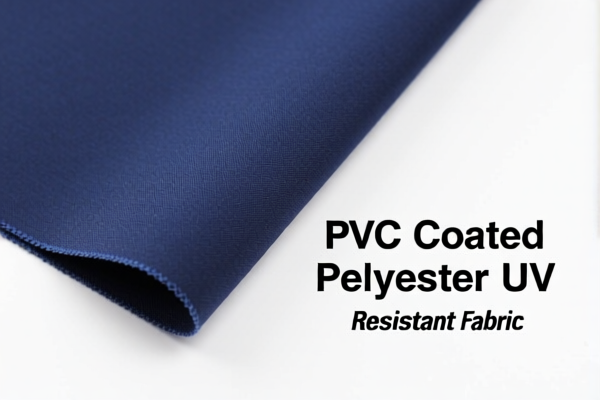
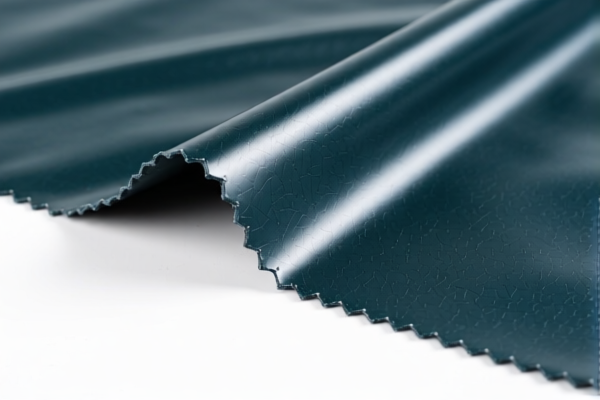
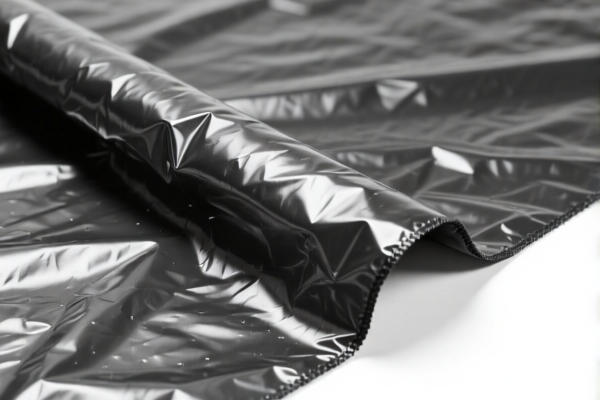
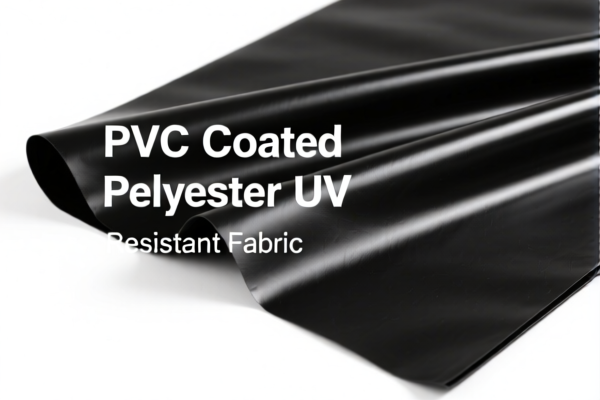
AI Analysis
🛡️ PVC Coated High Temperature Resistant Protective Fabric
🌐 HS Code Reference & Customs Clearance Guide | 2026 Latest Tariff Analysis | Professional Clearance Strategy
📌 I. Product Definition & Classification: Do You Really Understand "PVC Coated Fabric"?
PVC (Polyvinyl Chloride) coated high-temperature resistant protective fabric is a composite textile material widely used in industrial insulation, fire protection, and heavy-duty protective gear. In international trade, its classification depends heavily on whether it is viewed primarily as a textile or a plastic product.
Key Distinction: * Textile-Based (Chapter 59): If the fabric structure is dominant and PVC is applied as a coating/impregnation for protection/insulation. * Plastic-Based (Chapter 39): If the PVC layer is dominant, forming a sheet/film structure with textile reinforcement.
⚠️ Critical Classification Point:
- If the fabric retains its textile identity and the coating is for "imperviousness" or "protection" → Chapter 59
- If the product is essentially a plastic sheet with textile backing → Chapter 39
- High-Temperature Resistance alone does not change the HS code; it is a functional characteristic, not a material determinant.
📦 II. HS Code Classification Details (2026 Latest Tariff Authority Match)
Based on your provided data, here are the five potential HS Codes and their specific rationales. Note: All codes listed below are subject to US Import Tariffs (Base + Section 301 + IEEPA 122).
| HS Code | Summary / Rationale from Data | Total Tax Rate | Tax Detail Breakdown |
|---|---|---|---|
| 5911.10.20.00 | PVC Coated Shockproof Fabric: Material is PVC, form is fabric. Fits the description of textile fabrics coated with rubber or similar materials. | 38.8% | Base: 3.8% + Sec 301: 25.0% + IEEPA 122: 10% |
| 3921.12.15.00 | PVC Coated Shockproof Fabric: Material is PVC, form is fabric, purpose is shockproof. Fits the description of fiber-bonded attributes. | 41.5% | Base: 6.5% + Sec 301: 25.0% + IEEPA 122: 10% |
| 3921.12.11.00 | PVC Coated Shockproof Fabric: Contains PVC material and coating, form is sheet/film. Belongs to composite fabrics. | 39.2% | Base: 4.2% + Sec 301: 25.0% + IEEPA 122: 10% |
| 5911.10.10.00 | PVC Coated Shockproof Fabric: Contains coating and fabric, fits covered/impregnated textile characteristics. PVC inferred as plastic/rubber coating. | 37.9% | Base: 2.9% + Sec 301: 25.0% + IEEPA 122: 10% |
| 5903.10.20.10 | PVC Coated Tear-Resistant Fabric: Material is PVC, form is coated fabric. Belongs to textile fabrics impregnated, coated, covered or laminated. | 35.0% | Base: 0.0% + Sec 301: 25.0% + IEEPA 122: 10% |
🔍 Key Observation:
- 5903.10.20.10 offers the lowest total tax rate (35.0%) because it has a 0% Base Duty.
- However, this code specifically mentions "Tear-Resistant" (防撕裂) in the summary. If your product is primarily "High Temperature Resistant" (耐高温) rather than "Tear-Resistant," Customs may challenge this classification unless the tear resistance is a certified primary feature.
- 5911.10.10.00 is the second cheapest (37.9%) and is broader ("Shockproof" vs "Tear-Resistant"), making it potentially safer if the "High Temperature" aspect is not explicitly covered by another specific code.
💰 III. 2026 Latest Tariff Rate Details (Including Surcharges & Policy Add-ons)
✅ Applicable Country: United States (US)
✅ Origin: China (CN)
✅ Effective Date: 2025 Nov 10 onwards (for subsequent imports)
🎯 1. 5903.10.20.10 —— PVC Coated Tear-Resistant Fabric (Lowest Cost)
| Item | Content |
|---|---|
| Base Duty Rate | 0.0% (Ad Valorem) |
| USITC Surcharge (Sec 301) | +25.0% (From USITC Footnote 9903.88.01) |
| IEEPA Surcharge (122 Clause) | +10.0% (Targeting China/HK products, effective Nov 10, 2025) |
| Total Effective Rate | 35.0% |
| Tax Calculation | CIF Value × 35.0% |
| De Minimis Exemption | ❌ Not Available (deny_de_minimis applies to these HS codes) |
| Legal Basis Path | IEEPA:9903.01.25 → USITC:5903.10.20.10 → FOOTNOTE:9903.88.01 |
📌 Explanation:
- This code falls under Chapter 59, which generally has lower base duties than Chapter 39.
- The 25% Section 301 and 10% IEEPA 122 are mandatory surcharges for Chinese-origin goods in these categories.
- Warning: Ensure the product documentation highlights "Tear-Resistant" properties to justify this code. If the primary feature is only "Heat Resistant," Customs may reclassify to a higher base-duty code.
🎯 2. 5911.10.10.00 —— PVC Coated Shockproof Fabric (Safe Alternative)
| Item | Content |
|---|---|
| Base Duty Rate | 2.9% |
| USITC Surcharge (Sec 301) | +25.0% |
| IEEPA Surcharge (122 Clause) | +10.0% |
| Total Effective Rate | 37.9% |
| Tax Calculation | CIF Value × 37.9% |
| De Minimis Exemption | ❌ Not Available |
| Legal Basis Path | IEEPA:9903.01.24 → USITC:5911.10.10.00 → FOOTNOTE:9903.88.01 |
📌 Note:
- This is a Chapter 59 classification (Textile Articles).
- It is often considered more accurate for "Coated Fabrics" where the fabric base is the structural element.
- 37.9% is still significantly lower than Chapter 39 options (39.2% - 41.5%).
🎯 3. 3921.12.11.00 & 3921.12.15.00 —— Plastic Sheets/Laminates (Higher Cost)
| Item | Content |
|---|---|
| Base Duty Rate | 4.2% (for .11.00) / 6.5% (for .15.00) |
| USITC Surcharge (Sec 301) | +25.0% |
| IEEPA Surcharge (122 Clause) | +10.0% |
| Total Effective Rate | 39.2% / 41.5% |
| De Minimis Exemption | ❌ Not Available |
📌 Warning:
- These fall under Chapter 39 (Plastics).
- They are typically used if the PVC coating is so thick that the product is considered a "Plastic Sheet" rather than a "Fabric."
- Higher Base Duties make these less cost-effective unless the product physically fails the textile definition of Chapter 59.
🛠️ IV. Customs Clearance Practical Advice (Pitfall Avoidance Guide)
✅ 1. Documentation Checklist (Essential for Approval)
| Document | Required? | Explanation |
|---|---|---|
| ✅ Product Specification Sheet | ✔️ | Must clearly state: Material (PVC + Fabric Base), Coating Weight, Heat Resistance Temp (°C/°F), and Tear Strength (if using 5903) |
| ✅ Composition Breakdown | ✔️ | % of Fabric vs. % of PVC. Critical for distinguishing Ch 59 (Textile dominant) vs Ch 39 (Plastic dominant) |
| ✅ Product Photos | ✔️ | Show cross-section to prove it is a "Coated Fabric" not just a "Plastic Sheet" |
| ✅ Test Reports | ✔️ | UL94 Fire Rating, Heat Resistance Test, Tear Strength Test (for 5903) |
| ✅ Commercial Invoice | ✔️ | Description: "PVC Coated Fabric, Heat Resistant, for [Specific Use]" |
| ✅ Bill of Lading | ✔️ | Ensure no misleading terms like "Plastic Sheet" if declaring as Fabric |
✅ 2. Declaration Strategy (Key Mantras)
🔥 "Fabric Base, Coating Top, Chapter 59 is King; Plastic Sheet, High Base, Chapter 39 is Stingy!"
| Scenario | Correct Declaration | Wrong Declaration | Risk |
|---|---|---|---|
| Primary Feature: Tear Resistance | 5903.10.20.10 (35.0%) |
5911.10.10.00 |
Overpaying by 2.9% |
| Primary Feature: Heat/General Protection | 5911.10.10.00 (37.9%) |
3921.12.15.00 |
Overpaying by 3.6% - 13.6% |
| Very Thick PVC, Minimal Fabric | 3921.12.11.00 (39.2%) |
5903.10.20.10 |
Misclassification Penalty + Higher Tax |
| Splitting Shipments | N/A | Splitting into parts | 89.5%+ Tax on accessories/parts |
✅ 3. Special Handling for "High Temperature"
| Issue | Advice |
|---|---|
| No Specific "Heat Resistant" HS | There is no HS code specifically for "Heat Resistant." You must classify by Material/Form (PVC Coated Fabric). Use functional specs in documents to support the primary use. |
| Customs Scrutiny | High-temp fabrics are often used for industrial/fireproofing. Be ready to provide UL or SGS reports proving the material properties. |
| 122 Clause Impact | The 10% IEEPA 122 tariff applies to these textile/plastic composites from China. Ensure your supplier confirms origin and you have the correct Certificate of Origin. |
🌍 V. Global Market Comparison (2026 Update)
| Country/Region | Recommended HS Code | Estimated Total Tax | Certification Req. | Notes |
|---|---|---|---|---|
| 🇺🇸 USA | 5903.10.20.10 |
35.0% | N/A (General) | Lowest Rate if Tear-Resistant is proven. |
| 🇨🇳 China | 5903.10.20.10 |
~0% - 5% | CCC (if applicable) | No surcharges for imports to China. |
| 🇪🇺 EU | 5903.10.20 |
6.5% (standard) | REACH/RoHS | No Section 301/122 equivalents. |
| 🇬🇧 UK | 5903.10.20 |
6.5% | UKCA | Post-Brexit rules apply. |
📌 Conclusion:
- USA is the most complex market due to Section 301 (25%) and IEEPA 122 (10%).
- Optimization Opportunity: If your product meets the definition of "Tear-Resistant," aggressively push for5903.10.20.10to save 2.9% vs the next best textile option.
- If not,5911.10.10.00is the safest "Textile" classification. Avoid Chapter 39 unless the PVC layer is overwhelmingly dominant (>50% by weight/structure).
📌 VI. Common Mistakes & Pitfalls (Lessons Learned)
❌ Mistake 1: Calling it "Plastic Sheet" when it is clearly fabric.
👉 Result: Customs may reclassify to Chapter 39 (Higher Base Duty) or reject the "Textile" entry.
❌ Mistake 2: Ignoring the "122 Clause" (10% Surcharge).
👉 Result: Unexpected 10% additional cost on top of the 25% Sec 301. Total tax jumps from 25% to 35%+ depending on base rate.
❌ Mistake 3: Misrepresenting "Heat Resistant" as the primary classifier.
👉 Result: HS codes do not classify by "Heat." You must classify by Material (PVC/Fabric) and Form (Coated). Use heat resistance only in the description.
❌ Mistake 4: Using 5903.10.20.10 without Tear Resistance Data.
👉 Result: Customs audit. If "Tear Resistant" is not in the specs/test report, they may downgrade to a higher base-duty code like 5911.10.20.00 (38.8%), costing you more.
✅ Correct Approach:
"PVC Coated Textile Fabric, Heat Resistant up to 120°C, Tear Strength >500N, Model XYZ, Certified for Industrial Use"
🎯 VII. Conclusion: Professional Classification, Maximized Savings!
🎯 Remember the Mantra:
🔹 "Fabric Base, Coating Top, Chapter 59 is King; Plastic Sheet, High Base, Chapter 39 is Stingy!"
🔹 "Heat Resistant is a Feature, Not a Code. Classify by Material, Save by Correct HS!"
🔹 "10% IEEPA 122 is Non-Negotiable for China. Plan Your Tariff Budget!"
📌 Pro Tip:
If your fabric is originally manufactured in Vietnam, Mexico, or Thailand, you may be eligible for IEEPA/Sec 301 Exemptions.
Recommend Applying for an Advance Ruling with US Customs (CBP) to lock in the favorable5903.10.20.10or5911.10.10.00classification.
📣 Immediate Action:
📞 Consult with a licensed customs broker.
📄 Provide Tear Strength Test Reports to justify5903.10.20.10.
🚀 Ensure your commercial invoice clearly states "PVC Coated Fabric" and "Chinese Origin" to avoid delays.
✨ Professional Clearance Starts with Precise Classification!
💼 Every Percent Saved is Pure Profit!
Customer Reviews
About HS Code Classification
The Harmonized System (HS) is an internationally standardized nomenclature developed by the World Customs Organization (WCO) to classify traded products. Over 200 countries use the HS system as the basis for customs tariffs, trade statistics, and import/export regulations.
Each HS code follows a hierarchical structure:
- Chapter (2 digits) — Broad category of goods (e.g., Chapter 84: Machinery and Mechanical Appliances)
- Heading (4 digits) — More specific grouping within the chapter
- Subheading (6 digits) — Internationally standardized breakdown, used by all WCO member countries
- National subdivisions (8-10 digits) — Country-specific extensions for further classification, such as US HTSUS 10-digit codes
Correct HS code classification is essential for smooth customs clearance, accurate duty payment, and compliance with trade regulations. Misclassification can lead to customs delays, overpayment of duties, or penalties.
When importing from CN to US, the applicable tariff rates may include:
- Most-Favored-Nation (MFN) rate — The standard duty rate applied to WTO members
- General rate — Applied to countries without trade agreements
- Trade remedy duties — Additional tariffs such as Section 301 (anti-dumping), Section 232 (national security), or countervailing duties
The information provided on this page is for reference purposes only. For official classification, please consult with your local customs authority or a licensed customs broker.