PVC Composite Flame Retardant Board
CN → US| HS编码 | 关税税率 | 原产国 | 目的国 | 文档 |
|---|---|---|---|---|
| 3926906520 | 14.2% | CN | US | 官方文档 |
| 5911101000 | 37.9% | CN | US | 官方文档 |
| 3921121100 | 39.2% | CN | US | 官方文档 |
| 5911102000 | 38.8% | CN | US | 官方文档 |
| 3926906520 | 14.2% | CN | US | 官方文档 |
商品图片
AI分析
🛡️ PVC Composite Flame Retardant Board: HS Code Classification & US Customs Clearance Strategy (2026)
🌐 HS Code Reference & Clearance Guide | 2026 Latest Tariff Analysis | Professional Compliance Strategy
📌 I. Product Definition & Classification: What is a "PVC Composite Flame Retardant Board"?
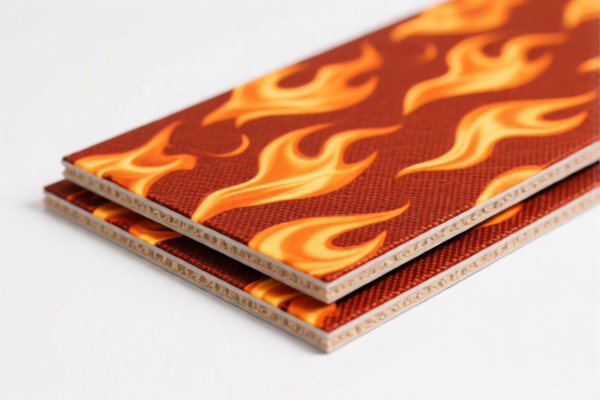
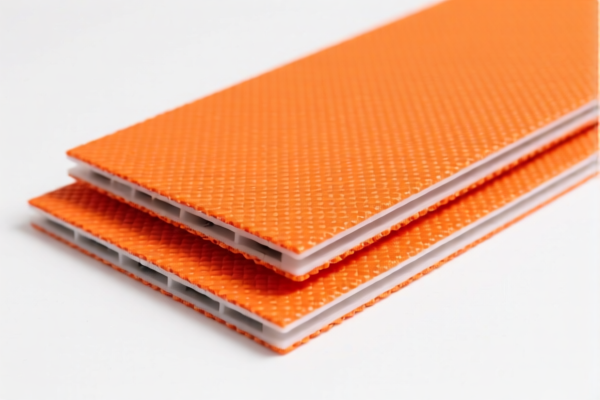
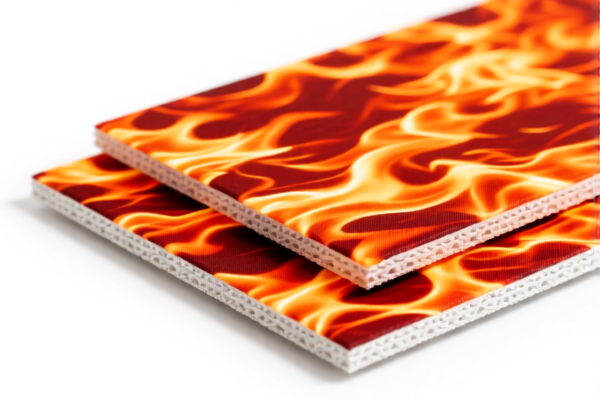
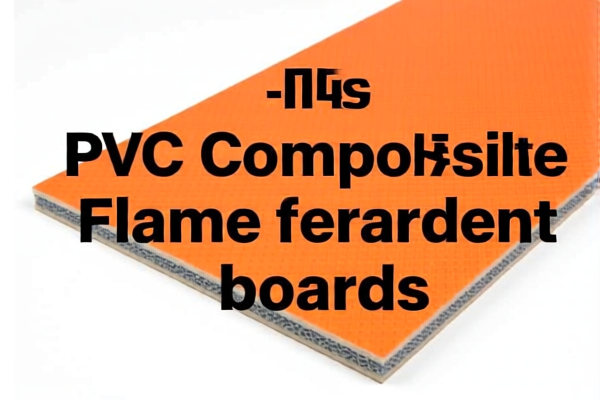
A PVC Composite Flame Retardant Board is a specialized industrial or construction material composed primarily of Polyvinyl Chloride (PVC) in a board/panel form. Key characteristics include: * Material: PVC-based plastic. * Form: Rigid or semi-rigid board/panel. * Function: Flame retardant properties (often achieved through additives or composite structures). * Structure: May involve single-layer PVC or multi-layer composites (e.g., PVC coated on fabric, or PVC sandwiched with other materials).
⚠️ Key Classification Dilemma:
- Is it a general plastic product (Chapter 39)?
- Or is it a technical textile/composite fabric (Chapter 59) due to PVC coating/lamination on a textile substrate?
- The distinction depends on material dominance and composite structure.
📦 II. HS Code Classification Details (2026 Latest Tariff Authority)
Based on the provided data, four potential HS Codes are identified. Each reflects a different interpretation of the product’s composition and function.
| HS Code | Product Description | Key Justification | Total Tax Rate |
|---|---|---|---|
| 3926.90.65.20 | Other plastic articles (PVC flame retardant board) | PVC is the primary material; board form; not specifically classified elsewhere. | 14.2% |
| 5911.10.10.00 | Textile fabrics coated with PVC (Composite fabric, technical use) | Product contains textile fabric + PVC coating; material consistency suggests textile composite. | 37.9% |
| 3921.12.11.00 | Plastics laminated with textile (PVC composite textile material) | PVC + textile composite structure; classified as laminated plastic with textile backing. | 39.2% |
| 5911.10.20.00 | Other technical textile products (PVC coated, technical use) | Composite fabric form; PVC used for coating/lamination; functional/technical end-use. | 38.8% |
🔍 Critical Distinction:
- 3926.90.65.20 → Treats the product as a pure plastic article (lowest tax, simplest classification).
- 5911.10.10.00 / 3921.12.11.00 / 5911.10.20.00 → Treats the product as a composite/textile-based item (higher tax due to textile content and Section 301/122 tariffs).
💰 III. 2026 Latest Tariff Rate Breakdown (Including Surcharges & Policy Add-ons)
✅ Applicable Country: United States (US)
✅ Country of Origin: China (CN)
✅ Effective Date: November 10, 2025 (and onwards)
🎯 1. 3926.90.65.20 —— Plastic Flame Retardant Board (Lowest Tax)
| Item | Content |
|---|---|
| Base Duty | 4.2% |
| Section 301 Surcharge | 0.0% (Not applicable under this specific subheading) |
| Section 122 Tariff | 10% |
| Total Tax Rate | 14.2% |
| Calculation | CIF Value × 14.2% |
| De Minimis Exemption | ❌ Not Available (deny_de_minimis) |
| Legal Basis Path | Section 122: 9903.01.25 → USITC: 3926.90.65.20 |
📌 Explanation:
- This is the most cost-effective classification if the product can be argued as a pure plastic article without significant textile integration.
- Section 122 (10%) applies to certain plastic products from China.
- No Section 301 (25%) surcharge, making it significantly cheaper than textile-based classifications.
🎯 2. 5911.10.10.00 —— PVC-Coated Textile Fabric (High Tax)
| Item | Content |
|---|---|
| Base Duty | 2.9% |
| Section 301 Surcharge | +25.0% |
| Section 122 Tariff | +10.0% |
| Total Tax Rate | 37.9% |
| Calculation | CIF Value × 37.9% |
| De Minimis Exemption | ❌ Not Available |
| Legal Basis Path | Section 301: 9903.88.01 → Section 122: 9903.01.25 → USITC: 5911.10.10.00 |
📌 Explanation:
- If the product is classified as a textile fabric coated with PVC, it attracts Section 301 (25%) + Section 122 (10%).
- This is a high-cost classification due to the textile origin and additional tariffs.
🎯 3. 3921.12.11.00 —— PVC-Textile Laminated Composite (Highest Tax)
| Item | Content |
|---|---|
| Base Duty | 4.2% |
| Section 301 Surcharge | +25.0% |
| Section 122 Tariff | +10.0% |
| Total Tax Rate | 39.2% |
| Calculation | CIF Value × 39.2% |
| De Minimis Exemption | ❌ Not Available |
| Legal Basis Path | Section 301: 9903.88.01 → Section 122: 9903.01.25 → USITC: 3921.12.11.00 |
📌 Explanation:
- This classification applies if the product is a laminated plastic-textile composite.
- Highest total tax (39.2%) due to both Section 301 and Section 122 tariffs.
- Avoid this classification if possible, as it is the most expensive.
🎯 4. 5911.10.20.00 —— Technical Textile with PVC Coating (High Tax)
| Item | Content |
|---|---|
| Base Duty | 3.8% |
| Section 301 Surcharge | +25.0% |
| Section 122 Tariff | +10.0% |
| Total Tax Rate | 38.8% |
| Calculation | CIF Value × 38.8% |
| De Minimis Exemption | ❌ Not Available |
| Legal Basis Path | Section 301: 9903.88.01 → Section 122: 9903.01.25 → USITC: 5911.10.20.00 |
📌 Explanation:
- Similar to5911.10.10.00, but classified under technical textile products rather than general coated fabrics.
- Total tax: 38.8%, nearly identical to the previous textile-based codes.
🛠️ IV. Customs Clearance Practical Advice (Real-World Pitfall Guide)
✅ 1. Documentation Checklist (All Required)
| Document | Must Provide | Notes |
|---|---|---|
| ✅ Product Specifications | ✔️ | Material composition (PVC % vs. textile %), thickness, flame retardant rating |
| ✅ Technical Data Sheet | ✔️ | Include flame retardant test results (e.g., UL94, ASTM D635) |
| ✅ Product Photos | ✔️ | Clear images of the board, edges, and any labels |
| ✅ Cross-Section/Microscopy Report | ✔️ | Critical to prove whether textile is embedded or just surface-coated |
| ✅ Commercial Invoice | ✔️ | Clearly state: "PVC Composite Flame Retardant Board, HS Code 3926.90.65.20" |
| ✅ Packing List | ✔️ | Indicate unit weight, dimensions, and packaging type |
| ✅ Origin Certificate | ✔️ | If not China-origin, claim FTA benefits (e.g., USMCA, ASEAN) |
✅ 2. Classification Strategy (Key Mantra)
🔥 “Pure Plastic = 14.2% | Composite Textile = 37–39% | Declare Accurately!”
| Scenario | Correct HS Code | Risk if Misclassified |
|---|---|---|
| Single-layer PVC board (no textile) | 3926.90.65.20 |
N/A (Correct) |
| PVC-coated fabric (textile base) | 5911.10.10.00 or 5911.10.20.00 |
If declared as 3926.90.65.20 → Under-declaration penalty |
| Laminated PVC-textile (sandwich structure) | 3921.12.11.00 |
If declared as 3926.90.65.20 → High risk of audit & back-taxes |
| PVC board with fabric backing | 5911.10.10.00 |
Same as above |
📌 Pro Tip:
- If the product is primarily PVC (e.g., >90% PVC by weight/volume) and the textile is negligible or absent, argue for3926.90.65.20.
- If the product contains significant textile layers or is fabric-based with PVC coating, prepare for higher tariffs under Chapter 59.
✅ 3. Special Cases & Handling
| Scenario | Handling Advice |
|---|---|
| OEM Custom Boards | Provide client design specs to justify classification |
| Multilayer Boards | Submit cross-section analysis to prove PVC dominance |
| Flame Retardant Additives | Do not change HS Code; additives are part of the plastic formulation |
| Non-China Origin | If from Vietnam, Thailand, etc., IEEPA exemptions may apply → Lower tariffs |
🌍 V. Global Market Comparison (2026)
| Country/Region | Recommended HS Code | Tax Rate | Certification | Notes |
|---|---|---|---|---|
| 🇺🇸 USA | 3926.90.65.20 |
14.2% | No special certs required | Best option if pure PVC |
| 🇺🇸 USA (if textile-based) | 5911.10.10.00 |
37.9% | None | High tariff due to Section 301 |
| 🇨🇳 China | 3926.90.65.20 |
4.2% | CCC (if applicable) | No surcharges |
| 🇪🇺 EU | 3926.90.65.20 |
0% | REACH, RoHS | No Section 301/122 |
| 🇯🇵 Japan | 3926.90.65.20 |
0% | JIS | No surcharges |
📌 Conclusion:
- USA is the only market with significant surcharges for Chinese-origin PVC/textile products.
- Non-China origin (e.g., Vietnam, Thailand) can avoid Section 301/122 → Lower costs.
- EU, Japan, China have no surcharges, making them more favorable for export.
📌 VI. Common Mistakes & Pitfalls (Lessons Learned)
❌ Mistake 1: Classifying a textile-based PVC board as 3926.90.65.20
👉 Consequence: Customs audit → Back-taxes + Penalties (up to 39.2% vs. 14.2%)
❌ Mistake 2: Failing to provide cross-section analysis
👉 Consequence: Customs rejects self-classification → Delay + Additional fees
❌ Mistake 3: Using vague descriptions like "Plastic Board"
👉 Consequence: Customs reclassifies → Uncertainty & higher risk
❌ Mistake 4: Assuming De Minimis exemption applies
👉 Consequence: Not eligible for shipments under $800 → Full duty applies
✅ Correct Approach:
“PVC Composite Flame Retardant Board, Pure PVC Form, UL94-V0 Certified, HS Code 3926.90.65.20”
🎯 VII. Conclusion: Precision Classification Saves Money!
🎯 Remember the Mantra:
🔹 “Pure PVC = 14.2% | Composite Textile = 37–39% | Document Everything!”
🔹 “HS Code Determines Cost, Accuracy Prevents Penalties!”
📌 Pro Tip:
If your PVC board is sourced from Vietnam, Mexico, Thailand, or Malaysia, you may qualify for IEEPA Exemptions, reducing tariffs to 0–5%.
Consider applying for Pre-Ruling (Advance Ruling) from CBP to confirm classification before shipment.
📣 Immediate Action:
📞 Contact a licensed customs broker + Provide product images + Apply for HS Code Pre-Ruling
🚀 Ensure smooth clearance, lower costs, and faster delivery for your PVC Composite Flame Retardant Board!
✨ Professional classification starts with accurate documentation!
💼 Every percentage point of tariff impacts your bottom line!
用户评价
关于 HS 编码归类
协调制度(HS)是由世界海关组织(WCO)制定的国际贸易商品分类标准。全球 200 多个国家采用 HS 系统作为海关关税、贸易统计和进出口监管的基础。
每个 HS 编码遵循以下层级结构:
- 章(2 位)——商品大类(例如:第 84 章:机器和机械设备)
- 品目(4 位)——章内的更具体分类
- 子目(6 位)——国际通用细分,所有 WCO 成员国统一使用
- 本国细分(8-10 位)——各国自行扩展的细分编码,如美国 HTSUS 10 位编码
正确的 HS 编码归类对于顺利通关、准确缴纳关税和遵守贸易法规至关重要。错误归类可能导致海关延误、多缴关税或罚款。
从CN进口到US时,适用的关税税率可能包括:
- 最惠国(MFN)税率——适用于 WTO 成员国的标准关税税率
- 普通税率——适用于无贸易协定国家
- 贸易救济关税——附加关税,如 301 条款(反倾销)、232 条款(国家安全)或反补贴税
本页内容仅供参考。如需正式归类,请咨询当地海关或持牌报关代理。