PVC Composite Flame Retardant Board
CN → US| HS Code | Tariff Rate | Origin | Destination | Doc |
|---|---|---|---|---|
| 3926906520 | 14.2% | CN | US | Official Doc |
| 5911101000 | 37.9% | CN | US | Official Doc |
| 3921121100 | 39.2% | CN | US | Official Doc |
| 5911102000 | 38.8% | CN | US | Official Doc |
| 3926906520 | 14.2% | CN | US | Official Doc |
Product Images
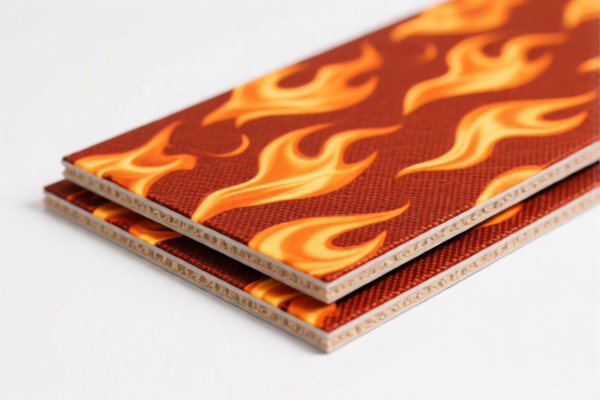
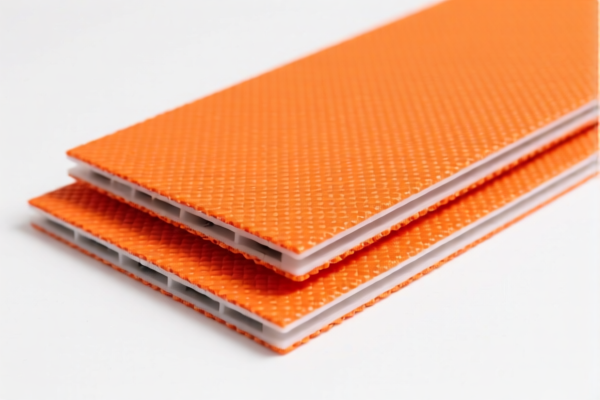
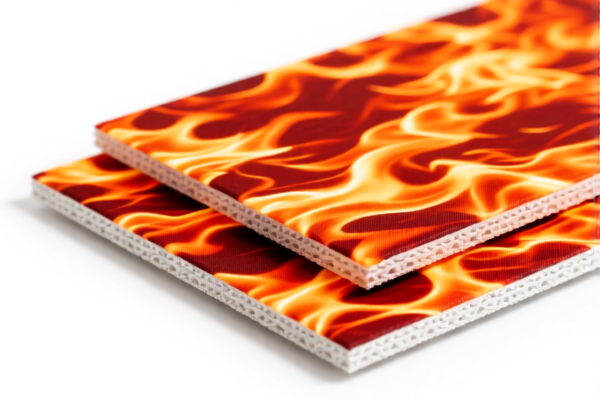
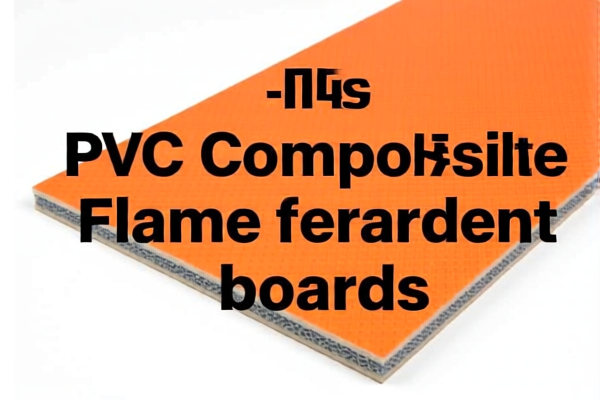
AI Analysis
🛡️ PVC Composite Flame Retardant Board: HS Code Classification & US Customs Clearance Strategy (2026)
🌐 HS Code Reference & Clearance Guide | 2026 Latest Tariff Analysis | Professional Compliance Strategy
📌 I. Product Definition & Classification: What is a "PVC Composite Flame Retardant Board"?
A PVC Composite Flame Retardant Board is a specialized industrial or construction material composed primarily of Polyvinyl Chloride (PVC) in a board/panel form. Key characteristics include: * Material: PVC-based plastic. * Form: Rigid or semi-rigid board/panel. * Function: Flame retardant properties (often achieved through additives or composite structures). * Structure: May involve single-layer PVC or multi-layer composites (e.g., PVC coated on fabric, or PVC sandwiched with other materials).
⚠️ Key Classification Dilemma:
- Is it a general plastic product (Chapter 39)?
- Or is it a technical textile/composite fabric (Chapter 59) due to PVC coating/lamination on a textile substrate?
- The distinction depends on material dominance and composite structure.
📦 II. HS Code Classification Details (2026 Latest Tariff Authority)
Based on the provided data, four potential HS Codes are identified. Each reflects a different interpretation of the product’s composition and function.
| HS Code | Product Description | Key Justification | Total Tax Rate |
|---|---|---|---|
| 3926.90.65.20 | Other plastic articles (PVC flame retardant board) | PVC is the primary material; board form; not specifically classified elsewhere. | 14.2% |
| 5911.10.10.00 | Textile fabrics coated with PVC (Composite fabric, technical use) | Product contains textile fabric + PVC coating; material consistency suggests textile composite. | 37.9% |
| 3921.12.11.00 | Plastics laminated with textile (PVC composite textile material) | PVC + textile composite structure; classified as laminated plastic with textile backing. | 39.2% |
| 5911.10.20.00 | Other technical textile products (PVC coated, technical use) | Composite fabric form; PVC used for coating/lamination; functional/technical end-use. | 38.8% |
🔍 Critical Distinction:
- 3926.90.65.20 → Treats the product as a pure plastic article (lowest tax, simplest classification).
- 5911.10.10.00 / 3921.12.11.00 / 5911.10.20.00 → Treats the product as a composite/textile-based item (higher tax due to textile content and Section 301/122 tariffs).
💰 III. 2026 Latest Tariff Rate Breakdown (Including Surcharges & Policy Add-ons)
✅ Applicable Country: United States (US)
✅ Country of Origin: China (CN)
✅ Effective Date: November 10, 2025 (and onwards)
🎯 1. 3926.90.65.20 —— Plastic Flame Retardant Board (Lowest Tax)
| Item | Content |
|---|---|
| Base Duty | 4.2% |
| Section 301 Surcharge | 0.0% (Not applicable under this specific subheading) |
| Section 122 Tariff | 10% |
| Total Tax Rate | 14.2% |
| Calculation | CIF Value × 14.2% |
| De Minimis Exemption | ❌ Not Available (deny_de_minimis) |
| Legal Basis Path | Section 122: 9903.01.25 → USITC: 3926.90.65.20 |
📌 Explanation:
- This is the most cost-effective classification if the product can be argued as a pure plastic article without significant textile integration.
- Section 122 (10%) applies to certain plastic products from China.
- No Section 301 (25%) surcharge, making it significantly cheaper than textile-based classifications.
🎯 2. 5911.10.10.00 —— PVC-Coated Textile Fabric (High Tax)
| Item | Content |
|---|---|
| Base Duty | 2.9% |
| Section 301 Surcharge | +25.0% |
| Section 122 Tariff | +10.0% |
| Total Tax Rate | 37.9% |
| Calculation | CIF Value × 37.9% |
| De Minimis Exemption | ❌ Not Available |
| Legal Basis Path | Section 301: 9903.88.01 → Section 122: 9903.01.25 → USITC: 5911.10.10.00 |
📌 Explanation:
- If the product is classified as a textile fabric coated with PVC, it attracts Section 301 (25%) + Section 122 (10%).
- This is a high-cost classification due to the textile origin and additional tariffs.
🎯 3. 3921.12.11.00 —— PVC-Textile Laminated Composite (Highest Tax)
| Item | Content |
|---|---|
| Base Duty | 4.2% |
| Section 301 Surcharge | +25.0% |
| Section 122 Tariff | +10.0% |
| Total Tax Rate | 39.2% |
| Calculation | CIF Value × 39.2% |
| De Minimis Exemption | ❌ Not Available |
| Legal Basis Path | Section 301: 9903.88.01 → Section 122: 9903.01.25 → USITC: 3921.12.11.00 |
📌 Explanation:
- This classification applies if the product is a laminated plastic-textile composite.
- Highest total tax (39.2%) due to both Section 301 and Section 122 tariffs.
- Avoid this classification if possible, as it is the most expensive.
🎯 4. 5911.10.20.00 —— Technical Textile with PVC Coating (High Tax)
| Item | Content |
|---|---|
| Base Duty | 3.8% |
| Section 301 Surcharge | +25.0% |
| Section 122 Tariff | +10.0% |
| Total Tax Rate | 38.8% |
| Calculation | CIF Value × 38.8% |
| De Minimis Exemption | ❌ Not Available |
| Legal Basis Path | Section 301: 9903.88.01 → Section 122: 9903.01.25 → USITC: 5911.10.20.00 |
📌 Explanation:
- Similar to5911.10.10.00, but classified under technical textile products rather than general coated fabrics.
- Total tax: 38.8%, nearly identical to the previous textile-based codes.
🛠️ IV. Customs Clearance Practical Advice (Real-World Pitfall Guide)
✅ 1. Documentation Checklist (All Required)
| Document | Must Provide | Notes |
|---|---|---|
| ✅ Product Specifications | ✔️ | Material composition (PVC % vs. textile %), thickness, flame retardant rating |
| ✅ Technical Data Sheet | ✔️ | Include flame retardant test results (e.g., UL94, ASTM D635) |
| ✅ Product Photos | ✔️ | Clear images of the board, edges, and any labels |
| ✅ Cross-Section/Microscopy Report | ✔️ | Critical to prove whether textile is embedded or just surface-coated |
| ✅ Commercial Invoice | ✔️ | Clearly state: "PVC Composite Flame Retardant Board, HS Code 3926.90.65.20" |
| ✅ Packing List | ✔️ | Indicate unit weight, dimensions, and packaging type |
| ✅ Origin Certificate | ✔️ | If not China-origin, claim FTA benefits (e.g., USMCA, ASEAN) |
✅ 2. Classification Strategy (Key Mantra)
🔥 “Pure Plastic = 14.2% | Composite Textile = 37–39% | Declare Accurately!”
| Scenario | Correct HS Code | Risk if Misclassified |
|---|---|---|
| Single-layer PVC board (no textile) | 3926.90.65.20 |
N/A (Correct) |
| PVC-coated fabric (textile base) | 5911.10.10.00 or 5911.10.20.00 |
If declared as 3926.90.65.20 → Under-declaration penalty |
| Laminated PVC-textile (sandwich structure) | 3921.12.11.00 |
If declared as 3926.90.65.20 → High risk of audit & back-taxes |
| PVC board with fabric backing | 5911.10.10.00 |
Same as above |
📌 Pro Tip:
- If the product is primarily PVC (e.g., >90% PVC by weight/volume) and the textile is negligible or absent, argue for3926.90.65.20.
- If the product contains significant textile layers or is fabric-based with PVC coating, prepare for higher tariffs under Chapter 59.
✅ 3. Special Cases & Handling
| Scenario | Handling Advice |
|---|---|
| OEM Custom Boards | Provide client design specs to justify classification |
| Multilayer Boards | Submit cross-section analysis to prove PVC dominance |
| Flame Retardant Additives | Do not change HS Code; additives are part of the plastic formulation |
| Non-China Origin | If from Vietnam, Thailand, etc., IEEPA exemptions may apply → Lower tariffs |
🌍 V. Global Market Comparison (2026)
| Country/Region | Recommended HS Code | Tax Rate | Certification | Notes |
|---|---|---|---|---|
| 🇺🇸 USA | 3926.90.65.20 |
14.2% | No special certs required | Best option if pure PVC |
| 🇺🇸 USA (if textile-based) | 5911.10.10.00 |
37.9% | None | High tariff due to Section 301 |
| 🇨🇳 China | 3926.90.65.20 |
4.2% | CCC (if applicable) | No surcharges |
| 🇪🇺 EU | 3926.90.65.20 |
0% | REACH, RoHS | No Section 301/122 |
| 🇯🇵 Japan | 3926.90.65.20 |
0% | JIS | No surcharges |
📌 Conclusion:
- USA is the only market with significant surcharges for Chinese-origin PVC/textile products.
- Non-China origin (e.g., Vietnam, Thailand) can avoid Section 301/122 → Lower costs.
- EU, Japan, China have no surcharges, making them more favorable for export.
📌 VI. Common Mistakes & Pitfalls (Lessons Learned)
❌ Mistake 1: Classifying a textile-based PVC board as 3926.90.65.20
👉 Consequence: Customs audit → Back-taxes + Penalties (up to 39.2% vs. 14.2%)
❌ Mistake 2: Failing to provide cross-section analysis
👉 Consequence: Customs rejects self-classification → Delay + Additional fees
❌ Mistake 3: Using vague descriptions like "Plastic Board"
👉 Consequence: Customs reclassifies → Uncertainty & higher risk
❌ Mistake 4: Assuming De Minimis exemption applies
👉 Consequence: Not eligible for shipments under $800 → Full duty applies
✅ Correct Approach:
“PVC Composite Flame Retardant Board, Pure PVC Form, UL94-V0 Certified, HS Code 3926.90.65.20”
🎯 VII. Conclusion: Precision Classification Saves Money!
🎯 Remember the Mantra:
🔹 “Pure PVC = 14.2% | Composite Textile = 37–39% | Document Everything!”
🔹 “HS Code Determines Cost, Accuracy Prevents Penalties!”
📌 Pro Tip:
If your PVC board is sourced from Vietnam, Mexico, Thailand, or Malaysia, you may qualify for IEEPA Exemptions, reducing tariffs to 0–5%.
Consider applying for Pre-Ruling (Advance Ruling) from CBP to confirm classification before shipment.
📣 Immediate Action:
📞 Contact a licensed customs broker + Provide product images + Apply for HS Code Pre-Ruling
🚀 Ensure smooth clearance, lower costs, and faster delivery for your PVC Composite Flame Retardant Board!
✨ Professional classification starts with accurate documentation!
💼 Every percentage point of tariff impacts your bottom line!
Customer Reviews
About HS Code Classification
The Harmonized System (HS) is an internationally standardized nomenclature developed by the World Customs Organization (WCO) to classify traded products. Over 200 countries use the HS system as the basis for customs tariffs, trade statistics, and import/export regulations.
Each HS code follows a hierarchical structure:
- Chapter (2 digits) — Broad category of goods (e.g., Chapter 84: Machinery and Mechanical Appliances)
- Heading (4 digits) — More specific grouping within the chapter
- Subheading (6 digits) — Internationally standardized breakdown, used by all WCO member countries
- National subdivisions (8-10 digits) — Country-specific extensions for further classification, such as US HTSUS 10-digit codes
Correct HS code classification is essential for smooth customs clearance, accurate duty payment, and compliance with trade regulations. Misclassification can lead to customs delays, overpayment of duties, or penalties.
When importing from CN to US, the applicable tariff rates may include:
- Most-Favored-Nation (MFN) rate — The standard duty rate applied to WTO members
- General rate — Applied to countries without trade agreements
- Trade remedy duties — Additional tariffs such as Section 301 (anti-dumping), Section 232 (national security), or countervailing duties
The information provided on this page is for reference purposes only. For official classification, please consult with your local customs authority or a licensed customs broker.