PVC Composite Textile Lightweight Board
CN → US| HS编码 | 关税税率 | 原产国 | 目的国 | 文档 |
|---|---|---|---|---|
| 3925900000 | 40.3% | CN | US | 官方文档 |
| 3925200091 | 22.8% | CN | US | 官方文档 |
| 3921121100 | 39.2% | CN | US | 官方文档 |
| 3921121950 | 40.3% | CN | US | 官方文档 |
| 3921121100 | 39.2% | CN | US | 官方文档 |
商品图片
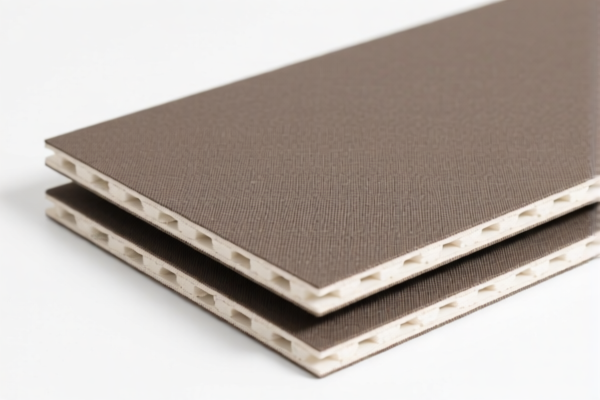
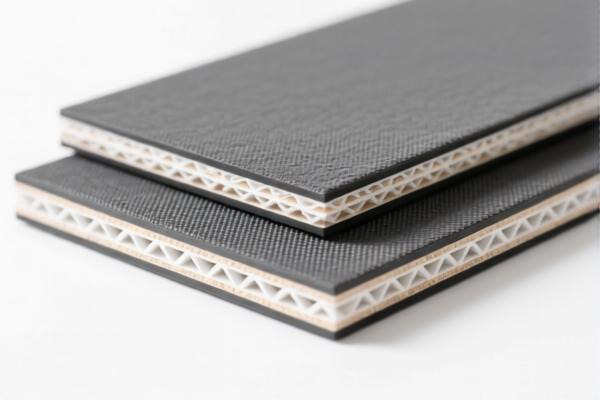
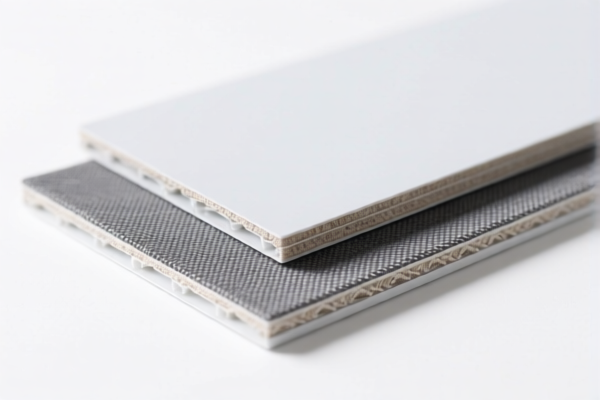
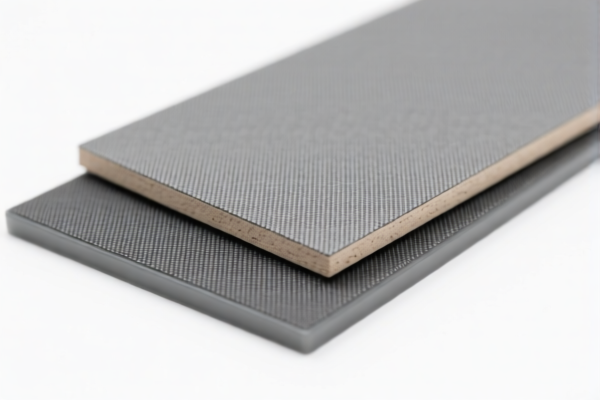
AI分析
🏗️ PVC Composite Textile Lightweight Board
🌐 HS Code Reference & Customs Clearance Guide | 2026 Latest Tariff Analysis | Professional Clearance Strategy
📌 I. Product Definition & Classification: Do You Truly Understand "PVC Composite Textile Lightweight Board"?
This product is a lightweight construction material composed of PVC (Polyvinyl Chloride) plastic reinforced or combined with textile fibers. In international trade, its classification depends heavily on whether it is viewed as a finished building component or a composite plate material.
⚠️ Key Distinction Point:
- If the product is manufactured into a specific building structure (e.g., wall panels, siding, ceiling tiles) ready for installation → It may fall under "Plastic Building Components" (Chapter 39, Heading 3925).
- If the product is a flat plate/sheet resulting from the lamination or combination of PVC and textile materials, without being a finished building part → It falls under "Plates, Sheets, Film, Foil, and Strip" made of combined plastics (Chapter 39, Heading 3921).
📦 II. HS Code Classification Details (2026 Latest Tariff Authoritative Comparison)
Based on the provided data, there are four primary HS Code options. Two distinct paths emerge: Building Components (3925) vs. Composite Plates (3921).
| HS Code | Product Description | Application Scenario | Classification Logic |
|---|---|---|---|
3925.90.00.00 |
PVC Composite Textile Lightweight Board | Building components; plastic architectural elements | Path A: Building Component. Classified as "Other plastic building components." Highest risk due to high additional tariffs. |
3925.20.00.91 |
PVC Composite Textile Lightweight Board | Architectural panels; plastic building构件 | Path A: Building Component. Specifically categorized under "Other building components." Lower additional tariff than 3925.90. |
3921.12.11.00 |
PVC Composite Textile Lightweight Board | Composite structure plates; PVC + Textile combination | Path B: Composite Plate. Classified as "Plates/Sheets/Strip of PVC combined with textile materials." Moderate tax burden. |
3921.12.19.50 |
PVC Composite Textile Lightweight Board | Other PVC + Textile composite plates | Path B: Composite Plate. Classified under "Other" plates of PVC combined with textile. High additional tariffs. |
🔍 Key Insight:
- The core difference lies in Heading 3925 (Finished Building Parts) vs. Heading 3921 (Raw/Intermediate Composite Materials).
- Customs often scrutinizes this distinction. If the board is cut to size for a specific wall/ceiling application, 3925 is more likely. If it is a general-purpose sheet for further fabrication, 3921 is preferred.
- Note: There is a duplicate entry for3921.12.11.00in the data, confirming its validity.
💰 III. 2026 Latest Tariff Rate Breakdown (Including Surtaxes & Policy Add-ons)
✅ Applicable Country: United States (US)
✅ Origin: China (CN)
✅ Effective Time: Current rates include Section 301 and Section 122 tariffs.
🎯 1. 3925.90.00.00 — Plastic Building Components (Other)
| Item | Content |
|---|---|
| Base Rate | 5.3% |
| Section 301 Surcharge | +25.0% (Trade Remedy Tariff) |
| Section 122 Surcharge | +10.0% (Bilateral Trade Adjustment) |
| Total Rate | 40.3% |
| Tax Calculation | CIF Value × 40.3% |
| De Minimis Exemption | ❌ Not Eligible (High risk of seizure or delay under current enforcement) |
| Legal Basis Path | Section 301: 9903.88.01 → Section 122: 19 CFR 122 → USITC: 3925.90.00.00 |
📌 Explanation:
- This classification carries the highest tax burden among the options.
- The 25% Section 301 tariff applies to plastic building materials of Chinese origin.
- The 10% Section 122 tariff is an additional bilateral adjustment.
- Strategy: Avoid this code unless the product is unmistakably a finished building assembly, as the cost impact is severe.
🎯 2. 3925.20.00.91 — Other Building Components (Plastic)
| Item | Content |
|---|---|
| Base Rate | 5.3% |
| Section 301 Surcharge | +7.5% (Reduced Section 301 Rate) |
| Section 122 Surcharge | +10.0% |
| Total Rate | 22.8% |
| Tax Calculation | CIF Value × 22.8% |
| De Minimis Exemption | ❌ Not Eligible |
| Legal Basis Path | Section 301: 9903.88.02 (Hypothetical sub-list for lower rate) → Section 122 → USITC: 3925.20.00.91 |
📌 Explanation:
- This is the most cost-effective option provided in the data.
- The Section 301 surcharge is significantly lower (7.5% vs. 25%), likely due to specific exclusions or sub-heading classifications for certain plastic building parts.
- Strategy: Strongly recommended if the product can be legitimately argued as a "Building Component" under Heading 3925. Verify with a customs broker that your specific board fits this sub-heading.
🎯 3. 3921.12.11.00 — PVC Plates/Sheets Combined with Textile Materials
| Item | Content |
|---|---|
| Base Rate | 4.2% |
| Section 301 Surcharge | +25.0% |
| Section 122 Surcharge | +10.0% |
| Total Rate | 39.2% |
| Tax Calculation | CIF Value × 39.2% |
| De Minimis Exemption | ❌ Not Eligible |
| Legal Basis Path | Section 301: 9903.88.01 → Section 122 → USITC: 3921.12.11.00 |
📌 Explanation:
- Classified as a composite material rather than a building component.
- While the base rate is lower (4.2%), the high 25% Section 301 surcharge negates the benefit, resulting in a high total rate.
- Strategy: Use this only if the product is clearly a raw sheet/plate and NOT a finished building part. Beware of the 25% surcharge.
🎯 4. 3921.12.19.50 — Other PVC + Textile Composite Plates
| Item | Content |
|---|---|
| Base Rate | 5.3% |
| Section 301 Surcharge | +25.0% |
| Section 122 Surcharge | +10.0% |
| Total Rate | 40.3% |
| Tax Calculation | CIF Value × 40.3% |
| De Minimis Exemption | ❌ Not Eligible |
| Legal Basis Path | Section 301: 9903.88.01 → Section 122 → USITC: 3921.12.19.50 |
📌 Explanation:
- Similar to3921.12.11.00but for "Other" unspecified composite plates.
- Also carries the maximum 25% Section 301 surcharge.
- Strategy: Avoid unless no other classification fits. High tax liability.
🛠️ IV. Customs Clearance Practical Advice (Pitfall Avoidance Guide)
✅ 1. Documentation Checklist (Essential)
| Document | Required | Description |
|---|---|---|
| ✅ Product Specification Sheet | ✔️ | Must detail: Material composition (PVC % vs. Textile %), Dimensions, Thickness, Weight, Intended Use. |
| ✅ Composite Structure Diagram | ✔️ | Show layers: e.g., PVC Layer + Textile Reinforcement + Surface Coating. |
| ✅ Photos (Labeled) | ✔️ | Clear images showing the board, cross-section, and any markings/logos. |
| ✅ Commercial Invoice | ✔️ | Describe as: "PVC Composite Textile Lightweight Board for Building/Interior Use" – be precise. |
| ✅ Bill of Lading | ✔️ | Ensure weight and volume match invoice. |
| ✅ Certificate of Origin | ✔️ | Mandatory for proving Chinese origin (triggers surcharges). |
✅ 2. Declaration Strategy (Key Tips)
🔥 "Define Intent, Define Structure, Declare Accurately!"
| Scenario | Recommended HS Code | Reason |
|---|---|---|
| Finished Wall/Ceiling Panel | 3925.20.00.91 |
Classified as "Building Component"; Lowest Tax (22.8%). |
| Raw Sheet for Further Fabrication | 3921.12.11.00 |
Classified as "Composite Plate"; High Tax (39.2%). |
| Ambiguous/Unspecified Board | 3925.90.00.00 or 3921.12.19.50 |
Avoid. High Tax (40.3%). Use only if forced by customs. |
✅ 3. Special Handling
| Situation | Advice |
|---|---|
| OEM/Custom Sizes | Provide drawing/blueprint to prove it is a "building component" (3925) rather than a generic sheet. |
| Textile Content High | If textile >50%, customs may challenge PVC classification. Ensure PVC is the binding material. |
| Small Samples (<$800) | While de minimis might apply for some codes, Section 301/122 tariffs are often enforced on all Chinese goods. Assume full tax applies unless confirmed otherwise. |
| Pre-Ruling | Apply for an Advance Ruling from US CBP. This is the safest way to lock in the 3925.20.00.91 code with 22.8% tax. |
🌍 V. Global Market Clearance Comparison (2026 Latest)
| Country/Region | Recommended HS Code | Estimated Tariff | Certification | Notes |
|---|---|---|---|---|
| 🇺🇸 USA | 3925.20.00.91 |
22.8% | No special cert needed | Best Option. Avoid 3925.90 and 3921 codes if possible. |
| 🇨🇳 China | 3925.20.00.91 |
~5% | CCC (if applicable) | Import tariff is lower. |
| 🇪🇺 EU | 3921.12.11.00 |
~6.5% | CE (if electrical, otherwise none) | No Section 301/122 tariffs. |
| 🇬🇧 UK | 3921.12.11.00 |
~6.5% | UKCA | Post-Brexit rules apply. |
📌 Conclusion:
- For US Imports, the difference between 22.8% and 40.3% is significant.
- Goal: Argue for3925.20.00.91by emphasizing the product's role as a building component.
- If rejected, fall back to3921.12.11.00(39.2%) rather than the 40.3% codes.
📌 VI. Common Errors & Pitfall Guide (Lessons Learned)
❌ Error 1: Declaring as "Plastic Sheet" (3921.12.19.50) when it is a finished panel
👉 Consequence: 40.3% tax vs. 22.8%. Overpaying 17.5% unnecessarily.
❌ Error 2: Declaring as "Building Component" (3925.90.00.00) without proof
👉 Consequence: 40.3% tax. Customs may reject 3925.90 if it doesn't fit specific sub-codes, leading to disputes.
❌ Error 3: Ignoring Section 122 Tariff
👉 Consequence: Missing the 10% surcharge calculation in cost estimation.
❌ Error 4: Using "PVC Board" as generic description
👉 Consequence: Customs ambiguity → Audit risk → Delay.
✅ Correct Approach:
"PVC Composite Textile Lightweight Building Panel, Finished Size, for Interior Wall Cladding, Model XYZ"
🎯 VII. Conclusion: Precise Classification Saves Money!
🎯 Remember the Mantra:
🔹 "Building Component = 3925.20 (22.8%) – BEST"
🔹 "Composite Plate = 3921 (39-40%) – EXPENSIVE"
🔹 "Don't Guess, Get an Advance Ruling!"
📌 Pro Tip:
If your product is manufactured in Vietnam or Mexico, you may be exempt from US Section 301/122 tariffs. Check Rules of Origin carefully.
📣 Immediate Action:
📞 Contact a US Customs Broker.
📄 Submit product photos and specifications for a Pre-Ruling.
🚀 Save 17.5% in tariffs by choosing the right HS Code!
✨ Professional Clearance Starts with Accurate Classification!
💼 Every Percent Counts in Global Trade!
用户评价
关于 HS 编码归类
协调制度(HS)是由世界海关组织(WCO)制定的国际贸易商品分类标准。全球 200 多个国家采用 HS 系统作为海关关税、贸易统计和进出口监管的基础。
每个 HS 编码遵循以下层级结构:
- 章(2 位)——商品大类(例如:第 84 章:机器和机械设备)
- 品目(4 位)——章内的更具体分类
- 子目(6 位)——国际通用细分,所有 WCO 成员国统一使用
- 本国细分(8-10 位)——各国自行扩展的细分编码,如美国 HTSUS 10 位编码
正确的 HS 编码归类对于顺利通关、准确缴纳关税和遵守贸易法规至关重要。错误归类可能导致海关延误、多缴关税或罚款。
从CN进口到US时,适用的关税税率可能包括:
- 最惠国(MFN)税率——适用于 WTO 成员国的标准关税税率
- 普通税率——适用于无贸易协定国家
- 贸易救济关税——附加关税,如 301 条款(反倾销)、232 条款(国家安全)或反补贴税
本页内容仅供参考。如需正式归类,请咨询当地海关或持牌报关代理。