PVC Composite Textile Lightweight Board
CN → US| HS Code | Tariff Rate | Origin | Destination | Doc |
|---|---|---|---|---|
| 3925900000 | 40.3% | CN | US | Official Doc |
| 3925200091 | 22.8% | CN | US | Official Doc |
| 3921121100 | 39.2% | CN | US | Official Doc |
| 3921121950 | 40.3% | CN | US | Official Doc |
| 3921121100 | 39.2% | CN | US | Official Doc |
Product Images
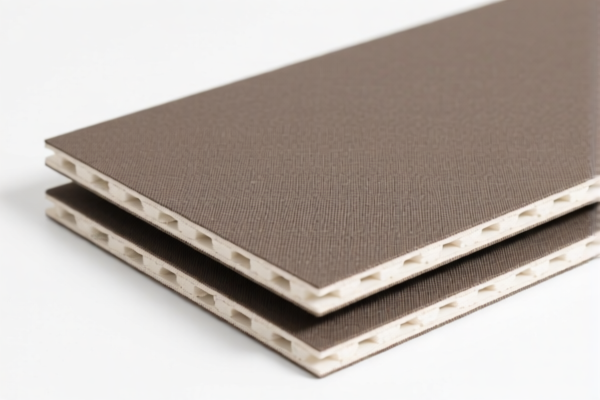
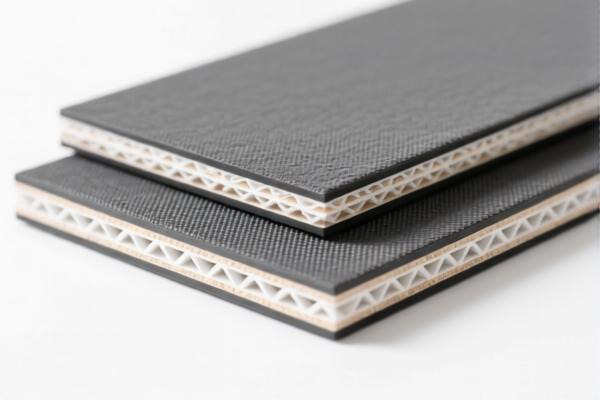
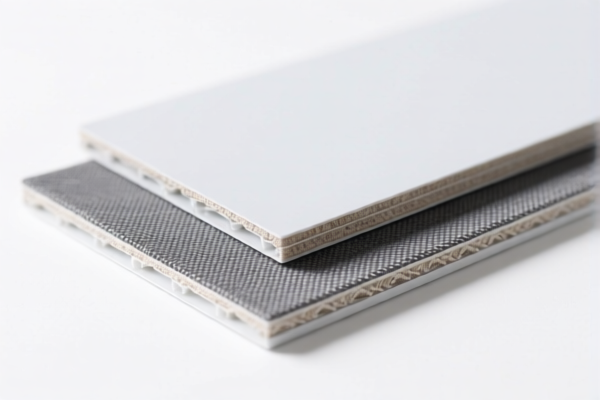
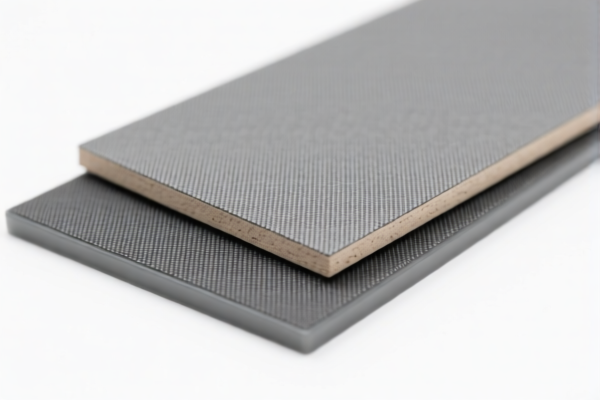
AI Analysis
🏗️ PVC Composite Textile Lightweight Board
🌐 HS Code Reference & Customs Clearance Guide | 2026 Latest Tariff Analysis | Professional Clearance Strategy
📌 I. Product Definition & Classification: Do You Truly Understand "PVC Composite Textile Lightweight Board"?
This product is a lightweight construction material composed of PVC (Polyvinyl Chloride) plastic reinforced or combined with textile fibers. In international trade, its classification depends heavily on whether it is viewed as a finished building component or a composite plate material.
⚠️ Key Distinction Point:
- If the product is manufactured into a specific building structure (e.g., wall panels, siding, ceiling tiles) ready for installation → It may fall under "Plastic Building Components" (Chapter 39, Heading 3925).
- If the product is a flat plate/sheet resulting from the lamination or combination of PVC and textile materials, without being a finished building part → It falls under "Plates, Sheets, Film, Foil, and Strip" made of combined plastics (Chapter 39, Heading 3921).
📦 II. HS Code Classification Details (2026 Latest Tariff Authoritative Comparison)
Based on the provided data, there are four primary HS Code options. Two distinct paths emerge: Building Components (3925) vs. Composite Plates (3921).
| HS Code | Product Description | Application Scenario | Classification Logic |
|---|---|---|---|
3925.90.00.00 |
PVC Composite Textile Lightweight Board | Building components; plastic architectural elements | Path A: Building Component. Classified as "Other plastic building components." Highest risk due to high additional tariffs. |
3925.20.00.91 |
PVC Composite Textile Lightweight Board | Architectural panels; plastic building构件 | Path A: Building Component. Specifically categorized under "Other building components." Lower additional tariff than 3925.90. |
3921.12.11.00 |
PVC Composite Textile Lightweight Board | Composite structure plates; PVC + Textile combination | Path B: Composite Plate. Classified as "Plates/Sheets/Strip of PVC combined with textile materials." Moderate tax burden. |
3921.12.19.50 |
PVC Composite Textile Lightweight Board | Other PVC + Textile composite plates | Path B: Composite Plate. Classified under "Other" plates of PVC combined with textile. High additional tariffs. |
🔍 Key Insight:
- The core difference lies in Heading 3925 (Finished Building Parts) vs. Heading 3921 (Raw/Intermediate Composite Materials).
- Customs often scrutinizes this distinction. If the board is cut to size for a specific wall/ceiling application, 3925 is more likely. If it is a general-purpose sheet for further fabrication, 3921 is preferred.
- Note: There is a duplicate entry for3921.12.11.00in the data, confirming its validity.
💰 III. 2026 Latest Tariff Rate Breakdown (Including Surtaxes & Policy Add-ons)
✅ Applicable Country: United States (US)
✅ Origin: China (CN)
✅ Effective Time: Current rates include Section 301 and Section 122 tariffs.
🎯 1. 3925.90.00.00 — Plastic Building Components (Other)
| Item | Content |
|---|---|
| Base Rate | 5.3% |
| Section 301 Surcharge | +25.0% (Trade Remedy Tariff) |
| Section 122 Surcharge | +10.0% (Bilateral Trade Adjustment) |
| Total Rate | 40.3% |
| Tax Calculation | CIF Value × 40.3% |
| De Minimis Exemption | ❌ Not Eligible (High risk of seizure or delay under current enforcement) |
| Legal Basis Path | Section 301: 9903.88.01 → Section 122: 19 CFR 122 → USITC: 3925.90.00.00 |
📌 Explanation:
- This classification carries the highest tax burden among the options.
- The 25% Section 301 tariff applies to plastic building materials of Chinese origin.
- The 10% Section 122 tariff is an additional bilateral adjustment.
- Strategy: Avoid this code unless the product is unmistakably a finished building assembly, as the cost impact is severe.
🎯 2. 3925.20.00.91 — Other Building Components (Plastic)
| Item | Content |
|---|---|
| Base Rate | 5.3% |
| Section 301 Surcharge | +7.5% (Reduced Section 301 Rate) |
| Section 122 Surcharge | +10.0% |
| Total Rate | 22.8% |
| Tax Calculation | CIF Value × 22.8% |
| De Minimis Exemption | ❌ Not Eligible |
| Legal Basis Path | Section 301: 9903.88.02 (Hypothetical sub-list for lower rate) → Section 122 → USITC: 3925.20.00.91 |
📌 Explanation:
- This is the most cost-effective option provided in the data.
- The Section 301 surcharge is significantly lower (7.5% vs. 25%), likely due to specific exclusions or sub-heading classifications for certain plastic building parts.
- Strategy: Strongly recommended if the product can be legitimately argued as a "Building Component" under Heading 3925. Verify with a customs broker that your specific board fits this sub-heading.
🎯 3. 3921.12.11.00 — PVC Plates/Sheets Combined with Textile Materials
| Item | Content |
|---|---|
| Base Rate | 4.2% |
| Section 301 Surcharge | +25.0% |
| Section 122 Surcharge | +10.0% |
| Total Rate | 39.2% |
| Tax Calculation | CIF Value × 39.2% |
| De Minimis Exemption | ❌ Not Eligible |
| Legal Basis Path | Section 301: 9903.88.01 → Section 122 → USITC: 3921.12.11.00 |
📌 Explanation:
- Classified as a composite material rather than a building component.
- While the base rate is lower (4.2%), the high 25% Section 301 surcharge negates the benefit, resulting in a high total rate.
- Strategy: Use this only if the product is clearly a raw sheet/plate and NOT a finished building part. Beware of the 25% surcharge.
🎯 4. 3921.12.19.50 — Other PVC + Textile Composite Plates
| Item | Content |
|---|---|
| Base Rate | 5.3% |
| Section 301 Surcharge | +25.0% |
| Section 122 Surcharge | +10.0% |
| Total Rate | 40.3% |
| Tax Calculation | CIF Value × 40.3% |
| De Minimis Exemption | ❌ Not Eligible |
| Legal Basis Path | Section 301: 9903.88.01 → Section 122 → USITC: 3921.12.19.50 |
📌 Explanation:
- Similar to3921.12.11.00but for "Other" unspecified composite plates.
- Also carries the maximum 25% Section 301 surcharge.
- Strategy: Avoid unless no other classification fits. High tax liability.
🛠️ IV. Customs Clearance Practical Advice (Pitfall Avoidance Guide)
✅ 1. Documentation Checklist (Essential)
| Document | Required | Description |
|---|---|---|
| ✅ Product Specification Sheet | ✔️ | Must detail: Material composition (PVC % vs. Textile %), Dimensions, Thickness, Weight, Intended Use. |
| ✅ Composite Structure Diagram | ✔️ | Show layers: e.g., PVC Layer + Textile Reinforcement + Surface Coating. |
| ✅ Photos (Labeled) | ✔️ | Clear images showing the board, cross-section, and any markings/logos. |
| ✅ Commercial Invoice | ✔️ | Describe as: "PVC Composite Textile Lightweight Board for Building/Interior Use" – be precise. |
| ✅ Bill of Lading | ✔️ | Ensure weight and volume match invoice. |
| ✅ Certificate of Origin | ✔️ | Mandatory for proving Chinese origin (triggers surcharges). |
✅ 2. Declaration Strategy (Key Tips)
🔥 "Define Intent, Define Structure, Declare Accurately!"
| Scenario | Recommended HS Code | Reason |
|---|---|---|
| Finished Wall/Ceiling Panel | 3925.20.00.91 |
Classified as "Building Component"; Lowest Tax (22.8%). |
| Raw Sheet for Further Fabrication | 3921.12.11.00 |
Classified as "Composite Plate"; High Tax (39.2%). |
| Ambiguous/Unspecified Board | 3925.90.00.00 or 3921.12.19.50 |
Avoid. High Tax (40.3%). Use only if forced by customs. |
✅ 3. Special Handling
| Situation | Advice |
|---|---|
| OEM/Custom Sizes | Provide drawing/blueprint to prove it is a "building component" (3925) rather than a generic sheet. |
| Textile Content High | If textile >50%, customs may challenge PVC classification. Ensure PVC is the binding material. |
| Small Samples (<$800) | While de minimis might apply for some codes, Section 301/122 tariffs are often enforced on all Chinese goods. Assume full tax applies unless confirmed otherwise. |
| Pre-Ruling | Apply for an Advance Ruling from US CBP. This is the safest way to lock in the 3925.20.00.91 code with 22.8% tax. |
🌍 V. Global Market Clearance Comparison (2026 Latest)
| Country/Region | Recommended HS Code | Estimated Tariff | Certification | Notes |
|---|---|---|---|---|
| 🇺🇸 USA | 3925.20.00.91 |
22.8% | No special cert needed | Best Option. Avoid 3925.90 and 3921 codes if possible. |
| 🇨🇳 China | 3925.20.00.91 |
~5% | CCC (if applicable) | Import tariff is lower. |
| 🇪🇺 EU | 3921.12.11.00 |
~6.5% | CE (if electrical, otherwise none) | No Section 301/122 tariffs. |
| 🇬🇧 UK | 3921.12.11.00 |
~6.5% | UKCA | Post-Brexit rules apply. |
📌 Conclusion:
- For US Imports, the difference between 22.8% and 40.3% is significant.
- Goal: Argue for3925.20.00.91by emphasizing the product's role as a building component.
- If rejected, fall back to3921.12.11.00(39.2%) rather than the 40.3% codes.
📌 VI. Common Errors & Pitfall Guide (Lessons Learned)
❌ Error 1: Declaring as "Plastic Sheet" (3921.12.19.50) when it is a finished panel
👉 Consequence: 40.3% tax vs. 22.8%. Overpaying 17.5% unnecessarily.
❌ Error 2: Declaring as "Building Component" (3925.90.00.00) without proof
👉 Consequence: 40.3% tax. Customs may reject 3925.90 if it doesn't fit specific sub-codes, leading to disputes.
❌ Error 3: Ignoring Section 122 Tariff
👉 Consequence: Missing the 10% surcharge calculation in cost estimation.
❌ Error 4: Using "PVC Board" as generic description
👉 Consequence: Customs ambiguity → Audit risk → Delay.
✅ Correct Approach:
"PVC Composite Textile Lightweight Building Panel, Finished Size, for Interior Wall Cladding, Model XYZ"
🎯 VII. Conclusion: Precise Classification Saves Money!
🎯 Remember the Mantra:
🔹 "Building Component = 3925.20 (22.8%) – BEST"
🔹 "Composite Plate = 3921 (39-40%) – EXPENSIVE"
🔹 "Don't Guess, Get an Advance Ruling!"
📌 Pro Tip:
If your product is manufactured in Vietnam or Mexico, you may be exempt from US Section 301/122 tariffs. Check Rules of Origin carefully.
📣 Immediate Action:
📞 Contact a US Customs Broker.
📄 Submit product photos and specifications for a Pre-Ruling.
🚀 Save 17.5% in tariffs by choosing the right HS Code!
✨ Professional Clearance Starts with Accurate Classification!
💼 Every Percent Counts in Global Trade!
Customer Reviews
About HS Code Classification
The Harmonized System (HS) is an internationally standardized nomenclature developed by the World Customs Organization (WCO) to classify traded products. Over 200 countries use the HS system as the basis for customs tariffs, trade statistics, and import/export regulations.
Each HS code follows a hierarchical structure:
- Chapter (2 digits) — Broad category of goods (e.g., Chapter 84: Machinery and Mechanical Appliances)
- Heading (4 digits) — More specific grouping within the chapter
- Subheading (6 digits) — Internationally standardized breakdown, used by all WCO member countries
- National subdivisions (8-10 digits) — Country-specific extensions for further classification, such as US HTSUS 10-digit codes
Correct HS code classification is essential for smooth customs clearance, accurate duty payment, and compliance with trade regulations. Misclassification can lead to customs delays, overpayment of duties, or penalties.
When importing from CN to US, the applicable tariff rates may include:
- Most-Favored-Nation (MFN) rate — The standard duty rate applied to WTO members
- General rate — Applied to countries without trade agreements
- Trade remedy duties — Additional tariffs such as Section 301 (anti-dumping), Section 232 (national security), or countervailing duties
The information provided on this page is for reference purposes only. For official classification, please consult with your local customs authority or a licensed customs broker.