PVC Foam Board
CN → US| HS编码 | 关税税率 | 原产国 | 目的国 | 文档 |
|---|---|---|---|---|
| 3921125000 | 41.5% | CN | US | 官方文档 |
| 3921121100 | 39.2% | CN | US | 官方文档 |
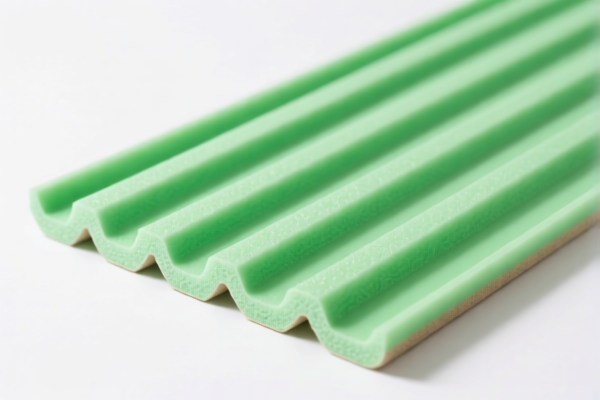
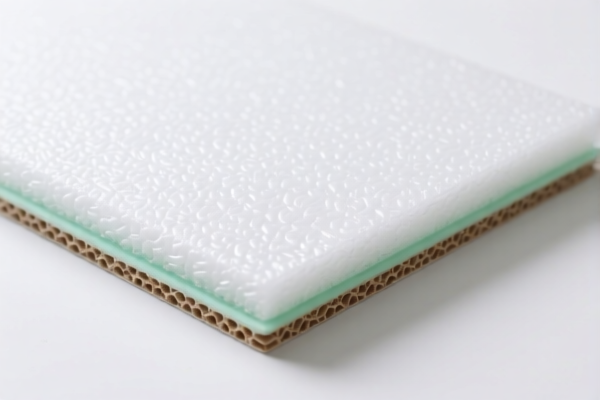
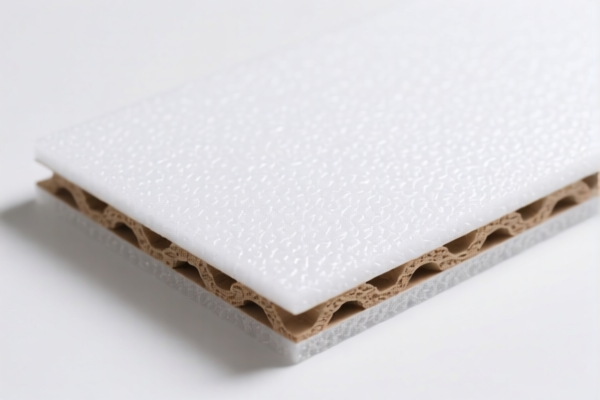
商品图片

AI分析
🧱 PVC Foam Board (Cellular PVC Plates/Sheets)
🌐 HS Code Reference & Clearance Guide | 2026 Latest Tariff Analysis | Professional Level Entry Strategy
📌 I. Product Definition & Classification: Do You Really Understand "PVC Foam Board"?
PVC Foam Board, widely known in the industry as Celuka Board or Foam Core Board, is a rigid, lightweight plastic sheet made from Polyvinyl Chloride (PVC) resin. Its defining characteristic is its cellular structure (hence "Cellular" in HS codes), which provides a smooth surface and a lighter weight compared to solid PVC sheets.
In international trade, it is strictly categorized under Chapter 39: Plastics and Articles Thereof. The classification depends heavily on two factors: 1. Material Composition: Is it pure PVC foam, or is it laminated/combined with textiles? 2. Structure: Is it a standalone plastic sheet or a composite material?
⚠️ Key Distinction Point:
- If the board is pure PVC foam (regardless of surface printing or painting) → It falls under 3921.12.50.00.
- If the board is laminated with textile materials (e.g., fabric backing or surface cloth) where man-made fibers predominate → It falls under 3921.12.11.00.
📦 II. HS Code Classification Details (2026 Latest Official Tariff Correspondence)
| HS Code | Product Description | Application Scenario | Key Classification Feature |
|---|---|---|---|
3921.12.50.00 |
Other plates, sheets, film, foil and strip, of plastics: Cellular: Of polymers of vinyl chloride: Other | Standard white/black/grey PVC foam boards, printed foam sheets, architectural wall panels, signage substrates | ✅ Pure PVC Cellular Structure (No textile predominance) |
3921.12.11.00 |
Other plates, sheets... Cellular: Of polymers of vinyl chloride: Combined with textile materials: Products with textile components in which man-made fibers predominate...: Over 70 percent by weight of plastics | PVC foam boards with fabric backing, laminated textile-PVC composites, specialized industrial liners | ✅ Composite Structure (Textile + PVC, >70% plastic by weight) |
🔍 Key Reminder:
- Do not confuse with "Solid" PVC: Solid PVC plates fall under 3921.13 or 3921.14. The term "Cellular" is mandatory for foam boards. - Textile Check: If your PVC foam board has a significant textile layer (e.g., fiberglass mesh reinforcement that constitutes a textile component exceeding weight thresholds, or fabric lamination), it might shift to the "Combined with textile materials" category. However, standard glass-fiber reinforced foam often still stays in3921.12.50.00unless the textile component is explicitly dominant and meets the specific subheading criteria for3921.12.11.00. Consult the specific bill of materials.
💰 III. 2026 Latest Tariff Rate Details (Including Surtax & Policy Surcharge)
✅ Applicable Country: United States (US)
✅ Country of Origin: China (CN)
✅ Effective Date: From November 10, 2025 (Including subsequent imports)
🎯 1. 3921.12.50.00 — PVC Foam Board (Pure Cellular)
| Item | Content |
|---|---|
| Base Tariff Rate | 6.5% (Ad Valorem) |
| Section 301 Surcharge | +25.0% |
| Total Tax Rate | 31.5% |
| Tax Calculation | CIF Value × 31.5% |
| De Minimis Eligibility | ❌ No (High tax rate prevents $800 de minimis exemption for most commercial shipments) |
| Legal Basis Path | USITC:3921.12.50.00 → SECTION301:3921.12.50.00 |
📌 Explanation:
- The 6.5% is the standard Most Favored Nation (MFN) duty for cellular PVC sheets. - The 25% is the additional tariff imposed under Section 301 of the Trade Act of 1974 against Chinese goods. - Total Liability: For every $10,000 of FOB value (assuming minimal freight/insurance), expect $3,150 in duties. This is a high-cost entry category.
🎯 2. 3921.12.11.00 — PVC Foam Board Combined with Textile
| Item | Content |
|---|---|
| Base Tariff Rate | 4.2% (Ad Valorem) |
| Section 301 Surcharge | +25.0% |
| Total Tax Rate | 29.2% |
| Tax Calculation | CIF Value × 29.2% |
| De Minimis Eligibility | ❌ No |
| Legal Basis Path | USITC:3921.12.11.00 → SECTION301:3921.12.11.00 |
📌 Note:
- This category applies only if the product is explicitly defined as "Combined with textile materials" and man-made fibers predominate. - While the base rate is lower (4.2% vs 6.5%), the 25% Section 301 surcharge remains the same. - Risk: Misclassification here if the textile component is not dominant can lead to penalties. Use3921.12.50.00if no significant textile component exists.
🛠️ IV. Clearance Practical Advice (Battle-Tested Pitfall Guide)
✅ 1. Document Checklist (All Are Required)
| Document | Mandatory? | Explanation |
|---|---|---|
| ✅ Product Specification Sheet | ✔️ | Must explicitly state "Cellular PVC", "Foam Core", density (kg/m³), and dimensions. |
| ✅ Composition Statement | ✔️ | Detailed breakdown: PVC resin %, fillers %, additives %. Crucial for proving it is "Cellular PVC" and not a composite requiring a different chapter. |
| ✅ Commercial Invoice | ✔️ | Must clearly describe the item as "PVC Foam Board / Cellular PVC Sheet". Avoid vague terms like "Plastic Plate". |
| ✅ Packing List | ✔️ | List net/gross weight accurately. Foam boards are lightweight but bulky; volume weight may apply in shipping, though duty is based on value/weight per customs rules. |
| ✅ Certificate of Origin (CO) | ✔️ | Confirming "Made in China" to verify Section 301 applicability. |
✅ 2. Declaration Tips (Key Mnemonics)
🔥 "Foam is Cellular, Not Solid; Declare 'Cellular PVC' Explicitly!"
| Scenario | Correct Declaration | Wrong Practice |
|---|---|---|
| Standard White Foam Board | 3921.12.50.00: "Cellular PVC Sheets" | Misdeclaring as "Plastic Plates" (3921.10) → Risk of penalty |
| Foam Board with Printed Graphics | 3921.12.50.00: "Printed Cellular PVC Sheets" | Do not separate printing as a different service if it's integral |
| PVC Sheet with Fabric Backing | 3921.12.11.00: "Combined with Textile Materials" | Misdeclaring as pure PVC → Underpayment of tax (if textile dominates) or Overpayment (if pure) |
| Solid PVC Sheet (No Foam) | 3921.13/14: "Non-Cellular PVC" | Calling it "Foam Board" when it's solid → Major Misclassification |
✅ 3. Special Situation Handling
| Situation | Handling Advice |
|---|---|
| Custom Cut Sizes | Declare as "Sheets/Cut to Size". The HS Code remains the same. Ensure invoice lists dimensions. |
| Anti-UV / Fire-Retardant Grade | This does not change the HS Code. It is still 3921.12.50.00. Ensure specs mention "Fire Retardant" for end-user compliance (e.g., ASTM E84), but not for customs classification. |
| Recycled PVC Foam | Still classified under 3921.12. However, ensure you do not claim "Recycled Content" benefits unless specific trade agreements apply (unlikely for US/China). |
| Sample Shipments | Even for samples, if value > $800, duties apply. For samples < $800, check if Section 301 applies to de minimis. Caution: Section 301 goods are often excluded from de minimis exemptions by US Customs. Verify current CBP directives. |
🌍 V. Global Market Clearance Comparison (2026 Latest)
| Country/Region | Recommended HS Code | Tariff Rate (China Origin) | Certification Requirements | Notes |
|---|---|---|---|---|
| 🇺🇸 United States | 3921.12.50.00 |
31.5% (Base 6.5% + 25% Sec 301) | FDA (if food contact), Prop 65 (CA) | High Duty Burden. Plan margin accordingly. |
| 🇨🇳 China | 3921.12.50.00 |
0% (Import Duty) + VAT 13% | CCC (if applicable) | Domestic production is strong. |
| 🇪🇺 European Union | 3921.10.39 (Likely) |
0% - 6.5% (Varies by specific subtype) | CE (REACH/RoHS) | EU classification may differ slightly; check "Cellular Plastics" subheadings. |
| 🇬🇧 United Kingdom | 3921.12.50 |
0% - 6.5% | UKCA | Post-Brexit rules similar to EU but distinct. |
| 🇦🇺 Australia | 3921.12.50 |
5% | NATA Testing | Lower tariff than US, but verify anti-dumping duties. |
📌 Conclusion:
- The United States is the most challenging market for PVC Foam Boards due to the 25% Section 301 surcharge, bringing the total to 31.5%. - EU and Asia-Pacific markets are more tariff-friendly. - No Free Trade Agreement (FTA) typically eliminates Section 301 duties for China-origin goods entering the US.
📌 VI. Common Errors & Pitfalls (Blood-Tested Lessons)
❌ Error 1: Declaring "PVC Foam" as "Plastic Plates" (3921.10)
👉 Consequence: If caught, the duty rate might be different, leading to underpayment penalties or overpayment. The 10-digit code is critical for exact duty assessment.
❌ Error 2: Ignoring the "Cellular" keyword
👉 Consequence: Customs may classify it as "Solid PVC" (3921.13 or 3921.14), which might have a different duty rate (often higher base rate). This causes delay and re-inspection.
❌ Error 3: Confusing "Foam Board" with "Expanded Polystyrene (EPS)"
👉 Consequence: EPS is Chapter 39.20 or 39.21 but different subheadings. Misdeclaration leads to wrong HS Code and potential tariff evasion accusations.
❌ Error 4: Assuming "Printed PVC Foam" is a different product
👉 Consequence: Printing is considered a finishing process. The HS Code remains 3921.12.50.00. Do not split into "Paper" and "Plastic".
✅ Correct Practice:
"PVC Foam Board, Cellular, Rigid, White, 4x8ft, 10mm Thick, Model XYZ, Made in China"
🎯 VII. Conclusion: Professional Declaration Saves Money!
🎯 Remember the Mnemonic:
🔹 "Foam = Cellular, PVC = 3921.12"
🔹 "301 Tax is 25%, Total is 31.5%"
🔹 "Textile? Check Weight, Then 3921.12.11"
📌 Pro Tip:
If you are shipping to the US, calculate the landed cost carefully. The 31.5% duty is significant. Consider:
1. Consolidating Shipments to reduce per-unit handling costs.
2. Verifying Duty Exclusions: Check if your specific manufacturer/product has a Section 301 Exclusion (rare for standard foam boards, but worth checking CBP lists).
3. Pre-Ruling: Request a Binding Ruling from US Customs and Border Protection (CBP) before first shipment to lock in the HS Code.
📣 Immediate Action:
📞 Contact Your Freight Forwarder + Provide Spec Sheets + Confirm Section 301 Applicability
🚀 Secure Your Margin by knowing the 31.5% duty burden upfront!
✨ Professional Customs Clearance Starts with Accurate Classification!
💼 Every Percentage Point Counts in the PVC Foam Board Trade!
用户评价
关于 HS 编码归类
协调制度(HS)是由世界海关组织(WCO)制定的国际贸易商品分类标准。全球 200 多个国家采用 HS 系统作为海关关税、贸易统计和进出口监管的基础。
每个 HS 编码遵循以下层级结构:
- 章(2 位)——商品大类(例如:第 84 章:机器和机械设备)
- 品目(4 位)——章内的更具体分类
- 子目(6 位)——国际通用细分,所有 WCO 成员国统一使用
- 本国细分(8-10 位)——各国自行扩展的细分编码,如美国 HTSUS 10 位编码
正确的 HS 编码归类对于顺利通关、准确缴纳关税和遵守贸易法规至关重要。错误归类可能导致海关延误、多缴关税或罚款。
从CN进口到US时,适用的关税税率可能包括:
- 最惠国(MFN)税率——适用于 WTO 成员国的标准关税税率
- 普通税率——适用于无贸易协定国家
- 贸易救济关税——附加关税,如 301 条款(反倾销)、232 条款(国家安全)或反补贴税
本页内容仅供参考。如需正式归类,请咨询当地海关或持牌报关代理。