PVC Foam Board
CN → US| HS Code | Tariff Rate | Origin | Destination | Doc |
|---|---|---|---|---|
| 3921125000 | 41.5% | CN | US | Official Doc |
| 3921121100 | 39.2% | CN | US | Official Doc |
Product Images

AI Analysis
🧱 PVC Foam Board (Cellular PVC Plates/Sheets)
🌐 HS Code Reference & Clearance Guide | 2026 Latest Tariff Analysis | Professional Level Entry Strategy
📌 I. Product Definition & Classification: Do You Really Understand "PVC Foam Board"?
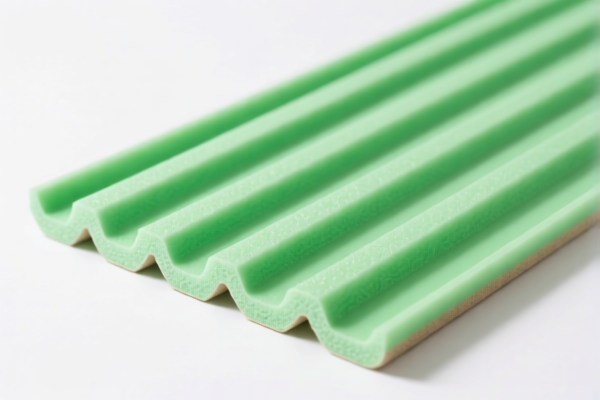
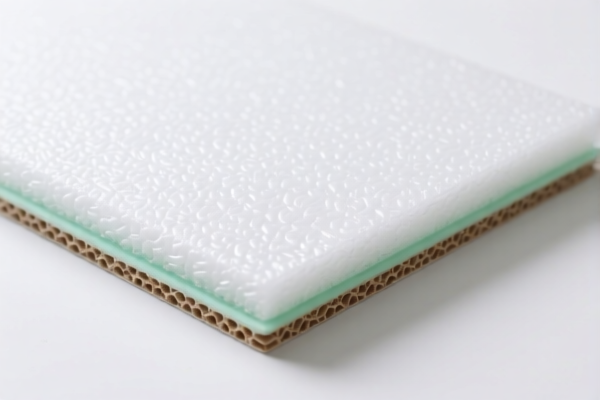
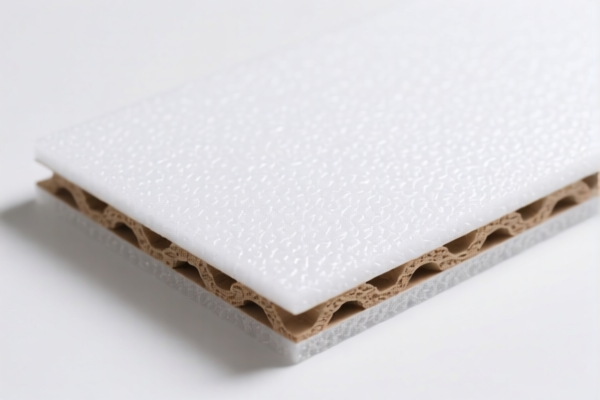
PVC Foam Board, widely known in the industry as Celuka Board or Foam Core Board, is a rigid, lightweight plastic sheet made from Polyvinyl Chloride (PVC) resin. Its defining characteristic is its cellular structure (hence "Cellular" in HS codes), which provides a smooth surface and a lighter weight compared to solid PVC sheets.
In international trade, it is strictly categorized under Chapter 39: Plastics and Articles Thereof. The classification depends heavily on two factors: 1. Material Composition: Is it pure PVC foam, or is it laminated/combined with textiles? 2. Structure: Is it a standalone plastic sheet or a composite material?
⚠️ Key Distinction Point:
- If the board is pure PVC foam (regardless of surface printing or painting) → It falls under 3921.12.50.00.
- If the board is laminated with textile materials (e.g., fabric backing or surface cloth) where man-made fibers predominate → It falls under 3921.12.11.00.
📦 II. HS Code Classification Details (2026 Latest Official Tariff Correspondence)
| HS Code | Product Description | Application Scenario | Key Classification Feature |
|---|---|---|---|
3921.12.50.00 |
Other plates, sheets, film, foil and strip, of plastics: Cellular: Of polymers of vinyl chloride: Other | Standard white/black/grey PVC foam boards, printed foam sheets, architectural wall panels, signage substrates | ✅ Pure PVC Cellular Structure (No textile predominance) |
3921.12.11.00 |
Other plates, sheets... Cellular: Of polymers of vinyl chloride: Combined with textile materials: Products with textile components in which man-made fibers predominate...: Over 70 percent by weight of plastics | PVC foam boards with fabric backing, laminated textile-PVC composites, specialized industrial liners | ✅ Composite Structure (Textile + PVC, >70% plastic by weight) |
🔍 Key Reminder:
- Do not confuse with "Solid" PVC: Solid PVC plates fall under 3921.13 or 3921.14. The term "Cellular" is mandatory for foam boards. - Textile Check: If your PVC foam board has a significant textile layer (e.g., fiberglass mesh reinforcement that constitutes a textile component exceeding weight thresholds, or fabric lamination), it might shift to the "Combined with textile materials" category. However, standard glass-fiber reinforced foam often still stays in3921.12.50.00unless the textile component is explicitly dominant and meets the specific subheading criteria for3921.12.11.00. Consult the specific bill of materials.
💰 III. 2026 Latest Tariff Rate Details (Including Surtax & Policy Surcharge)
✅ Applicable Country: United States (US)
✅ Country of Origin: China (CN)
✅ Effective Date: From November 10, 2025 (Including subsequent imports)
🎯 1. 3921.12.50.00 — PVC Foam Board (Pure Cellular)
| Item | Content |
|---|---|
| Base Tariff Rate | 6.5% (Ad Valorem) |
| Section 301 Surcharge | +25.0% |
| Total Tax Rate | 31.5% |
| Tax Calculation | CIF Value × 31.5% |
| De Minimis Eligibility | ❌ No (High tax rate prevents $800 de minimis exemption for most commercial shipments) |
| Legal Basis Path | USITC:3921.12.50.00 → SECTION301:3921.12.50.00 |
📌 Explanation:
- The 6.5% is the standard Most Favored Nation (MFN) duty for cellular PVC sheets. - The 25% is the additional tariff imposed under Section 301 of the Trade Act of 1974 against Chinese goods. - Total Liability: For every $10,000 of FOB value (assuming minimal freight/insurance), expect $3,150 in duties. This is a high-cost entry category.
🎯 2. 3921.12.11.00 — PVC Foam Board Combined with Textile
| Item | Content |
|---|---|
| Base Tariff Rate | 4.2% (Ad Valorem) |
| Section 301 Surcharge | +25.0% |
| Total Tax Rate | 29.2% |
| Tax Calculation | CIF Value × 29.2% |
| De Minimis Eligibility | ❌ No |
| Legal Basis Path | USITC:3921.12.11.00 → SECTION301:3921.12.11.00 |
📌 Note:
- This category applies only if the product is explicitly defined as "Combined with textile materials" and man-made fibers predominate. - While the base rate is lower (4.2% vs 6.5%), the 25% Section 301 surcharge remains the same. - Risk: Misclassification here if the textile component is not dominant can lead to penalties. Use3921.12.50.00if no significant textile component exists.
🛠️ IV. Clearance Practical Advice (Battle-Tested Pitfall Guide)
✅ 1. Document Checklist (All Are Required)
| Document | Mandatory? | Explanation |
|---|---|---|
| ✅ Product Specification Sheet | ✔️ | Must explicitly state "Cellular PVC", "Foam Core", density (kg/m³), and dimensions. |
| ✅ Composition Statement | ✔️ | Detailed breakdown: PVC resin %, fillers %, additives %. Crucial for proving it is "Cellular PVC" and not a composite requiring a different chapter. |
| ✅ Commercial Invoice | ✔️ | Must clearly describe the item as "PVC Foam Board / Cellular PVC Sheet". Avoid vague terms like "Plastic Plate". |
| ✅ Packing List | ✔️ | List net/gross weight accurately. Foam boards are lightweight but bulky; volume weight may apply in shipping, though duty is based on value/weight per customs rules. |
| ✅ Certificate of Origin (CO) | ✔️ | Confirming "Made in China" to verify Section 301 applicability. |
✅ 2. Declaration Tips (Key Mnemonics)
🔥 "Foam is Cellular, Not Solid; Declare 'Cellular PVC' Explicitly!"
| Scenario | Correct Declaration | Wrong Practice |
|---|---|---|
| Standard White Foam Board | 3921.12.50.00: "Cellular PVC Sheets" | Misdeclaring as "Plastic Plates" (3921.10) → Risk of penalty |
| Foam Board with Printed Graphics | 3921.12.50.00: "Printed Cellular PVC Sheets" | Do not separate printing as a different service if it's integral |
| PVC Sheet with Fabric Backing | 3921.12.11.00: "Combined with Textile Materials" | Misdeclaring as pure PVC → Underpayment of tax (if textile dominates) or Overpayment (if pure) |
| Solid PVC Sheet (No Foam) | 3921.13/14: "Non-Cellular PVC" | Calling it "Foam Board" when it's solid → Major Misclassification |
✅ 3. Special Situation Handling
| Situation | Handling Advice |
|---|---|
| Custom Cut Sizes | Declare as "Sheets/Cut to Size". The HS Code remains the same. Ensure invoice lists dimensions. |
| Anti-UV / Fire-Retardant Grade | This does not change the HS Code. It is still 3921.12.50.00. Ensure specs mention "Fire Retardant" for end-user compliance (e.g., ASTM E84), but not for customs classification. |
| Recycled PVC Foam | Still classified under 3921.12. However, ensure you do not claim "Recycled Content" benefits unless specific trade agreements apply (unlikely for US/China). |
| Sample Shipments | Even for samples, if value > $800, duties apply. For samples < $800, check if Section 301 applies to de minimis. Caution: Section 301 goods are often excluded from de minimis exemptions by US Customs. Verify current CBP directives. |
🌍 V. Global Market Clearance Comparison (2026 Latest)
| Country/Region | Recommended HS Code | Tariff Rate (China Origin) | Certification Requirements | Notes |
|---|---|---|---|---|
| 🇺🇸 United States | 3921.12.50.00 |
31.5% (Base 6.5% + 25% Sec 301) | FDA (if food contact), Prop 65 (CA) | High Duty Burden. Plan margin accordingly. |
| 🇨🇳 China | 3921.12.50.00 |
0% (Import Duty) + VAT 13% | CCC (if applicable) | Domestic production is strong. |
| 🇪🇺 European Union | 3921.10.39 (Likely) |
0% - 6.5% (Varies by specific subtype) | CE (REACH/RoHS) | EU classification may differ slightly; check "Cellular Plastics" subheadings. |
| 🇬🇧 United Kingdom | 3921.12.50 |
0% - 6.5% | UKCA | Post-Brexit rules similar to EU but distinct. |
| 🇦🇺 Australia | 3921.12.50 |
5% | NATA Testing | Lower tariff than US, but verify anti-dumping duties. |
📌 Conclusion:
- The United States is the most challenging market for PVC Foam Boards due to the 25% Section 301 surcharge, bringing the total to 31.5%. - EU and Asia-Pacific markets are more tariff-friendly. - No Free Trade Agreement (FTA) typically eliminates Section 301 duties for China-origin goods entering the US.
📌 VI. Common Errors & Pitfalls (Blood-Tested Lessons)
❌ Error 1: Declaring "PVC Foam" as "Plastic Plates" (3921.10)
👉 Consequence: If caught, the duty rate might be different, leading to underpayment penalties or overpayment. The 10-digit code is critical for exact duty assessment.
❌ Error 2: Ignoring the "Cellular" keyword
👉 Consequence: Customs may classify it as "Solid PVC" (3921.13 or 3921.14), which might have a different duty rate (often higher base rate). This causes delay and re-inspection.
❌ Error 3: Confusing "Foam Board" with "Expanded Polystyrene (EPS)"
👉 Consequence: EPS is Chapter 39.20 or 39.21 but different subheadings. Misdeclaration leads to wrong HS Code and potential tariff evasion accusations.
❌ Error 4: Assuming "Printed PVC Foam" is a different product
👉 Consequence: Printing is considered a finishing process. The HS Code remains 3921.12.50.00. Do not split into "Paper" and "Plastic".
✅ Correct Practice:
"PVC Foam Board, Cellular, Rigid, White, 4x8ft, 10mm Thick, Model XYZ, Made in China"
🎯 VII. Conclusion: Professional Declaration Saves Money!
🎯 Remember the Mnemonic:
🔹 "Foam = Cellular, PVC = 3921.12"
🔹 "301 Tax is 25%, Total is 31.5%"
🔹 "Textile? Check Weight, Then 3921.12.11"
📌 Pro Tip:
If you are shipping to the US, calculate the landed cost carefully. The 31.5% duty is significant. Consider:
1. Consolidating Shipments to reduce per-unit handling costs.
2. Verifying Duty Exclusions: Check if your specific manufacturer/product has a Section 301 Exclusion (rare for standard foam boards, but worth checking CBP lists).
3. Pre-Ruling: Request a Binding Ruling from US Customs and Border Protection (CBP) before first shipment to lock in the HS Code.
📣 Immediate Action:
📞 Contact Your Freight Forwarder + Provide Spec Sheets + Confirm Section 301 Applicability
🚀 Secure Your Margin by knowing the 31.5% duty burden upfront!
✨ Professional Customs Clearance Starts with Accurate Classification!
💼 Every Percentage Point Counts in the PVC Foam Board Trade!
Customer Reviews
About HS Code Classification
The Harmonized System (HS) is an internationally standardized nomenclature developed by the World Customs Organization (WCO) to classify traded products. Over 200 countries use the HS system as the basis for customs tariffs, trade statistics, and import/export regulations.
Each HS code follows a hierarchical structure:
- Chapter (2 digits) — Broad category of goods (e.g., Chapter 84: Machinery and Mechanical Appliances)
- Heading (4 digits) — More specific grouping within the chapter
- Subheading (6 digits) — Internationally standardized breakdown, used by all WCO member countries
- National subdivisions (8-10 digits) — Country-specific extensions for further classification, such as US HTSUS 10-digit codes
Correct HS code classification is essential for smooth customs clearance, accurate duty payment, and compliance with trade regulations. Misclassification can lead to customs delays, overpayment of duties, or penalties.
When importing from CN to US, the applicable tariff rates may include:
- Most-Favored-Nation (MFN) rate — The standard duty rate applied to WTO members
- General rate — Applied to countries without trade agreements
- Trade remedy duties — Additional tariffs such as Section 301 (anti-dumping), Section 232 (national security), or countervailing duties
The information provided on this page is for reference purposes only. For official classification, please consult with your local customs authority or a licensed customs broker.