PVC Industrial Pipe
CN → US| HS编码 | 关税税率 | 原产国 | 目的国 | 文档 |
|---|---|---|---|---|
| 3917230000 | 38.1% | CN | US | 官方文档 |
| 3917320010 | 38.1% | CN | US | 官方文档 |
| 3926909987 | 22.8% | CN | US | 官方文档 |
| 3926909989 | 22.8% | CN | US | 官方文档 |
| 3925200091 | 22.8% | CN | US | 官方文档 |
商品图片
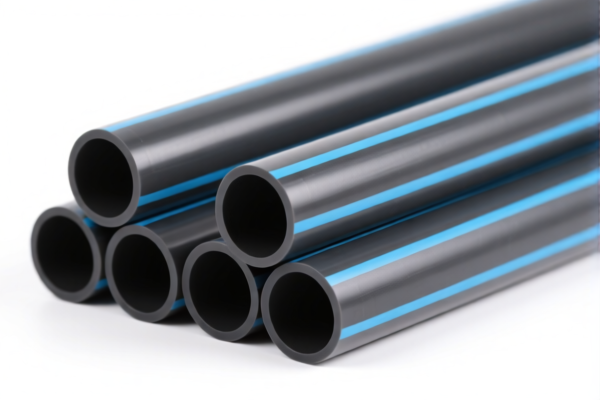
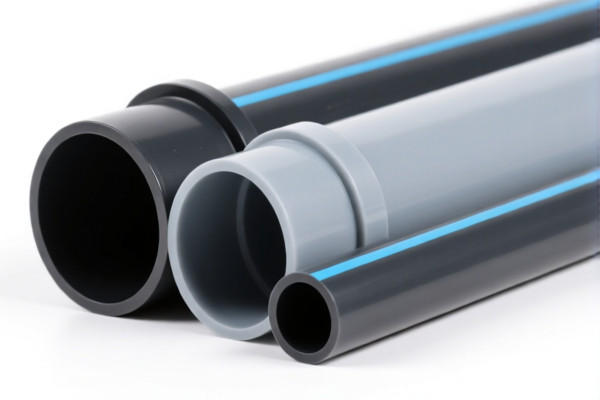
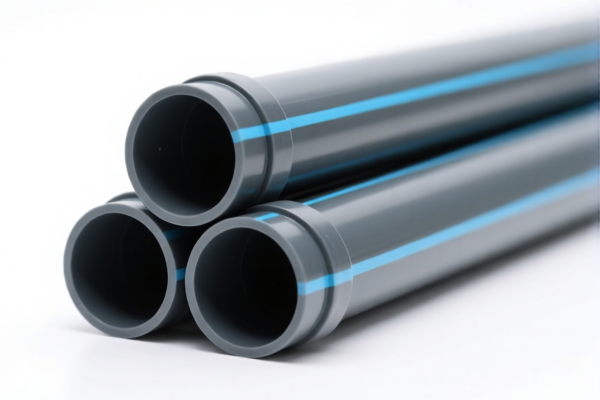
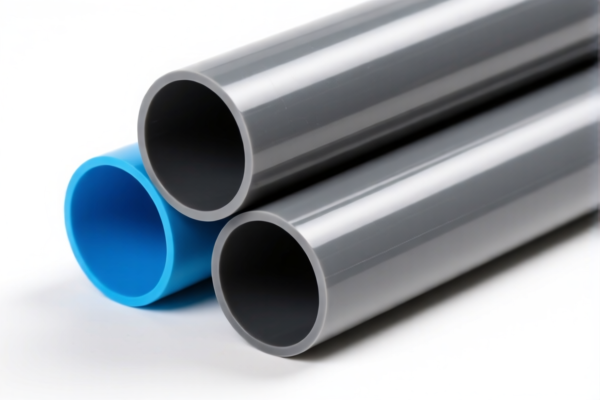
AI分析
🏗️ PVC Industrial Pipes: HS Code Classification & US Customs Clearance Guide (2026)
🌐 HS Code Reference & Customs Clearance Strategy | 2026 Tariff Analysis | Specialized Compliance for PVC Products
📌 I. Product Definition: What Exactly Is "PVC Industrial Pipe"?
In international trade, "PVC Industrial Pipe" is a broad term that often leads to misclassification. The US Customs and Border Protection (CBP) distinguishes between pipes based on their material specificity, end-use, and physical form.
Two Main Categories of PVC Pipes:
-
Chemical Specific Pipes (Section 3917/3925):
- Made specifically of chlorinated polymers or polyvinyl chloride (PVC).
- Typically classified under heading 3917 (Tubes, pipes, and hoses) or 3925 (Builders' ware of plastics).
- Key Indicator: The summary explicitly mentions "Vinyl Chloride Polymer" or "Polyvinyl Chloride."
-
General Plastic Pipes/Profiles (Section 3926):
- Made of "plastic" (generic) without specifying PVC in the detailed description, OR used as industrial profiles/components (like window frames or structural beams).
- Classified under heading 3926 (Other articles of plastic).
- Key Indicator: The summary mentions "Plastic," "Industrial Profile," or "Building Components" without explicit chemical naming in the HS description.
⚠️ Critical Distinction Point:
- If the product is a standard pipeline made of PVC → Look at 3917 or 3925.
- If the product is a structural profile (e.g., window frames, industrial beams) or generic plastic tube → Look at 3926.
- Misclassification Risk: Declaring a generic "Plastic Pipe" (3926) when it is actually PVC (3917) may lead to duty discrepancies, as tax rates differ significantly.
📦 II. HS Code Classification Details (2026 Authorized List)
Based on the provided data, here is the precise breakdown of applicable HS Codes for PVC Industrial Pipes:
| HS Code | Product Description | Key Characteristics | Tax Rate (Total) |
|---|---|---|---|
3917.23.00.00 |
PVC Pipe, Vinyl Chloride Polymer | Material: Vinyl Chloride Polymer; Form: Pipe/Conduit | 38.1% |
3917.32.00.10 |
PVC Pipe, Polyvinyl Chloride | Material: Polyvinyl Chloride; Form: Pipe | 38.1% |
3926.90.99.87 |
PVC Pipe/Industrial Profile | Material: Plastic; Form: Pipe/Hard Pipe; Use: Undefined | 22.8% |
3926.90.99.89 |
PVC Pipe, Other Plastic Article | Material: Plastic; Form: Pipe; Category: Other Plastic Goods | 22.8% |
3925.20.00.91 |
PVC Industrial Profile | Material: Plastic; Form: Industrial构件/Window Frame | 22.8% |
🔍 Analysis:
- Group A (Higher Duty):3917.23.00.00and3917.32.00.10are for direct PVC pipes with specified chemical composition.
- Group B (Lower Duty):3926.90.99.87,3926.90.99.89, and3925.20.00.91are for plastic pipes/profiles where the material is broadly "plastic" or used as "industrial profiles/builders' ware."
- Why the Difference? The US CBP may view "Industrial Profiles" (3925/3926) as construction materials rather than fluid transport pipes, leading to a lower tariff burden. However, accurate product definition is mandatory.
💰 III. 2026 Tariff Rate Breakdown (Including Additional Duties)
✅ Applicable Country: United States (US)
✅ Origin: China (CN)
✅ Effective Date: 2025–2026 (Subject to current trade policies)
🎯 Group 1: Specific PVC Pipes (3917.23.00.00 & 3917.32.00.10)
Total Tax: 38.1%
| Item | Detail |
|---|---|
| Base Tariff | 3.1% (General Rate) |
| Section 301 Additional Tariff | 25.0% (Added for Chinese-origin goods) |
| Section 122 Tariff | 10.0% (Specific policy surcharge) |
| Total Effective Rate | 38.1% |
| Calculation Base | CIF Value (Cost, Insurance, Freight) × 38.1% |
| De Minimis Exemption | ❌ Not Eligible (Section 301 and Section 122 duties usually deny de minimis exemption) |
📌 Explanation:
- The 25% Section 301 tariff applies to most PVC products of Chinese origin.
- The 10% Section 122 tariff is an additional surcharge applied to specific categories.
- These duties are cumulative. You cannot choose one or the other; they are additive.
🎯 Group 2: Plastic Pipes/Profiles (3926.90.99.87, 3926.90.99.89, 3925.20.00.91)
Total Tax: 22.8%
| Item | Detail |
|---|---|
| Base Tariff | 5.3% (General Rate) |
| Section 301 Additional Tariff | 7.5% (Note: Lower than Group 1, possibly due to different subheading classification) |
| Section 122 Tariff | 10.0% |
| Total Effective Rate | 22.8% |
| Calculation Base | CIF Value × 22.8% |
| De Minimis Exemption | ❌ Not Eligible |
📌 Explanation:
- The Base Tariff is higher (5.3% vs 3.1%), but the Section 301 Additional Tariff is significantly lower (7.5% vs 25.0%).
- This results in a 15.3% lower total duty compared to Group 1.
- ⚠️ Warning: You cannot arbitrarily shift from3917to3926to save taxes. The classification must match the physical and functional nature of the product. If it is a standard PVC pipe for fluid transport,3917is likely correct. If it is a structural profile (e.g., window frame, industrial beam),3925/3926may apply.
🛠️ IV. Customs Clearance Practical Advice (Avoiding Pitfalls)
✅ 1. Documentation Checklist (Mandatory)
| Document | Required? | Purpose |
|---|---|---|
| ✅ Product Specification Sheet | ✔️ | Must detail: Material (PVC/Plastic), Diameter, Wall Thickness, Pressure Rating, Chemical Resistance. |
| ✅ Technical Drawing | ✔️ | To prove if it is a "Pipe" (fluid transport) or "Profile" (structural support). |
| ✅ Photos (Labeled) | ✔️ | Show the product, label, and packaging. Clearly show if it has joints, fittings, or is a raw profile. |
| ✅ Commercial Invoice | ✔️ | Accurate description: "PVC Pipe, Vinyl Chloride Polymer, 2-inch, Schedule 40" vs "Plastic Industrial Profile, Window Frame Component." |
| ✅ Certificate of Origin (CO) | ✔️ | To confirm Chinese origin and apply accurate tariffs. |
| ✅ Third-Party Test Report | ✔️ | ASTM/ISO standards for PVC (e.g., ASTM D1785) to prove material composition. |
✅ 2. Classification Strategy (Key Tips)
🔥 "Material Defines Code, Function Confirms It!"
| Scenario | Recommended HS Code | Why? |
|---|---|---|
| Standard PVC Pipe for Water/Gas | 3917.23.00.00 or 3917.32.00.10 |
Explicitly made of PVC for pipeline use. |
| PVC Pipe for Electrical Conduit | 3917.23.00.00 |
Still a PVC pipe, even if for wiring. |
| PVC Window Frame Profile | 3925.20.00.91 |
Classified as "Builders' Ware," not a fluid pipe. |
| Generic Plastic Tube (Non-PVC) | 3926.90.99.87 |
Material is not specified as PVC. |
| PVC Industrial Beam/Support | 3926.90.99.89 |
Considered "Other Plastic Article" for industrial use. |
📌 Critical Warning:
- Do NOT misdeclare a PVC pipe as "Plastic Profile" to avoid the 25% Section 301 tariff. CBP conducts material testing. If the lab proves it is PVC, they will reclassify it and charge back taxes + penalties.
- If the product is exclusively for industrial structural support (e.g., chemical plant scaffolding), argue for3925/3926with strong technical docs.
✅ 3. Special Case Handling
| Situation | Action |
|---|---|
| Mixed Shipment (Pipes + Fittings) | Declare separately. Pipes under 3917, Fittings under 3917.99 or 3926.90. Do not lump together. |
| OEM Custom PVC Pipes | Provide client’s technical specs. If specs say "PVC," use 3917. If specs say "Plastic Profile," use 3926. |
| Used/Recycled PVC Pipes | May require EPA notifications. Tariffs may differ. Consult EPA and CBP. |
| High-Pressure PVC Pipes | Ensure ASTM/ISO certification is attached. Low-quality pipes may be rejected for safety reasons. |
🌍 V. Global Market Comparison (2026)
| Country | Recommended HS Code | Estimated Total Duty | Notes |
|---|---|---|---|
| 🇺🇸 USA | 3917.23.00.00 |
38.1% | High Section 301 + Section 122 tariffs. |
| 🇺🇸 USA | 3926.90.99.87 |
22.8% | Lower if classified as "Industrial Profile." |
| 🇨🇳 China | 3917.23.00.00 |
~3–5% | Low import duty, no Section 301. |
| 🇪🇺 EU | 3917.23.00.00 |
~2–4% | No anti-dumping on standard PVC pipes (check for specific AD cases). |
| 🇬🇧 UK | 3917.23.00.00 |
~2–4% | Post-Brexit tariffs similar to EU for most plastics. |
📌 Conclusion:
- The US market is the most challenging due to Section 301 and Section 122 tariffs.
- Cost Optimization: If your product can be legitimately classified as an "Industrial Profile" (e.g., window frames, structural beams) rather than a "Pipeline," you can save ~15% in duties. However, this requires robust technical documentation.
📌 VI. Common Mistakes & Pitfalls (Learn from Others' Failures)
❌ Mistake 1: Declaring PVC Pipes as "Plastic Tubing" to avoid Section 301.
👉 Result: CBP lab test confirms PVC → Back taxes (25%) + 25% penalty.
❌ Mistake 2: Ignoring the "Section 122" 10% tariff.
👉 Result: Underpaying duties → Audit and fine.
❌ Mistake 3: Mixing "PVC Pipes" and "PVC Fittings" on one line item.
👉 Result: CBP may assess the higher duty rate for the entire shipment.
❌ Mistake 4: Using vague descriptions like "Plastic Pipe."
👉 Result: CBP assigns a default HS Code, often the higher-tariff one, and delays clearance.
✅ Correct Approach:
"Rigid PVC Pipe, Vinyl Chloride Polymer, 4-inch OD, Schedule 40, ASTM D1785, for Water Conveyance"
🎯 VII. Conclusion: Precision Saves Money
🎯 Key Takeaway:
🔹 "PVC Pipe" = 38.1% Duty (3917)
🔹 "Plastic Profile/Industrial Component" = 22.8% Duty (3926/3925)
🔹 "Do Not Lie" → Misclassification leads to penalties.
🔹 "Document Rigorously" → Technical specs are your best defense.
📌 Pro Tip:
If you are importing large volumes, consider applying for a CBP Binding Ruling before shipment. This legally binds CBP to your classification, providing certainty for 5 years.
📣 Immediate Action:
📞 Consult a Customs Broker + Prepare Technical Specs + Request Binding Ruling
🚀 Clear the Customs Hurdle, Reduce Costs, and Scale Your Business!
✨ Professional Classification, Smooth Clearance!
💼 Every Duty Dollar Counts – Get It Right the First Time!
用户评价
关于 HS 编码归类
协调制度(HS)是由世界海关组织(WCO)制定的国际贸易商品分类标准。全球 200 多个国家采用 HS 系统作为海关关税、贸易统计和进出口监管的基础。
每个 HS 编码遵循以下层级结构:
- 章(2 位)——商品大类(例如:第 84 章:机器和机械设备)
- 品目(4 位)——章内的更具体分类
- 子目(6 位)——国际通用细分,所有 WCO 成员国统一使用
- 本国细分(8-10 位)——各国自行扩展的细分编码,如美国 HTSUS 10 位编码
正确的 HS 编码归类对于顺利通关、准确缴纳关税和遵守贸易法规至关重要。错误归类可能导致海关延误、多缴关税或罚款。
从CN进口到US时,适用的关税税率可能包括:
- 最惠国(MFN)税率——适用于 WTO 成员国的标准关税税率
- 普通税率——适用于无贸易协定国家
- 贸易救济关税——附加关税,如 301 条款(反倾销)、232 条款(国家安全)或反补贴税
本页内容仅供参考。如需正式归类,请咨询当地海关或持牌报关代理。