PVC Industrial Pipe
CN → US| HS Code | Tariff Rate | Origin | Destination | Doc |
|---|---|---|---|---|
| 3917230000 | 38.1% | CN | US | Official Doc |
| 3917320010 | 38.1% | CN | US | Official Doc |
| 3926909987 | 22.8% | CN | US | Official Doc |
| 3926909989 | 22.8% | CN | US | Official Doc |
| 3925200091 | 22.8% | CN | US | Official Doc |
Product Images
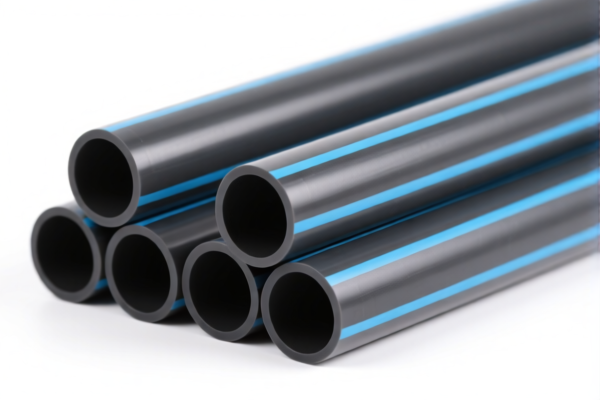
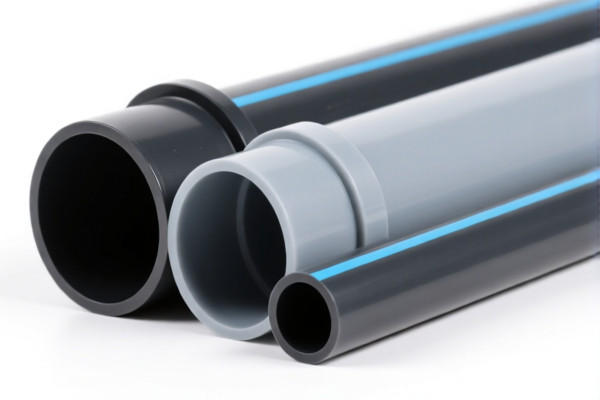
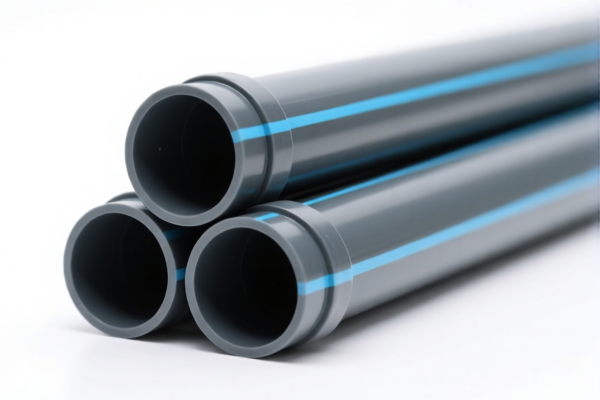
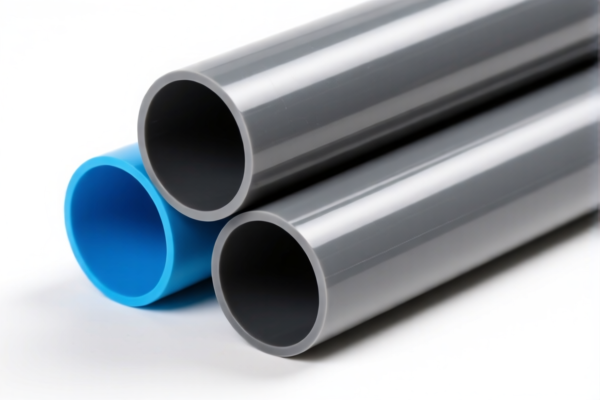
AI Analysis
🏗️ PVC Industrial Pipes: HS Code Classification & US Customs Clearance Guide (2026)
🌐 HS Code Reference & Customs Clearance Strategy | 2026 Tariff Analysis | Specialized Compliance for PVC Products
📌 I. Product Definition: What Exactly Is "PVC Industrial Pipe"?
In international trade, "PVC Industrial Pipe" is a broad term that often leads to misclassification. The US Customs and Border Protection (CBP) distinguishes between pipes based on their material specificity, end-use, and physical form.
Two Main Categories of PVC Pipes:
-
Chemical Specific Pipes (Section 3917/3925):
- Made specifically of chlorinated polymers or polyvinyl chloride (PVC).
- Typically classified under heading 3917 (Tubes, pipes, and hoses) or 3925 (Builders' ware of plastics).
- Key Indicator: The summary explicitly mentions "Vinyl Chloride Polymer" or "Polyvinyl Chloride."
-
General Plastic Pipes/Profiles (Section 3926):
- Made of "plastic" (generic) without specifying PVC in the detailed description, OR used as industrial profiles/components (like window frames or structural beams).
- Classified under heading 3926 (Other articles of plastic).
- Key Indicator: The summary mentions "Plastic," "Industrial Profile," or "Building Components" without explicit chemical naming in the HS description.
⚠️ Critical Distinction Point:
- If the product is a standard pipeline made of PVC → Look at 3917 or 3925.
- If the product is a structural profile (e.g., window frames, industrial beams) or generic plastic tube → Look at 3926.
- Misclassification Risk: Declaring a generic "Plastic Pipe" (3926) when it is actually PVC (3917) may lead to duty discrepancies, as tax rates differ significantly.
📦 II. HS Code Classification Details (2026 Authorized List)
Based on the provided data, here is the precise breakdown of applicable HS Codes for PVC Industrial Pipes:
| HS Code | Product Description | Key Characteristics | Tax Rate (Total) |
|---|---|---|---|
3917.23.00.00 |
PVC Pipe, Vinyl Chloride Polymer | Material: Vinyl Chloride Polymer; Form: Pipe/Conduit | 38.1% |
3917.32.00.10 |
PVC Pipe, Polyvinyl Chloride | Material: Polyvinyl Chloride; Form: Pipe | 38.1% |
3926.90.99.87 |
PVC Pipe/Industrial Profile | Material: Plastic; Form: Pipe/Hard Pipe; Use: Undefined | 22.8% |
3926.90.99.89 |
PVC Pipe, Other Plastic Article | Material: Plastic; Form: Pipe; Category: Other Plastic Goods | 22.8% |
3925.20.00.91 |
PVC Industrial Profile | Material: Plastic; Form: Industrial构件/Window Frame | 22.8% |
🔍 Analysis:
- Group A (Higher Duty):3917.23.00.00and3917.32.00.10are for direct PVC pipes with specified chemical composition.
- Group B (Lower Duty):3926.90.99.87,3926.90.99.89, and3925.20.00.91are for plastic pipes/profiles where the material is broadly "plastic" or used as "industrial profiles/builders' ware."
- Why the Difference? The US CBP may view "Industrial Profiles" (3925/3926) as construction materials rather than fluid transport pipes, leading to a lower tariff burden. However, accurate product definition is mandatory.
💰 III. 2026 Tariff Rate Breakdown (Including Additional Duties)
✅ Applicable Country: United States (US)
✅ Origin: China (CN)
✅ Effective Date: 2025–2026 (Subject to current trade policies)
🎯 Group 1: Specific PVC Pipes (3917.23.00.00 & 3917.32.00.10)
Total Tax: 38.1%
| Item | Detail |
|---|---|
| Base Tariff | 3.1% (General Rate) |
| Section 301 Additional Tariff | 25.0% (Added for Chinese-origin goods) |
| Section 122 Tariff | 10.0% (Specific policy surcharge) |
| Total Effective Rate | 38.1% |
| Calculation Base | CIF Value (Cost, Insurance, Freight) × 38.1% |
| De Minimis Exemption | ❌ Not Eligible (Section 301 and Section 122 duties usually deny de minimis exemption) |
📌 Explanation:
- The 25% Section 301 tariff applies to most PVC products of Chinese origin.
- The 10% Section 122 tariff is an additional surcharge applied to specific categories.
- These duties are cumulative. You cannot choose one or the other; they are additive.
🎯 Group 2: Plastic Pipes/Profiles (3926.90.99.87, 3926.90.99.89, 3925.20.00.91)
Total Tax: 22.8%
| Item | Detail |
|---|---|
| Base Tariff | 5.3% (General Rate) |
| Section 301 Additional Tariff | 7.5% (Note: Lower than Group 1, possibly due to different subheading classification) |
| Section 122 Tariff | 10.0% |
| Total Effective Rate | 22.8% |
| Calculation Base | CIF Value × 22.8% |
| De Minimis Exemption | ❌ Not Eligible |
📌 Explanation:
- The Base Tariff is higher (5.3% vs 3.1%), but the Section 301 Additional Tariff is significantly lower (7.5% vs 25.0%).
- This results in a 15.3% lower total duty compared to Group 1.
- ⚠️ Warning: You cannot arbitrarily shift from3917to3926to save taxes. The classification must match the physical and functional nature of the product. If it is a standard PVC pipe for fluid transport,3917is likely correct. If it is a structural profile (e.g., window frame, industrial beam),3925/3926may apply.
🛠️ IV. Customs Clearance Practical Advice (Avoiding Pitfalls)
✅ 1. Documentation Checklist (Mandatory)
| Document | Required? | Purpose |
|---|---|---|
| ✅ Product Specification Sheet | ✔️ | Must detail: Material (PVC/Plastic), Diameter, Wall Thickness, Pressure Rating, Chemical Resistance. |
| ✅ Technical Drawing | ✔️ | To prove if it is a "Pipe" (fluid transport) or "Profile" (structural support). |
| ✅ Photos (Labeled) | ✔️ | Show the product, label, and packaging. Clearly show if it has joints, fittings, or is a raw profile. |
| ✅ Commercial Invoice | ✔️ | Accurate description: "PVC Pipe, Vinyl Chloride Polymer, 2-inch, Schedule 40" vs "Plastic Industrial Profile, Window Frame Component." |
| ✅ Certificate of Origin (CO) | ✔️ | To confirm Chinese origin and apply accurate tariffs. |
| ✅ Third-Party Test Report | ✔️ | ASTM/ISO standards for PVC (e.g., ASTM D1785) to prove material composition. |
✅ 2. Classification Strategy (Key Tips)
🔥 "Material Defines Code, Function Confirms It!"
| Scenario | Recommended HS Code | Why? |
|---|---|---|
| Standard PVC Pipe for Water/Gas | 3917.23.00.00 or 3917.32.00.10 |
Explicitly made of PVC for pipeline use. |
| PVC Pipe for Electrical Conduit | 3917.23.00.00 |
Still a PVC pipe, even if for wiring. |
| PVC Window Frame Profile | 3925.20.00.91 |
Classified as "Builders' Ware," not a fluid pipe. |
| Generic Plastic Tube (Non-PVC) | 3926.90.99.87 |
Material is not specified as PVC. |
| PVC Industrial Beam/Support | 3926.90.99.89 |
Considered "Other Plastic Article" for industrial use. |
📌 Critical Warning:
- Do NOT misdeclare a PVC pipe as "Plastic Profile" to avoid the 25% Section 301 tariff. CBP conducts material testing. If the lab proves it is PVC, they will reclassify it and charge back taxes + penalties.
- If the product is exclusively for industrial structural support (e.g., chemical plant scaffolding), argue for3925/3926with strong technical docs.
✅ 3. Special Case Handling
| Situation | Action |
|---|---|
| Mixed Shipment (Pipes + Fittings) | Declare separately. Pipes under 3917, Fittings under 3917.99 or 3926.90. Do not lump together. |
| OEM Custom PVC Pipes | Provide client’s technical specs. If specs say "PVC," use 3917. If specs say "Plastic Profile," use 3926. |
| Used/Recycled PVC Pipes | May require EPA notifications. Tariffs may differ. Consult EPA and CBP. |
| High-Pressure PVC Pipes | Ensure ASTM/ISO certification is attached. Low-quality pipes may be rejected for safety reasons. |
🌍 V. Global Market Comparison (2026)
| Country | Recommended HS Code | Estimated Total Duty | Notes |
|---|---|---|---|
| 🇺🇸 USA | 3917.23.00.00 |
38.1% | High Section 301 + Section 122 tariffs. |
| 🇺🇸 USA | 3926.90.99.87 |
22.8% | Lower if classified as "Industrial Profile." |
| 🇨🇳 China | 3917.23.00.00 |
~3–5% | Low import duty, no Section 301. |
| 🇪🇺 EU | 3917.23.00.00 |
~2–4% | No anti-dumping on standard PVC pipes (check for specific AD cases). |
| 🇬🇧 UK | 3917.23.00.00 |
~2–4% | Post-Brexit tariffs similar to EU for most plastics. |
📌 Conclusion:
- The US market is the most challenging due to Section 301 and Section 122 tariffs.
- Cost Optimization: If your product can be legitimately classified as an "Industrial Profile" (e.g., window frames, structural beams) rather than a "Pipeline," you can save ~15% in duties. However, this requires robust technical documentation.
📌 VI. Common Mistakes & Pitfalls (Learn from Others' Failures)
❌ Mistake 1: Declaring PVC Pipes as "Plastic Tubing" to avoid Section 301.
👉 Result: CBP lab test confirms PVC → Back taxes (25%) + 25% penalty.
❌ Mistake 2: Ignoring the "Section 122" 10% tariff.
👉 Result: Underpaying duties → Audit and fine.
❌ Mistake 3: Mixing "PVC Pipes" and "PVC Fittings" on one line item.
👉 Result: CBP may assess the higher duty rate for the entire shipment.
❌ Mistake 4: Using vague descriptions like "Plastic Pipe."
👉 Result: CBP assigns a default HS Code, often the higher-tariff one, and delays clearance.
✅ Correct Approach:
"Rigid PVC Pipe, Vinyl Chloride Polymer, 4-inch OD, Schedule 40, ASTM D1785, for Water Conveyance"
🎯 VII. Conclusion: Precision Saves Money
🎯 Key Takeaway:
🔹 "PVC Pipe" = 38.1% Duty (3917)
🔹 "Plastic Profile/Industrial Component" = 22.8% Duty (3926/3925)
🔹 "Do Not Lie" → Misclassification leads to penalties.
🔹 "Document Rigorously" → Technical specs are your best defense.
📌 Pro Tip:
If you are importing large volumes, consider applying for a CBP Binding Ruling before shipment. This legally binds CBP to your classification, providing certainty for 5 years.
📣 Immediate Action:
📞 Consult a Customs Broker + Prepare Technical Specs + Request Binding Ruling
🚀 Clear the Customs Hurdle, Reduce Costs, and Scale Your Business!
✨ Professional Classification, Smooth Clearance!
💼 Every Duty Dollar Counts – Get It Right the First Time!
Customer Reviews
About HS Code Classification
The Harmonized System (HS) is an internationally standardized nomenclature developed by the World Customs Organization (WCO) to classify traded products. Over 200 countries use the HS system as the basis for customs tariffs, trade statistics, and import/export regulations.
Each HS code follows a hierarchical structure:
- Chapter (2 digits) — Broad category of goods (e.g., Chapter 84: Machinery and Mechanical Appliances)
- Heading (4 digits) — More specific grouping within the chapter
- Subheading (6 digits) — Internationally standardized breakdown, used by all WCO member countries
- National subdivisions (8-10 digits) — Country-specific extensions for further classification, such as US HTSUS 10-digit codes
Correct HS code classification is essential for smooth customs clearance, accurate duty payment, and compliance with trade regulations. Misclassification can lead to customs delays, overpayment of duties, or penalties.
When importing from CN to US, the applicable tariff rates may include:
- Most-Favored-Nation (MFN) rate — The standard duty rate applied to WTO members
- General rate — Applied to countries without trade agreements
- Trade remedy duties — Additional tariffs such as Section 301 (anti-dumping), Section 232 (national security), or countervailing duties
The information provided on this page is for reference purposes only. For official classification, please consult with your local customs authority or a licensed customs broker.