PVC Plastic Conveyor Tubes
CN → US| HS编码 | 关税税率 | 原产国 | 目的国 | 文档 |
|---|---|---|---|---|
| 3917320010 | 38.1% | CN | US | 官方文档 |
| 3926909987 | 22.8% | CN | US | 官方文档 |
| 3917230000 | 38.1% | CN | US | 官方文档 |
| 3926909989 | 22.8% | CN | US | 官方文档 |
| 8431499084 | 85.0% | CN | US | 官方文档 |
| 3926906010 | 39.2% | CN | US | 官方文档 |
商品图片
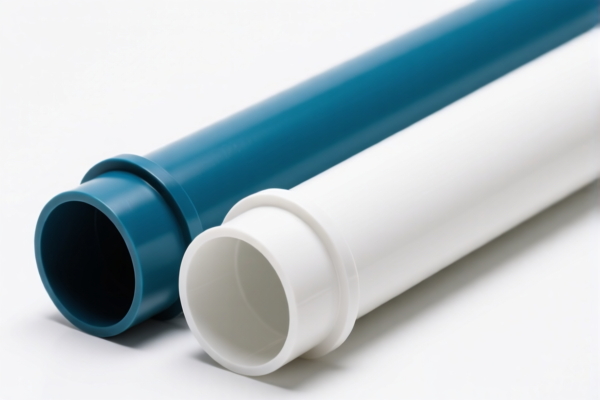
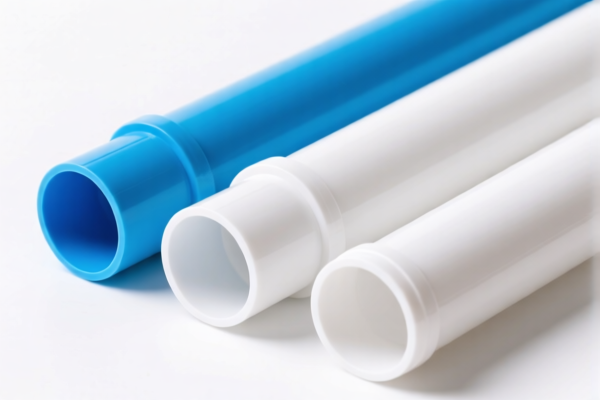
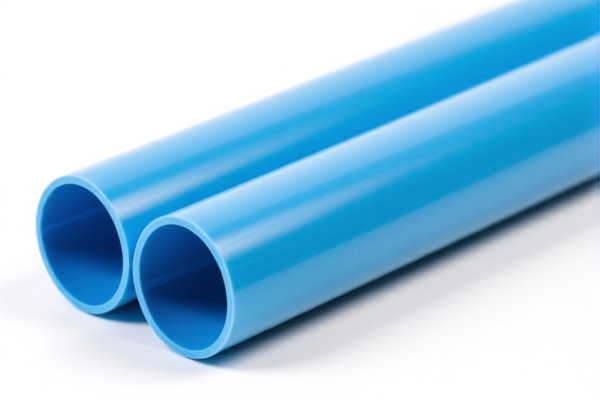
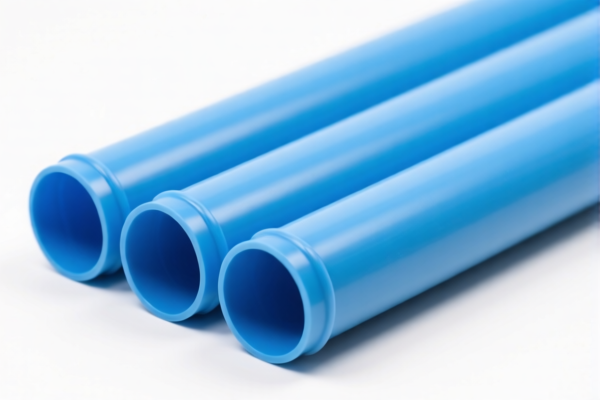
AI分析
🧪 PVC Plastic Conveyor Tubes (Industrial Belt & Hoses)
🌐 HS Code Reference & Customs Clearance Guide | 2026 Latest Tariff Analysis | Professional Clearance Strategy
📌 I. Product Definition & Classification: Do You Really Know "PVC Conveyor Tubes"?
"PVC Plastic Conveyor Tubes" in international trade usually refer to flexible tubing or belts made of Polyvinyl Chloride (PVC), used for industrial material transport, liquid conveyance, or pneumatic systems. Their classification is highly sensitive to material composition and end-use.
Key Distinction: * Pure PVC Pipes/Tubes: If used for plumbing, electrical wiring, or general fluid transport, they fall under Chapter 39 (Plastics). * Conveyor Belts/Tubes (Textile Reinforced): If the PVC is coated on a textile or fabric core specifically for conveying materials (like in factories/warehouses), it may fall under Chapter 84 (Machinery Parts).
⚠️ Critical Classification Point:
- If it is a bare PVC tube (no fabric reinforcement) → Chapter 39 (Plastics).
- If it is a PVC-coated fabric belt/tube for industrial conveyance → Chapter 84 (Machinery).
📦 II. HS Code Classification Details (2026 Latest Tariff Authority Match)
Based on your provided <DATA>, here are the precise matches for "PVC Plastic Conveyor Tubes":
| HS Code | Product Description | Application Scenario | Material/State |
|---|---|---|---|
3917.32.00.10 |
PVC Pipes, made of Polyvinyl Chloride, in tube form | Plumbing, electrical conduit, general fluid transport | ✅ PVC Resin |
3917.23.00.00 |
Pipes & Tubes, made of Vinyl Polymers (PVC) | Exact match for PVC polymer tubes | ✅ Vinyl Polymer |
3926.90.99.87 |
PVC Tubes, classified as "Other Plastic Articles" | Fallback category if specific PVC pipe code doesn't fit perfectly | ✅ Plastic |
3926.90.99.89 |
PVC Tubes, classified as "Other Plastic Articles" | Alternative "Other" plastic article category | ✅ Plastic |
8431.49.90.84 |
PVC Textile Industrial Conveyor Belt/Tube | Industrial material handling, factory conveyor systems | ✅ PVC + Textile |
🔍 Key Insight:
- The term "Conveyor" in your input might mislead some to think only of Chapter 84. However, if the product is a simple PVC tube not reinforced with fabric for heavy-duty material conveyance, it stays in Chapter 39.
-8431.49.90.84is only applicable if the product is specifically a conveyor belt/strip made of PVC and textile. If it’s a plain PVC tube, this code is incorrect and will lead to high tariffs and inspection delays.
💰 III. 2026 Latest Tariff Rate Breakdown (Including Surtaxes & Policy Add-ons)
✅ Applicable Country: United States (US)
✅ Country of Origin: China (CN)
✅ Effective Date: 2025+ (Current Trade War Policies)
🎯 1. 3917.32.00.10 & 3917.23.00.00 —— Pure PVC Pipes/Tubes (High Tariff Risk)
| Item | Details |
|---|---|
| Base Tariff | 3.1% (Ad Valorem) |
| Section 301 Surtax | +25.0% (USITC Footnote 9903.88.01) |
| Section 122 Surtax | +10.0% (Specific to Chinese PVC/Plastics) |
| Total Tariff Rate | 38.1% |
| Tax Calculation | CIF Value × 38.1% |
| De Minimis Exemption | ❌ Not Applicable (High tariff goods are excluded) |
| Legal Path | USITC:3917.32.00.10 → FOOTNOTE:301_25% → IEEPA:122_10% |
📌 Explanation:
- 38.1% is the total landed cost impact on pure PVC pipes. This is a high-cost item for importers.
- Both3917.32.00.10and3917.23.00.00carry the same 38.1% rate because they are both classified as PVC pipes under Chapter 39.
🎯 2. 3926.90.99.87 & 3926.90.99.89 —— "Other" Plastic Articles (Lower Tariff Option)
| Item | Details |
|---|---|
| Base Tariff | 5.3% (Ad Valorem) |
| Section 301 Surtax | +7.5% (Reduced 301 surtax for some plastic goods) |
| Section 122 Surtax | +10.0% |
| Total Tariff Rate | 22.8% |
| Tax Calculation | CIF Value × 22.8% |
| De Minimis Exemption | ❌ Not Applicable |
| Legal Path | USITC:3926.90.99.87 → FOOTNOTE:301_7.5% → IEEPA:122_10% |
📌 Explanation:
- 22.8% is significantly lower than 38.1%.
- If your product is not a standard "pipe" but a "custom-shaped tube" or "general plastic article," using3926.90can save 15.3% in tariffs.
- ⚠️ Risk: Customs may challenge this if the product is clearly a standard PVC pipe. Must justify "non-pipe" shape/use.
🎯 3. 8431.49.90.84 —— PVC Textile Conveyor Belt (Extremely High Tariff)
| Item | Details |
|---|---|
| Base Tariff | 0.0% |
| Section 301 Surtax | +25.0% |
| Section 122 Surtax | +10.0% |
| Steel/Aluminum/Copper Surtax | +50.0% (If any metal reinforcement is present) |
| Total Tariff Rate | 85.0% (or higher if metal parts) |
| Tax Calculation | CIF Value × 85.0% |
| De Minimis Exemption | ❌ Not Applicable |
| Legal Path | USITC:8431.49.90.84 → FOOTNOTE:301_25% → IEEPA:122_10% → METAL_SURCHARGE_50% |
📌 Explanation:
- 85.0% is a prohibitive tariff. Only apply this if the product is explicitly a textile-reinforced conveyor belt used in machinery.
- If it’s a plain PVC tube, DO NOT USE THIS CODE. It will trigger heavy audits.
🛠️ IV. Customs Clearance Practical Advice (Avoid Pitfalls)
✅ 1. Preparation Checklist (Must-Haves)
| Document | Required? | Notes |
|---|---|---|
| ✅ Product Specification Sheet | ✔️ | Must clearly state: Material (PVC), Reinforcement (Yes/No), Use (Plumbing vs. Conveyor) |
| ✅ Product Photos | ✔️ | Show cross-section, markings, and end-use context |
| ✅ Commercial Invoice | ✔️ | Describe as "PVC Tube" or "PVC Conveyor Belt" accurately. Avoid vague terms like "Plastic Part" |
| ✅ Certificate of Origin | ✔️ | For US-China trade, this confirms Chinese origin for surtax calculation |
| ✅ Composition Analysis | ✔️ | If disputing between 3917 (38.1%) and 3926 (22.8%), provide lab report |
✅ 2. Declaration Strategy (Key Formulas)
🔥 "Identify Use, Choose Code, Save 15%!"
| Scenario | Correct HS Code | Tariff | Common Mistake |
|---|---|---|---|
| Standard PVC Pipe (Plumbing/Wire) | 3917.32.00.10 |
38.1% | Trying to use 3926 to save tax → Customs rejection |
| Custom/Non-Standard PVC Tube | 3926.90.99.87 |
22.8% | Using 3917 → Overpaying 15.3% |
| Textile-Reinforced Conveyor Belt | 8431.49.90.84 |
85.0% | Using 3926 → Undervaluation penalty |
| Plain Tube with Metal Core | 8431.49.90.84 |
>85.0% | Using plastic code → Heavy fine |
✅ 3. Special Considerations
| Issue | Recommendation |
|---|---|
| "Conveyor" in Name | If the tube is not reinforced with fabric/textile, remove "Conveyor" from the declaration. Use "PVC Flexible Tube" instead. This avoids 8431 and 85% tariff. |
| Duty Minimization | If the tube is not a standard pipe, argue for 3926.90.99.87 (22.8%) by providing engineering drawings showing it’s a specialized "other plastic article." |
| Metal Reinforcement | If there’s any steel wire or mesh, expect 50% additional surtax. Avoid if possible. |
🌍 V. Global Market Comparison (2026)
| Country | Recommended HS Code | Tariff Rate | Notes |
|---|---|---|---|
| 🇺🇸 USA | 3926.90.99.87 (if possible) |
22.8% | Best rate for PVC tubes. 3917 is 38.1%. |
| 🇪🇺 EU | 3917.32.00 |
~2.7% + VAT | No Section 301/122 surtaxes. Lower overall cost. |
| 🇨🇳 China | 3917.32.00 |
5% - 9% | Domestic trade or re-export. |
| 🇯🇵 Japan | 3917.32.00 |
5% - 7% | No major surtaxes on PVC tubes. |
📌 Conclusion:
- The US market is the most expensive for PVC products due to 301 and 122 surtaxes.
- Optimization Strategy: If your product allows, classify it as3926.90.99.87("Other Plastic Article") to reduce tariff from 38.1% to 22.8%. This requires proving it’s not a standard pipe.
📌 VI. Common Errors & Pitfalls (Lessons Learned)
❌ Error 1: Calling a plain PVC tube a "Conveyor Belt" to fit 3926.
👉 Result: Customs inspection reveals it’s a standard pipe → Forced to pay 38.1% + penalties.
❌ Error 2: Using 8431.49.90.84 for a simple PVC hose.
👉 Result: 85% tariff + potential detention for misclassification.
❌ Error 3: Ignoring the "122 Surtax" in total cost calculation.
👉 Result: Underestimating landed cost by 10%, leading to margin erosion.
✅ Correct Approach:
"Flexible PVC Tube, 2-inch Diameter, No Textile Reinforcement, For Fluid Transfer, Model XYZ, PVC-100%"
🎯 VII. Conclusion: Professional Declaration, Cost Optimization!
🎯 Remember the Formula:
🔹 "Plain PVC Pipe = 38.1% | Custom PVC Tube = 22.8% | Textile Belt = 85.0%"
🔹 "Drop 'Conveyor' if no fabric, Save 15% in Duties!"
📌 Pro Tip:
If you are importing large volumes, consider Advanced Ruling (APA) from US Customs to lock in the 22.8% rate for 3926.90.99.87. This provides legal certainty and avoids post-clearance audits.
📣 Immediate Action:
📞 Review your product’s reinforcement material.
📄 Prepare engineering drawings to support3926if applicable.
🚀 Optimize your HS Code to save 15.3% in tariffs!
✨ Professional Customs Clearance Starts with Precise Classification!
💼 Every Percent Saved is Pure Profit!
用户评价
关于 HS 编码归类
协调制度(HS)是由世界海关组织(WCO)制定的国际贸易商品分类标准。全球 200 多个国家采用 HS 系统作为海关关税、贸易统计和进出口监管的基础。
每个 HS 编码遵循以下层级结构:
- 章(2 位)——商品大类(例如:第 84 章:机器和机械设备)
- 品目(4 位)——章内的更具体分类
- 子目(6 位)——国际通用细分,所有 WCO 成员国统一使用
- 本国细分(8-10 位)——各国自行扩展的细分编码,如美国 HTSUS 10 位编码
正确的 HS 编码归类对于顺利通关、准确缴纳关税和遵守贸易法规至关重要。错误归类可能导致海关延误、多缴关税或罚款。
从CN进口到US时,适用的关税税率可能包括:
- 最惠国(MFN)税率——适用于 WTO 成员国的标准关税税率
- 普通税率——适用于无贸易协定国家
- 贸易救济关税——附加关税,如 301 条款(反倾销)、232 条款(国家安全)或反补贴税
本页内容仅供参考。如需正式归类,请咨询当地海关或持牌报关代理。