PVC Plastic Conveyor Tubes
CN → US| HS Code | Tariff Rate | Origin | Destination | Doc |
|---|---|---|---|---|
| 3917320010 | 38.1% | CN | US | Official Doc |
| 3926909987 | 22.8% | CN | US | Official Doc |
| 3917230000 | 38.1% | CN | US | Official Doc |
| 3926909989 | 22.8% | CN | US | Official Doc |
| 8431499084 | 85.0% | CN | US | Official Doc |
| 3926906010 | 39.2% | CN | US | Official Doc |
Product Images
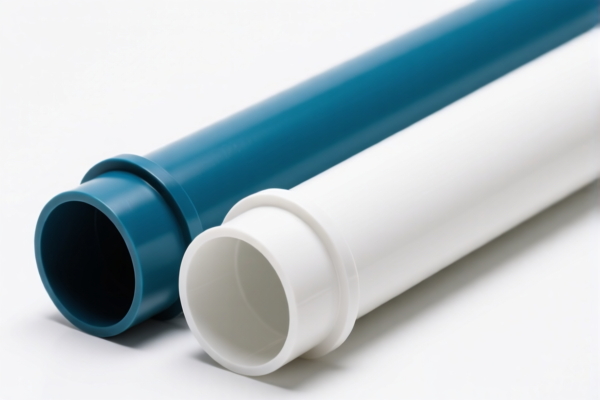

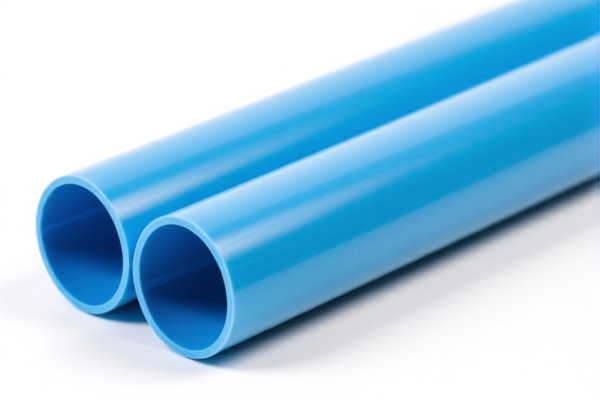
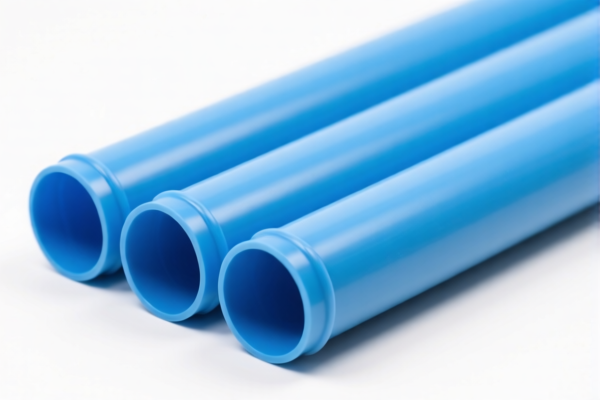
AI Analysis
🧪 PVC Plastic Conveyor Tubes (Industrial Belt & Hoses)
🌐 HS Code Reference & Customs Clearance Guide | 2026 Latest Tariff Analysis | Professional Clearance Strategy
📌 I. Product Definition & Classification: Do You Really Know "PVC Conveyor Tubes"?
"PVC Plastic Conveyor Tubes" in international trade usually refer to flexible tubing or belts made of Polyvinyl Chloride (PVC), used for industrial material transport, liquid conveyance, or pneumatic systems. Their classification is highly sensitive to material composition and end-use.
Key Distinction: * Pure PVC Pipes/Tubes: If used for plumbing, electrical wiring, or general fluid transport, they fall under Chapter 39 (Plastics). * Conveyor Belts/Tubes (Textile Reinforced): If the PVC is coated on a textile or fabric core specifically for conveying materials (like in factories/warehouses), it may fall under Chapter 84 (Machinery Parts).
⚠️ Critical Classification Point:
- If it is a bare PVC tube (no fabric reinforcement) → Chapter 39 (Plastics).
- If it is a PVC-coated fabric belt/tube for industrial conveyance → Chapter 84 (Machinery).
📦 II. HS Code Classification Details (2026 Latest Tariff Authority Match)
Based on your provided <DATA>, here are the precise matches for "PVC Plastic Conveyor Tubes":
| HS Code | Product Description | Application Scenario | Material/State |
|---|---|---|---|
3917.32.00.10 |
PVC Pipes, made of Polyvinyl Chloride, in tube form | Plumbing, electrical conduit, general fluid transport | ✅ PVC Resin |
3917.23.00.00 |
Pipes & Tubes, made of Vinyl Polymers (PVC) | Exact match for PVC polymer tubes | ✅ Vinyl Polymer |
3926.90.99.87 |
PVC Tubes, classified as "Other Plastic Articles" | Fallback category if specific PVC pipe code doesn't fit perfectly | ✅ Plastic |
3926.90.99.89 |
PVC Tubes, classified as "Other Plastic Articles" | Alternative "Other" plastic article category | ✅ Plastic |
8431.49.90.84 |
PVC Textile Industrial Conveyor Belt/Tube | Industrial material handling, factory conveyor systems | ✅ PVC + Textile |
🔍 Key Insight:
- The term "Conveyor" in your input might mislead some to think only of Chapter 84. However, if the product is a simple PVC tube not reinforced with fabric for heavy-duty material conveyance, it stays in Chapter 39.
-8431.49.90.84is only applicable if the product is specifically a conveyor belt/strip made of PVC and textile. If it’s a plain PVC tube, this code is incorrect and will lead to high tariffs and inspection delays.
💰 III. 2026 Latest Tariff Rate Breakdown (Including Surtaxes & Policy Add-ons)
✅ Applicable Country: United States (US)
✅ Country of Origin: China (CN)
✅ Effective Date: 2025+ (Current Trade War Policies)
🎯 1. 3917.32.00.10 & 3917.23.00.00 —— Pure PVC Pipes/Tubes (High Tariff Risk)
| Item | Details |
|---|---|
| Base Tariff | 3.1% (Ad Valorem) |
| Section 301 Surtax | +25.0% (USITC Footnote 9903.88.01) |
| Section 122 Surtax | +10.0% (Specific to Chinese PVC/Plastics) |
| Total Tariff Rate | 38.1% |
| Tax Calculation | CIF Value × 38.1% |
| De Minimis Exemption | ❌ Not Applicable (High tariff goods are excluded) |
| Legal Path | USITC:3917.32.00.10 → FOOTNOTE:301_25% → IEEPA:122_10% |
📌 Explanation:
- 38.1% is the total landed cost impact on pure PVC pipes. This is a high-cost item for importers.
- Both3917.32.00.10and3917.23.00.00carry the same 38.1% rate because they are both classified as PVC pipes under Chapter 39.
🎯 2. 3926.90.99.87 & 3926.90.99.89 —— "Other" Plastic Articles (Lower Tariff Option)
| Item | Details |
|---|---|
| Base Tariff | 5.3% (Ad Valorem) |
| Section 301 Surtax | +7.5% (Reduced 301 surtax for some plastic goods) |
| Section 122 Surtax | +10.0% |
| Total Tariff Rate | 22.8% |
| Tax Calculation | CIF Value × 22.8% |
| De Minimis Exemption | ❌ Not Applicable |
| Legal Path | USITC:3926.90.99.87 → FOOTNOTE:301_7.5% → IEEPA:122_10% |
📌 Explanation:
- 22.8% is significantly lower than 38.1%.
- If your product is not a standard "pipe" but a "custom-shaped tube" or "general plastic article," using3926.90can save 15.3% in tariffs.
- ⚠️ Risk: Customs may challenge this if the product is clearly a standard PVC pipe. Must justify "non-pipe" shape/use.
🎯 3. 8431.49.90.84 —— PVC Textile Conveyor Belt (Extremely High Tariff)
| Item | Details |
|---|---|
| Base Tariff | 0.0% |
| Section 301 Surtax | +25.0% |
| Section 122 Surtax | +10.0% |
| Steel/Aluminum/Copper Surtax | +50.0% (If any metal reinforcement is present) |
| Total Tariff Rate | 85.0% (or higher if metal parts) |
| Tax Calculation | CIF Value × 85.0% |
| De Minimis Exemption | ❌ Not Applicable |
| Legal Path | USITC:8431.49.90.84 → FOOTNOTE:301_25% → IEEPA:122_10% → METAL_SURCHARGE_50% |
📌 Explanation:
- 85.0% is a prohibitive tariff. Only apply this if the product is explicitly a textile-reinforced conveyor belt used in machinery.
- If it’s a plain PVC tube, DO NOT USE THIS CODE. It will trigger heavy audits.
🛠️ IV. Customs Clearance Practical Advice (Avoid Pitfalls)
✅ 1. Preparation Checklist (Must-Haves)
| Document | Required? | Notes |
|---|---|---|
| ✅ Product Specification Sheet | ✔️ | Must clearly state: Material (PVC), Reinforcement (Yes/No), Use (Plumbing vs. Conveyor) |
| ✅ Product Photos | ✔️ | Show cross-section, markings, and end-use context |
| ✅ Commercial Invoice | ✔️ | Describe as "PVC Tube" or "PVC Conveyor Belt" accurately. Avoid vague terms like "Plastic Part" |
| ✅ Certificate of Origin | ✔️ | For US-China trade, this confirms Chinese origin for surtax calculation |
| ✅ Composition Analysis | ✔️ | If disputing between 3917 (38.1%) and 3926 (22.8%), provide lab report |
✅ 2. Declaration Strategy (Key Formulas)
🔥 "Identify Use, Choose Code, Save 15%!"
| Scenario | Correct HS Code | Tariff | Common Mistake |
|---|---|---|---|
| Standard PVC Pipe (Plumbing/Wire) | 3917.32.00.10 |
38.1% | Trying to use 3926 to save tax → Customs rejection |
| Custom/Non-Standard PVC Tube | 3926.90.99.87 |
22.8% | Using 3917 → Overpaying 15.3% |
| Textile-Reinforced Conveyor Belt | 8431.49.90.84 |
85.0% | Using 3926 → Undervaluation penalty |
| Plain Tube with Metal Core | 8431.49.90.84 |
>85.0% | Using plastic code → Heavy fine |
✅ 3. Special Considerations
| Issue | Recommendation |
|---|---|
| "Conveyor" in Name | If the tube is not reinforced with fabric/textile, remove "Conveyor" from the declaration. Use "PVC Flexible Tube" instead. This avoids 8431 and 85% tariff. |
| Duty Minimization | If the tube is not a standard pipe, argue for 3926.90.99.87 (22.8%) by providing engineering drawings showing it’s a specialized "other plastic article." |
| Metal Reinforcement | If there’s any steel wire or mesh, expect 50% additional surtax. Avoid if possible. |
🌍 V. Global Market Comparison (2026)
| Country | Recommended HS Code | Tariff Rate | Notes |
|---|---|---|---|
| 🇺🇸 USA | 3926.90.99.87 (if possible) |
22.8% | Best rate for PVC tubes. 3917 is 38.1%. |
| 🇪🇺 EU | 3917.32.00 |
~2.7% + VAT | No Section 301/122 surtaxes. Lower overall cost. |
| 🇨🇳 China | 3917.32.00 |
5% - 9% | Domestic trade or re-export. |
| 🇯🇵 Japan | 3917.32.00 |
5% - 7% | No major surtaxes on PVC tubes. |
📌 Conclusion:
- The US market is the most expensive for PVC products due to 301 and 122 surtaxes.
- Optimization Strategy: If your product allows, classify it as3926.90.99.87("Other Plastic Article") to reduce tariff from 38.1% to 22.8%. This requires proving it’s not a standard pipe.
📌 VI. Common Errors & Pitfalls (Lessons Learned)
❌ Error 1: Calling a plain PVC tube a "Conveyor Belt" to fit 3926.
👉 Result: Customs inspection reveals it’s a standard pipe → Forced to pay 38.1% + penalties.
❌ Error 2: Using 8431.49.90.84 for a simple PVC hose.
👉 Result: 85% tariff + potential detention for misclassification.
❌ Error 3: Ignoring the "122 Surtax" in total cost calculation.
👉 Result: Underestimating landed cost by 10%, leading to margin erosion.
✅ Correct Approach:
"Flexible PVC Tube, 2-inch Diameter, No Textile Reinforcement, For Fluid Transfer, Model XYZ, PVC-100%"
🎯 VII. Conclusion: Professional Declaration, Cost Optimization!
🎯 Remember the Formula:
🔹 "Plain PVC Pipe = 38.1% | Custom PVC Tube = 22.8% | Textile Belt = 85.0%"
🔹 "Drop 'Conveyor' if no fabric, Save 15% in Duties!"
📌 Pro Tip:
If you are importing large volumes, consider Advanced Ruling (APA) from US Customs to lock in the 22.8% rate for 3926.90.99.87. This provides legal certainty and avoids post-clearance audits.
📣 Immediate Action:
📞 Review your product’s reinforcement material.
📄 Prepare engineering drawings to support3926if applicable.
🚀 Optimize your HS Code to save 15.3% in tariffs!
✨ Professional Customs Clearance Starts with Precise Classification!
💼 Every Percent Saved is Pure Profit!
Customer Reviews
About HS Code Classification
The Harmonized System (HS) is an internationally standardized nomenclature developed by the World Customs Organization (WCO) to classify traded products. Over 200 countries use the HS system as the basis for customs tariffs, trade statistics, and import/export regulations.
Each HS code follows a hierarchical structure:
- Chapter (2 digits) — Broad category of goods (e.g., Chapter 84: Machinery and Mechanical Appliances)
- Heading (4 digits) — More specific grouping within the chapter
- Subheading (6 digits) — Internationally standardized breakdown, used by all WCO member countries
- National subdivisions (8-10 digits) — Country-specific extensions for further classification, such as US HTSUS 10-digit codes
Correct HS code classification is essential for smooth customs clearance, accurate duty payment, and compliance with trade regulations. Misclassification can lead to customs delays, overpayment of duties, or penalties.
When importing from CN to US, the applicable tariff rates may include:
- Most-Favored-Nation (MFN) rate — The standard duty rate applied to WTO members
- General rate — Applied to countries without trade agreements
- Trade remedy duties — Additional tariffs such as Section 301 (anti-dumping), Section 232 (national security), or countervailing duties
The information provided on this page is for reference purposes only. For official classification, please consult with your local customs authority or a licensed customs broker.