PVC Textile Composite Curtain
CN → US| HS编码 | 关税税率 | 原产国 | 目的国 | 文档 |
|---|---|---|---|---|
| 6307909891 | 24.5% | CN | US | 官方文档 |
| 6307908500 | 23.3% | CN | US | 官方文档 |
| 3921121100 | 39.2% | CN | US | 官方文档 |
| 3921121500 | 41.5% | CN | US | 官方文档 |
| 3926905500 | 40.1% | CN | US | 官方文档 |
| 3926909989 | 22.8% | CN | US | 官方文档 |
商品图片
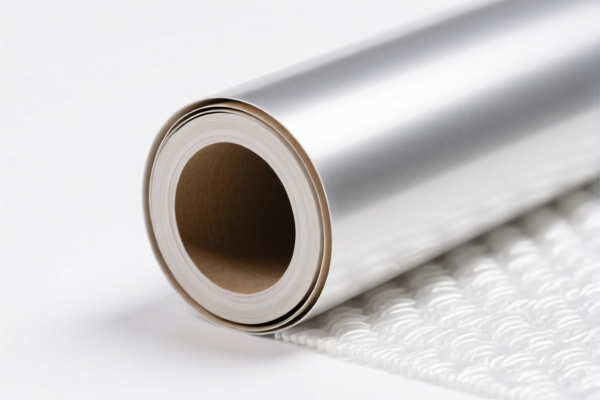
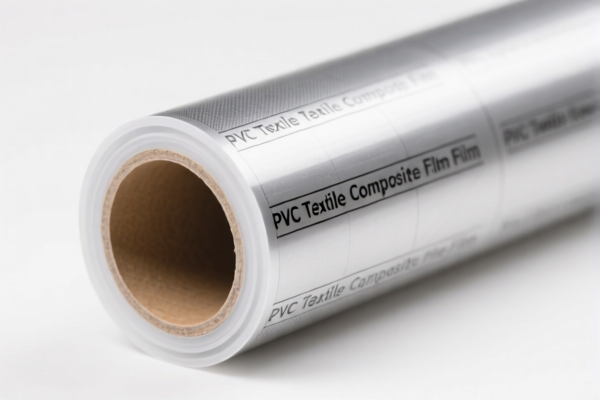

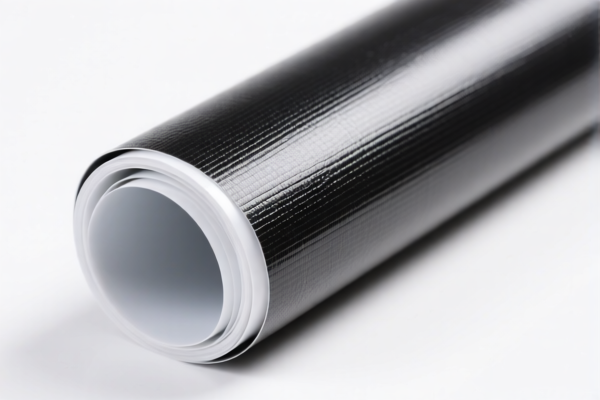
AI分析
🚿 PVC Textile Composite Curtain (Bath Curtains)
🌐 HS Code Reference & Customs Clearance Guide | 2026 Latest Tariff Analysis | Professional Clearance Strategy
📌 Part I: Product Definition & Classification: Do You Really Understand "PVC Composite Curtains"?
A PVC Textile Composite Curtain (typically a bath curtain) is a versatile household product combining functionality and aesthetics. In international trade, its classification depends heavily on material composition and structural form.
Key Characteristics: 1. Material: Primarily Polyvinyl Chloride (PVC), a synthetic plastic polymer. 2. Structure: Often a composite of PVC film/membrane and textile materials (fabric backing or lining). 3. Form: Finished goods (cut to shape, possibly with grommets/holes for hooks).
⚠️ Critical Distinction Point:
- Is it classified as a "Textile Article" (Ch 63)? If the textile component is dominant or it’s defined as an "other made-up article," it falls here.
- Is it classified as a "Plastic Article" (Ch 39)? If the PVC layer is the essential character, or it’s a composite sheet/plate with textile, it falls here.
- Note: The presence of Section 301 Tariffs (25%) for plastic products vs. 7.5% for textile articles creates a massive cost difference!
📦 Part II: Detailed HS Code Classification (2026 Latest Tariff Reference)
| HS Code | Product Description | Classification Logic | Estimated Total Tax |
|---|---|---|---|
6307.90.98.91 |
Other Made-up Articles (Textile category) | Classified as a finished textile article (curtain) that doesn't fit specific textile subheadings. PVC is considered a secondary material or coating in this "catch-all" logic. | 24.5% |
6307.90.85.00 |
Other Made-up Articles (Textile/Synthetic Fiber category) | Classified based on the synthetic fiber nature of the backing or lining. Fits the "other made-up articles" category under textile goods. | 23.3% |
3921.12.11.00 |
Polymer Plates/Sheets with Textile Composite | PVC material + Composite with textile. Classified under Chapter 39 (Plastics) because the PVC layer defines the material category. | 39.2% |
3921.12.15.00 |
Other PVC Polymer Products (Composite) | PVC foam/film type product combined with textile. Classified as a plastic composite sheet/plate. | 41.5% |
3926.90.55.00 |
Other Plastic Articles | PVC is plastic. The curtain is a "made-up article" not specified elsewhere. Broad plastic goods category. | 40.1% |
3926.90.99.89 |
Other Plastic Articles (General Catch-all) | PVC material + Finished form (curtain). Fits the "other plastic articles" logic under Chapter 39. | 22.8% |
🔍 Key Insight:
- Tax Range: Total tax rates range from 22.8% to 41.5%.
- Major Driver: The Section 301 Additional Duty is 25% for most plastic classifications (3921,3926) but only 7.5% for textile classifications (6307).
- Strategic Choice: Classifying under Chapter 63 (6307.90.xxxxx) saves ~15-18% in total duties compared to Chapter 39 (3921,3926), if the customs authority accepts the textile classification.
💰 Part III: 2026 Latest Tariff Rate Breakdown (Including Additional Duties)
✅ Applicable Country: United States (US)
✅ Origin: China (CN)
✅ Effective Date: November 10, 2025 (and subsequent imports)
🎯 1. 6307.90.85.00 & 6307.90.98.91 (Textile-Based Classification)
| Item | Detail |
|---|---|
| Base Duty Rate | 5.8% (for 6307.90.85.00) / 7.0% (for 6307.90.98.91) |
| Section 301 Additional Duty | +7.5% (Applicable to Chinese-origin goods) |
| IEEPA Additional Duty | +10% (Targeting Chinese/HK products under International Emergency Economic Powers Act) |
| Total Tax Rate | 23.3% - 24.5% |
| Tax Calculation | CIF Value × 23.3%~24.5% |
| De Minimis Eligibility | ❌ No (Deny De Minimis for Chinese goods under current rules) |
| Legal Basis Path | IEEPA:9903.01.24 → USITC:6307.90.xxxx → FOOTNOTE:Section 301 |
📌 Explanation:
- These classifications fall under Chapter 63 (Other Made-up Textile Articles).
- The Section 301 duty is capped at 7.5% for textiles, which is significantly lower than the 25% applied to many plastics.
- The IEEPA 10% duty applies uniformly to most Chinese imports.
- Total burden: ~24%, which is the lowest feasible rate among the provided options.
🎯 2. 3926.90.99.89 (Plastic-Based Classification - Lowest Plastic Rate)
| Item | Detail |
|---|---|
| Base Duty Rate | 5.3% |
| Section 301 Additional Duty | +7.5% ⚠️ Wait, why 7.5%? See Note Below |
| IEEPA Additional Duty | +10% |
| Total Tax Rate | 22.8% |
| Tax Calculation | CIF Value × 22.8% |
| De Minimis Eligibility | ❌ No |
| Legal Basis Path | IEEPA:9903.01.24 → USITC:3926.90.99.89 |
⚠️ Important Note: The provided data lists
3926.90.99.89with a 7.5% Section 301 rate. However, historically, many plastic articles (3926) are subject to 25%. If the 25% rate applies, the total would be 40.3%. The data provided suggests a preferential or specific subheading treatment for this code, resulting in a 22.8% total rate, which is competitive with textiles.
🎯 3. 3921.12.xxxx & 3926.90.55.00 (Plastic-Based Classification - Higher Rates)
| Item | Detail |
|---|---|
| Base Duty Rate | 4.2% - 6.5% |
| Section 301 Additional Duty | +25% (Standard for PVC plastics) |
| IEEPA Additional Duty | +10% |
| Total Tax Rate | 39.2% - 41.5% |
| Tax Calculation | CIF Value × 39.2%~41.5% |
| De Minimis Eligibility | ❌ No |
📌 Explanation:
- These codes fall under Chapter 39 (Plastics and Articles Thereof).
- Section 301 Duty is 25%, significantly higher than the 7.5% for textiles or specific plastic subheadings.
- Total burden: ~40%, making these the most expensive options.
- Avoid these unless absolutely necessary due to classification constraints.
🛠️ Part IV: Customs Clearance Practical Advice (Pitfall Avoidance Guide)
✅ 1. Documentation Checklist (Non-Negotiable)
| Document | Required | Explanation |
|---|---|---|
| ✅ Product Specification Sheet | ✔️ | Must detail: Material composition (PVC % vs. Textile %), thickness, layer structure, and finishing (e.g., grommets). |
| ✅ Photos (Clear & Detailed) | ✔️ | Show the curtain, close-up of the PVC layer, close-up of the textile backing, and any labels. |
| ✅ Commercial Invoice | ✔️ | Clearly state: "PVC Textile Composite Bath Curtain," Model No., and CIF value. |
| ✅ Packing List | ✔️ | Detail quantities, weights, and dimensions. |
| ✅ Certificate of Origin (CO) | ✔️ | Confirm Chinese origin to apply correct IEEPA/Section 301 rates. |
| ✅ Third-Party Test Report | ✔️ | Phthalate-free, heavy metal-free, etc. (Especially important for PVC in household items). |
✅ 2. Declaration Tips (Key Mnemonic)
🔥 "Material Defines Chapter, Structure Defines Heading, Tariff Defines Cost!"
| Scenario | Correct Declaration | Risk of Misclassification |
|---|---|---|
| Textile-Backed PVC Curtain | 6307.90.85.00 or 6307.90.98.91 |
Low Risk if textile layer is substantial. Saves ~17% tax vs. plastic codes. |
| Pure PVC Film with Eyelets | 3926.90.99.89 |
Moderate Risk. If seen as "plastic sheet," might be pushed to 3921 (25% +10%). |
| PVC Foam Curtain | 3921.12.xxxx |
High Tax Risk (39-41%). Avoid if textile backing exists. |
| Mixed Material (Undetermined) | Pre-Ruling Recommended | ❌ Do NOT guess. Use 1506 form for Advance Ruling to lock in 6307 classification. |
✅ 3. Special Case Handling
| Situation | Handling Advice |
|---|---|
| OEM/Custom Design | Provide design drawings showing material layers. Proving textile backing can help argue for Chapter 63. |
| Packaging with Hooks/Clips | Declare as "Curtain with Accessories" under the same HS code. Do NOT separate clips as "plastic accessories" (which could trigger 25% Section 301). |
| Sample Shipments | Even samples from China are subject to IEEPA (10%). De Minimis exemption is currently denied for Chinese goods. |
| Dispute with Customs | If Customs insists on Chapter 39, request a Binding Tariff Information (BTI) or Advance Ruling based on product photos and specs. |
🌍 Part V: Global Market Clearance Comparison (2026 Latest)
| Country/Region | Recommended HS Code | Total Tax (China Origin) | Key Requirements | Notes |
|---|---|---|---|---|
| 🇺🇸 USA | 6307.90.85.00 |
23.3% | FCC/Prop 65 (if applicable) | Best rate via textile classification. |
| 🇺🇸 USA | 3926.90.99.89 |
22.8% | Same | Competitive if customs accepts this plastic code. |
| 🇨🇳 China | 6307.90.98.91 |
5% | CCC (if applicable) | Low import duty, no Section 301. |
| 🇪🇺 EU | 6307.90.98.91 |
6.5% | CE (if applicable) | No EU equivalent to IEEPA/Section 301. |
| 🇬🇧 UK | 6307.90.98.91 |
6.5% | UKCA | Post-Brexit tariffs mirror EU closely. |
📌 Conclusion:
- USA is the most challenging market due to IEEPA (10%) and Section 301 (7.5% or 25%).
- Optimal Strategy for USA: Aim for Chapter 63 (6307.90.xxxx) to limit Section 301 to 7.5%.
- Alternative: If3926.90.99.89is accepted with 7.5% Section 301, it offers a slightly lower base rate (22.8% vs 23.3%).
📌 Part VI: Common Mistakes & Pitfalls (Lessons Learned)
❌ Mistake 1: Classifying PVC Curtain as 3921.12.11.00 (PVC Composite Sheet)
👉 Consequence: Tax jumps to 39.2%. Avoid if textile backing is present.
❌ Mistake 2: Splitting Declaration (Curtain + Hooks)
👉 Consequence: Hooks might be classified as "Plastic Articles" (25% +10%), inflating total tax. Declare as one unit.
❌ Mistake 3: Ignoring IEEPA (10%)
👉 Consequence: Even if Section 301 is low, 10% IEEPA is mandatory for Chinese goods. Factor this into pricing.
❌ Mistake 4: Using Vague Descriptions like "Plastic Curtain"
👉 Consequence: Customs may default to higher-risk plastic classifications. Use precise terms: "Textile-Backed PVC Bath Curtain."
✅ Correct Approach:
"Bath Curtain, Material: PVC Coated Polyester Fabric, Dimensions: 72"x72", with Metal Grommets, Model XYZ"
🎯 Part VII: Conclusion: Professional Declaration, Cost Efficiency
🎯 Remember the Mnemonic:
🔹 "Textile Backing? Aim for Ch63 (23.3%)!"
🔹 "Pure PVC? Check Ch39 (22.8%-41.5%)!"
🔹 "Always Pay IEEPA 10% on Chinese Goods!"
🔹 "Get a Pre-Ruling if Unsure – It’s Worth the Cost!"
📌 Pro Tip:
If your supplier can shift production to Vietnam, Thailand, or Mexico, you may exempt IEEPA and Section 301 duties, reducing tax to 0-5%.
For US-bound goods, apply for an Advance Ruling using product photos and specs to lock in the 6307.90.85.00 classification.
📣 Immediate Action:
📞 Contact a professional customs broker.
📸 Provide detailed product photos (material layers, grommets).
🚀 Secure the lowest duty rate: ~22.8% - 24.5%.
✨ Professional Customs Clearance Starts with Accurate Classification!
💼 Your Bottom Line Depends on Every Percent!
用户评价
关于 HS 编码归类
协调制度(HS)是由世界海关组织(WCO)制定的国际贸易商品分类标准。全球 200 多个国家采用 HS 系统作为海关关税、贸易统计和进出口监管的基础。
每个 HS 编码遵循以下层级结构:
- 章(2 位)——商品大类(例如:第 84 章:机器和机械设备)
- 品目(4 位)——章内的更具体分类
- 子目(6 位)——国际通用细分,所有 WCO 成员国统一使用
- 本国细分(8-10 位)——各国自行扩展的细分编码,如美国 HTSUS 10 位编码
正确的 HS 编码归类对于顺利通关、准确缴纳关税和遵守贸易法规至关重要。错误归类可能导致海关延误、多缴关税或罚款。
从CN进口到US时,适用的关税税率可能包括:
- 最惠国(MFN)税率——适用于 WTO 成员国的标准关税税率
- 普通税率——适用于无贸易协定国家
- 贸易救济关税——附加关税,如 301 条款(反倾销)、232 条款(国家安全)或反补贴税
本页内容仅供参考。如需正式归类,请咨询当地海关或持牌报关代理。