PVC Textile Composite Curtain
CN → US| HS Code | Tariff Rate | Origin | Destination | Doc |
|---|---|---|---|---|
| 6307909891 | 24.5% | CN | US | Official Doc |
| 6307908500 | 23.3% | CN | US | Official Doc |
| 3921121100 | 39.2% | CN | US | Official Doc |
| 3921121500 | 41.5% | CN | US | Official Doc |
| 3926905500 | 40.1% | CN | US | Official Doc |
| 3926909989 | 22.8% | CN | US | Official Doc |
Product Images

AI Analysis
🚿 PVC Textile Composite Curtain (Bath Curtains)
🌐 HS Code Reference & Customs Clearance Guide | 2026 Latest Tariff Analysis | Professional Clearance Strategy
📌 Part I: Product Definition & Classification: Do You Really Understand "PVC Composite Curtains"?
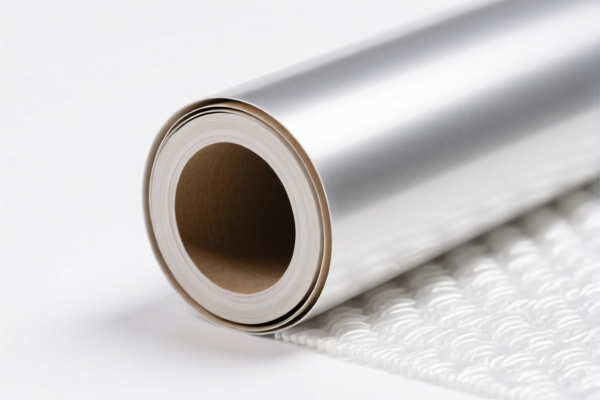
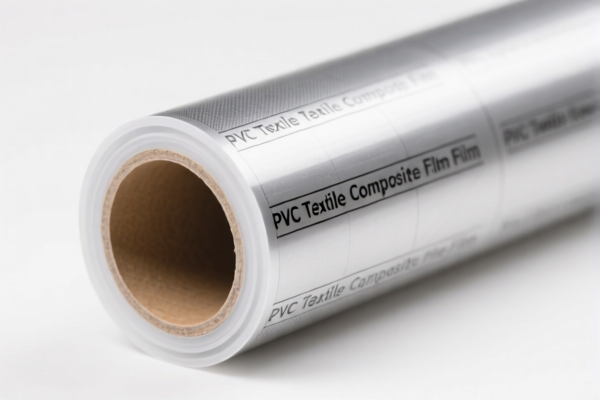
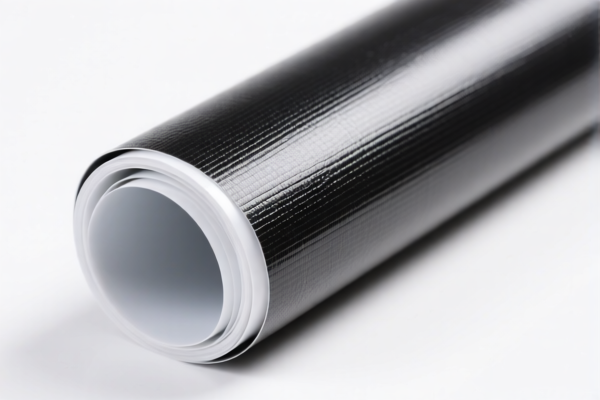
A PVC Textile Composite Curtain (typically a bath curtain) is a versatile household product combining functionality and aesthetics. In international trade, its classification depends heavily on material composition and structural form.
Key Characteristics: 1. Material: Primarily Polyvinyl Chloride (PVC), a synthetic plastic polymer. 2. Structure: Often a composite of PVC film/membrane and textile materials (fabric backing or lining). 3. Form: Finished goods (cut to shape, possibly with grommets/holes for hooks).
⚠️ Critical Distinction Point:
- Is it classified as a "Textile Article" (Ch 63)? If the textile component is dominant or it’s defined as an "other made-up article," it falls here.
- Is it classified as a "Plastic Article" (Ch 39)? If the PVC layer is the essential character, or it’s a composite sheet/plate with textile, it falls here.
- Note: The presence of Section 301 Tariffs (25%) for plastic products vs. 7.5% for textile articles creates a massive cost difference!
📦 Part II: Detailed HS Code Classification (2026 Latest Tariff Reference)
| HS Code | Product Description | Classification Logic | Estimated Total Tax |
|---|---|---|---|
6307.90.98.91 |
Other Made-up Articles (Textile category) | Classified as a finished textile article (curtain) that doesn't fit specific textile subheadings. PVC is considered a secondary material or coating in this "catch-all" logic. | 24.5% |
6307.90.85.00 |
Other Made-up Articles (Textile/Synthetic Fiber category) | Classified based on the synthetic fiber nature of the backing or lining. Fits the "other made-up articles" category under textile goods. | 23.3% |
3921.12.11.00 |
Polymer Plates/Sheets with Textile Composite | PVC material + Composite with textile. Classified under Chapter 39 (Plastics) because the PVC layer defines the material category. | 39.2% |
3921.12.15.00 |
Other PVC Polymer Products (Composite) | PVC foam/film type product combined with textile. Classified as a plastic composite sheet/plate. | 41.5% |
3926.90.55.00 |
Other Plastic Articles | PVC is plastic. The curtain is a "made-up article" not specified elsewhere. Broad plastic goods category. | 40.1% |
3926.90.99.89 |
Other Plastic Articles (General Catch-all) | PVC material + Finished form (curtain). Fits the "other plastic articles" logic under Chapter 39. | 22.8% |
🔍 Key Insight:
- Tax Range: Total tax rates range from 22.8% to 41.5%.
- Major Driver: The Section 301 Additional Duty is 25% for most plastic classifications (3921,3926) but only 7.5% for textile classifications (6307).
- Strategic Choice: Classifying under Chapter 63 (6307.90.xxxxx) saves ~15-18% in total duties compared to Chapter 39 (3921,3926), if the customs authority accepts the textile classification.
💰 Part III: 2026 Latest Tariff Rate Breakdown (Including Additional Duties)
✅ Applicable Country: United States (US)
✅ Origin: China (CN)
✅ Effective Date: November 10, 2025 (and subsequent imports)
🎯 1. 6307.90.85.00 & 6307.90.98.91 (Textile-Based Classification)
| Item | Detail |
|---|---|
| Base Duty Rate | 5.8% (for 6307.90.85.00) / 7.0% (for 6307.90.98.91) |
| Section 301 Additional Duty | +7.5% (Applicable to Chinese-origin goods) |
| IEEPA Additional Duty | +10% (Targeting Chinese/HK products under International Emergency Economic Powers Act) |
| Total Tax Rate | 23.3% - 24.5% |
| Tax Calculation | CIF Value × 23.3%~24.5% |
| De Minimis Eligibility | ❌ No (Deny De Minimis for Chinese goods under current rules) |
| Legal Basis Path | IEEPA:9903.01.24 → USITC:6307.90.xxxx → FOOTNOTE:Section 301 |
📌 Explanation:
- These classifications fall under Chapter 63 (Other Made-up Textile Articles).
- The Section 301 duty is capped at 7.5% for textiles, which is significantly lower than the 25% applied to many plastics.
- The IEEPA 10% duty applies uniformly to most Chinese imports.
- Total burden: ~24%, which is the lowest feasible rate among the provided options.
🎯 2. 3926.90.99.89 (Plastic-Based Classification - Lowest Plastic Rate)
| Item | Detail |
|---|---|
| Base Duty Rate | 5.3% |
| Section 301 Additional Duty | +7.5% ⚠️ Wait, why 7.5%? See Note Below |
| IEEPA Additional Duty | +10% |
| Total Tax Rate | 22.8% |
| Tax Calculation | CIF Value × 22.8% |
| De Minimis Eligibility | ❌ No |
| Legal Basis Path | IEEPA:9903.01.24 → USITC:3926.90.99.89 |
⚠️ Important Note: The provided data lists
3926.90.99.89with a 7.5% Section 301 rate. However, historically, many plastic articles (3926) are subject to 25%. If the 25% rate applies, the total would be 40.3%. The data provided suggests a preferential or specific subheading treatment for this code, resulting in a 22.8% total rate, which is competitive with textiles.
🎯 3. 3921.12.xxxx & 3926.90.55.00 (Plastic-Based Classification - Higher Rates)
| Item | Detail |
|---|---|
| Base Duty Rate | 4.2% - 6.5% |
| Section 301 Additional Duty | +25% (Standard for PVC plastics) |
| IEEPA Additional Duty | +10% |
| Total Tax Rate | 39.2% - 41.5% |
| Tax Calculation | CIF Value × 39.2%~41.5% |
| De Minimis Eligibility | ❌ No |
📌 Explanation:
- These codes fall under Chapter 39 (Plastics and Articles Thereof).
- Section 301 Duty is 25%, significantly higher than the 7.5% for textiles or specific plastic subheadings.
- Total burden: ~40%, making these the most expensive options.
- Avoid these unless absolutely necessary due to classification constraints.
🛠️ Part IV: Customs Clearance Practical Advice (Pitfall Avoidance Guide)
✅ 1. Documentation Checklist (Non-Negotiable)
| Document | Required | Explanation |
|---|---|---|
| ✅ Product Specification Sheet | ✔️ | Must detail: Material composition (PVC % vs. Textile %), thickness, layer structure, and finishing (e.g., grommets). |
| ✅ Photos (Clear & Detailed) | ✔️ | Show the curtain, close-up of the PVC layer, close-up of the textile backing, and any labels. |
| ✅ Commercial Invoice | ✔️ | Clearly state: "PVC Textile Composite Bath Curtain," Model No., and CIF value. |
| ✅ Packing List | ✔️ | Detail quantities, weights, and dimensions. |
| ✅ Certificate of Origin (CO) | ✔️ | Confirm Chinese origin to apply correct IEEPA/Section 301 rates. |
| ✅ Third-Party Test Report | ✔️ | Phthalate-free, heavy metal-free, etc. (Especially important for PVC in household items). |
✅ 2. Declaration Tips (Key Mnemonic)
🔥 "Material Defines Chapter, Structure Defines Heading, Tariff Defines Cost!"
| Scenario | Correct Declaration | Risk of Misclassification |
|---|---|---|
| Textile-Backed PVC Curtain | 6307.90.85.00 or 6307.90.98.91 |
Low Risk if textile layer is substantial. Saves ~17% tax vs. plastic codes. |
| Pure PVC Film with Eyelets | 3926.90.99.89 |
Moderate Risk. If seen as "plastic sheet," might be pushed to 3921 (25% +10%). |
| PVC Foam Curtain | 3921.12.xxxx |
High Tax Risk (39-41%). Avoid if textile backing exists. |
| Mixed Material (Undetermined) | Pre-Ruling Recommended | ❌ Do NOT guess. Use 1506 form for Advance Ruling to lock in 6307 classification. |
✅ 3. Special Case Handling
| Situation | Handling Advice |
|---|---|
| OEM/Custom Design | Provide design drawings showing material layers. Proving textile backing can help argue for Chapter 63. |
| Packaging with Hooks/Clips | Declare as "Curtain with Accessories" under the same HS code. Do NOT separate clips as "plastic accessories" (which could trigger 25% Section 301). |
| Sample Shipments | Even samples from China are subject to IEEPA (10%). De Minimis exemption is currently denied for Chinese goods. |
| Dispute with Customs | If Customs insists on Chapter 39, request a Binding Tariff Information (BTI) or Advance Ruling based on product photos and specs. |
🌍 Part V: Global Market Clearance Comparison (2026 Latest)
| Country/Region | Recommended HS Code | Total Tax (China Origin) | Key Requirements | Notes |
|---|---|---|---|---|
| 🇺🇸 USA | 6307.90.85.00 |
23.3% | FCC/Prop 65 (if applicable) | Best rate via textile classification. |
| 🇺🇸 USA | 3926.90.99.89 |
22.8% | Same | Competitive if customs accepts this plastic code. |
| 🇨🇳 China | 6307.90.98.91 |
5% | CCC (if applicable) | Low import duty, no Section 301. |
| 🇪🇺 EU | 6307.90.98.91 |
6.5% | CE (if applicable) | No EU equivalent to IEEPA/Section 301. |
| 🇬🇧 UK | 6307.90.98.91 |
6.5% | UKCA | Post-Brexit tariffs mirror EU closely. |
📌 Conclusion:
- USA is the most challenging market due to IEEPA (10%) and Section 301 (7.5% or 25%).
- Optimal Strategy for USA: Aim for Chapter 63 (6307.90.xxxx) to limit Section 301 to 7.5%.
- Alternative: If3926.90.99.89is accepted with 7.5% Section 301, it offers a slightly lower base rate (22.8% vs 23.3%).
📌 Part VI: Common Mistakes & Pitfalls (Lessons Learned)
❌ Mistake 1: Classifying PVC Curtain as 3921.12.11.00 (PVC Composite Sheet)
👉 Consequence: Tax jumps to 39.2%. Avoid if textile backing is present.
❌ Mistake 2: Splitting Declaration (Curtain + Hooks)
👉 Consequence: Hooks might be classified as "Plastic Articles" (25% +10%), inflating total tax. Declare as one unit.
❌ Mistake 3: Ignoring IEEPA (10%)
👉 Consequence: Even if Section 301 is low, 10% IEEPA is mandatory for Chinese goods. Factor this into pricing.
❌ Mistake 4: Using Vague Descriptions like "Plastic Curtain"
👉 Consequence: Customs may default to higher-risk plastic classifications. Use precise terms: "Textile-Backed PVC Bath Curtain."
✅ Correct Approach:
"Bath Curtain, Material: PVC Coated Polyester Fabric, Dimensions: 72"x72", with Metal Grommets, Model XYZ"
🎯 Part VII: Conclusion: Professional Declaration, Cost Efficiency
🎯 Remember the Mnemonic:
🔹 "Textile Backing? Aim for Ch63 (23.3%)!"
🔹 "Pure PVC? Check Ch39 (22.8%-41.5%)!"
🔹 "Always Pay IEEPA 10% on Chinese Goods!"
🔹 "Get a Pre-Ruling if Unsure – It’s Worth the Cost!"
📌 Pro Tip:
If your supplier can shift production to Vietnam, Thailand, or Mexico, you may exempt IEEPA and Section 301 duties, reducing tax to 0-5%.
For US-bound goods, apply for an Advance Ruling using product photos and specs to lock in the 6307.90.85.00 classification.
📣 Immediate Action:
📞 Contact a professional customs broker.
📸 Provide detailed product photos (material layers, grommets).
🚀 Secure the lowest duty rate: ~22.8% - 24.5%.
✨ Professional Customs Clearance Starts with Accurate Classification!
💼 Your Bottom Line Depends on Every Percent!
Customer Reviews
About HS Code Classification
The Harmonized System (HS) is an internationally standardized nomenclature developed by the World Customs Organization (WCO) to classify traded products. Over 200 countries use the HS system as the basis for customs tariffs, trade statistics, and import/export regulations.
Each HS code follows a hierarchical structure:
- Chapter (2 digits) — Broad category of goods (e.g., Chapter 84: Machinery and Mechanical Appliances)
- Heading (4 digits) — More specific grouping within the chapter
- Subheading (6 digits) — Internationally standardized breakdown, used by all WCO member countries
- National subdivisions (8-10 digits) — Country-specific extensions for further classification, such as US HTSUS 10-digit codes
Correct HS code classification is essential for smooth customs clearance, accurate duty payment, and compliance with trade regulations. Misclassification can lead to customs delays, overpayment of duties, or penalties.
When importing from CN to US, the applicable tariff rates may include:
- Most-Favored-Nation (MFN) rate — The standard duty rate applied to WTO members
- General rate — Applied to countries without trade agreements
- Trade remedy duties — Additional tariffs such as Section 301 (anti-dumping), Section 232 (national security), or countervailing duties
The information provided on this page is for reference purposes only. For official classification, please consult with your local customs authority or a licensed customs broker.