PVC Textile Composite Film
CN → US| HS编码 | 关税税率 | 原产国 | 目的国 | 文档 |
|---|---|---|---|---|
| 5907006000 | 35.0% | CN | US | 官方文档 |
| 5911102000 | 38.8% | CN | US | 官方文档 |
| 5903102090 | 35.0% | CN | US | 官方文档 |
| 5911101000 | 37.9% | CN | US | 官方文档 |
| 5903102010 | 35.0% | CN | US | 官方文档 |
商品图片
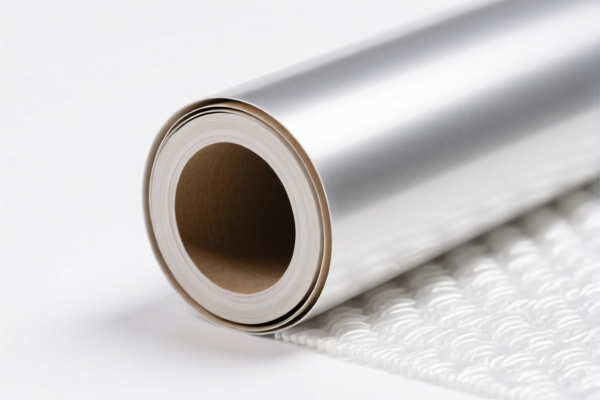
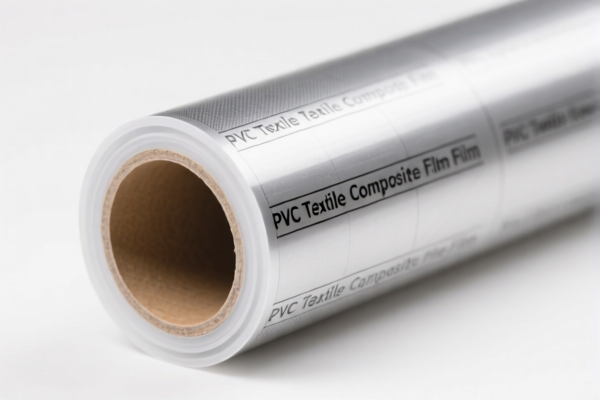

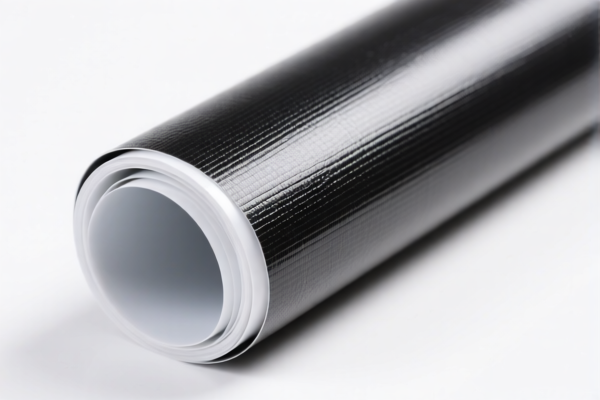
AI分析
🧵 PVC Textile Composite Film: The Ultimate Trade Compliance Guide (2026 Edition)
🌐 HS Code Reference & Customs Clearance Guide | 2026 Latest Tariff Breakdown | Professional-Level Strategy
📌 Part 1: Product Definition & Classification: Do You Really Understand "PVC Composite"?
PVC Textile Composite Film is a specialized industrial material consisting of a textile base (such as polyester, nylon, or canvas) coated, impregnated, or laminated with Polyvinyl Chloride (PVC). It is widely used in: * Industrial Applications: Conveyor belts, tarpaulins, awnings, airbags, and filtration fabrics. * Consumer Goods: Inflatable products, coated fabrics for luggage/bags, and protective covers.
In international trade, classification depends heavily on the primary function and technical nature of the composite. It is generally split into two main categories:
- Textile Fabrics Impregnated/Coated (Chapter 59, Heading 5903): Used when the primary characteristic is the fabric itself, enhanced by PVC for durability, water resistance, or coating purposes.
- Technical Textiles (Chapter 59, Heading 5911): Used when the material serves a specific technical function (e.g., filtration, grinding, or specialized industrial reinforcement) beyond simple protection or decoration.
⚠️ Key Distinction Point:
- If it is a general-purpose coated fabric (like tarpaulins, awnings, or bags) → Look at 5903.
- If it is a specialized technical textile (like filtration media, grinding cloths, or specific industrial reinforcements) → Look at 5911.
📦 Part 2: HS Code Classification Details (2026 Latest Tariff Authority Comparison)
| HS Code | Product Description | Applicable Scenario | Primary Characteristic |
|---|---|---|---|
5903.10.20.90 |
Other textile fabrics impregnated/coated with PVC (Other) | General industrial coatings, tarpaulins, awnings, decorative laminates | ✅ Impregnated/Coated/Laminated |
5903.10.20.10 |
Other textile fabrics impregnated/coated with PVC (Specific) | Specific PVC-composite textiles meeting detailed technical criteria for general use | ✅ Impregnated/Coated/Laminated |
5907.00.60.00 |
Textile fabrics impregnated/coated/painted with PVC (Other) | Broad category for PVC-composite textiles not specified elsewhere | ✅ Impregnated/Coated/Painted |
5911.10.10.00 |
Textile fabrics for technical uses, other (Coated/Laminated) | Specialized technical textiles, reinforced industrial fabrics | ✅ Technical Use |
5911.10.20.00 |
Textile fabrics for technical uses, other (Specific) | Filter cloths, grinding cloths, or specific industrial technical textiles | ✅ Technical Use |
🔍 Critical Reminder:
- 5903 Series covers most common PVC-composite fabrics used in manufacturing, construction, and consumer goods.
- 5911 Series is reserved for technical applications. Misclassifying a standard coated fabric as a "technical textile" can lead to higher base tariffs (3.8% vs 0%).
- 5907.00 is often a residual category for coated textiles not fitting neatly into 5903’s specific subheadings.
💰 Part 3: 2026 Latest Tariff Rate Breakdown (Including Surtaxes & Policy Add-ons)
✅ Applicable Country: United States (US)
✅ Country of Origin: China (CN)
✅ Effective Date: 2025/2026 (Current Trade Regime)
🎯 1. 5903.10.20.90 & 5903.10.20.10 — PVC Impregnated/Coated Textiles
| Item | Content |
|---|---|
| Base Tariff | 0.0% (ad valorem) |
| Section 301 Surtax | +25.0% (USITC Footnote 9903.01.25) |
| Section 122 / IEEPA Surtax | +10.0% (Against China-specific products) |
| Total Effective Rate | 35.0% |
| Tax Calculation | CIF Value × 35% |
| De Minimis Eligibility | ❌ Not Eligible (deny_de_minimis applies to Section 301 goods) |
| Legal Path | IEEPA:9903.01.25 → USITC:5903.10.20.90 → FOOTNOTE:301 |
📌 Explanation:
- Base Rate: 0% because these are considered textile substrates with plastic coatings, often enjoyed preferential base rates.
- Section 301 (25%): The major hurdle for Chinese-origin PVC composites.
- IEEPA/122 (10%): Additional punitive tariff targeting specific Chinese manufacturing sectors.
- Total: 35%. This is a high-cost classification.
🎯 2. 5907.00.60.00 — PVC Composite Textile (General)
| Item | Content |
|---|---|
| Base Tariff | 0.0% (ad valorem) |
| Section 301 Surtax | +25.0% (USITC Footnote 9903.88.01) |
| Section 122 / IEEPA Surtax | +10.0% (Against China-specific products) |
| Total Effective Rate | 35.0% |
| Tax Calculation | CIF Value × 35% |
| De Minimis Eligibility | ❌ Not Eligible |
| Legal Path | IEEPA:9903.88.01 → USITC:5907.00.60.00 → FOOTNOTE:301 |
📌 Note:
- Functions similarly to the 5903 series.
- If the product is a "composite strip" or "tape" rather than a broad fabric, this code may apply.
- Total: 35%.
🎯 3. 5911.10.20.00 — Technical Textile (Specific)
| Item | Content |
|---|---|
| Base Tariff | 3.8% (ad valorem) |
| Section 301 Surtax | +25.0% (USITC Footnote 9903.01.25) |
| Section 122 / IEEPA Surtax | +10.0% (Against China-specific products) |
| Total Effective Rate | 38.8% |
| Tax Calculation | CIF Value × 38.8% |
| De Minimis Eligibility | ❌ Not Eligible |
| Legal Path | IEEPA:9903.01.25 → USITC:5911.10.20.00 → FOOTNOTE:301 |
📌 Warning:
- If your PVC composite is classified as a technical textile (e.g., for filtration or grinding), the base rate jumps to 3.8%.
- Total tariff becomes 38.8%, which is 3.8% HIGHER than the general coated fabrics (5903/5907).
- Only use 5911 if the technical function is undeniable. Otherwise, 5903/5907 is cheaper.
🎯 4. 5911.10.10.00 — Technical Textile (Other)
| Item | Content |
|---|---|
| Base Tariff | 2.9% (ad valorem) |
| Section 301 Surtax | +25.0% (USITC Footnote 9903.01.25) |
| Section 122 / IEEPA Surtax | +10.0% (Against China-specific products) |
| Total Effective Rate | 37.9% |
| Tax Calculation | CIF Value × 37.9% |
| De Minimis Eligibility | ❌ Not Eligible |
| Legal Path | IEEPA:9903.01.25 → USITC:5911.10.10.00 → FOOTNOTE:301 |
📌 Note:
- Slightly lower base rate (2.9%) than 5911.10.20.00, but still higher than the 0% base of 5903/5907.
- Total: 37.9%.
🛠️ Part 4: Customs Clearance Practical Advice (Avoiding Pitfalls)
✅ 1. Documentation Checklist (Non-Negotiable)
| Document | Required? | Explanation |
|---|---|---|
| ✅ Product Specification Sheet | ✔️ | Must detail: Base fabric material (e.g., 100% Polyester), PVC % content, coating weight (gsm), and thickness. |
| ✅ Technical Data Sheet | ✔️ | Critical for distinguishing between 5903 (general coating) and 5911 (technical use). If it’s for filtration, specify pore size. If for awnings, specify UV resistance. |
| ✅ Composition Statement | ✔️ | Clearly state: "Textile Base + PVC Coating/Lamination". Avoid vague terms like "Plastic Sheet". |
| ✅ Commercial Invoice | ✔️ | Must accurately describe the item as "PVC Coated Textile" or "Composite Fabric". |
| ✅ HS Code Pre-Ruling | ✔️ | Highly Recommended. Given the 3.8% difference between 5903 and 5911, a pre-ruling saves money and time. |
✅ 2. Declaration Tips (The Golden Rules)
🔥 “Describe the Function, Not Just the Material!”
| Scenario | Correct Declaration | Wrong Declaration | Consequence |
|---|---|---|---|
| Tarpaulins/Awnings | "PVC Coated Polyester Tarpaulin, 500gsm" | "Plastic Sheet" or "Rubber Sheet" | Misclassification risk. Must use 5903. |
| Filter Cloth | "PVC Impregnated Nylon Filter Fabric" | "Textile Fabric" | If technical, 5911 applies (38.8%). If general, 5903 (35%). |
| Conveyor Belt Cover | "PVC Composite Textile for Conveyor Belts" | "Industrial Rubber" | Clarify it’s a textile composite to target 5903 or 5911. |
| OEM/Custom Order | "Custom PVC Laminated Canvas" | "Generic Fabric" | Ensure specs match the claimed HS code. |
✅ 3. Special Cases
| Situation | Advice |
|---|---|
| Mixed Materials | If the textile base is natural fiber (cotton/wool), HS codes change significantly. Stick to synthetic bases for 5903/5911. |
| Printed/Colored | Printing does not change HS code from 5903/5907, but ensure it’s not classified as "printed fabric" under different headings if the PVC layer is dominant. |
| Small Samples | De Minimis ($800) does NOT apply due to Section 301. Even small shipments incur the 35%+ tariff. Plan logistics accordingly. |
🌍 Part 5: Global Market Comparison (2026 Latest)
| Country/Region | Recommended HS Code | Tariff Rate (China Origin) | Key Certifications | Notes |
|---|---|---|---|---|
| 🇺🇸 USA | 5903.10.20.90 / 5903.10.20.10 |
35.0% (Base 0% + 25% + 10%) | ASTM, CPSIA (if consumer) | Highest cost due to surtaxes. |
| 🇨🇳 China | 5903.10.20.90 |
5-8% (Import Duty) | CCC (if applicable) | Low base duty. No Section 301. |
| 🇪🇺 EU | 5903.10.89 |
0-4% (General) | REACH, RoHS | No punitive surtaxes. REACH compliance is critical for PVC. |
| 🇬🇧 UK | 5903.10.89 |
0-4% | UKCA | Post-Brexit rules similar to EU but requires UKCA marking. |
| 🇯🇵 Japan | 5903.20.000 |
5-6% | JIS | Moderate tariff. No punitive surtaxes. |
📌 Conclusion:
- USA is the most expensive market due to the 35% effective rate.
- EU/UK/Asia offer significantly lower duties, but PVC restrictions (REACH/RoHS) are stricter. Ensure plasticizers (e.g., Phthalates) are compliant.
📌 Part 6: Common Errors & Pitfalls (Lessons Learned)
❌ Error 1: Classifying PVC-coated fabric as "Plastic Sheet" (Chapter 39)
👉 Consequence: Incorrect HS code. If it’s textile-based, it must be Chapter 59. Misdeclaration leads to penalties.
❌ Error 2: Ignoring the "Technical Use" aspect for 5911
👉 Consequence: If you declare 5911 for a non-technical item (e.g., a simple tarp), you may face scrutiny for over-declaring value/function. Conversely, declaring 5903 for a technical filter may lead to higher duties if the base rate for 5911 is misapplied by customs. Always aim for 5903 if possible, as base rate is 0%.
❌ Error 3: Assuming De Minimis applies
👉 Consequence: Chinese-origin PVC composites are strictly excluded from the $800 de minimis threshold. Do not use DHL/UPS small parcel channels to avoid tariffs.
❌ Error 4: Vague Description "Composite Film"
👉 Consequence: Customs cannot distinguish between 5903 and 5911. Request detailed specs.
✅ Correct Practice:
"PVC-Coated Polyester Textile, 500 GSM, for Outdoor Awning Use, Non-Technical Application" → Target 5903.10.20.90.
🎯 Part 7: Conclusion: Precision Saves Money!
🎯 Remember the Mantra:
🔹 "Textile Base + PVC Coating = Chapter 59."
🔹 "General Use = 5903 (0% Base, 35% Total)."
🔹 "Technical Use = 5911 (2.9-3.8% Base, 37.9-38.8% Total)."
🔹 "USA Surtaxes are Unavoidable for China Origin!"
📌 Pro Tip:
If your product is used for general purposes (tarpaulins, bags, covers), insist on 5903. It saves you 3.8-3.9% in total tariffs compared to 5911. Document the "non-technical" nature clearly in your invoices and specs.
📣 Immediate Action:
📞 Request a Pre-Ruling from US CBP if your product is borderline between 5903 and 5911.
📄 Ensure REACH Compliance if exporting to Europe to avoid chemical bans on PVC plasticizers.
🚀 Optimize Your Supply Chain: Consider sourcing PVC coating services from non-China countries if targeting the US market to mitigate Section 301 risks.
✨ Professional Customs Clearance Starts with Precise Classification!
💼 Every Percentage Point Counts in the Age of Trade Wars!
用户评价
关于 HS 编码归类
协调制度(HS)是由世界海关组织(WCO)制定的国际贸易商品分类标准。全球 200 多个国家采用 HS 系统作为海关关税、贸易统计和进出口监管的基础。
每个 HS 编码遵循以下层级结构:
- 章(2 位)——商品大类(例如:第 84 章:机器和机械设备)
- 品目(4 位)——章内的更具体分类
- 子目(6 位)——国际通用细分,所有 WCO 成员国统一使用
- 本国细分(8-10 位)——各国自行扩展的细分编码,如美国 HTSUS 10 位编码
正确的 HS 编码归类对于顺利通关、准确缴纳关税和遵守贸易法规至关重要。错误归类可能导致海关延误、多缴关税或罚款。
从CN进口到US时,适用的关税税率可能包括:
- 最惠国(MFN)税率——适用于 WTO 成员国的标准关税税率
- 普通税率——适用于无贸易协定国家
- 贸易救济关税——附加关税,如 301 条款(反倾销)、232 条款(国家安全)或反补贴税
本页内容仅供参考。如需正式归类,请咨询当地海关或持牌报关代理。