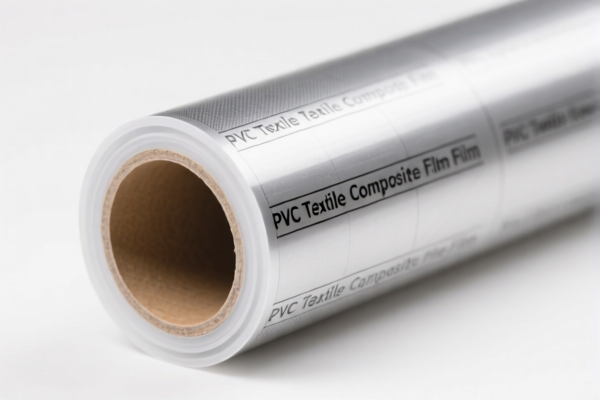
PVC Textile Composite Film
CN → US| HS Code | Tariff Rate | Origin | Destination | Doc |
|---|---|---|---|---|
| 5907006000 | 35.0% | CN | US | Official Doc |
| 5911102000 | 38.8% | CN | US | Official Doc |
| 5903102090 | 35.0% | CN | US | Official Doc |
| 5911101000 | 37.9% | CN | US | Official Doc |
| 5903102010 | 35.0% | CN | US | Official Doc |
Product Images

AI Analysis
🧵 PVC Textile Composite Film: The Ultimate Trade Compliance Guide (2026 Edition)
🌐 HS Code Reference & Customs Clearance Guide | 2026 Latest Tariff Breakdown | Professional-Level Strategy
📌 Part 1: Product Definition & Classification: Do You Really Understand "PVC Composite"?
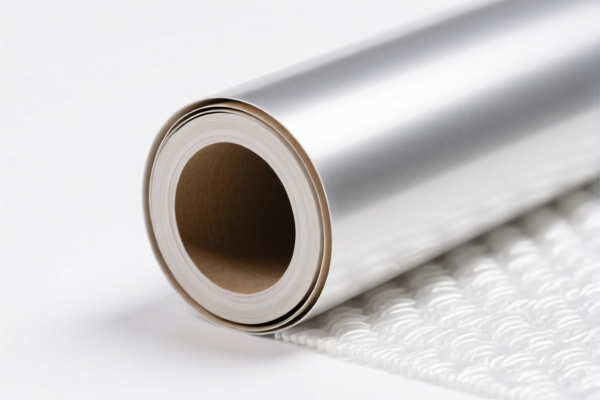
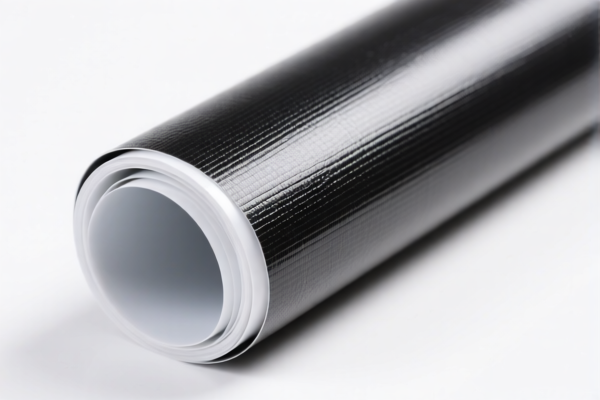
PVC Textile Composite Film is a specialized industrial material consisting of a textile base (such as polyester, nylon, or canvas) coated, impregnated, or laminated with Polyvinyl Chloride (PVC). It is widely used in: * Industrial Applications: Conveyor belts, tarpaulins, awnings, airbags, and filtration fabrics. * Consumer Goods: Inflatable products, coated fabrics for luggage/bags, and protective covers.
In international trade, classification depends heavily on the primary function and technical nature of the composite. It is generally split into two main categories:
- Textile Fabrics Impregnated/Coated (Chapter 59, Heading 5903): Used when the primary characteristic is the fabric itself, enhanced by PVC for durability, water resistance, or coating purposes.
- Technical Textiles (Chapter 59, Heading 5911): Used when the material serves a specific technical function (e.g., filtration, grinding, or specialized industrial reinforcement) beyond simple protection or decoration.
⚠️ Key Distinction Point:
- If it is a general-purpose coated fabric (like tarpaulins, awnings, or bags) → Look at 5903.
- If it is a specialized technical textile (like filtration media, grinding cloths, or specific industrial reinforcements) → Look at 5911.
📦 Part 2: HS Code Classification Details (2026 Latest Tariff Authority Comparison)
| HS Code | Product Description | Applicable Scenario | Primary Characteristic |
|---|---|---|---|
5903.10.20.90 |
Other textile fabrics impregnated/coated with PVC (Other) | General industrial coatings, tarpaulins, awnings, decorative laminates | ✅ Impregnated/Coated/Laminated |
5903.10.20.10 |
Other textile fabrics impregnated/coated with PVC (Specific) | Specific PVC-composite textiles meeting detailed technical criteria for general use | ✅ Impregnated/Coated/Laminated |
5907.00.60.00 |
Textile fabrics impregnated/coated/painted with PVC (Other) | Broad category for PVC-composite textiles not specified elsewhere | ✅ Impregnated/Coated/Painted |
5911.10.10.00 |
Textile fabrics for technical uses, other (Coated/Laminated) | Specialized technical textiles, reinforced industrial fabrics | ✅ Technical Use |
5911.10.20.00 |
Textile fabrics for technical uses, other (Specific) | Filter cloths, grinding cloths, or specific industrial technical textiles | ✅ Technical Use |
🔍 Critical Reminder:
- 5903 Series covers most common PVC-composite fabrics used in manufacturing, construction, and consumer goods.
- 5911 Series is reserved for technical applications. Misclassifying a standard coated fabric as a "technical textile" can lead to higher base tariffs (3.8% vs 0%).
- 5907.00 is often a residual category for coated textiles not fitting neatly into 5903’s specific subheadings.
💰 Part 3: 2026 Latest Tariff Rate Breakdown (Including Surtaxes & Policy Add-ons)
✅ Applicable Country: United States (US)
✅ Country of Origin: China (CN)
✅ Effective Date: 2025/2026 (Current Trade Regime)
🎯 1. 5903.10.20.90 & 5903.10.20.10 — PVC Impregnated/Coated Textiles
| Item | Content |
|---|---|
| Base Tariff | 0.0% (ad valorem) |
| Section 301 Surtax | +25.0% (USITC Footnote 9903.01.25) |
| Section 122 / IEEPA Surtax | +10.0% (Against China-specific products) |
| Total Effective Rate | 35.0% |
| Tax Calculation | CIF Value × 35% |
| De Minimis Eligibility | ❌ Not Eligible (deny_de_minimis applies to Section 301 goods) |
| Legal Path | IEEPA:9903.01.25 → USITC:5903.10.20.90 → FOOTNOTE:301 |
📌 Explanation:
- Base Rate: 0% because these are considered textile substrates with plastic coatings, often enjoyed preferential base rates.
- Section 301 (25%): The major hurdle for Chinese-origin PVC composites.
- IEEPA/122 (10%): Additional punitive tariff targeting specific Chinese manufacturing sectors.
- Total: 35%. This is a high-cost classification.
🎯 2. 5907.00.60.00 — PVC Composite Textile (General)
| Item | Content |
|---|---|
| Base Tariff | 0.0% (ad valorem) |
| Section 301 Surtax | +25.0% (USITC Footnote 9903.88.01) |
| Section 122 / IEEPA Surtax | +10.0% (Against China-specific products) |
| Total Effective Rate | 35.0% |
| Tax Calculation | CIF Value × 35% |
| De Minimis Eligibility | ❌ Not Eligible |
| Legal Path | IEEPA:9903.88.01 → USITC:5907.00.60.00 → FOOTNOTE:301 |
📌 Note:
- Functions similarly to the 5903 series.
- If the product is a "composite strip" or "tape" rather than a broad fabric, this code may apply.
- Total: 35%.
🎯 3. 5911.10.20.00 — Technical Textile (Specific)
| Item | Content |
|---|---|
| Base Tariff | 3.8% (ad valorem) |
| Section 301 Surtax | +25.0% (USITC Footnote 9903.01.25) |
| Section 122 / IEEPA Surtax | +10.0% (Against China-specific products) |
| Total Effective Rate | 38.8% |
| Tax Calculation | CIF Value × 38.8% |
| De Minimis Eligibility | ❌ Not Eligible |
| Legal Path | IEEPA:9903.01.25 → USITC:5911.10.20.00 → FOOTNOTE:301 |
📌 Warning:
- If your PVC composite is classified as a technical textile (e.g., for filtration or grinding), the base rate jumps to 3.8%.
- Total tariff becomes 38.8%, which is 3.8% HIGHER than the general coated fabrics (5903/5907).
- Only use 5911 if the technical function is undeniable. Otherwise, 5903/5907 is cheaper.
🎯 4. 5911.10.10.00 — Technical Textile (Other)
| Item | Content |
|---|---|
| Base Tariff | 2.9% (ad valorem) |
| Section 301 Surtax | +25.0% (USITC Footnote 9903.01.25) |
| Section 122 / IEEPA Surtax | +10.0% (Against China-specific products) |
| Total Effective Rate | 37.9% |
| Tax Calculation | CIF Value × 37.9% |
| De Minimis Eligibility | ❌ Not Eligible |
| Legal Path | IEEPA:9903.01.25 → USITC:5911.10.10.00 → FOOTNOTE:301 |
📌 Note:
- Slightly lower base rate (2.9%) than 5911.10.20.00, but still higher than the 0% base of 5903/5907.
- Total: 37.9%.
🛠️ Part 4: Customs Clearance Practical Advice (Avoiding Pitfalls)
✅ 1. Documentation Checklist (Non-Negotiable)
| Document | Required? | Explanation |
|---|---|---|
| ✅ Product Specification Sheet | ✔️ | Must detail: Base fabric material (e.g., 100% Polyester), PVC % content, coating weight (gsm), and thickness. |
| ✅ Technical Data Sheet | ✔️ | Critical for distinguishing between 5903 (general coating) and 5911 (technical use). If it’s for filtration, specify pore size. If for awnings, specify UV resistance. |
| ✅ Composition Statement | ✔️ | Clearly state: "Textile Base + PVC Coating/Lamination". Avoid vague terms like "Plastic Sheet". |
| ✅ Commercial Invoice | ✔️ | Must accurately describe the item as "PVC Coated Textile" or "Composite Fabric". |
| ✅ HS Code Pre-Ruling | ✔️ | Highly Recommended. Given the 3.8% difference between 5903 and 5911, a pre-ruling saves money and time. |
✅ 2. Declaration Tips (The Golden Rules)
🔥 “Describe the Function, Not Just the Material!”
| Scenario | Correct Declaration | Wrong Declaration | Consequence |
|---|---|---|---|
| Tarpaulins/Awnings | "PVC Coated Polyester Tarpaulin, 500gsm" | "Plastic Sheet" or "Rubber Sheet" | Misclassification risk. Must use 5903. |
| Filter Cloth | "PVC Impregnated Nylon Filter Fabric" | "Textile Fabric" | If technical, 5911 applies (38.8%). If general, 5903 (35%). |
| Conveyor Belt Cover | "PVC Composite Textile for Conveyor Belts" | "Industrial Rubber" | Clarify it’s a textile composite to target 5903 or 5911. |
| OEM/Custom Order | "Custom PVC Laminated Canvas" | "Generic Fabric" | Ensure specs match the claimed HS code. |
✅ 3. Special Cases
| Situation | Advice |
|---|---|
| Mixed Materials | If the textile base is natural fiber (cotton/wool), HS codes change significantly. Stick to synthetic bases for 5903/5911. |
| Printed/Colored | Printing does not change HS code from 5903/5907, but ensure it’s not classified as "printed fabric" under different headings if the PVC layer is dominant. |
| Small Samples | De Minimis ($800) does NOT apply due to Section 301. Even small shipments incur the 35%+ tariff. Plan logistics accordingly. |
🌍 Part 5: Global Market Comparison (2026 Latest)
| Country/Region | Recommended HS Code | Tariff Rate (China Origin) | Key Certifications | Notes |
|---|---|---|---|---|
| 🇺🇸 USA | 5903.10.20.90 / 5903.10.20.10 |
35.0% (Base 0% + 25% + 10%) | ASTM, CPSIA (if consumer) | Highest cost due to surtaxes. |
| 🇨🇳 China | 5903.10.20.90 |
5-8% (Import Duty) | CCC (if applicable) | Low base duty. No Section 301. |
| 🇪🇺 EU | 5903.10.89 |
0-4% (General) | REACH, RoHS | No punitive surtaxes. REACH compliance is critical for PVC. |
| 🇬🇧 UK | 5903.10.89 |
0-4% | UKCA | Post-Brexit rules similar to EU but requires UKCA marking. |
| 🇯🇵 Japan | 5903.20.000 |
5-6% | JIS | Moderate tariff. No punitive surtaxes. |
📌 Conclusion:
- USA is the most expensive market due to the 35% effective rate.
- EU/UK/Asia offer significantly lower duties, but PVC restrictions (REACH/RoHS) are stricter. Ensure plasticizers (e.g., Phthalates) are compliant.
📌 Part 6: Common Errors & Pitfalls (Lessons Learned)
❌ Error 1: Classifying PVC-coated fabric as "Plastic Sheet" (Chapter 39)
👉 Consequence: Incorrect HS code. If it’s textile-based, it must be Chapter 59. Misdeclaration leads to penalties.
❌ Error 2: Ignoring the "Technical Use" aspect for 5911
👉 Consequence: If you declare 5911 for a non-technical item (e.g., a simple tarp), you may face scrutiny for over-declaring value/function. Conversely, declaring 5903 for a technical filter may lead to higher duties if the base rate for 5911 is misapplied by customs. Always aim for 5903 if possible, as base rate is 0%.
❌ Error 3: Assuming De Minimis applies
👉 Consequence: Chinese-origin PVC composites are strictly excluded from the $800 de minimis threshold. Do not use DHL/UPS small parcel channels to avoid tariffs.
❌ Error 4: Vague Description "Composite Film"
👉 Consequence: Customs cannot distinguish between 5903 and 5911. Request detailed specs.
✅ Correct Practice:
"PVC-Coated Polyester Textile, 500 GSM, for Outdoor Awning Use, Non-Technical Application" → Target 5903.10.20.90.
🎯 Part 7: Conclusion: Precision Saves Money!
🎯 Remember the Mantra:
🔹 "Textile Base + PVC Coating = Chapter 59."
🔹 "General Use = 5903 (0% Base, 35% Total)."
🔹 "Technical Use = 5911 (2.9-3.8% Base, 37.9-38.8% Total)."
🔹 "USA Surtaxes are Unavoidable for China Origin!"
📌 Pro Tip:
If your product is used for general purposes (tarpaulins, bags, covers), insist on 5903. It saves you 3.8-3.9% in total tariffs compared to 5911. Document the "non-technical" nature clearly in your invoices and specs.
📣 Immediate Action:
📞 Request a Pre-Ruling from US CBP if your product is borderline between 5903 and 5911.
📄 Ensure REACH Compliance if exporting to Europe to avoid chemical bans on PVC plasticizers.
🚀 Optimize Your Supply Chain: Consider sourcing PVC coating services from non-China countries if targeting the US market to mitigate Section 301 risks.
✨ Professional Customs Clearance Starts with Precise Classification!
💼 Every Percentage Point Counts in the Age of Trade Wars!
Customer Reviews
About HS Code Classification
The Harmonized System (HS) is an internationally standardized nomenclature developed by the World Customs Organization (WCO) to classify traded products. Over 200 countries use the HS system as the basis for customs tariffs, trade statistics, and import/export regulations.
Each HS code follows a hierarchical structure:
- Chapter (2 digits) — Broad category of goods (e.g., Chapter 84: Machinery and Mechanical Appliances)
- Heading (4 digits) — More specific grouping within the chapter
- Subheading (6 digits) — Internationally standardized breakdown, used by all WCO member countries
- National subdivisions (8-10 digits) — Country-specific extensions for further classification, such as US HTSUS 10-digit codes
Correct HS code classification is essential for smooth customs clearance, accurate duty payment, and compliance with trade regulations. Misclassification can lead to customs delays, overpayment of duties, or penalties.
When importing from CN to US, the applicable tariff rates may include:
- Most-Favored-Nation (MFN) rate — The standard duty rate applied to WTO members
- General rate — Applied to countries without trade agreements
- Trade remedy duties — Additional tariffs such as Section 301 (anti-dumping), Section 232 (national security), or countervailing duties
The information provided on this page is for reference purposes only. For official classification, please consult with your local customs authority or a licensed customs broker.