PVC Textile Composite Soundproof Board
CN → US| HS编码 | 关税税率 | 原产国 | 目的国 | 文档 |
|---|---|---|---|---|
| 3926905900 | 37.4% | CN | US | 官方文档 |
| 3926906090 | 39.2% | CN | US | 官方文档 |
| 3921121500 | 41.5% | CN | US | 官方文档 |
| 3921121100 | 39.2% | CN | US | 官方文档 |
| 5903102090 | 35.0% | CN | US | 官方文档 |
商品图片
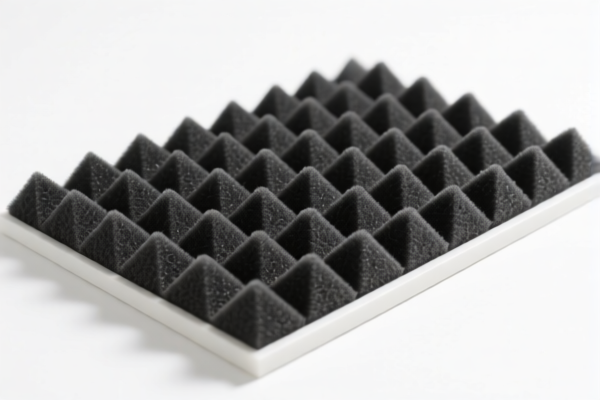
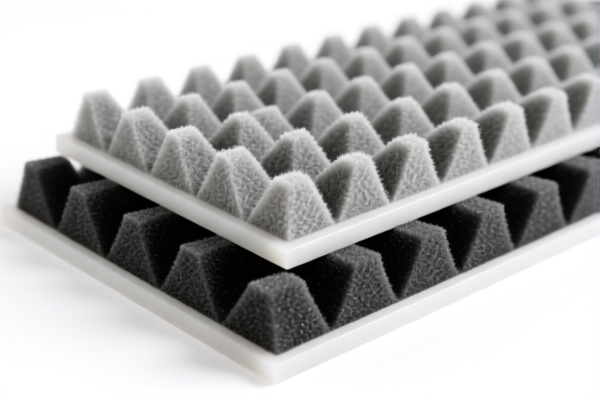
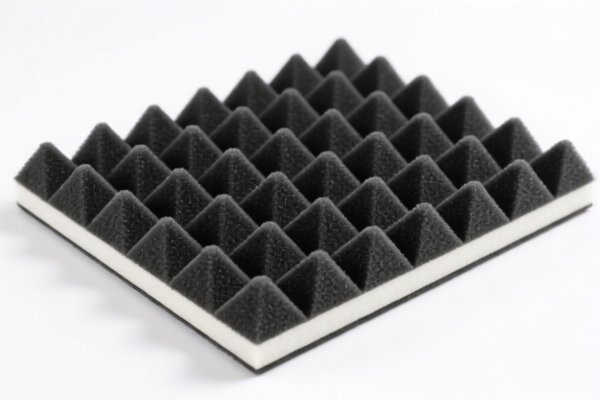
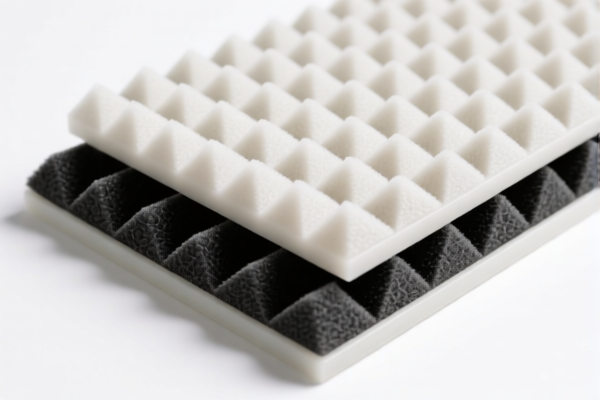
AI分析
🛡️ PVC Textile Composite Soundproof Board (PVC 纺织品涂层隔音板/复合隔热布)
🌐 HS Code Reference & Clearance Guide | 2026 Latest Tariff Breakdown | Professional Compliance Strategy
📌 I. Product Definition & Classification: What Exactly Is This Product?
The term "PVC Textile Composite Soundproof Board" is a broad commercial description that masks significant technical variations. In international trade, classification depends strictly on the physical form, composition ratio, and specific function.
It generally falls into three categories: 1. Coated/Impregnated Textile Fabrics: Fabric that has been coated, impregnated, or laminated with PVC, primarily used for acoustic insulation. 2. Plastic Plates/Sheets (Composite): Rigid or semi-rigid boards made by combining PVC with textile layers, classified as plastic products. 3. Specialized Industrial Components: Parts categorized by their specific mechanical or industrial use.
⚠️ Critical Distinction:
- If the product is flexible fabric where PVC weight > 70% → It is a Textile Product (Chapter 59 or 3921).
- If the product is a rigid board/panel → It is a Plastic Product (Chapter 39).
- Misclassification Risk: Declaring a rigid board as "fabric" or vice versa can trigger audits, delays, and back-tariffs.
📦 II. HS Code Classification Details (2026 Latest Tariff Authority Mapping)
Based on the provided data, here are the 5 precise HS Codes applicable to this product family.
| HS Code | Product Description | Key Characteristics | Application Scenario |
|---|---|---|---|
3926.90.59.00 |
PVC Textile Composite Soundproof Board | Form: Coated soundproof board. Material: PVC. Use: Mechanical/Industrial materials. |
Rigid coated panels for industrial machinery noise reduction. |
3926.90.60.90 |
PVC Textile Composite Soundproof Board | Form: Plate/Board. Material: PVC. Use: Soundproofing; Other制品 (Other articles). |
General-purpose acoustic boards, interior decoration, non-industrial specific. |
3921.12.15.00 |
PVC Textile Composite Insulating Cloth | Form: Composite Cloth. Material: PVC. Use: Thermal Insulation. Property: Composite material. |
Flexible or semi-rigid insulating layers where composite nature is key. |
3921.12.11.00 |
PVC Textile Composite Insulating Cloth | Form: Composite Cloth / Sheet. Material: PVC. Use: Thermal Insulation. Condition: Plastic component > 70%. |
High-PVC content composites, rigid sheets, heavy-duty insulation. |
5903.10.20.90 |
PVC Textile Composite Insulating Cloth | Material: Polyvinyl Chloride (PVC). Form: Textile fabric impregnated, coated, covered, or laminated with plastic. Condition: Weight proportion > 70%. |
Flexible fabrics for sound/heat insulation, clearly defined as textile-based. |
🔍 Key Insight:
-3926vs3921:3926is for "Other articles of plastics" (often finished goods or parts), while3921is for "Other plates, sheets, film, foil and strip" (semi-finished materials).
-5903is for Textiles coated with plastic. If the textile base is the primary structural element, this code may apply, but it carries the lowest base tariff (0%).
-3926.90.59.00and3926.90.60.90are for rigid boards/panels used as industrial components or general articles.
💰 III. 2026 Latest Tariff Rate Breakdown (Including Additional Duties & Policy Add-ons)
✅ Applicable Country: United States (US)
✅ Country of Origin: China (CN)
✅ Effective Date: 2025/2026 (Current Trade War Era)
🎯 1. 3926.90.59.00 — PVC Textile Composite Soundproof Board (Industrial)
| Item | Content |
|---|---|
| Base Tariff | 2.4% (ad valorem) |
| Section 301 (Additional) | +25.0% (USITC Footnote for Chinese plastics) |
| IEEPA (Section 122) | +10.0% (Targeted Chinese imports) |
| Total Tax Rate | 37.4% |
| Tax Calculation | CIF Value × 37.4% |
| De Minimis Exemption? | ❌ No (Denied for Section 301/IEEPA goods) |
| Legal Basis Path | USITC:3926.90.59.00 → FOOTNOTE:301.88 → IEEPA:9903.01.25 |
📌 Explanation:
- The 37.4% total rate makes this a high-cost import.
- The 122 Clause (often referencing specific executive orders or trade enforcement actions) adds an extra 10% on top of the standard 301 tariff.
🎯 2. 3926.90.60.90 — PVC Textile Composite Soundproof Board (General Other Articles)
| Item | Content |
|---|---|
| Base Tariff | 4.2% |
| Section 301 (Additional) | +25.0% |
| IEEPA (Section 122) | +10.0% |
| Total Tax Rate | 39.2% |
| Tax Calculation | CIF Value × 39.2% |
| De Minimis Exemption? | ❌ No |
| Legal Basis Path | USITC:3926.90.60.90 → FOOTNOTE:301.88 → IEEPA:9903.01.25 |
📌 Note:
- Slightly higher base tariff than3926.90.59.00due to being classified as a "General Other Article" rather than a specific industrial material.
- Still subject to the full 35% additional duties.
🎯 3. 3921.12.15.00 — PVC Textile Composite Insulating Cloth (Composite Material)
| Item | Content |
|---|---|
| Base Tariff | 6.5% |
| Section 301 (Additional) | +25.0% |
| IEEPA (Section 122) | +10.0% |
| Total Tax Rate | 41.5% |
| Tax Calculation | CIF Value × 41.5% |
| De Minimis Exemption? | ❌ No |
| Legal Basis Path | USITC:3921.12.15.00 → FOOTNOTE:301.88 → IEEPA:9903.01.25 |
📌 Critical:
- This is the highest total tax rate (41.5%) among the PVC board options.
- The higher base tariff (6.5%) reflects its status as a specialized composite material.
🎯 4. 3921.12.11.00 — PVC Textile Composite Insulating Cloth (>70% Plastic)
| Item | Content |
|---|---|
| Base Tariff | 4.2% |
| Section 301 (Additional) | +25.0% |
| IEEPA (Section 122) | +10.0% |
| Total Tax Rate | 39.2% |
| Tax Calculation | CIF Value × 39.2% |
| De Minimis Exemption? | ❌ No |
| Legal Basis Path | USITC:3921.12.11.00 → FOOTNOTE:301.88 → IEEPA:9903.01.25 |
📌 Note:
- Identical total rate to3926.90.60.90but different legal basis.
- Applicable when the plastic content explicitly exceeds 70%, shifting it from a "textile-coated" view to a "plastic-heavy composite" view.
🎯 5. 5903.10.20.90 — PVC Textile Composite Insulating Cloth (Textile-Based)
| Item | Content |
|---|---|
| Base Tariff | 0.0% |
| Section 301 (Additional) | +25.0% |
| IEEPA (Section 122) | +10.0% |
| Total Tax Rate | 35.0% |
| Tax Calculation | CIF Value × 35.0% |
| De Minimis Exemption? | ❌ No |
| Legal Basis Path | USITC:5903.10.20.90 → FOOTNOTE:301.88 → IEEPA:9903.01.25 |
📌 Strategic Advantage:
- This is the MOST COST-EFFECTIVE classification (35.0% total).
- Why? Because the Base Tariff is 0%.
- Condition: The product MUST be clearly defined as a textile fabric impregnated/coated/laminated with PVC, where the textile structure is visible or primary, and PVC weight > 70%.
- Risk: If customs inspectors determine the product is a "plastic board" (rigid), they may reclassify it to3926or3921, increasing the tax to 37.4%–41.5%.
🛠️ IV. Clearance Practical Advice (Battle-Tested Pitfall Avoidance)
✅ 1. Documentation Checklist (Non-Negotiable)
| Document | Mandatory? | Details |
|---|---|---|
| ✅ Product Specification Sheet | ✔️ | Must detail: Weight per sq. meter, PVC %, Fabric Type, Thickness, Flexibility (Rigid vs. Flexible). |
| ✅ Composition Test Report | ✔️ | Third-party lab report proving PVC content % and textile base weight. Crucial for 5903 vs 3921 distinction. |
| ✅ Product Photos | ✔️ | Show cross-section (if layered), flexibility test (bending), and application context. |
| ✅ Commercial Invoice | ✔️ | Description must be precise: e.g., "PVC-Coated Polyester Fabric for Acoustic Insulation" vs. "PVC Soundproof Board." |
| ✅ Bill of Lading | ✔️ | Ensure packaging marks align with invoice. |
| ✅ Certificate of Origin (CO) | ✔️ | Standard for US import. |
✅ 2. Declaration Strategy (Key Mnemonic)
🔥 “Fabric First, Plastic Second; Rigid Boards Need Care!”
| Scenario | Correct HS Code | Common Error | Consequence |
|---|---|---|---|
| Flexible Roll (Coated Fabric) | 5903.10.20.90 |
Declare as 3926 |
Overpay 2.5%–6.5% |
| Semi-Rigid Sheet (Composite) | 3921.12.11.00 or 15 |
Declare as 5903 |
Customs Rejection/Re-class |
| Rigid Panel (Industrial Part) | 3926.90.59.00 |
Declare as 3926.90.60.90 |
Overpay 1.8% |
| Rigid Panel (General Use) | 3926.90.60.90 |
Declare as 5903 |
High Audit Risk |
📌 Strategic Tip:
If your product is flexible (rolls, can be bent), fight for5903.10.20.90. The 35% rate is significantly cheaper than the 37.4%–41.5% range for plastic-heavy codes.
Proof Required: Show that it is sold in rolls, is foldable, and the textile backing is integral.
✅ 3. Special Circumstances Handling
| Situation | Recommendation |
|---|---|
| Hybrid Product (Part rigid, part flexible) | Break down shipment if possible. Rigid parts → 3926. Flexible parts → 5903. |
| Custom OEM Branding | Provide client order and design specs. Ensure description matches actual physical properties, not just brand name. |
| Multi-Use (Soundproof + Thermal) | Highlight Soundproof if using 3926, but Thermal/Textile if pushing for 5903 or 3921. 5903 is the safest low-tax bet if textile-dominated. |
| Small Samples | Even if de minimis ($800) applies, Section 301 and IEEPA duties are NOT exempted. You still owe 35–41.5%. |
🌍 V. Global Market Comparison (2026 Update)
| Country/Region | Recommended HS Code | Total Tariff (China Origin) | Key Requirements | Notes |
|---|---|---|---|---|
| 🇺🇸 USA | 5903.10.20.90 (Best) |
35.0% | FCC/UL (if electrical), Lab Tests | High risk of audit. Must prove textile nature. |
| 🇺🇸 USA | 3926.90.59.00 |
37.4% | Standard CO | Safer for rigid industrial parts. |
| 🇨🇳 China | 3921.12.11.00 |
~5-10% | CCC (if applicable) | No 301/IEEPA tariffs. |
| 🇪🇺 EU | 5903.10.20 |
~0-4% | REACH, RoHS | No major trade war tariffs. |
| 🇨🇦 Canada | 5903.10.20 |
~0-5% | Standard CO | CUSMA eligible if Canadian content. |
📌 Conclusion:
- USA is the hardest market due to layered tariffs (Base + 301 + IEEPA).
- Strategy: Use5903.10.20.90if physically flexible. Use3926if rigid.
- DO NOT try to under-declare. The 1.8%–6.5% difference is not worth the risk of detention.
📌 VI. Common Errors & Pitfall Guide (Blood & Tears)
❌ Error 1: Calling a Rigid Board "Soundproof Fabric" to get 5903 (35%).
👉 Consequence: Customs sees it’s rigid → Re-classifies to 3926 (37.4%+) → Penalties + Back Taxes.
❌ Error 2: Calling a Fabric Roll "Plastic Sheet" to avoid scrutiny.
👉 Consequence: Pay 41.5% instead of 35%. Unnecessary Cost.
❌ Error 3: Ignoring IEEPA 122 Clause.
👉 Consequence: Declaration misses the 10% additional duty → Customs Bill for Underpayment.
❌ Error 4: Vague Description "PVC Board".
👉 Consequence: Customs uses discretionary classification → Likely 3926.90.90 (Higher base rate) → Audit Delay.
✅ Correct Practice:
“PVC-Coated Polyester Acoustic Fabric, Flexible Roll, 75% PVC by Weight, Impregnated Textile for Sound Insulation, HS 5903.10.20.90”
🎯 VII. Conclusion: Precision Classification, Maximizing Profit!
🎯 Remember the Golden Rule:
🔹 “Flexible? Go 5903 (35%). Rigid? Go 3926 (37-39%). Never Guess!”
🔹 “Textile Base Proves Lower Tax. Plastic Proof Increases Cost.”
🔹 “301 + IEEPA = 35% Minimum. Don’t Let Base Tariff Kill You.”
📌 Pro Tip:
If your product is borderline (semi-rigid), consult a Customs Broker for a Pre-Ruling (Advance Ruling). A $500 pre-ruling can save you $10,000+ in duties on a container load.
📣 Immediate Action:
📞 Contact your Customs Broker
📄 Provide Cross-Section Photos + Lab Reports
🚀 Secure the 35% Rate or Pay 41.5% Wisely!
✨ Professional Clearance Starts with Accurate Classification!
💼 Your Margin Depends on Your HS Code!
用户评价
关于 HS 编码归类
协调制度(HS)是由世界海关组织(WCO)制定的国际贸易商品分类标准。全球 200 多个国家采用 HS 系统作为海关关税、贸易统计和进出口监管的基础。
每个 HS 编码遵循以下层级结构:
- 章(2 位)——商品大类(例如:第 84 章:机器和机械设备)
- 品目(4 位)——章内的更具体分类
- 子目(6 位)——国际通用细分,所有 WCO 成员国统一使用
- 本国细分(8-10 位)——各国自行扩展的细分编码,如美国 HTSUS 10 位编码
正确的 HS 编码归类对于顺利通关、准确缴纳关税和遵守贸易法规至关重要。错误归类可能导致海关延误、多缴关税或罚款。
从CN进口到US时,适用的关税税率可能包括:
- 最惠国(MFN)税率——适用于 WTO 成员国的标准关税税率
- 普通税率——适用于无贸易协定国家
- 贸易救济关税——附加关税,如 301 条款(反倾销)、232 条款(国家安全)或反补贴税
本页内容仅供参考。如需正式归类,请咨询当地海关或持牌报关代理。