PVC Textile Composite Waterproof Membrane
CN → US| HS编码 | 关税税率 | 原产国 | 目的国 | 文档 |
|---|---|---|---|---|
| 6307909891 | 24.5% | CN | US | 官方文档 |
| 6307908500 | 23.3% | CN | US | 官方文档 |
| 3921121100 | 39.2% | CN | US | 官方文档 |
| 3921121500 | 41.5% | CN | US | 官方文档 |
| 3926905500 | 40.1% | CN | US | 官方文档 |
| 3926909989 | 22.8% | CN | US | 官方文档 |
商品图片
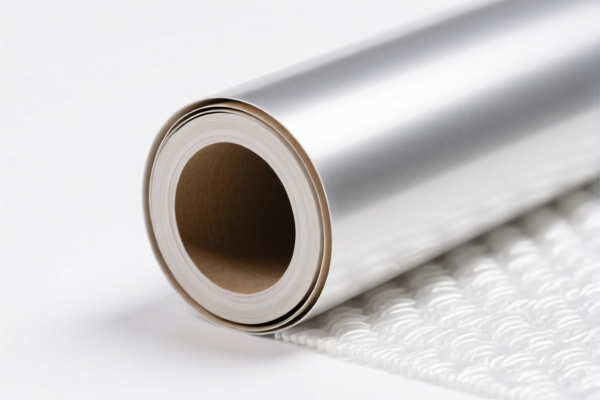
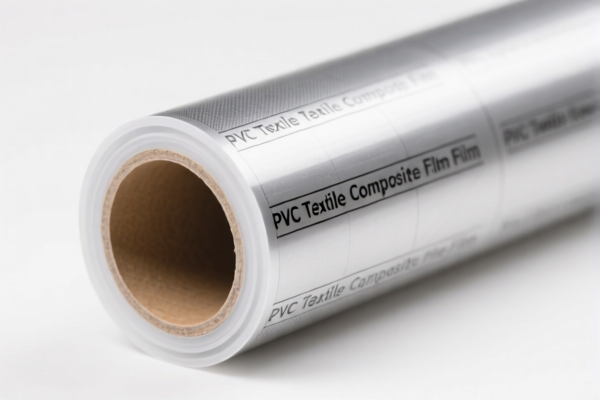

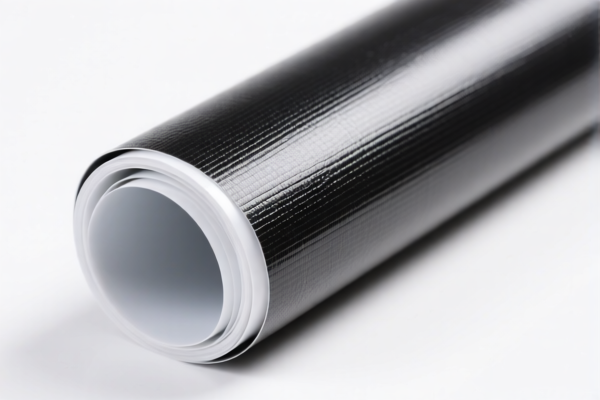
AI分析
🛁 PVC Textile Composite Waterproof Membrane (Bathroom Curtains)
🌐 HS Code Reference & Customs Clearance Guide | 2026 Latest Tariff Analysis | Professional Compliance Strategy
📌 I. Product Definition & Classification: What Exactly Are We Dealing With?
PVC Textile Composite Waterproof Membranes, commonly known as bathroom shower curtains, are constructed by laminating or coating polyvinyl chloride (PVC) onto a textile base (such as polyester or cotton). In international trade, the classification hinges on whether the product is viewed as a textile accessory or a plastic composite article.
Key Distinction Logic: * Textile-Dominated: If the textile layer provides the main structural integrity and identity, it may fall under Chapter 63 (Other made-up textile articles). * Plastic-Dominated: If the PVC layer is the primary material (especially if thick, foamed, or acting as the waterproof barrier), it may fall under Chapter 39 (Plastics and articles thereof).
⚠️ Critical Classification Risk:
- Misclassification can lead to tariff discrepancies ranging from 22.8% to 41.5% due to the significant difference in Section 21 (Plastics) vs. Section XI (Textiles) duties.
- The "Composite" nature requires careful analysis of which material gives the article its essential character.
📦 II. HS Code Classification Details (2026 Authoritative Reference)
| HS Code | Product Description | Applicable Scenario | Material Logic |
|---|---|---|---|
| 6307.90.98.91 | Other made-up articles, incl. dress patterns | Generic "other" textile composite; PVC is seen as a coating/finish | ✅ Textile Base Dominant |
| 6307.90.85.00 | Other made-up articles, incl. dress patterns | Synthetic/Artificial fiber textile base with PVC coating | ✅ Synthetic Textile Base |
| 3921.12.11.00 | PVC polymers combined with textile materials | PVC layer is substantial; considered a plastic-textile composite | ✅ Plastic Layer Dominant |
| 3921.12.15.00 | PVC foam/film combined with textile materials | Specifically PVC foam or thick film laminated to textile | ✅ Foam/Film Plastic Base |
| 3926.90.55.00 | Other plastic articles, incl. household items | Plastic household goods category; broader classification | ✅ Plastic Household Item |
| 3926.90.99.89 | Other plastic articles, general fallback | "Other" plastic articles not elsewhere specified; PVC dominant | ✅ Plastic General Item |
🔍 Key Insight:
- Codes6307.xxgenerally attract lower base duties (5.8%-7.0%) but are still subject to trade war tariffs.
- Codes3921.xxand3926.xxare classified under Section 21 (Plastics), often attracting higher base duties (4.2%-6.5%) and potentially stricter scrutiny on "essential character."
💰 III. 2026 Latest Tariff Rate Breakdown (Including Add-ons & Policy Levies)
✅ Applicable Country: United States (US)
✅ Origin: China (CN)
✅ Effective Date: Post-2025 Trade Policy (Including Section 301 & IEEPA measures)
🎯 1. 6307.90.98.91 & 6307.90.85.00 — Textile-Based Classification
These codes benefit from the lower base duty rates of the textile chapter, but still face significant trade barriers.
| Item | Content |
|---|---|
| Base Duty Rate | 5.8% - 7.0% (Ad Valorem) |
| Section 301 Add-on | +7.5% (Specific to subheadings 6307.90.85 and 98) |
| IEEPA Surcharge | +10% (Targeting Chinese-origin goods) |
| Total Duty Rate | 23.3% - 24.5% |
| Tax Calculation | CIF Value × 23.3%~24.5% |
| De Minimis Eligibility | ❌ No (deny_de_minimis) |
| Legal Basis Path | USITC:6307.90.85.00 → FOOTNOTE:301 → IEEPA:9903.01.24 |
📌 Explanation:
- The 7.5% add-on is specific to certain 6307 subheadings under Section 301.
- The 10% IEEPA is a blanket surcharge on Chinese goods.
- Total Liability: ~24.5% for general composite, ~23.3% for synthetic-based. This is moderately high but lower than the plastic classification options.
🎯 2. 3921.12.11.00 & 3921.12.15.00 — PVC Polymer/Film Classification
If customs determines the PVC layer defines the essential character (e.g., thick foam, heavy coating), the tariff jumps significantly.
| Item | Content |
|---|---|
| Base Duty Rate | 4.2% - 6.5% (Ad Valorem) |
| Section 301 Add-on | +25.0% (Standard Section 301 rate for plastics) |
| IEEPA Surcharge | +10% (Targeting Chinese-origin goods) |
| Total Duty Rate | 39.2% - 41.5% |
| Tax Calculation | CIF Value × 39.2%~41.5% |
| De Minimis Eligibility | ❌ No (deny_de_minimis) |
| Legal Basis Path | USITC:3921.12.11.00 → FOOTNOTE:301 → IEEPA:9903.01.24 |
📌 Warning:
- The 25% Section 301 rate is the standard for most plastic articles.
- Combined with IEEPA, the total tax exceeds 40%. This is a critical cost driver that can erase profit margins.
🎯 3. 3926.90.55.00 & 3926.90.99.89 — Other Plastic Articles
These are "catch-all" plastic categories. Note the variance in Section 301 application.
| Item | Content |
|---|---|
| Base Duty Rate | 5.1% - 5.3% (Ad Valorem) |
| Section 301 Add-on | +25.0% (For 3926.90.55) / +7.5% (For 3926.90.99.89) |
| IEEPA Surcharge | +10% |
| Total Duty Rate | 40.1% (for .55) / 22.8% (for .99.89) |
| Tax Calculation | CIF Value × 22.8%~40.1% |
| De Minimis Eligibility | ❌ No (deny_de_minimis) |
📌 Critical Distinction:
-3926.90.99.89benefits from a lower Section 301 add-on (7.5%) in some interpretations or specific exclusions, resulting in a 22.8% total rate, which is competitive with textile codes.
-3926.90.55.00faces the full 25% add-on, leading to 40.1% total.
- Risk: Misclassifying a heavy PVC curtain as.99.89when it should be.55or3921.xxcan lead to audits and penalties.
🛠️ IV. Customs Clearance Practical Advice (Real-World Pitfall Guide)
✅ 1. Documentation Checklist (Non-Negotiable)
| Document | Required | Description |
|---|---|---|
| ✅ Product Specification Sheet | ✔️ | Must detail: PVC thickness, textile base material (Polyester/Cotton), lamination method. |
| ✅ Material Composition Breakdown | ✔️ | % of PVC vs. % of Textile by weight. Critical for "Essential Character" argument. |
| ✅ Product Photos (Clear) | ✔️ | Show texture, thickness, and any foam layers. |
| ✅ Commercial Invoice | ✔️ | Must clearly state "PVC Textile Composite Shower Curtain" – avoid vague terms like "Plastic Sheet". |
| ✅ HS Code Pre-Ruling | ✔️ | Highly Recommended to confirm if 6307 or 3921/3926 applies to your specific product. |
✅ 2. Declaration Strategy (Key Mantras)
🔥 “Weight & Structure Define Character: Heavy PVC = Plastic, Light Fabric = Textile.”
| Scenario | Correct Declaration | Incorrect Declaration |
|---|---|---|
| Light PVC Coating on Polyester | 6307.90.98.91 (Textile) |
3921.12.11.00 (Plastic) → Overpaid 15%+ tax |
| Thick PVC Foam Laminated | 3921.12.15.00 (Plastic Foam) |
6307.90.85.00 (Textile) → Underpayment Risk |
| Generic Plastic Curtain | 3926.90.99.89 (Plastic Fallback) |
Vague "Plastic Good" → Customs Audit |
✅ 3. Special Handling Cases
| Case | Handling Advice |
|---|---|
| OEM Custom Designs | Provide design files showing material layers. If textile is visible on both sides, argue for 6307. |
| Packaged as Sets | If sold with hooks/rings, declare as a set. The curtain usually dictates the classification. |
| Foam vs. Film | Foam (expanded PVC) falls under 3921.12.15. Film (non-foam) may fall under 3921.12.11 or 3926. Be precise. |
🌍 V. Global Market Comparison (2026 Outlook)
| Market | Recommended HS Code | Est. Total Duty | Notes |
|---|---|---|---|
| 🇺🇸 USA | 6307.90.98.91 |
24.5% | Best balance for textile-heavy curtains. Avoid 3921 if possible. |
| 🇪🇺 EU | 6307.90.98 |
~4.5% | Lower base duty, no Section 301/IEEPA equivalents. |
| 🇨🇳 China | 6307.90.98 |
~7% | Standard import duty, no surcharges. |
| 🇬🇧 UK | 6307.90.98 |
~6.5% | Post-Brexit tariffs apply. |
📌 Conclusion:
- The US market is the most challenging due to the叠加 (stacking) of Section 301 and IEEPA tariffs.
- Textile classification (6307) is generally safer and cheaper for standard shower curtains, provided the PVC is not excessively thick or foamed.
- If your product is thick, foamed, or rigid, you must accept the Plastic Classification (3921/3926) and budget for ~40% duty.
📌 VI. Common Errors & Pitfalls (Blood Lessons)
❌ Error 1: Classifying a heavy foam PVC curtain as 6307.90.98.91
👉 Consequence: Customs reclassifies to 3921.12.15.00 → Back taxes + Penalties (Difference ~17%).
❌ Error 2: Using vague terms like "Plastic Sheet" for a finished curtain
👉 Consequence: Customs may apply Chapter 39 general rates or demand detailed specs → Delay in Release.
❌ Error 3: Ignoring the "Essential Character" test
👉 Consequence: If the textile layer is merely decorative and PVC provides waterproofing, customs will favor Plastic (39xx) classification.
❌ Error 4: Failing to disclose Chinese Origin
👉 Consequence: Missing IEEPA 10% surcharge → Heavy fines + Entry Rejection.
✅ Correct Approach:
“PVC Textile Composite Shower Curtain, 70% Polyester Base, 30% PVC Coating, Non-Foam, for Bathroom Use, Model XYZ, China Origin”
🎯 VII. Conclusion: Precision Classification Saves Money!
🎯 Remember the Mantra:
🔹 “Light Fabric = Textile (24%), Heavy Foam = Plastic (40%), Choose Wisely or Pay the Price!”
🔹 “HS Code Determines Profit: A 15% duty difference can make or break your US market entry!”
📌 Pro Tip:
If your PVC content is < 50% by weight and the textile is the main structure, argue for
6307.
If PVC is thick (>1mm) or foamed, prepare for3921classification.
Apply for a Pre-Ruling with US Customs and Border Protection (CBP) to secure a binding decision and avoid surprises.
📣 Immediate Action:
📞 Consult a Customs Broker + Provide Material Spec Sheet + Request HS Code Pre-Ruling
🚀 Ensure Smooth Customs Clearance, Maximize Profit Margins, and Scale Your Business!
✨ Professional Customs Clearance Starts with Accurate Classification!
💼 Every Percentage Point of Duty is a Potential Profit Margin!
用户评价
关于 HS 编码归类
协调制度(HS)是由世界海关组织(WCO)制定的国际贸易商品分类标准。全球 200 多个国家采用 HS 系统作为海关关税、贸易统计和进出口监管的基础。
每个 HS 编码遵循以下层级结构:
- 章(2 位)——商品大类(例如:第 84 章:机器和机械设备)
- 品目(4 位)——章内的更具体分类
- 子目(6 位)——国际通用细分,所有 WCO 成员国统一使用
- 本国细分(8-10 位)——各国自行扩展的细分编码,如美国 HTSUS 10 位编码
正确的 HS 编码归类对于顺利通关、准确缴纳关税和遵守贸易法规至关重要。错误归类可能导致海关延误、多缴关税或罚款。
从CN进口到US时,适用的关税税率可能包括:
- 最惠国(MFN)税率——适用于 WTO 成员国的标准关税税率
- 普通税率——适用于无贸易协定国家
- 贸易救济关税——附加关税,如 301 条款(反倾销)、232 条款(国家安全)或反补贴税
本页内容仅供参考。如需正式归类,请咨询当地海关或持牌报关代理。