PVC Textile Gift Packaging Cloth
CN → US| HS编码 | 关税税率 | 原产国 | 目的国 | 文档 |
|---|---|---|---|---|
| 3926400010 | 15.3% | CN | US | 官方文档 |
| 3926903300 | 16.5% | CN | US | 官方文档 |
| 4202929336 | 52.6% | CN | US | 官方文档 |
| 4202929100 | 52.6% | CN | US | 官方文档 |
| 5903102090 | 35.0% | CN | US | 官方文档 |
商品图片
AI分析
🧶 PVC Textile Gift Packaging Cloth
🌐 HS Code Reference & Customs Clearance Guide | 2026 Latest Tariff Analysis | Professional-Level Strategy
📌 Part 1: Product Definition & Classification: Do You Really Understand "PVC Textile Packaging"?
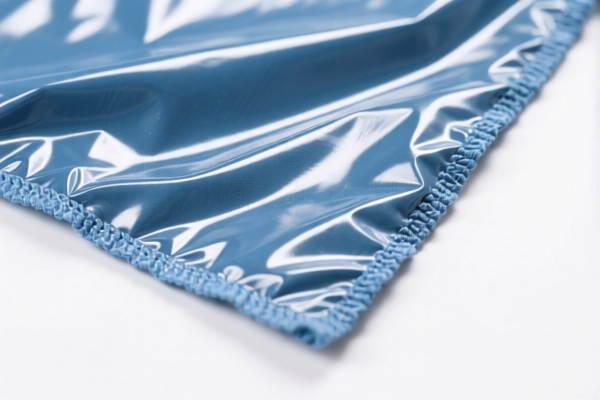
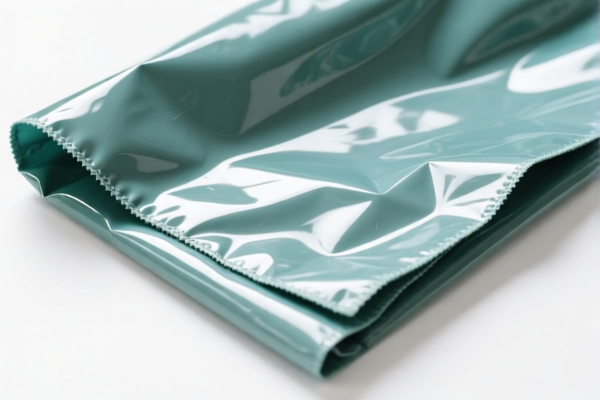
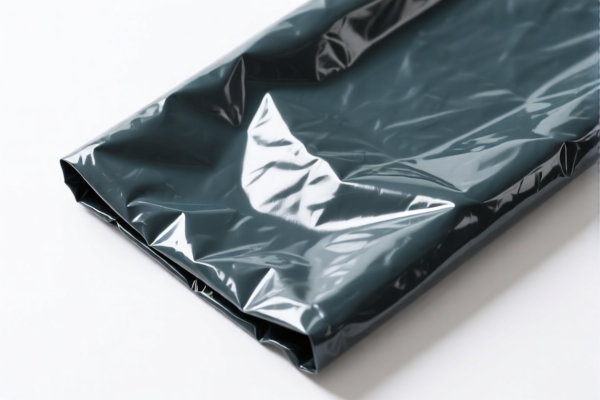
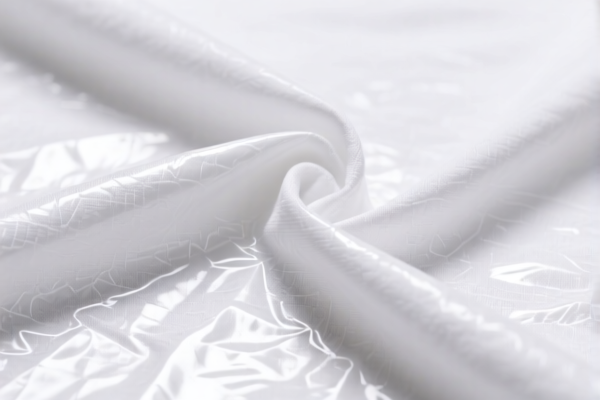
PVC Textile Gift Packaging Cloth is a composite material commonly used for gift wrapping, tablecloths, decorative covers, and promotional displays. In international trade, its classification hinges on whether it is treated as a "Plastic Article," a "Textile Product," or a "Composite Container/Packing."
Key Distinction Points: 1. Pure PVC Plastic Film/Cloth: If the fabric is essentially PVC with minimal or no textile reinforcement that changes its fundamental character → Classified under Chapter 39. 2. Impregnated/Covered Textile: If the textile is impregnated with PVC but retains the structure of fabric → Classified under Chapter 59. 3. Finished Packaging/Container: If it is formed into a specific bag, pouch, or packaging structure using textile/plastic surfaces → Classified under Chapter 42.
⚠️ Critical Risk:
- Misclassifying a Chapter 42 item (packaging) as Chapter 39/59 (raw material) often triggers Section 301 Additional Tariffs (25%) and IEEPA Tariffs (10%), leading to massive cost differences. - The definition of "Gift Packaging Cloth" is ambiguous; customs look at the intended use and physical structure.
📦 Part 2: HS Code Classification Details (2026 Latest Tariff Authority对照)
| HS Code | Product Description | Application Scenario | Tax Rate |
|---|---|---|---|
3926.40.00.10 |
PVC Gift Packaging Cloth (Plastic Articles) | Decorative wrapping, plastic-only film, non-structural plastic goods | 15.3% |
3926.90.33.00 |
PVC Textile (Other Plastic Articles) | PVC-based textile where plastic character dominates | 16.5% |
4202.92.93.36 |
PVC + Textile Composite Packaging (Textile Exterior) | Bags/pouches with textile exterior, PVC interior/lamina | 52.6% |
4202.92.91.00 |
PVC + Textile Composite Packaging (Synthetic Fiber/Plastic) | Finished packaging containers made of synthetic fibers/plastics | 52.6% |
5903.10.20.90 |
PVC Impregnated/Covered Textile Fabric | Flat fabric, tablecloths, curtains, PVC-coated cloth (not yet made into bags) | 35.0% |
🔍 Key Reminder:
- Chapter 39 (3926.40/3926.90): Lower tax (15-16%), but only applies if the item is considered a "Plastic Article" or "Miscellaneous Plastic Item" without significant textile structure or finished packaging form. - Chapter 59 (5903.10): Medium tax (35%), applies to flat fabrics impregnated with PVC. Common for tablecloths or loose rolls. - Chapter 42 (4202.92): Highest tax (52.6%), applies if the product is considered a finished packaging container/bag (even if soft), often triggering Section 301 tariffs.
💰 Part 3: 2026 Latest Tariff Rate Details (Including Additional Taxes)
✅ Applicable Country: USA (US)
✅ Origin: China (CN)
✅ Effective Time: 2025-11-10 onwards (Includes subsequent imports)
🎯 1. 3926.40.00.10 —— PVC Gift Packaging Cloth (Plastic Articles)
| Item | Content |
|---|---|
| Base Tariff | 5.3% (ad valorem) |
| Section 301 Additional Tariff | 0.0% (Not subject to 25% surcharge) |
| IEEPA Additional Tariff | 10% (For China/HK products, effective 2025-11-10) |
| Total Tariff | 15.3% |
| Tax Calculation | CIF Value × 15.3% |
| De Minimis Exemption | ❌ Not Applicable (Most PVC packaging items exceed $800 de minimis thresholds or are restricted) |
| Legal Basis Path | IEEPA:9903.01.24 → USITC:3926.40.00.10 |
📌 Explanation:
- This is the most favorable classification if the product can be argued as a "miscellaneous plastic article" (gift wrap) rather than a textile or container. - No Section 301 (25%) tariff applies, making it significantly cheaper than Chapter 42.
🎯 2. 3926.90.33.00 —— Other Plastic Articles (PVC Textile)
| Item | Content |
|---|---|
| Base Tariff | 6.5% (ad valorem) |
| Section 301 Additional Tariff | 0.0% |
| IEEPA Additional Tariff | 10% |
| Total Tariff | 16.5% |
| Tax Calculation | CIF Value × 16.5% |
| De Minimis Exemption | ❌ Not Applicable |
| Legal Basis Path | IEEPA:9903.01.24 → USITC:3926.90.33.00 |
📌 Note:
- Similar to above, but for "other plastic articles." Slightly higher base rate (6.5% vs 5.3%). - Use this if the PVC texture is dominant, even if some textile fibers are present but not defining.
🎯 3. 5903.10.20.90 —— PVC-Impregnated/Covered Textile Fabric
| Item | Content |
|---|---|
| Base Tariff | 0.0% (ad valorem) |
| Section 301 Additional Tariff | 25.0% |
| IEEPA Additional Tariff | 10% |
| Total Tariff | 35.0% |
| Tax Calculation | CIF Value × 35.0% |
| De Minimis Exemption | ❌ Not Applicable |
| Legal Basis Path | IEEPA:9903.01.24 → USITC:5903.10.20.90 → FOOTNOTE:9903.88.01 |
📌 Warning:
- Base tariff is 0%, but the 25% Section 301 tariff makes it more expensive than Chapter 39. - This classification is for flat fabric (e.g., rolls of PVC-coated cloth). If the product is already cut/sewn into a bag/cover, customs may reclassify it to Chapter 42.
🎯 4. 4202.92.93.36 & 4202.92.91.00 —— Finished Packaging (Composite)
| Item | Content |
|---|---|
| Base Tariff | 17.6% (ad valorem) |
| Section 301 Additional Tariff | 25.0% |
| IEEPA Additional Tariff | 10% |
| Total Tariff | 52.6% |
| Tax Calculation | CIF Value × 52.6% |
| De Minimis Exemption | ❌ Not Applicable |
| Legal Basis Path | IEEPA:9903.01.24 → USITC:4202.92.93.36 / 4202.92.91.00 |
📌 Critical Alert:
- Highest tax burden (52.6%). - Applies if the product is deemed a finished packaging container (e.g., gift bags, pouches, structured covers). - Avoid this classification if possible by declaring as "raw fabric" (Chapter 59) or "plastic article" (Chapter 39), unless the product is clearly a finished bag.
🛠️ Part 4: Customs Clearance Practical Advice (Battle-Tested Pitfall Avoidance)
✅ 1. Preparation Checklist (Non-Negotiable)
| Document | Required | Description |
|---|---|---|
| ✅ Product Specifications | ✔️ | Material composition: % PVC, % Textile, weave type, thickness. |
| ✅ Product Photos | ✔️ | Show texture, finish, and any handles/zippers. |
| ✅ Commercial Invoice | ✔️ | Description must match HS Code logic (e.g., "PVC-Coated Fabric" vs. "Gift Bag"). |
| ✅ Packing List | ✔️ | Specify if items are rolls (fabric) or individual units (bags). |
| ✅ Material Test Report | ✔️ | To prove PVC ratio and textile nature. |
✅ 2. Declaration Strategy (Key Mantras)
🔥 "Roll = Fabric (Ch59); Plastic Look = Plastic Art (Ch39); Bag = Packaging (Ch42)"
| Scenario | Correct Declaration | Incorrect Approach |
|---|---|---|
| Loose Rolls of PVC-Coated Cloth | 5903.10.20.90 (35%) or 3926.40.00.10 (15.3%) |
Declare as "Gift Bags" → 52.6% |
| Pre-cut Gift Wrap Sheets (Plastic-like) | 3926.40.00.10 (15.3%) |
Declare as "Textile" → 35% |
| Finished Gift Bags with Handles | 4202.92.93.36 (52.6%) |
Try to declare as "Fabric" → High risk of audit & penalties |
| PVC Textile for Upholstery | 3926.90.33.00 (16.5%) |
Declare as "Gift Packaging" → Wrong use description |
📌 Strategy:
- If the product is not yet a finished bag, insist on Chapter 39 or Chapter 59. - Provide evidence that it is a raw material (e.g., sold in rolls, not pre-assembled). - If it is a finished bag, be prepared for 52.6%. Consider if "gift packaging" can be argued as a "plastic article" if the structure is simple and non-rigid.
✅ 3. Special Cases
| Case | Handling Advice |
|---|---|
| OEM Custom Printing | Provide print templates. Ensure description includes "PVC-Coated Textile" not just "Cloth." |
| Mixed Materials (Cotton + PVC) | If cotton is visible and structural, lean towards Chapter 59. If PVC is dominant, lean towards Chapter 39. |
| Small Samples (<$800) | May qualify for de minimis (Section 321), but Section 301 tariffs often still apply to Chinese goods. Check current CBP rules. |
| High-Value Commercial Orders | Apply for Advance Ruling from CBP. $52.6% vs $15% is a huge difference. |
🌍 Part 5: Global Market Comparison (2026)
| Country/Region | Recommended HS Code | Tariff | Certification | Notes |
|---|---|---|---|---|
| 🇺🇸 USA | 3926.40.00.10 |
15.3% | None | Best rate if classified as Plastic Article. Avoid 4202 (52.6%). |
| 🇨🇳 China | 5903.10.20.90 |
10-13% | None | Domestic trade. |
| 🇪🇺 EU | 5903.10.20.90 |
0-6% | REACH, RoHS | Often lower tariffs if not considered "packaging." |
| 🇬🇧 UK | 5903.10.20.90 |
0-6% | UKCA | Similar to EU. |
| 🇦🇺 Australia | 5903.10.20.90 |
5% | None | Lower rates, no Section 301. |
📌 Conclusion:
- USA is the most critical market for tariff optimization.
- Chapter 39 (3926.40.00.10) is the "Sweet Spot" for PVC gift packaging cloth, offering 15.3% vs 52.6%.
- Achieving this requires proving the item is a plastic article or flat fabric, not a finished container.
📌 Part 6: Common Mistakes & Pitfall Guide (Lessons from the Field)
❌ Mistake 1: Declaring "PVC Gift Bag" as 3926.40.00.10
👉 Result: Customs reclassifies to 4202.92.93.36 → Back taxes + Penalties + Delay.
✅ Fix: If it's a bag, declare correctly. If it's a roll of cloth, declare as 5903.10.20.90 or argue 3926.40.00.10.
❌ Mistake 2: Ignoring IEEPA 10% Tariff
👉 Result: Underpaying taxes by 10% on all HS Codes since Nov 2025.
✅ Fix: Always add 10% IEEPA to your cost model for Chinese-origin PVC/textile goods entering the US.
❌ Mistake 3: Confusing "Plastic Film" with "Textile"
👉 Result: Misdeclaration. If textile fibers are visible, 3926 may be challenged.
✅ Fix: Use 5903.10.20.90 (35%) as a safe middle ground if material is ambiguous.
✅ Correct Approach:
"PVC-Coated Polyester Fabric, Roll, For Gift Wrapping, Non-End-Use Product"
HS Code:3926.40.00.10or5903.10.20.90
Tariff: 15.3% or 35%
🎯 Part 7: Conclusion: Professional Declaration, Save Costs, Ensure Clearance!
🎯 Remember the Mantra:
🔹 "Roll is Fabric, Bag is Packaging, Plastic is Art. Choose wisely, pay less!"
🔹 "15.3% vs 52.6%: A 37% gap. Don't let a bad description cost you profit."
📌 Pro Tip:
- For large orders, submit a Request for Advance Ruling to CBP with physical samples.
- If the product is small gifts (under $800), check if de minimis applies, but note that Section 301 tariffs may still be collected at the port.
📣 Immediate Action:
📞 Consult a licensed Customs Broker
📄 Prepare Material Composition Reports
🚀 Optimize HS Code to 3926.40.00.10 (15.3%) if possible!
✨ Professional Customs Clearance Starts with Accurate Classification!
💼 Every Percent Saved is Pure Profit!
用户评价
关于 HS 编码归类
协调制度(HS)是由世界海关组织(WCO)制定的国际贸易商品分类标准。全球 200 多个国家采用 HS 系统作为海关关税、贸易统计和进出口监管的基础。
每个 HS 编码遵循以下层级结构:
- 章(2 位)——商品大类(例如:第 84 章:机器和机械设备)
- 品目(4 位)——章内的更具体分类
- 子目(6 位)——国际通用细分,所有 WCO 成员国统一使用
- 本国细分(8-10 位)——各国自行扩展的细分编码,如美国 HTSUS 10 位编码
正确的 HS 编码归类对于顺利通关、准确缴纳关税和遵守贸易法规至关重要。错误归类可能导致海关延误、多缴关税或罚款。
从CN进口到US时,适用的关税税率可能包括:
- 最惠国(MFN)税率——适用于 WTO 成员国的标准关税税率
- 普通税率——适用于无贸易协定国家
- 贸易救济关税——附加关税,如 301 条款(反倾销)、232 条款(国家安全)或反补贴税
本页内容仅供参考。如需正式归类,请咨询当地海关或持牌报关代理。