PVC Textile Gift Packaging Cloth
CN → US| HS Code | Tariff Rate | Origin | Destination | Doc |
|---|---|---|---|---|
| 3926400010 | 15.3% | CN | US | Official Doc |
| 3926903300 | 16.5% | CN | US | Official Doc |
| 4202929336 | 52.6% | CN | US | Official Doc |
| 4202929100 | 52.6% | CN | US | Official Doc |
| 5903102090 | 35.0% | CN | US | Official Doc |
Product Images
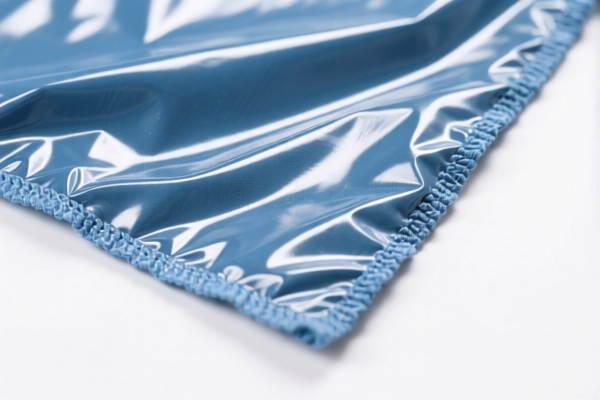
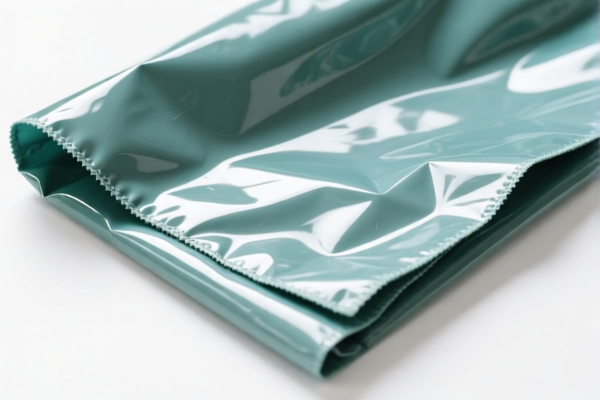
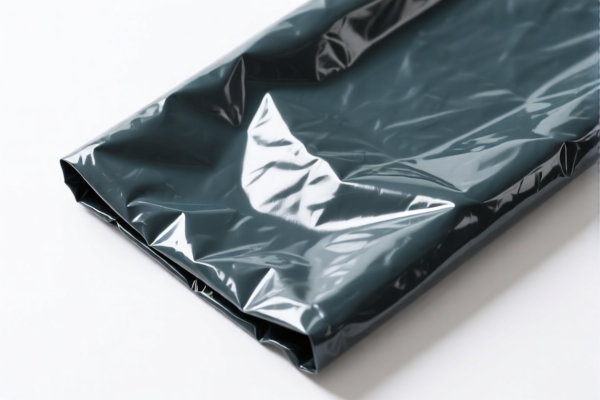
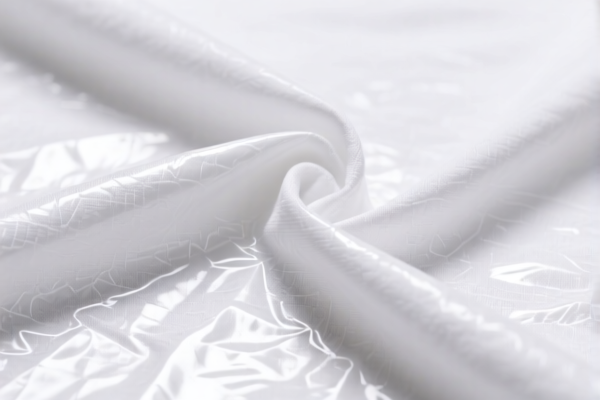
AI Analysis
🧶 PVC Textile Gift Packaging Cloth
🌐 HS Code Reference & Customs Clearance Guide | 2026 Latest Tariff Analysis | Professional-Level Strategy
📌 Part 1: Product Definition & Classification: Do You Really Understand "PVC Textile Packaging"?
PVC Textile Gift Packaging Cloth is a composite material commonly used for gift wrapping, tablecloths, decorative covers, and promotional displays. In international trade, its classification hinges on whether it is treated as a "Plastic Article," a "Textile Product," or a "Composite Container/Packing."
Key Distinction Points: 1. Pure PVC Plastic Film/Cloth: If the fabric is essentially PVC with minimal or no textile reinforcement that changes its fundamental character → Classified under Chapter 39. 2. Impregnated/Covered Textile: If the textile is impregnated with PVC but retains the structure of fabric → Classified under Chapter 59. 3. Finished Packaging/Container: If it is formed into a specific bag, pouch, or packaging structure using textile/plastic surfaces → Classified under Chapter 42.
⚠️ Critical Risk:
- Misclassifying a Chapter 42 item (packaging) as Chapter 39/59 (raw material) often triggers Section 301 Additional Tariffs (25%) and IEEPA Tariffs (10%), leading to massive cost differences. - The definition of "Gift Packaging Cloth" is ambiguous; customs look at the intended use and physical structure.
📦 Part 2: HS Code Classification Details (2026 Latest Tariff Authority对照)
| HS Code | Product Description | Application Scenario | Tax Rate |
|---|---|---|---|
3926.40.00.10 |
PVC Gift Packaging Cloth (Plastic Articles) | Decorative wrapping, plastic-only film, non-structural plastic goods | 15.3% |
3926.90.33.00 |
PVC Textile (Other Plastic Articles) | PVC-based textile where plastic character dominates | 16.5% |
4202.92.93.36 |
PVC + Textile Composite Packaging (Textile Exterior) | Bags/pouches with textile exterior, PVC interior/lamina | 52.6% |
4202.92.91.00 |
PVC + Textile Composite Packaging (Synthetic Fiber/Plastic) | Finished packaging containers made of synthetic fibers/plastics | 52.6% |
5903.10.20.90 |
PVC Impregnated/Covered Textile Fabric | Flat fabric, tablecloths, curtains, PVC-coated cloth (not yet made into bags) | 35.0% |
🔍 Key Reminder:
- Chapter 39 (3926.40/3926.90): Lower tax (15-16%), but only applies if the item is considered a "Plastic Article" or "Miscellaneous Plastic Item" without significant textile structure or finished packaging form. - Chapter 59 (5903.10): Medium tax (35%), applies to flat fabrics impregnated with PVC. Common for tablecloths or loose rolls. - Chapter 42 (4202.92): Highest tax (52.6%), applies if the product is considered a finished packaging container/bag (even if soft), often triggering Section 301 tariffs.
💰 Part 3: 2026 Latest Tariff Rate Details (Including Additional Taxes)
✅ Applicable Country: USA (US)
✅ Origin: China (CN)
✅ Effective Time: 2025-11-10 onwards (Includes subsequent imports)
🎯 1. 3926.40.00.10 —— PVC Gift Packaging Cloth (Plastic Articles)
| Item | Content |
|---|---|
| Base Tariff | 5.3% (ad valorem) |
| Section 301 Additional Tariff | 0.0% (Not subject to 25% surcharge) |
| IEEPA Additional Tariff | 10% (For China/HK products, effective 2025-11-10) |
| Total Tariff | 15.3% |
| Tax Calculation | CIF Value × 15.3% |
| De Minimis Exemption | ❌ Not Applicable (Most PVC packaging items exceed $800 de minimis thresholds or are restricted) |
| Legal Basis Path | IEEPA:9903.01.24 → USITC:3926.40.00.10 |
📌 Explanation:
- This is the most favorable classification if the product can be argued as a "miscellaneous plastic article" (gift wrap) rather than a textile or container. - No Section 301 (25%) tariff applies, making it significantly cheaper than Chapter 42.
🎯 2. 3926.90.33.00 —— Other Plastic Articles (PVC Textile)
| Item | Content |
|---|---|
| Base Tariff | 6.5% (ad valorem) |
| Section 301 Additional Tariff | 0.0% |
| IEEPA Additional Tariff | 10% |
| Total Tariff | 16.5% |
| Tax Calculation | CIF Value × 16.5% |
| De Minimis Exemption | ❌ Not Applicable |
| Legal Basis Path | IEEPA:9903.01.24 → USITC:3926.90.33.00 |
📌 Note:
- Similar to above, but for "other plastic articles." Slightly higher base rate (6.5% vs 5.3%). - Use this if the PVC texture is dominant, even if some textile fibers are present but not defining.
🎯 3. 5903.10.20.90 —— PVC-Impregnated/Covered Textile Fabric
| Item | Content |
|---|---|
| Base Tariff | 0.0% (ad valorem) |
| Section 301 Additional Tariff | 25.0% |
| IEEPA Additional Tariff | 10% |
| Total Tariff | 35.0% |
| Tax Calculation | CIF Value × 35.0% |
| De Minimis Exemption | ❌ Not Applicable |
| Legal Basis Path | IEEPA:9903.01.24 → USITC:5903.10.20.90 → FOOTNOTE:9903.88.01 |
📌 Warning:
- Base tariff is 0%, but the 25% Section 301 tariff makes it more expensive than Chapter 39. - This classification is for flat fabric (e.g., rolls of PVC-coated cloth). If the product is already cut/sewn into a bag/cover, customs may reclassify it to Chapter 42.
🎯 4. 4202.92.93.36 & 4202.92.91.00 —— Finished Packaging (Composite)
| Item | Content |
|---|---|
| Base Tariff | 17.6% (ad valorem) |
| Section 301 Additional Tariff | 25.0% |
| IEEPA Additional Tariff | 10% |
| Total Tariff | 52.6% |
| Tax Calculation | CIF Value × 52.6% |
| De Minimis Exemption | ❌ Not Applicable |
| Legal Basis Path | IEEPA:9903.01.24 → USITC:4202.92.93.36 / 4202.92.91.00 |
📌 Critical Alert:
- Highest tax burden (52.6%). - Applies if the product is deemed a finished packaging container (e.g., gift bags, pouches, structured covers). - Avoid this classification if possible by declaring as "raw fabric" (Chapter 59) or "plastic article" (Chapter 39), unless the product is clearly a finished bag.
🛠️ Part 4: Customs Clearance Practical Advice (Battle-Tested Pitfall Avoidance)
✅ 1. Preparation Checklist (Non-Negotiable)
| Document | Required | Description |
|---|---|---|
| ✅ Product Specifications | ✔️ | Material composition: % PVC, % Textile, weave type, thickness. |
| ✅ Product Photos | ✔️ | Show texture, finish, and any handles/zippers. |
| ✅ Commercial Invoice | ✔️ | Description must match HS Code logic (e.g., "PVC-Coated Fabric" vs. "Gift Bag"). |
| ✅ Packing List | ✔️ | Specify if items are rolls (fabric) or individual units (bags). |
| ✅ Material Test Report | ✔️ | To prove PVC ratio and textile nature. |
✅ 2. Declaration Strategy (Key Mantras)
🔥 "Roll = Fabric (Ch59); Plastic Look = Plastic Art (Ch39); Bag = Packaging (Ch42)"
| Scenario | Correct Declaration | Incorrect Approach |
|---|---|---|
| Loose Rolls of PVC-Coated Cloth | 5903.10.20.90 (35%) or 3926.40.00.10 (15.3%) |
Declare as "Gift Bags" → 52.6% |
| Pre-cut Gift Wrap Sheets (Plastic-like) | 3926.40.00.10 (15.3%) |
Declare as "Textile" → 35% |
| Finished Gift Bags with Handles | 4202.92.93.36 (52.6%) |
Try to declare as "Fabric" → High risk of audit & penalties |
| PVC Textile for Upholstery | 3926.90.33.00 (16.5%) |
Declare as "Gift Packaging" → Wrong use description |
📌 Strategy:
- If the product is not yet a finished bag, insist on Chapter 39 or Chapter 59. - Provide evidence that it is a raw material (e.g., sold in rolls, not pre-assembled). - If it is a finished bag, be prepared for 52.6%. Consider if "gift packaging" can be argued as a "plastic article" if the structure is simple and non-rigid.
✅ 3. Special Cases
| Case | Handling Advice |
|---|---|
| OEM Custom Printing | Provide print templates. Ensure description includes "PVC-Coated Textile" not just "Cloth." |
| Mixed Materials (Cotton + PVC) | If cotton is visible and structural, lean towards Chapter 59. If PVC is dominant, lean towards Chapter 39. |
| Small Samples (<$800) | May qualify for de minimis (Section 321), but Section 301 tariffs often still apply to Chinese goods. Check current CBP rules. |
| High-Value Commercial Orders | Apply for Advance Ruling from CBP. $52.6% vs $15% is a huge difference. |
🌍 Part 5: Global Market Comparison (2026)
| Country/Region | Recommended HS Code | Tariff | Certification | Notes |
|---|---|---|---|---|
| 🇺🇸 USA | 3926.40.00.10 |
15.3% | None | Best rate if classified as Plastic Article. Avoid 4202 (52.6%). |
| 🇨🇳 China | 5903.10.20.90 |
10-13% | None | Domestic trade. |
| 🇪🇺 EU | 5903.10.20.90 |
0-6% | REACH, RoHS | Often lower tariffs if not considered "packaging." |
| 🇬🇧 UK | 5903.10.20.90 |
0-6% | UKCA | Similar to EU. |
| 🇦🇺 Australia | 5903.10.20.90 |
5% | None | Lower rates, no Section 301. |
📌 Conclusion:
- USA is the most critical market for tariff optimization.
- Chapter 39 (3926.40.00.10) is the "Sweet Spot" for PVC gift packaging cloth, offering 15.3% vs 52.6%.
- Achieving this requires proving the item is a plastic article or flat fabric, not a finished container.
📌 Part 6: Common Mistakes & Pitfall Guide (Lessons from the Field)
❌ Mistake 1: Declaring "PVC Gift Bag" as 3926.40.00.10
👉 Result: Customs reclassifies to 4202.92.93.36 → Back taxes + Penalties + Delay.
✅ Fix: If it's a bag, declare correctly. If it's a roll of cloth, declare as 5903.10.20.90 or argue 3926.40.00.10.
❌ Mistake 2: Ignoring IEEPA 10% Tariff
👉 Result: Underpaying taxes by 10% on all HS Codes since Nov 2025.
✅ Fix: Always add 10% IEEPA to your cost model for Chinese-origin PVC/textile goods entering the US.
❌ Mistake 3: Confusing "Plastic Film" with "Textile"
👉 Result: Misdeclaration. If textile fibers are visible, 3926 may be challenged.
✅ Fix: Use 5903.10.20.90 (35%) as a safe middle ground if material is ambiguous.
✅ Correct Approach:
"PVC-Coated Polyester Fabric, Roll, For Gift Wrapping, Non-End-Use Product"
HS Code:3926.40.00.10or5903.10.20.90
Tariff: 15.3% or 35%
🎯 Part 7: Conclusion: Professional Declaration, Save Costs, Ensure Clearance!
🎯 Remember the Mantra:
🔹 "Roll is Fabric, Bag is Packaging, Plastic is Art. Choose wisely, pay less!"
🔹 "15.3% vs 52.6%: A 37% gap. Don't let a bad description cost you profit."
📌 Pro Tip:
- For large orders, submit a Request for Advance Ruling to CBP with physical samples.
- If the product is small gifts (under $800), check if de minimis applies, but note that Section 301 tariffs may still be collected at the port.
📣 Immediate Action:
📞 Consult a licensed Customs Broker
📄 Prepare Material Composition Reports
🚀 Optimize HS Code to 3926.40.00.10 (15.3%) if possible!
✨ Professional Customs Clearance Starts with Accurate Classification!
💼 Every Percent Saved is Pure Profit!
Customer Reviews
About HS Code Classification
The Harmonized System (HS) is an internationally standardized nomenclature developed by the World Customs Organization (WCO) to classify traded products. Over 200 countries use the HS system as the basis for customs tariffs, trade statistics, and import/export regulations.
Each HS code follows a hierarchical structure:
- Chapter (2 digits) — Broad category of goods (e.g., Chapter 84: Machinery and Mechanical Appliances)
- Heading (4 digits) — More specific grouping within the chapter
- Subheading (6 digits) — Internationally standardized breakdown, used by all WCO member countries
- National subdivisions (8-10 digits) — Country-specific extensions for further classification, such as US HTSUS 10-digit codes
Correct HS code classification is essential for smooth customs clearance, accurate duty payment, and compliance with trade regulations. Misclassification can lead to customs delays, overpayment of duties, or penalties.
When importing from CN to US, the applicable tariff rates may include:
- Most-Favored-Nation (MFN) rate — The standard duty rate applied to WTO members
- General rate — Applied to countries without trade agreements
- Trade remedy duties — Additional tariffs such as Section 301 (anti-dumping), Section 232 (national security), or countervailing duties
The information provided on this page is for reference purposes only. For official classification, please consult with your local customs authority or a licensed customs broker.