PVC Thick Walled Pipe
CN → US| HS编码 | 关税税率 | 原产国 | 目的国 | 文档 |
|---|---|---|---|---|
| 3917230000 | 38.1% | CN | US | 官方文档 |
| 3917320010 | 38.1% | CN | US | 官方文档 |
商品图片
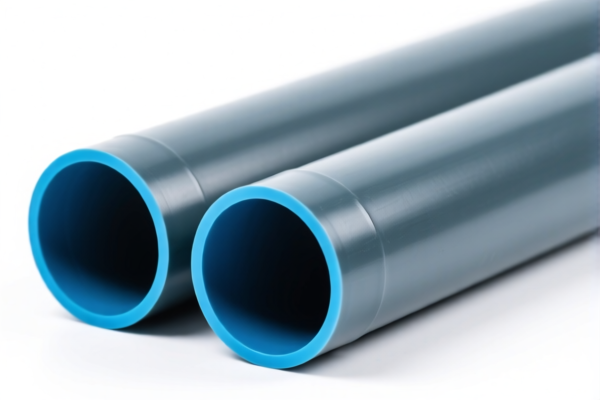
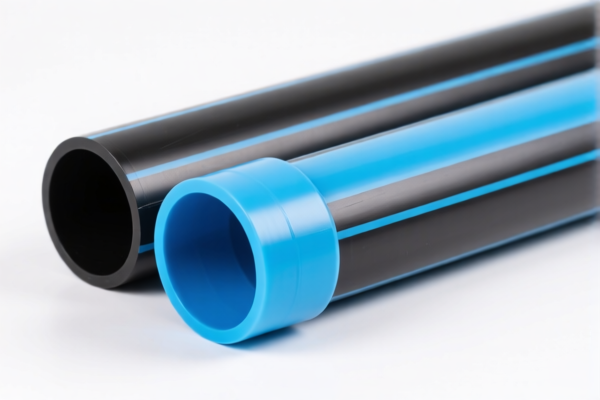
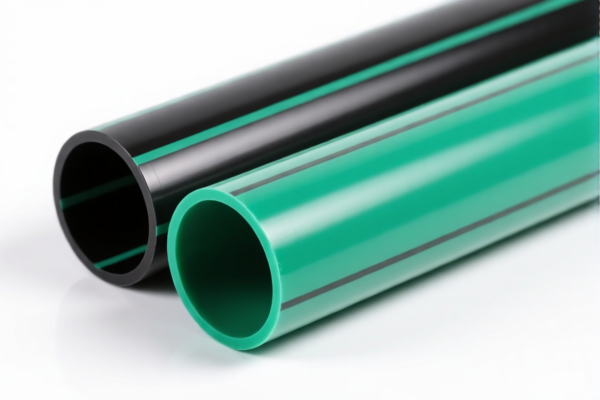
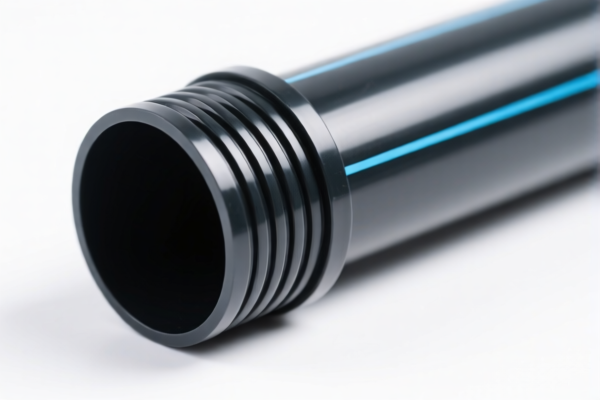
AI分析
🏗️ PVC Thick-Walled Pipe: Hard Tubes vs. Flexible Hoses | HS Code & Duty Breakdown
🌐 HS Code Reference & Clearance Guide | 2026 Latest Tariff Analysis | Professional Customs Strategy
📌 Part I: Product Definition & Classification — What Exactly is a "PVC Thick-Walled Pipe"?
In international trade, "PVC Thick-Walled Pipe" is a broad term that requires precise classification based on its structural rigidity and use case. The customs authority distinguishes primarily between:
1. Rigid PVC Tubes/Pipes (Hard Pipes): * Characteristics: High structural integrity, used for plumbing, drainage, industrial chemical transfer, and pressure systems. They maintain their shape under load. * HS Chapter Focus: Chapter 39, Heading 3917 (Tubes, pipes, and hoses... rigid).
2. Non-Reinforced PVC Hoses/Pipes (Other Tubes): * Characteristics: May be flexible or semi-rigid, not reinforced with metal or other materials. Often used for irrigation, low-pressure fluid transfer, or general utility. * HS Chapter Focus: Chapter 39, Heading 3917 (Tubes, pipes, and hoses... other, not reinforced).
⚠️ Key Distinction Point:
- If the PVC pipe is rigid (holds its shape when unsupported) and made of polyvinyl chloride → It falls under 3917.23.00.00.
- If the PVC pipe is not rigid (flexible/hose-like) and not reinforced with any other material (like mesh or steel) → It falls under 3917.32.00.10.
- Note: "Thick-walled" often implies rigidity for structural use, pushing most heavy-duty PVC pipes toward the Rigid category unless specified as a heavy-duty hose.
📦 Part II: HS Code Classification Details (2026 Latest Tariff Authority Comparison)
| HS Code | Product Description | Applicable Scenario | Rigidity/Reinforcement Status |
|---|---|---|---|
3917.23.00.00 |
Tubes, pipes and hoses, rigid: Of polymers of vinyl chloride | Industrial plumbing, drainage, pressure pipes, construction conduits | ✅ Rigid (Hard PVC) |
3917.32.00.10 |
Other tubes, pipes and hoses: Other, not reinforced... Of polyvinyl chloride | Irrigation hoses, low-pressure flexible PVC pipes, non-reinforced utility tubes | ✅ Not Reinforced & Non-Rigid (Flexible/Other) |
🔍 Critical Reminder:
- Rigid PVC Pipes (standard construction/plumbing grade) are almost always classified under 3917.23.00.00.
- If the PVC pipe is reinforced (e.g., with fiberglass or wire mesh), it does NOT fit into either of the two codes above from the provided data and would require a different classification (e.g., "reinforced or otherwise combined with other materials"). Ensure your product is truly non-reinforced if considering3917.32.00.10.
- Thickness alone does not determine the HS code; Rigidity does. A thick-walled pipe that bends easily is "other"; a thick-walled pipe that stands straight is "rigid".
💰 Part III: 2026 Latest Tariff Rate Breakdown (Including Additional Duties & Policy Add-ons)
✅ Applicable Country: United States (US)
✅ Country of Origin: China (CN) (Inferred from the provided tax data showing "Additional Duty")
✅ Effective Date: As per provided data (Check for current IEEPA/301 updates)
🎯 1. 3917.23.00.00 — Rigid PVC Tubes/Pipes
| Item | Detail |
|---|---|
| Base Tariff Rate | 0.0% (ad valorem) |
| Additional Duty (Section 301/IEEPA) | 0.0% |
| Total Tax Rate | 0.0% |
| Tax Calculation | CIF Value × 0.0% = $0 Duty |
| De Minimis Eligibility | N/A (Rate is 0%, but standard de minimis rules still apply for entry) |
| Legal Basis Path | USITC:3917.23.00.00 → Exempt from current 301/IEEPA additional duties |
📌 Explanation:
- Rigid PVC pipes currently enjoy a 0% total duty rate in the US market (based on provided data).
- This is a highly competitive classification for cost-sensitive projects.
- Caution: Ensure the pipe is indeed "rigid" and made of "polymer of vinyl chloride" to maintain this 0% rate. Misclassification as "other" could trigger higher duties.
🎯 2. 3917.32.00.10 — Other Non-Reinforced PVC Tubes/Hoses
| Item | Detail |
|---|---|
| Base Tariff Rate | 3.1% (ad valorem) |
| Additional Duty (Section 301/IEEPA) | 25.0% |
| Total Tax Rate | 28.1% |
| Tax Calculation | CIF Value × 28.1% |
| De Minimis Eligibility | ❌ Not Eligible (Likely due to high additional duty) |
| Legal Basis Path | USITC:3917.32.00.10 → 301:3917.32.00.10 (25% surcharge) |
📌 Explanation:
- "Other" PVC pipes (flexible/non-reinforced) face a steep 28.1% total duty.
- The 25% additional duty is a significant cost barrier.
- Cost Impact: For a $10,000 shipment, you would pay $2,810 in duties vs. $0 for rigid pipes.
🛠️ Part IV: Customs Clearance Practical Advice (Real-World Pitfall Guide)
✅ 1. Documentation Checklist (Non-Negotiable)
| Document | Required? | Explanation |
|---|---|---|
| ✅ Product Specification Sheet | ✔️ | Must specify: Material (PVC/U-PVC), Wall Thickness, Diameter, Pressure Rating, Rigidity/Flexibility. |
| ✅ Product Photos | ✔️ | Show the pipe standing alone (to prove rigidity) and being bent (if claiming flexibility). |
| ✅ Commercial Invoice | ✔️ | Clearly describe as "Rigid PVC Pipe" or "Non-Reinforced PVC Hose". Avoid vague terms like "PVC Tube". |
| ✅ Packing List | ✔️ | Detail quantity, weight, and dimensions. |
| ✅ Certificate of Origin (CO) | ✔️ | To prove country of origin (China triggers additional duties for HS 3917.32.00.10). |
| ✅ Mill Test Report / Quality Cert | ✔️ | Optional but recommended to prove material composition (Polymer of Vinyl Chloride). |
✅ 2. Declaration Tips (Key Mnemonics)
🔥 "Rigid is Free, Flexible is Fee! Describe Rigidity, Save 28 Percent!"
| Scenario | Correct Declaration | Wrong Practice |
|---|---|---|
| Heavy-duty construction pipe | 3917.23.00.00 - Rigid PVC Pipe |
Mislabeling as "PVC Hose" → 28.1% Duty |
| Irrigation hose (flexible) | 3917.32.00.10 - PVC Hose |
Mislabeling as "Rigid Pipe" → Risk of 28.1% + penalties |
| Reinforced PVC Pipe | NOT COVERED in provided data | Trying to force into 3917.23 → Misclassification risk |
✅ 3. Special Situation Handling
| Situation | Handling Advice |
|---|---|
| Is it really Rigid? | If it can be bent by hand without heating, do not use 3917.23.00.00. Use 3917.32.00.10 to avoid duty evasion claims. |
| Is it Reinforced? | If it has a visible mesh, wire, or fiber layer inside the wall, it is not "non-reinforced". You must find a different HS code (e.g., 3917.31 or 3917.33), as the provided data does not cover reinforced pipes. |
| Mixed Shipment | If a shipment contains both rigid pipes and flexible hoses, split the declaration. Do not lump them under one code to avoid the higher rate applying to the entire shipment. |
🌍 Part V: Global Market Clearance Comparison (2026 Latest)
| Country/Region | Recommended HS Code | Tariff Rate | Certification Requirement | Notes |
|---|---|---|---|---|
| 🇺🇸 USA | 3917.23.00.00 |
0.0% | None (Standard) | Best Option for rigid pipes. |
| 🇺🇸 USA | 3917.32.00.10 |
28.1% | None | High duty on flexible/non-reinforced. |
| 🇨🇳 China | 3917.23.00.00 |
~6.5%* | GB Standards | Import duties may vary; check latest MOFCOM lists. |
| 🇪🇺 EU | 3917.23 |
6.5%* | CE / REACH | Standard EU duty for rigid PVC pipes. |
| 🇦🇺 Australia | 3917.23 |
5.0%* | RCM | Standard Australian duty. |
📌 Conclusion:
- For US Exports: Classify rigid PVC pipes as3917.23.00.00to benefit from 0% duty.
- For Flexible PVC: Expect 28.1% duty if from China. Consider cost-benefit analysis.
- Avoid Ambiguity: Always specify "Rigid" vs. "Flexible" and "Reinforced" vs. "Non-Reinforced" in documentation.
📌 Part VI: Common Mistakes & Pitfall Guide (Lessons from Industry)
❌ Mistake 1: Calling all PVC pipes "PVC Pipes" in the invoice.
👉 Consequence: Customs may classify as the worst-case scenario (28.1%) or request reclassification, causing delays.
❌ Mistake 2: Misclassifying Reinforced PVC Pipes under 3917.23.00.00.
👉 Consequence: 3917.23.00.00 is for non-reinforced rigid PVC. Reinforced pipes belong to different subheadings. Misclassification leads to audits and penalties.
❌ Mistake 3: Assuming "Thick-Walled" means "Rigid".
👉 Consequence: Some thick-walled hoses are still flexible. If it bends, it's likely "Other" (3917.32.00.10), not "Rigid" (3917.23.00.00).
❌ Mistake 4: Ignoring the "Non-Reinforced" clause in 3917.32.00.10.
👉 Consequence: If your hose has a fiberglass liner, it is not eligible for this code.
✅ Correct Practice:
"Rigid Polyvinyl Chloride (PVC) Pipe, Unreinforced, Schedule 40, 4-inch Diameter, ASTM D1785 Compliant."
🎯 Part VII: Conclusion — Professional Declaration, Save Costs!
🎯 Remember the Mnemonic:
🔹 "Rigid PVC = 0% Duty. Flexible/Other PVC = 28.1% Duty. Reinforced = Not Covered Here."
🔹 "Be Specific: Rigid vs. Flexible. Reinforced vs. Non-Reinforced. Accuracy Saves 28%."
📌 Pro Tip:
If your product is reinforced or combined with other materials, the provided data does not cover it. You must consult a customs broker for the correct HS code (likely under 3917.31 or 3917.33). Do not guess.
📣 Immediate Action:
📞 Contact your customs broker with product photos and specifications.
📝 Clearly state: "Rigid" or "Flexible" and "Reinforced" or "Non-Reinforced".
🚀 Secure the 0% Duty by ensuring correct classification under3917.23.00.00for rigid PVC pipes.
✨ Professional Clearance Starts with Precise Classification!
💼 Your Cost Control Depends on These Two Digits: 23 vs. 32.
用户评价
关于 HS 编码归类
协调制度(HS)是由世界海关组织(WCO)制定的国际贸易商品分类标准。全球 200 多个国家采用 HS 系统作为海关关税、贸易统计和进出口监管的基础。
每个 HS 编码遵循以下层级结构:
- 章(2 位)——商品大类(例如:第 84 章:机器和机械设备)
- 品目(4 位)——章内的更具体分类
- 子目(6 位)——国际通用细分,所有 WCO 成员国统一使用
- 本国细分(8-10 位)——各国自行扩展的细分编码,如美国 HTSUS 10 位编码
正确的 HS 编码归类对于顺利通关、准确缴纳关税和遵守贸易法规至关重要。错误归类可能导致海关延误、多缴关税或罚款。
从CN进口到US时,适用的关税税率可能包括:
- 最惠国(MFN)税率——适用于 WTO 成员国的标准关税税率
- 普通税率——适用于无贸易协定国家
- 贸易救济关税——附加关税,如 301 条款(反倾销)、232 条款(国家安全)或反补贴税
本页内容仅供参考。如需正式归类,请咨询当地海关或持牌报关代理。