PVC Thick Walled Pipe
CN → US| HS Code | Tariff Rate | Origin | Destination | Doc |
|---|---|---|---|---|
| 3917230000 | 38.1% | CN | US | Official Doc |
| 3917320010 | 38.1% | CN | US | Official Doc |
Product Images
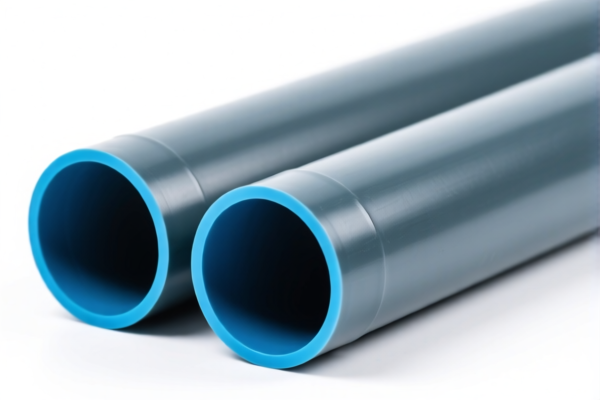
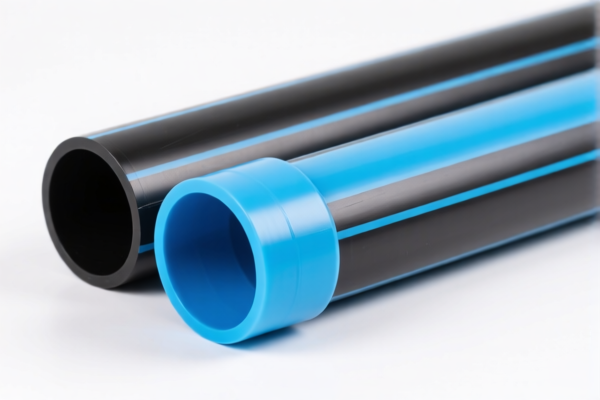
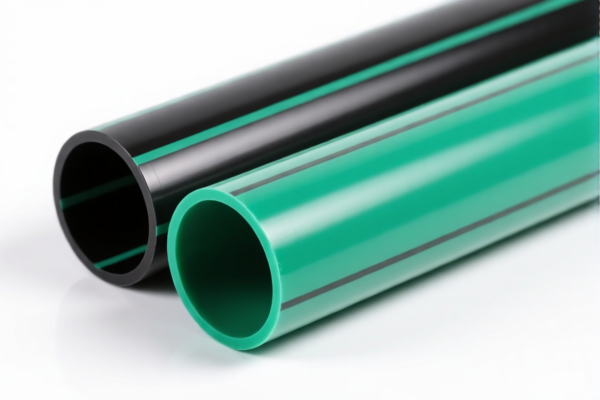
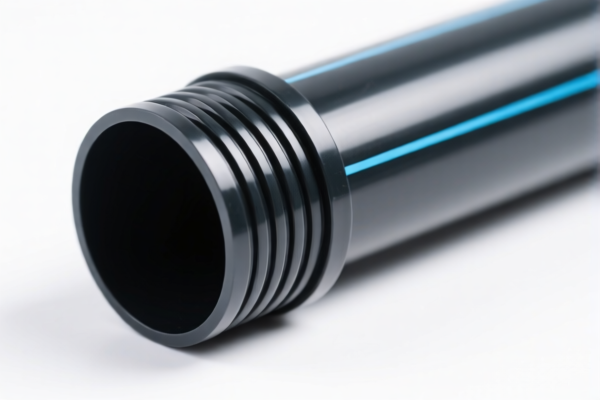
AI Analysis
🏗️ PVC Thick-Walled Pipe: Hard Tubes vs. Flexible Hoses | HS Code & Duty Breakdown
🌐 HS Code Reference & Clearance Guide | 2026 Latest Tariff Analysis | Professional Customs Strategy
📌 Part I: Product Definition & Classification — What Exactly is a "PVC Thick-Walled Pipe"?
In international trade, "PVC Thick-Walled Pipe" is a broad term that requires precise classification based on its structural rigidity and use case. The customs authority distinguishes primarily between:
1. Rigid PVC Tubes/Pipes (Hard Pipes): * Characteristics: High structural integrity, used for plumbing, drainage, industrial chemical transfer, and pressure systems. They maintain their shape under load. * HS Chapter Focus: Chapter 39, Heading 3917 (Tubes, pipes, and hoses... rigid).
2. Non-Reinforced PVC Hoses/Pipes (Other Tubes): * Characteristics: May be flexible or semi-rigid, not reinforced with metal or other materials. Often used for irrigation, low-pressure fluid transfer, or general utility. * HS Chapter Focus: Chapter 39, Heading 3917 (Tubes, pipes, and hoses... other, not reinforced).
⚠️ Key Distinction Point:
- If the PVC pipe is rigid (holds its shape when unsupported) and made of polyvinyl chloride → It falls under 3917.23.00.00.
- If the PVC pipe is not rigid (flexible/hose-like) and not reinforced with any other material (like mesh or steel) → It falls under 3917.32.00.10.
- Note: "Thick-walled" often implies rigidity for structural use, pushing most heavy-duty PVC pipes toward the Rigid category unless specified as a heavy-duty hose.
📦 Part II: HS Code Classification Details (2026 Latest Tariff Authority Comparison)
| HS Code | Product Description | Applicable Scenario | Rigidity/Reinforcement Status |
|---|---|---|---|
3917.23.00.00 |
Tubes, pipes and hoses, rigid: Of polymers of vinyl chloride | Industrial plumbing, drainage, pressure pipes, construction conduits | ✅ Rigid (Hard PVC) |
3917.32.00.10 |
Other tubes, pipes and hoses: Other, not reinforced... Of polyvinyl chloride | Irrigation hoses, low-pressure flexible PVC pipes, non-reinforced utility tubes | ✅ Not Reinforced & Non-Rigid (Flexible/Other) |
🔍 Critical Reminder:
- Rigid PVC Pipes (standard construction/plumbing grade) are almost always classified under 3917.23.00.00.
- If the PVC pipe is reinforced (e.g., with fiberglass or wire mesh), it does NOT fit into either of the two codes above from the provided data and would require a different classification (e.g., "reinforced or otherwise combined with other materials"). Ensure your product is truly non-reinforced if considering3917.32.00.10.
- Thickness alone does not determine the HS code; Rigidity does. A thick-walled pipe that bends easily is "other"; a thick-walled pipe that stands straight is "rigid".
💰 Part III: 2026 Latest Tariff Rate Breakdown (Including Additional Duties & Policy Add-ons)
✅ Applicable Country: United States (US)
✅ Country of Origin: China (CN) (Inferred from the provided tax data showing "Additional Duty")
✅ Effective Date: As per provided data (Check for current IEEPA/301 updates)
🎯 1. 3917.23.00.00 — Rigid PVC Tubes/Pipes
| Item | Detail |
|---|---|
| Base Tariff Rate | 0.0% (ad valorem) |
| Additional Duty (Section 301/IEEPA) | 0.0% |
| Total Tax Rate | 0.0% |
| Tax Calculation | CIF Value × 0.0% = $0 Duty |
| De Minimis Eligibility | N/A (Rate is 0%, but standard de minimis rules still apply for entry) |
| Legal Basis Path | USITC:3917.23.00.00 → Exempt from current 301/IEEPA additional duties |
📌 Explanation:
- Rigid PVC pipes currently enjoy a 0% total duty rate in the US market (based on provided data).
- This is a highly competitive classification for cost-sensitive projects.
- Caution: Ensure the pipe is indeed "rigid" and made of "polymer of vinyl chloride" to maintain this 0% rate. Misclassification as "other" could trigger higher duties.
🎯 2. 3917.32.00.10 — Other Non-Reinforced PVC Tubes/Hoses
| Item | Detail |
|---|---|
| Base Tariff Rate | 3.1% (ad valorem) |
| Additional Duty (Section 301/IEEPA) | 25.0% |
| Total Tax Rate | 28.1% |
| Tax Calculation | CIF Value × 28.1% |
| De Minimis Eligibility | ❌ Not Eligible (Likely due to high additional duty) |
| Legal Basis Path | USITC:3917.32.00.10 → 301:3917.32.00.10 (25% surcharge) |
📌 Explanation:
- "Other" PVC pipes (flexible/non-reinforced) face a steep 28.1% total duty.
- The 25% additional duty is a significant cost barrier.
- Cost Impact: For a $10,000 shipment, you would pay $2,810 in duties vs. $0 for rigid pipes.
🛠️ Part IV: Customs Clearance Practical Advice (Real-World Pitfall Guide)
✅ 1. Documentation Checklist (Non-Negotiable)
| Document | Required? | Explanation |
|---|---|---|
| ✅ Product Specification Sheet | ✔️ | Must specify: Material (PVC/U-PVC), Wall Thickness, Diameter, Pressure Rating, Rigidity/Flexibility. |
| ✅ Product Photos | ✔️ | Show the pipe standing alone (to prove rigidity) and being bent (if claiming flexibility). |
| ✅ Commercial Invoice | ✔️ | Clearly describe as "Rigid PVC Pipe" or "Non-Reinforced PVC Hose". Avoid vague terms like "PVC Tube". |
| ✅ Packing List | ✔️ | Detail quantity, weight, and dimensions. |
| ✅ Certificate of Origin (CO) | ✔️ | To prove country of origin (China triggers additional duties for HS 3917.32.00.10). |
| ✅ Mill Test Report / Quality Cert | ✔️ | Optional but recommended to prove material composition (Polymer of Vinyl Chloride). |
✅ 2. Declaration Tips (Key Mnemonics)
🔥 "Rigid is Free, Flexible is Fee! Describe Rigidity, Save 28 Percent!"
| Scenario | Correct Declaration | Wrong Practice |
|---|---|---|
| Heavy-duty construction pipe | 3917.23.00.00 - Rigid PVC Pipe |
Mislabeling as "PVC Hose" → 28.1% Duty |
| Irrigation hose (flexible) | 3917.32.00.10 - PVC Hose |
Mislabeling as "Rigid Pipe" → Risk of 28.1% + penalties |
| Reinforced PVC Pipe | NOT COVERED in provided data | Trying to force into 3917.23 → Misclassification risk |
✅ 3. Special Situation Handling
| Situation | Handling Advice |
|---|---|
| Is it really Rigid? | If it can be bent by hand without heating, do not use 3917.23.00.00. Use 3917.32.00.10 to avoid duty evasion claims. |
| Is it Reinforced? | If it has a visible mesh, wire, or fiber layer inside the wall, it is not "non-reinforced". You must find a different HS code (e.g., 3917.31 or 3917.33), as the provided data does not cover reinforced pipes. |
| Mixed Shipment | If a shipment contains both rigid pipes and flexible hoses, split the declaration. Do not lump them under one code to avoid the higher rate applying to the entire shipment. |
🌍 Part V: Global Market Clearance Comparison (2026 Latest)
| Country/Region | Recommended HS Code | Tariff Rate | Certification Requirement | Notes |
|---|---|---|---|---|
| 🇺🇸 USA | 3917.23.00.00 |
0.0% | None (Standard) | Best Option for rigid pipes. |
| 🇺🇸 USA | 3917.32.00.10 |
28.1% | None | High duty on flexible/non-reinforced. |
| 🇨🇳 China | 3917.23.00.00 |
~6.5%* | GB Standards | Import duties may vary; check latest MOFCOM lists. |
| 🇪🇺 EU | 3917.23 |
6.5%* | CE / REACH | Standard EU duty for rigid PVC pipes. |
| 🇦🇺 Australia | 3917.23 |
5.0%* | RCM | Standard Australian duty. |
📌 Conclusion:
- For US Exports: Classify rigid PVC pipes as3917.23.00.00to benefit from 0% duty.
- For Flexible PVC: Expect 28.1% duty if from China. Consider cost-benefit analysis.
- Avoid Ambiguity: Always specify "Rigid" vs. "Flexible" and "Reinforced" vs. "Non-Reinforced" in documentation.
📌 Part VI: Common Mistakes & Pitfall Guide (Lessons from Industry)
❌ Mistake 1: Calling all PVC pipes "PVC Pipes" in the invoice.
👉 Consequence: Customs may classify as the worst-case scenario (28.1%) or request reclassification, causing delays.
❌ Mistake 2: Misclassifying Reinforced PVC Pipes under 3917.23.00.00.
👉 Consequence: 3917.23.00.00 is for non-reinforced rigid PVC. Reinforced pipes belong to different subheadings. Misclassification leads to audits and penalties.
❌ Mistake 3: Assuming "Thick-Walled" means "Rigid".
👉 Consequence: Some thick-walled hoses are still flexible. If it bends, it's likely "Other" (3917.32.00.10), not "Rigid" (3917.23.00.00).
❌ Mistake 4: Ignoring the "Non-Reinforced" clause in 3917.32.00.10.
👉 Consequence: If your hose has a fiberglass liner, it is not eligible for this code.
✅ Correct Practice:
"Rigid Polyvinyl Chloride (PVC) Pipe, Unreinforced, Schedule 40, 4-inch Diameter, ASTM D1785 Compliant."
🎯 Part VII: Conclusion — Professional Declaration, Save Costs!
🎯 Remember the Mnemonic:
🔹 "Rigid PVC = 0% Duty. Flexible/Other PVC = 28.1% Duty. Reinforced = Not Covered Here."
🔹 "Be Specific: Rigid vs. Flexible. Reinforced vs. Non-Reinforced. Accuracy Saves 28%."
📌 Pro Tip:
If your product is reinforced or combined with other materials, the provided data does not cover it. You must consult a customs broker for the correct HS code (likely under 3917.31 or 3917.33). Do not guess.
📣 Immediate Action:
📞 Contact your customs broker with product photos and specifications.
📝 Clearly state: "Rigid" or "Flexible" and "Reinforced" or "Non-Reinforced".
🚀 Secure the 0% Duty by ensuring correct classification under3917.23.00.00for rigid PVC pipes.
✨ Professional Clearance Starts with Precise Classification!
💼 Your Cost Control Depends on These Two Digits: 23 vs. 32.
Customer Reviews
About HS Code Classification
The Harmonized System (HS) is an internationally standardized nomenclature developed by the World Customs Organization (WCO) to classify traded products. Over 200 countries use the HS system as the basis for customs tariffs, trade statistics, and import/export regulations.
Each HS code follows a hierarchical structure:
- Chapter (2 digits) — Broad category of goods (e.g., Chapter 84: Machinery and Mechanical Appliances)
- Heading (4 digits) — More specific grouping within the chapter
- Subheading (6 digits) — Internationally standardized breakdown, used by all WCO member countries
- National subdivisions (8-10 digits) — Country-specific extensions for further classification, such as US HTSUS 10-digit codes
Correct HS code classification is essential for smooth customs clearance, accurate duty payment, and compliance with trade regulations. Misclassification can lead to customs delays, overpayment of duties, or penalties.
When importing from CN to US, the applicable tariff rates may include:
- Most-Favored-Nation (MFN) rate — The standard duty rate applied to WTO members
- General rate — Applied to countries without trade agreements
- Trade remedy duties — Additional tariffs such as Section 301 (anti-dumping), Section 232 (national security), or countervailing duties
The information provided on this page is for reference purposes only. For official classification, please consult with your local customs authority or a licensed customs broker.