PVC Transparent Strip
CN → US| HS编码 | 关税税率 | 原产国 | 目的国 | 文档 |
|---|---|---|---|---|
| 3917220000 | 38.1% | CN | US | 官方文档 |
| 3917390020 | 38.1% | CN | US | 官方文档 |
| 3916200091 | 40.8% | CN | US | 官方文档 |
| 3916200020 | 40.8% | CN | US | 官方文档 |
| 3926904590 | 38.5% | CN | US | 官方文档 |
商品图片
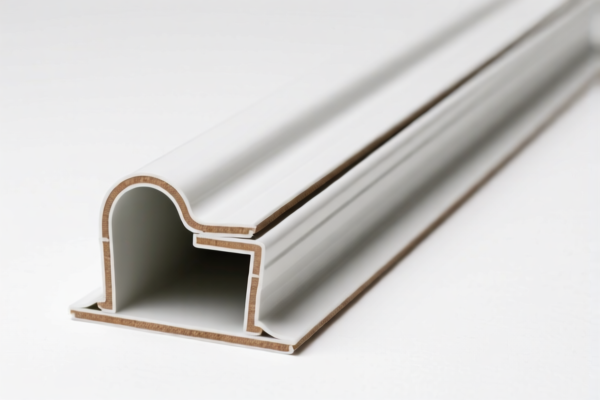
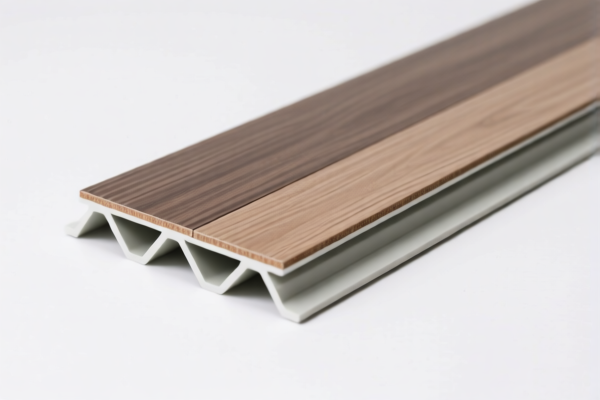
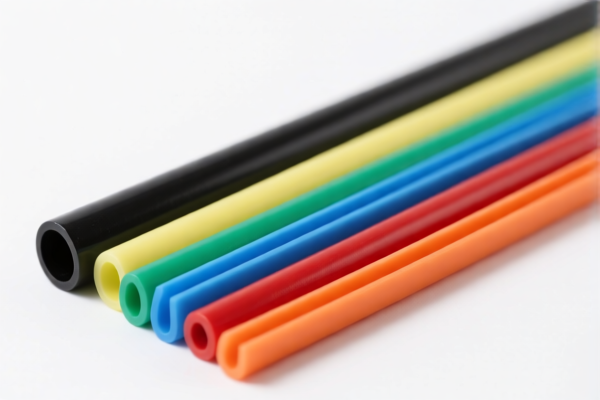

AI分析
🛡️ PVC Transparent Strip (Elastic Sealing Strip)
🌐 HS Code Reference & Customs Clearance Guide | 2026 Latest Tariff Analysis | Professional Clearance Strategy
📌 I. Product Definition & Classification: What Exactly is a "PVC Transparent Strip"?
In international trade, "PVC Transparent Strip" is a generic term that usually refers to PVC Elastic Sealing Strips. The core material is Polyvinyl Chloride (PVC), a vinyl polymer. The classification hinges on two critical factors: 1. Form/Shape: Is it a tube, a solid profile (rod/bar), a filament, or a gasket/seal? 2. Purpose: Is it used for plumbing, general sealing, or as a construction profile?
⚠️ Key Classification Distinctions:
- If shaped like a hollow tube or pipe accessory → Focus on 3917 (Plastics Pipes/Fittings).
- If shaped like a solid rod, bar, or extruded profile → Focus on 3916 (Plastic Single Monofilament/Rods/Profiles).
- If used specifically as a gasket or seal regardless of shape → Focus on 3926 (Other Plastic Articles).
📦 II. HS Code Classification Details (2026 Latest Tariff Authority Comparison)
Based on the provided data, here are the four possible classifications for PVC Elastic Sealing Strips, with their corresponding tax structures.
| HS Code | Product Description & Logic | Key Characteristics | Tax Rate (Total) |
|--------|----------|--------------------------|
| 3917.22.00.00 | PVC Elastic Sealing Strip (Tube/Fitting Category)
Material: PVC (Propylene Polymer category in summary); Form: Sealing Strip.
Logic: Matches the logic of hard tubes/accessories in terms of material and use. | Considered a Tube/Accessory type under Heading 39.17. Best if the strip has a tubular cross-section or functions as a conduit seal. | 38.1% |
| 3917.39.00.20 | PVC Elastic Sealing Strip (Plastic Accessory)
Material: PVC; Form: Tube-like accessory / Soft strip.
Logic: Fits the classification of "Other accessories of plastics for pipes, conduits..." under 3917.39. | Explicitly classified as a Plastic Accessory. Suitable if the item is a soft, flexible seal attached to a pipe system. | 38.1% |
| 3916.20.00.91 | PVC Elastic Sealing Strip (Solid Profile/Monofilament)
Material: PVC (Vinyl Polymer); Form: Other profiles.
Logic: Fits "Other" category under 3916.20 for solid plastic strips/monofilaments. | Classified as a Solid Profile. Use if the strip is extruded as a solid cross-section (not hollow) and doesn't fit other specific subheadings. | 40.8% |
| 3916.20.00.20 | PVC Elastic Sealing Strip (Profile)
Material: PVC; Form: Profile.
Logic: Fits the product characteristics under 3916.20.00 specifically for profiles. | Similar to above but specific to the "Profiles" sub-category. Often used for rigid or semi-rigid extruded PVC seals. | 40.8% |
| 3926.90.45.90 | PVC Elastic Sealing Strip (Gasket/Seal Item)
Material: PVC; Form: Sealing Strip/Gasket.
Logic: Fits "Gaskets, washers, and other seals" under 3926.90.45. | Classified as an Other Plastic Article (Seal). This is often the most accurate for pure "sealing" functions where the shape is less important than the function. | 38.5% |
🔍 Critical Reminder:
- 3917 vs. 3916: The main difference is Hollow vs. Solid. If the strip is a tube/hollow section, lean toward 3917. If it is a solid bar/extrusion, lean toward 3916.
- 3926: Use this if the item is primarily defined by its function (sealing/gasket) rather than its structural form as a pipe or profile.
- Tax Impact: The difference between 38.1% and 40.8% is small but significant at scale. However, misclassification can lead to audits.
💰 III. 2026 Latest Tariff Rate Breakdown (Including Surtaxes & Policy Add-ons)
✅ Applicable Country: United States (US)
✅ Country of Origin: China (CN)
✅ Effective Time: From November 10, 2025 (including subsequent imports)
🎯 1. Classification: 3917.22.00.00 & 3917.39.00.20 (Tube/Accessory Logic)
| Item | Content |
|---|---|
| Base Tariff Rate | 3.1% (Ad Valorem) |
| Section 301 Surcharge | +25.0% (Added Tariff) |
| Section 122 Tariff | +10.0% (122 Clause Tariff) |
| Total Tax Rate | 38.1% |
| Tax Calculation | CIF Value × 38.1% |
| De Minimis Exemption | ❌ Not Eligible (deny_de_minimis) |
| Legal Basis Path | Base: 3.1% → S301: 25% → Sec122: 10% → HS: 3917... |
📌 Explanation:
- These codes fall under Plastic Pipes/Accessories.
- The total tax is 38.1%, driven by the 25% Section 301 tariff and an additional 10% Section 122 tariff.
- Note: Section 122 tariffs are typically associated with specific trade enforcement actions or reciprocal measures.
🎯 2. Classification: 3916.20.00.91 & 3916.20.00.20 (Profile/Solid Logic)
| Item | Content |
|---|---|
| Base Tariff Rate | 5.8% (Ad Valorem) |
| Section 301 Surcharge | +25.0% (Added Tariff) |
| Section 122 Tariff | +10.0% (122 Clause Tariff) |
| Total Tax Rate | 40.8% |
| Tax Calculation | CIF Value × 40.8% |
| De Minimis Exemption | ❌ Not Eligible (deny_de_minimis) |
| Legal Basis Path | Base: 5.8% → S301: 25% → Sec122: 10% → HS: 3916... |
📌 Explanation:
- These codes fall under Plastic Profiles/Monofilaments.
- The base tariff is higher (5.8% vs 3.1%), leading to a higher total tax of 40.8%.
- Risk: If you declare a hollow tube as a "solid profile" to match a different HS code structure, you risk misclassification penalties.
🎯 3. Classification: 3926.90.45.90 (Gasket/Seal Logic)
| Item | Content |
|---|---|
| Base Tariff Rate | 3.5% (Ad Valorem) |
| Section 301 Surcharge | +25.0% (Added Tariff) |
| Section 122 Tariff | +10.0% (122 Clause Tariff) |
| Total Tax Rate | 38.5% |
| Tax Calculation | CIF Value × 38.5% |
| De Minimis Exemption | ❌ Not Eligible (deny_de_minimis) |
| Legal Basis Path | Base: 3.5% → S301: 25% → Sec122: 10% → HS: 3926... |
📌 Explanation:
- This code is for Other Plastic Articles (specifically seals/gaskets).
- Total tax is 38.5%, sitting between the 3917 and 3916 categories.
- Advantage: Often easier to defend if the product’s primary function is "sealing" rather than "conveying fluid."
🛠️ IV. Customs Clearance Practical Advice (Battle-Tested Pitfall Avoidance)
✅ 1. Required Documentation Checklist (Non-Negotiable)
| Document | Mandatory? | Notes |
|---|---|---|
| ✅ Product Spec Sheet | ✔️ | Must clearly state: Material (100% PVC or PVC blend), Hardness (Shore A), Cross-section shape (Hollow/Solid). |
| ✅ Product Photos | ✔️ | High-res images showing the cross-section. Is it a tube? A bar? A flat strip? |
| ✅ Commercial Invoice | ✔️ | Description must be precise: e.g., "PVC Elastic Sealing Strip, HS 3917.22" – do not just write "PVC Strip." |
| ✅ Bill of Lading / Packing List | ✔️ | Ensure weight and volume match the invoice exactly. |
| ✅ Certification (if any) | ✔️ | FDA (if food contact), RoHS, REACH. |
✅ 2. Declaration Strategy (Key Mantra)
🔥 "Shape Defines Code, Function Defines Sub-Heading, Truth Avoids Audits!"
| Scenario | Correct Declaration Approach | Incorrect Approach | Consequence |
|---|---|---|---|
| Hollow Tube Seals | 3917.22.00.00 or 3917.39.00.20 |
Declare as 3916 (Profile) |
Audit Risk: Customs will measure diameter/hollowness. Mismatch = Fine. |
| Solid Extruded Bars | 3916.20.00.20 or 3916.20.00.91 |
Declare as 3926 (General Seal) |
Tax Risk: You might get away with it, but if challenged, you owe the difference + interest. |
| Flat Gasket Strips | 3926.90.45.90 |
Declare as 3917 (Pipe Accessory) |
Logic Error: Pipes imply fluid transport. Seals imply blocking. Wrong logic = Rejection. |
✅ 3. Special Considerations
| Situation | Handling Advice |
|---|---|
| Mixed Shapes in One Shipment | Split the Declaration. If you have both hollow tubes and solid bars, they must be declared under different HS codes. Mixing them causes clearance delays. |
| Co-Extruded Strips | If the strip has multiple layers (e.g., PVC + Foam), consult a specialist. It may no longer be pure PVC and could shift to a different chapter (e.g., 40 for rubber-like foams). |
| Value Thresholds | Since deny_de_minimis applies, even small shipments (under $800) are subject to these high tariffs if imported directly by a company. Personal use shipments may differ, but commercial imports are strict. |
🌍 V. Global Market Comparison (2026 Latest)
| Country/Region | Recommended HS Code | Estimated Tariff (China Origin) | Certification Requirements | Notes |
|---|---|---|---|---|
| 🇺🇸 USA | 3917.22.00.00 / 3926.90.45.90 |
38.1% - 38.5% | FDA, RoHS (if applicable) | High Tax due to S301 + Sec 122. |
| 🇨🇳 China | 3917.22.00.00 |
~6% - 10% | CCC (if electrical), RoHS | Standard import duties. |
| 🇪🇺 EU | 3917.22.00.00 |
0% - 3% (Varies by NCTS) | REACH, RoHS | No Section 301 equivalent. |
| 🇯🇵 Japan | 3917.22.00.00 |
0% - 6% | JIS, PSE (if electrical) | Free Trade Agreement benefits possible. |
| 🇸🇬 Singapore | 3917.22.00.00 |
0% | None | Major re-export hub. |
📌 Conclusion:
- USA is the most expensive market for PVC strips due to the 38.1%+ combined tariff rate.
- EU and Japan are significantly more cost-effective for PVC exports.
- Cost Optimization: If targeting the US, consider supply chain diversification (e.g., manufacturing in Vietnam or Thailand) to potentially mitigate Section 301 tariffs, subject to current rules of origin.
📌 VI. Common Errors & Pitfall Guide (Lessons from Experience)
❌ Error 1: Describing the product simply as "PVC Strip" on the invoice.
👉 Result: Customs cannot determine if it's a pipe accessory (3917) or a general article (3926). Leads to Manual Examination, delays, and potential re-classification fines.
✅ Fix: Specify "PVC Hollow Sealing Tube" or "PVC Solid Profile Strip."
❌ Error 2: Assuming all PVC seals go to 3926.
👉 Result: If the seal is structurally a tube/pipe fitting, Customs will force it into 3917. While the tax might be similar (38.1% vs 38.5%), the legal basis changes, affecting compliance history.
✅ Fix: Prioritize structural classification (3917 for tubes, 3916 for solids) over functional classification (3926) unless function is the dominant feature.
❌ Error 3: Ignoring Section 122 Tariffs.
👉 Result: Many traders calculate only Base + 25%. They forget the 10% Section 122 tax, leading to underpayment and surprise bills upon entry summary review.
✅ Fix: Always calculate Base + 25% + 10% = Total Liability.
🎯 VII. Conclusion: Precise Classification Saves Money
🎯 Remember the Mantra:
🔹 "Hollow = 3917, Solid = 3916, Functional Seal = 3926."
🔹 "Total Tax = Base + 25% + 10% = 38%+ for PVC."
🔹 "Detail the Shape, Define the Use, Avoid the Audit."
📌 Pro Tip:
If your PVC strip is co-extruded (e.g., PVC outer, rubber inner), it may no longer be classified as "Pure PVC." Consult a customs broker immediately, as this could change the HS Code entirely and potentially lower duties if classified under Rubber (40), though it is rare.
📣 Immediate Action:
📞 Contact a Licensed Customs Broker + Provide Cross-Section Photos + Apply for Advance Ruling (if possible)
🚀 Ensure Accurate HS Codes to Avoid Delays at US Ports.
✨ Professional Clearance Starts with Accurate Classification!
💼 Every Percent of Tax Saved is Pure Profit!
用户评价
关于 HS 编码归类
协调制度(HS)是由世界海关组织(WCO)制定的国际贸易商品分类标准。全球 200 多个国家采用 HS 系统作为海关关税、贸易统计和进出口监管的基础。
每个 HS 编码遵循以下层级结构:
- 章(2 位)——商品大类(例如:第 84 章:机器和机械设备)
- 品目(4 位)——章内的更具体分类
- 子目(6 位)——国际通用细分,所有 WCO 成员国统一使用
- 本国细分(8-10 位)——各国自行扩展的细分编码,如美国 HTSUS 10 位编码
正确的 HS 编码归类对于顺利通关、准确缴纳关税和遵守贸易法规至关重要。错误归类可能导致海关延误、多缴关税或罚款。
从CN进口到US时,适用的关税税率可能包括:
- 最惠国(MFN)税率——适用于 WTO 成员国的标准关税税率
- 普通税率——适用于无贸易协定国家
- 贸易救济关税——附加关税,如 301 条款(反倾销)、232 条款(国家安全)或反补贴税
本页内容仅供参考。如需正式归类,请咨询当地海关或持牌报关代理。