PVC Transparent Strip
CN → US| HS Code | Tariff Rate | Origin | Destination | Doc |
|---|---|---|---|---|
| 3917220000 | 38.1% | CN | US | Official Doc |
| 3917390020 | 38.1% | CN | US | Official Doc |
| 3916200091 | 40.8% | CN | US | Official Doc |
| 3916200020 | 40.8% | CN | US | Official Doc |
| 3926904590 | 38.5% | CN | US | Official Doc |
Product Images
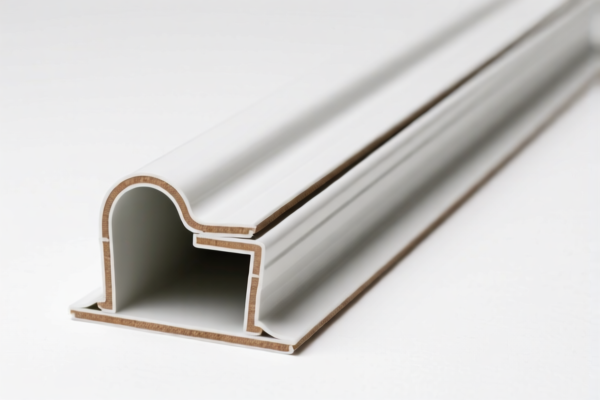

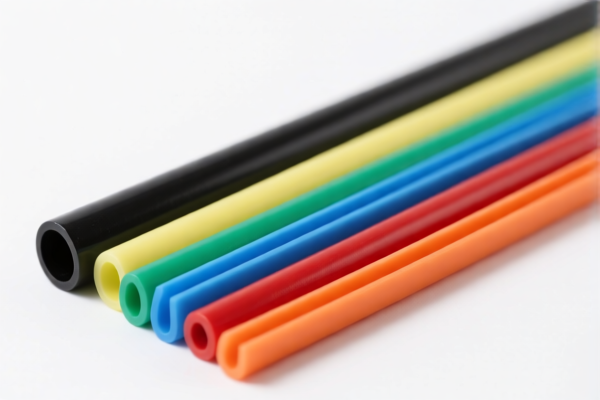

AI Analysis
🛡️ PVC Transparent Strip (Elastic Sealing Strip)
🌐 HS Code Reference & Customs Clearance Guide | 2026 Latest Tariff Analysis | Professional Clearance Strategy
📌 I. Product Definition & Classification: What Exactly is a "PVC Transparent Strip"?
In international trade, "PVC Transparent Strip" is a generic term that usually refers to PVC Elastic Sealing Strips. The core material is Polyvinyl Chloride (PVC), a vinyl polymer. The classification hinges on two critical factors: 1. Form/Shape: Is it a tube, a solid profile (rod/bar), a filament, or a gasket/seal? 2. Purpose: Is it used for plumbing, general sealing, or as a construction profile?
⚠️ Key Classification Distinctions:
- If shaped like a hollow tube or pipe accessory → Focus on 3917 (Plastics Pipes/Fittings).
- If shaped like a solid rod, bar, or extruded profile → Focus on 3916 (Plastic Single Monofilament/Rods/Profiles).
- If used specifically as a gasket or seal regardless of shape → Focus on 3926 (Other Plastic Articles).
📦 II. HS Code Classification Details (2026 Latest Tariff Authority Comparison)
Based on the provided data, here are the four possible classifications for PVC Elastic Sealing Strips, with their corresponding tax structures.
| HS Code | Product Description & Logic | Key Characteristics | Tax Rate (Total) |
|--------|----------|--------------------------|
| 3917.22.00.00 | PVC Elastic Sealing Strip (Tube/Fitting Category)
Material: PVC (Propylene Polymer category in summary); Form: Sealing Strip.
Logic: Matches the logic of hard tubes/accessories in terms of material and use. | Considered a Tube/Accessory type under Heading 39.17. Best if the strip has a tubular cross-section or functions as a conduit seal. | 38.1% |
| 3917.39.00.20 | PVC Elastic Sealing Strip (Plastic Accessory)
Material: PVC; Form: Tube-like accessory / Soft strip.
Logic: Fits the classification of "Other accessories of plastics for pipes, conduits..." under 3917.39. | Explicitly classified as a Plastic Accessory. Suitable if the item is a soft, flexible seal attached to a pipe system. | 38.1% |
| 3916.20.00.91 | PVC Elastic Sealing Strip (Solid Profile/Monofilament)
Material: PVC (Vinyl Polymer); Form: Other profiles.
Logic: Fits "Other" category under 3916.20 for solid plastic strips/monofilaments. | Classified as a Solid Profile. Use if the strip is extruded as a solid cross-section (not hollow) and doesn't fit other specific subheadings. | 40.8% |
| 3916.20.00.20 | PVC Elastic Sealing Strip (Profile)
Material: PVC; Form: Profile.
Logic: Fits the product characteristics under 3916.20.00 specifically for profiles. | Similar to above but specific to the "Profiles" sub-category. Often used for rigid or semi-rigid extruded PVC seals. | 40.8% |
| 3926.90.45.90 | PVC Elastic Sealing Strip (Gasket/Seal Item)
Material: PVC; Form: Sealing Strip/Gasket.
Logic: Fits "Gaskets, washers, and other seals" under 3926.90.45. | Classified as an Other Plastic Article (Seal). This is often the most accurate for pure "sealing" functions where the shape is less important than the function. | 38.5% |
🔍 Critical Reminder:
- 3917 vs. 3916: The main difference is Hollow vs. Solid. If the strip is a tube/hollow section, lean toward 3917. If it is a solid bar/extrusion, lean toward 3916.
- 3926: Use this if the item is primarily defined by its function (sealing/gasket) rather than its structural form as a pipe or profile.
- Tax Impact: The difference between 38.1% and 40.8% is small but significant at scale. However, misclassification can lead to audits.
💰 III. 2026 Latest Tariff Rate Breakdown (Including Surtaxes & Policy Add-ons)
✅ Applicable Country: United States (US)
✅ Country of Origin: China (CN)
✅ Effective Time: From November 10, 2025 (including subsequent imports)
🎯 1. Classification: 3917.22.00.00 & 3917.39.00.20 (Tube/Accessory Logic)
| Item | Content |
|---|---|
| Base Tariff Rate | 3.1% (Ad Valorem) |
| Section 301 Surcharge | +25.0% (Added Tariff) |
| Section 122 Tariff | +10.0% (122 Clause Tariff) |
| Total Tax Rate | 38.1% |
| Tax Calculation | CIF Value × 38.1% |
| De Minimis Exemption | ❌ Not Eligible (deny_de_minimis) |
| Legal Basis Path | Base: 3.1% → S301: 25% → Sec122: 10% → HS: 3917... |
📌 Explanation:
- These codes fall under Plastic Pipes/Accessories.
- The total tax is 38.1%, driven by the 25% Section 301 tariff and an additional 10% Section 122 tariff.
- Note: Section 122 tariffs are typically associated with specific trade enforcement actions or reciprocal measures.
🎯 2. Classification: 3916.20.00.91 & 3916.20.00.20 (Profile/Solid Logic)
| Item | Content |
|---|---|
| Base Tariff Rate | 5.8% (Ad Valorem) |
| Section 301 Surcharge | +25.0% (Added Tariff) |
| Section 122 Tariff | +10.0% (122 Clause Tariff) |
| Total Tax Rate | 40.8% |
| Tax Calculation | CIF Value × 40.8% |
| De Minimis Exemption | ❌ Not Eligible (deny_de_minimis) |
| Legal Basis Path | Base: 5.8% → S301: 25% → Sec122: 10% → HS: 3916... |
📌 Explanation:
- These codes fall under Plastic Profiles/Monofilaments.
- The base tariff is higher (5.8% vs 3.1%), leading to a higher total tax of 40.8%.
- Risk: If you declare a hollow tube as a "solid profile" to match a different HS code structure, you risk misclassification penalties.
🎯 3. Classification: 3926.90.45.90 (Gasket/Seal Logic)
| Item | Content |
|---|---|
| Base Tariff Rate | 3.5% (Ad Valorem) |
| Section 301 Surcharge | +25.0% (Added Tariff) |
| Section 122 Tariff | +10.0% (122 Clause Tariff) |
| Total Tax Rate | 38.5% |
| Tax Calculation | CIF Value × 38.5% |
| De Minimis Exemption | ❌ Not Eligible (deny_de_minimis) |
| Legal Basis Path | Base: 3.5% → S301: 25% → Sec122: 10% → HS: 3926... |
📌 Explanation:
- This code is for Other Plastic Articles (specifically seals/gaskets).
- Total tax is 38.5%, sitting between the 3917 and 3916 categories.
- Advantage: Often easier to defend if the product’s primary function is "sealing" rather than "conveying fluid."
🛠️ IV. Customs Clearance Practical Advice (Battle-Tested Pitfall Avoidance)
✅ 1. Required Documentation Checklist (Non-Negotiable)
| Document | Mandatory? | Notes |
|---|---|---|
| ✅ Product Spec Sheet | ✔️ | Must clearly state: Material (100% PVC or PVC blend), Hardness (Shore A), Cross-section shape (Hollow/Solid). |
| ✅ Product Photos | ✔️ | High-res images showing the cross-section. Is it a tube? A bar? A flat strip? |
| ✅ Commercial Invoice | ✔️ | Description must be precise: e.g., "PVC Elastic Sealing Strip, HS 3917.22" – do not just write "PVC Strip." |
| ✅ Bill of Lading / Packing List | ✔️ | Ensure weight and volume match the invoice exactly. |
| ✅ Certification (if any) | ✔️ | FDA (if food contact), RoHS, REACH. |
✅ 2. Declaration Strategy (Key Mantra)
🔥 "Shape Defines Code, Function Defines Sub-Heading, Truth Avoids Audits!"
| Scenario | Correct Declaration Approach | Incorrect Approach | Consequence |
|---|---|---|---|
| Hollow Tube Seals | 3917.22.00.00 or 3917.39.00.20 |
Declare as 3916 (Profile) |
Audit Risk: Customs will measure diameter/hollowness. Mismatch = Fine. |
| Solid Extruded Bars | 3916.20.00.20 or 3916.20.00.91 |
Declare as 3926 (General Seal) |
Tax Risk: You might get away with it, but if challenged, you owe the difference + interest. |
| Flat Gasket Strips | 3926.90.45.90 |
Declare as 3917 (Pipe Accessory) |
Logic Error: Pipes imply fluid transport. Seals imply blocking. Wrong logic = Rejection. |
✅ 3. Special Considerations
| Situation | Handling Advice |
|---|---|
| Mixed Shapes in One Shipment | Split the Declaration. If you have both hollow tubes and solid bars, they must be declared under different HS codes. Mixing them causes clearance delays. |
| Co-Extruded Strips | If the strip has multiple layers (e.g., PVC + Foam), consult a specialist. It may no longer be pure PVC and could shift to a different chapter (e.g., 40 for rubber-like foams). |
| Value Thresholds | Since deny_de_minimis applies, even small shipments (under $800) are subject to these high tariffs if imported directly by a company. Personal use shipments may differ, but commercial imports are strict. |
🌍 V. Global Market Comparison (2026 Latest)
| Country/Region | Recommended HS Code | Estimated Tariff (China Origin) | Certification Requirements | Notes |
|---|---|---|---|---|
| 🇺🇸 USA | 3917.22.00.00 / 3926.90.45.90 |
38.1% - 38.5% | FDA, RoHS (if applicable) | High Tax due to S301 + Sec 122. |
| 🇨🇳 China | 3917.22.00.00 |
~6% - 10% | CCC (if electrical), RoHS | Standard import duties. |
| 🇪🇺 EU | 3917.22.00.00 |
0% - 3% (Varies by NCTS) | REACH, RoHS | No Section 301 equivalent. |
| 🇯🇵 Japan | 3917.22.00.00 |
0% - 6% | JIS, PSE (if electrical) | Free Trade Agreement benefits possible. |
| 🇸🇬 Singapore | 3917.22.00.00 |
0% | None | Major re-export hub. |
📌 Conclusion:
- USA is the most expensive market for PVC strips due to the 38.1%+ combined tariff rate.
- EU and Japan are significantly more cost-effective for PVC exports.
- Cost Optimization: If targeting the US, consider supply chain diversification (e.g., manufacturing in Vietnam or Thailand) to potentially mitigate Section 301 tariffs, subject to current rules of origin.
📌 VI. Common Errors & Pitfall Guide (Lessons from Experience)
❌ Error 1: Describing the product simply as "PVC Strip" on the invoice.
👉 Result: Customs cannot determine if it's a pipe accessory (3917) or a general article (3926). Leads to Manual Examination, delays, and potential re-classification fines.
✅ Fix: Specify "PVC Hollow Sealing Tube" or "PVC Solid Profile Strip."
❌ Error 2: Assuming all PVC seals go to 3926.
👉 Result: If the seal is structurally a tube/pipe fitting, Customs will force it into 3917. While the tax might be similar (38.1% vs 38.5%), the legal basis changes, affecting compliance history.
✅ Fix: Prioritize structural classification (3917 for tubes, 3916 for solids) over functional classification (3926) unless function is the dominant feature.
❌ Error 3: Ignoring Section 122 Tariffs.
👉 Result: Many traders calculate only Base + 25%. They forget the 10% Section 122 tax, leading to underpayment and surprise bills upon entry summary review.
✅ Fix: Always calculate Base + 25% + 10% = Total Liability.
🎯 VII. Conclusion: Precise Classification Saves Money
🎯 Remember the Mantra:
🔹 "Hollow = 3917, Solid = 3916, Functional Seal = 3926."
🔹 "Total Tax = Base + 25% + 10% = 38%+ for PVC."
🔹 "Detail the Shape, Define the Use, Avoid the Audit."
📌 Pro Tip:
If your PVC strip is co-extruded (e.g., PVC outer, rubber inner), it may no longer be classified as "Pure PVC." Consult a customs broker immediately, as this could change the HS Code entirely and potentially lower duties if classified under Rubber (40), though it is rare.
📣 Immediate Action:
📞 Contact a Licensed Customs Broker + Provide Cross-Section Photos + Apply for Advance Ruling (if possible)
🚀 Ensure Accurate HS Codes to Avoid Delays at US Ports.
✨ Professional Clearance Starts with Accurate Classification!
💼 Every Percent of Tax Saved is Pure Profit!
Customer Reviews
About HS Code Classification
The Harmonized System (HS) is an internationally standardized nomenclature developed by the World Customs Organization (WCO) to classify traded products. Over 200 countries use the HS system as the basis for customs tariffs, trade statistics, and import/export regulations.
Each HS code follows a hierarchical structure:
- Chapter (2 digits) — Broad category of goods (e.g., Chapter 84: Machinery and Mechanical Appliances)
- Heading (4 digits) — More specific grouping within the chapter
- Subheading (6 digits) — Internationally standardized breakdown, used by all WCO member countries
- National subdivisions (8-10 digits) — Country-specific extensions for further classification, such as US HTSUS 10-digit codes
Correct HS code classification is essential for smooth customs clearance, accurate duty payment, and compliance with trade regulations. Misclassification can lead to customs delays, overpayment of duties, or penalties.
When importing from CN to US, the applicable tariff rates may include:
- Most-Favored-Nation (MFN) rate — The standard duty rate applied to WTO members
- General rate — Applied to countries without trade agreements
- Trade remedy duties — Additional tariffs such as Section 301 (anti-dumping), Section 232 (national security), or countervailing duties
The information provided on this page is for reference purposes only. For official classification, please consult with your local customs authority or a licensed customs broker.