PVC Wall Covering
CN → US| HS编码 | 关税税率 | 原产国 | 目的国 | 文档 |
|---|---|---|---|---|
| 5903102090 | 35.0% | CN | US | 官方文档 |
| 5903102010 | 35.0% | CN | US | 官方文档 |
| 3919905060 | 40.8% | CN | US | 官方文档 |
| 3919905040 | 40.8% | CN | US | 官方文档 |
| 4811596000 | 35.0% | CN | US | 官方文档 |
商品图片
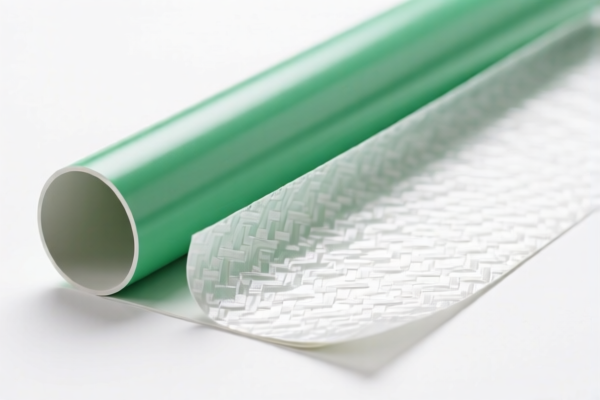
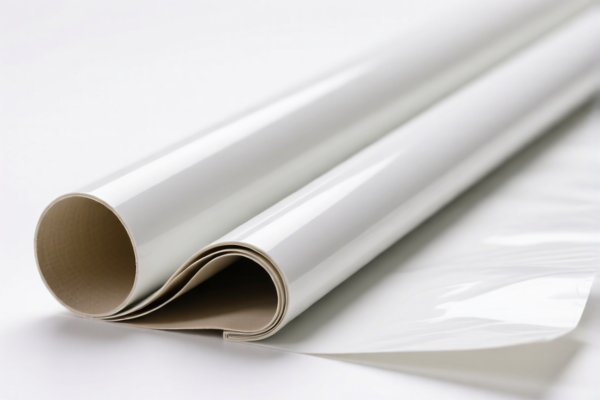
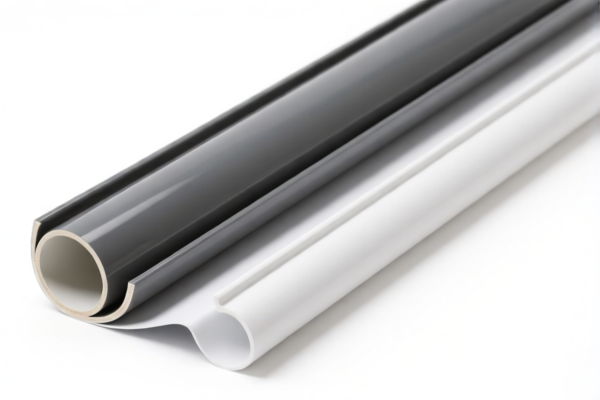
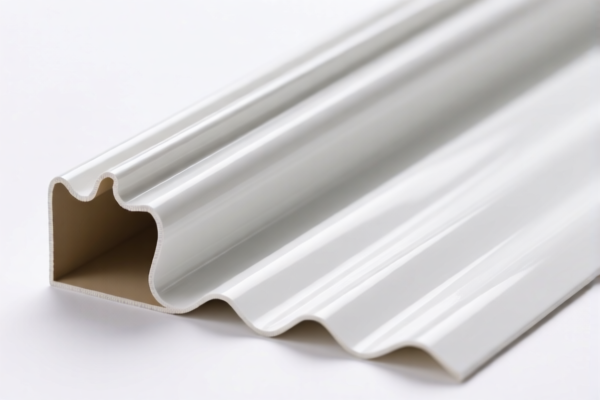
AI分析
🧱 PVC Wall Covering (PVC Wall Covering Films/Sheets)
🌐 HS Code Reference & Customs Clearance Guide | 2026 Latest Tariff Analysis | Professional Clearance Strategy
📌 I. Product Definition & Classification: Do You Really Understand "PVC Wall Covering"?
PVC Wall Covering, often referred to as PVC Wallpaper or PVC Wall Film, is a decorative building material widely used in interior design. In international trade, its classification depends heavily on the base material, manufacturing process, and physical form (e.g., self-adhesive vs. non-adhesive, textile-backed vs. paper-backed vs. pure plastic).
The core ambiguity lies in whether the product is considered: 1. Impregnated/Coated Textile Fabric: If it has a textile base and is impregnated with PVC. 2. Coated Paper: If it has a paper/cellulose base coated with plastic. 3. Self-Adhesive Plastic Sheet: If it is primarily a plastic sheet with an adhesive backing, regardless of the base.
⚠️ Key Distinction Point:
- If the product is primarily a textile fabric impregnated/coated with PVC → Chapter 59
- If the product is primarily paper coated with PVC → Chapter 48
- If the product is a self-adhesive plastic sheet/film (often used as wallpaper) → Chapter 39
📦 II. HS Code Classification Details (2026 Latest Tariff Authority Cross-Reference)
| HS Code | Product Description | Applicable Scenario | Base Material/Feature |
|---|---|---|---|
5903.10.20.90 |
Textile fabric impregnated, coated, covered or laminated with PVC; other than those of heading 5602, 5603, 5902 or 5911 | PVC Wall Covering where the primary identity is a textile fabric impregnated/coated with PVC. | ✅ Textile Base + PVC |
5903.10.20.10 |
Textile fabric impregnated, coated, covered or laminated with PVC; of a weight per square meter exceeding 1,500 g/m² | Similar to above, but specific weight/structure criteria met. Often used for heavy-duty wall coverings with high plastic content (>70%). | ✅ Textile Base + High PVC Weight |
3919.90.50.60 |
Self-adhesive plates, sheets, film, foil, strip and other flat shapes, of plastics | Self-adhesive PVC Wall Film/Sheet. Classified as plastic product due to the self-adhesive nature and plastic composition. | ✅ Plastic Base + Self-Adhesive |
3919.90.50.40 |
Self-adhesive plates, sheets, film, foil, strip and other flat shapes, of plastics | Standard self-adhesive PVC Wall Film. Fits the material and form characteristics of self-adhesive plastic sheets. | ✅ Plastic Base + Self-Adhesive |
4811.59.60.00 |
Paper, paperboard, cellulose wadding and webs of cellulose fibrous material, coated, impregnated, covered, surface-coloured, surface-decorated or printed, other than those of heading 4803 to 4809 | PVC Wall Covering where the base is paper or cellulose-based, covered/coated with plastic. | ✅ Paper/Cellulose Base + PVC Coating |
🔍 Key Reminder:
- The primary material determines the chapter. If the textile base is essential to the product's identity, use 5903. If it's a plastic film with adhesive, use 3919. If it's paper with a plastic surface, use 4811. - Self-adhesive products are heavily scrutinized under 3919. Misclassifying a self-adhesive plastic sheet as a simple textile or paper product can lead to significant tariff discrepancies.
💰 III. 2026 Latest Tariff Rate Breakdown (Including Surcharges & Policy Add-ons)
✅ Applicable Country: United States (US)
✅ Origin: China (CN)
✅ Effective Date: 2025/2026 (Includes subsequent imports)
🎯 1. 5903.10.20.90 & 5903.10.20.10 —— Textile Fabric Impregnated/Coated with PVC
| Item | Content |
|---|---|
| Basic Tariff | 0.0% (ad valorem) |
| USITC Additional Tariff (Section 301) | +25.0% |
| IEEPA Additional Tariff (Section 122/China-Specific) | +10.0% |
| Total Tariff Rate | 35.0% |
| Tax Calculation | CIF Value × 35.0% |
| De Minimis Eligibility | ❌ Not Eligible (deny_de_minimis) |
| Legal Basis Path | USITC:5903.10.20.10 → FOOTNOTE:301 → IEEPA:China-Specific |
📌 Explanation:
- Although the Basic Tariff is 0%, the Section 301 Tariff (25%) and IEEPA Tariff (10%) apply, resulting in a total effective rate of 35%. - These tariffs are cumulative. Do not assume "0% basic tariff" means low cost. - Crucial for Clearance: Ensure the description clearly states "Textile fabric impregnated with PVC" to align with this classification. Misclassification as3919would increase the basic tariff to 5.8%.
🎯 2. 4811.59.60.00 —— Paper/Cellulose Coated with PVC
| Item | Content |
|---|---|
| Basic Tariff | 0.0% (ad valorem) |
| USITC Additional Tariff (Section 301) | +25.0% |
| IEEPA Additional Tariff (Section 122/China-Specific) | +10.0% |
| Total Tariff Rate | 35.0% |
| Tax Calculation | CIF Value × 35.0% |
| De Minimis Eligibility | ❌ Not Eligible (deny_de_minimis) |
| Legal Basis Path | USITC:4811.59.60.00 → FOOTNOTE:301 → IEEPA:China-Specific |
📌 Explanation:
- Similar to the textile category, the Basic Tariff is 0%, but the Additional Tariffs (35% total) apply. - This classification is appropriate if the product is paper-based with a PVC coating. Verify the base material carefully.
🎯 3. 3919.90.50.60 & 3919.90.50.40 —— Self-Adhesive Plastic Sheets/Films
| Item | Content |
|---|---|
| Basic Tariff | 5.8% (ad valorem) |
| USITC Additional Tariff (Section 301) | +25.0% |
| IEEPA Additional Tariff (Section 122/China-Specific) | +10.0% |
| Total Tariff Rate | 40.8% |
| Tax Calculation | CIF Value × 40.8% |
| De Minimis Eligibility | ❌ Not Eligible (deny_de_minimis) |
| Legal Basis Path | USITC:3919.90.50.40/60 → FOOTNOTE:301 → IEEPA:China-Specific |
📌 Explanation:
- This category has a higher Basic Tariff (5.8%) compared to Chapters 48 and 59. - Total Rate: 40.8% (5.8% + 25% + 10%). - This classification applies if the product is a self-adhesive plastic film (even if used as wallpaper). The "self-adhesive" feature triggers Chapter 39. - Cost Impact: This is 5.8% more expensive than the5903or4811classifications due to the higher basic rate.
🛠️ IV. Customs Clearance Practical Advice (Battle-Tested Pitfall Avoidance Guide)
✅ 1. Preparation Checklist (Missing items are not allowed)
| Document | Required | Description |
|---|---|---|
| ✅ Product Specification Sheet | ✔️ | Must specify Base Material (Textile, Paper, or Plastic), Coating/Impregnation Material (PVC), and Form (Self-adhesive or not). |
| ✅ Material Composition Report | ✔️ | Details the percentage of PVC vs. base material. Critical for distinguishing between 5903, 4811, and 3919. |
| ✅ Product Photos (Including Label) | ✔️ | Show the texture, backing (if visible), and any "Self-Adhesive" labeling. |
| ✅ Commercial Invoice | ✔️ | Must accurately describe the product as "PVC Wall Covering" or "PVC Wallpaper" and include the HS Code. |
| ✅ Packing List | ✔️ | Clearly list quantities, weights, and dimensions. |
| ✅ Certificate of Origin (CO) | ✔️ | Essential for proving Chinese origin to apply the correct additional tariffs. |
✅ 2. Declaration Tips (Key Mantra)
🔥 “Base Material Determines Chapter, Self-Adhesive Triggers Plastic, Tariff Differs by 5.8%!”
| Scenario | Correct Declaration | Incorrect Practice |
|---|---|---|
| Textile-based PVC Wallpaper | 5903.10.20.90 or 5903.10.20.10 |
Declare as 3919 → Higher Tax (40.8%) |
| Paper-based PVC Wallpaper | 4811.59.60.00 |
Declare as 3919 → Higher Tax (40.8%) |
| Self-Adhesive PVC Film (Plastic Base) | 3919.90.50.60 or 3919.90.50.40 |
Declare as 5903 or 4811 → Misclassification Risk |
| Non-Adhesive PVC Sheet | Check 5903 or 3920 (not in data) |
Do not use 3919 if not self-adhesive |
📌 Note:
- Self-adhesive is the key keyword for3919. If the product is not self-adhesive (e.g., it requires glue to be applied separately), it should not be classified under3919. - For5903and4811, emphasize the impregnation/coating process.
✅ 3. Special Cases Handling
| Scenario | Handling Advice |
|---|---|
| Mixed Materials | If the product has a mixed base (e.g., fabric + paper), determine the essential character. If fabric dominates, use 5903. |
| Patterned vs. Plain | Pattern does not change the HS Code classification in this context. Focus on material. |
| Sample vs. Bulk | Samples are still subject to tariffs. Do not use "Sample" to evade deny_de_minimis rules. |
| OEM/Private Label | Provide OEM agreement if needed, but classification remains based on product characteristics. |
🌍 V. Global Market Clearance Comparison (2026 Latest)
| Country/Region | Recommended HS Code | Tariff (China Origin) | Certification Requirements | Remarks |
|---|---|---|---|---|
| 🇺🇸 USA | 5903.10.20.90 / 3919.90.50.40 |
35.0% / 40.8% | FCC (if electronic components), Prop 65 | High tariffs due to Section 301 & IEEPA. |
| 🇨🇳 China | 5903.10.20 / 3919.90 |
~5-13% | CCC (if applicable) | No Section 301 tariffs. |
| 🇪🇺 EU | 5903.10 / 3919.90 |
6.5% - 10% | CE, REACH | No additional punitive tariffs. |
| 🇬🇧 UK | 5903.10 / 3919.90 |
6.5% - 10% | UKCA | Post-Brexit tariffs apply. |
| 🇦🇺 Australia | 5903.10 / 3919.90 |
5% | RCM | No major additional tariffs. |
📌 Conclusion:
- USA is the most complex market due to cumulative tariffs (35-40.8%). - Accurate Material Declaration is critical to avoid overpayment (e.g., paying 40.8% instead of 35%). - Other Markets (EU, UK, AU, Asia) generally have lower tariffs, making them more cost-effective for export.
📌 VI. Common Errors & Pitfall Avoidance Guide (Lessons from Blood and Tears)
❌ Error 1: Classifying Self-Adhesive PVC Film as 5903 (Textile)
👉 Consequence: Customs may reclassify to 3919 → Back Taxes + Penalties. The basic tariff difference (5.8%) plus potential delays.
❌ Error 2: Classifying Non-Adhesive PVC Wallcovering as 3919
👉 Consequence: 3919 requires "Self-Adhesive". Misclassification leads to Customs Inspection, delays, and potential rejection. Use 5903 or 3920 instead.
❌ Error 3: Ignoring the IEEPA 10% Surcharge
👉 Consequence: Even if the basic tariff is 0%, failing to account for the 10% IEEPA tariff leads to underpayment. Total cost is 35% or 40.8%, not 25%.
❌ Error 4: Vague Product Description
👉 Consequence: "PVC Sheet" is too vague. Customs cannot determine if it's textile-based, paper-based, or plastic-based. Must specify: "PVC Wall Covering, Textile Base, Impregnated with PVC, Non-Self-Adhesive".
✅ Correct Declaration Example:
"PVC Wall Covering, Textile Base Impregnated with PVC, Non-Self-Adhesive, Model ABC, Origin China"
HS Code:5903.10.20.90
Rate: 35.0%
🎯 VII. Conclusion: Precise Classification Saves Money!
🎯 Key Takeaways:
🔹 "Base Material Rules: Textile/Paper → 35%, Self-Adhesive Plastic → 40.8%"
🔹 "Don't Forget the 10% IEEPA Surcharge on Top of 25% Section 301"
🔹 "Clear Description Prevents Delays: Specify Base, Coating, and Adhesive Status"
📌 Pro Tip:
If you are exporting to the USA, consider Pre-Clearance Rulings to confirm the HS Code, especially for ambiguous products.
For non-US markets, enjoy lower tariffs and simpler clearance processes.
📣 Immediate Action:
📞 Consult a Customs Broker to verify your product's base material.
📄 Update Product Descriptions in your commercial invoices.
💡 Calculate Landed Cost using 35% or 40.8% for US imports.
✨ Professional Clearance Starts with Accurate Classification!
💼 Every Percentage Point Matters in International Trade!
用户评价
关于 HS 编码归类
协调制度(HS)是由世界海关组织(WCO)制定的国际贸易商品分类标准。全球 200 多个国家采用 HS 系统作为海关关税、贸易统计和进出口监管的基础。
每个 HS 编码遵循以下层级结构:
- 章(2 位)——商品大类(例如:第 84 章:机器和机械设备)
- 品目(4 位)——章内的更具体分类
- 子目(6 位)——国际通用细分,所有 WCO 成员国统一使用
- 本国细分(8-10 位)——各国自行扩展的细分编码,如美国 HTSUS 10 位编码
正确的 HS 编码归类对于顺利通关、准确缴纳关税和遵守贸易法规至关重要。错误归类可能导致海关延误、多缴关税或罚款。
从CN进口到US时,适用的关税税率可能包括:
- 最惠国(MFN)税率——适用于 WTO 成员国的标准关税税率
- 普通税率——适用于无贸易协定国家
- 贸易救济关税——附加关税,如 301 条款(反倾销)、232 条款(国家安全)或反补贴税
本页内容仅供参考。如需正式归类,请咨询当地海关或持牌报关代理。