PVC Wall Covering
CN → US| HS Code | Tariff Rate | Origin | Destination | Doc |
|---|---|---|---|---|
| 5903102090 | 35.0% | CN | US | Official Doc |
| 5903102010 | 35.0% | CN | US | Official Doc |
| 3919905060 | 40.8% | CN | US | Official Doc |
| 3919905040 | 40.8% | CN | US | Official Doc |
| 4811596000 | 35.0% | CN | US | Official Doc |
Product Images
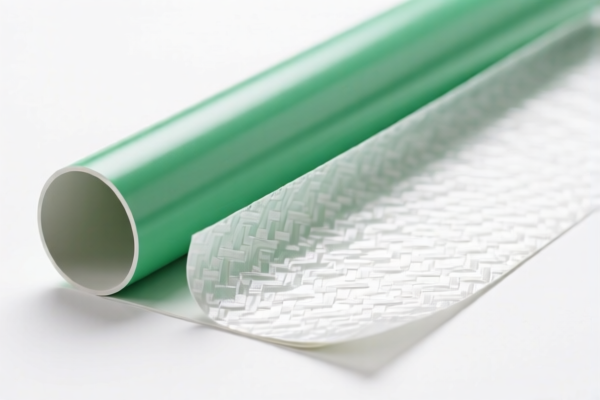
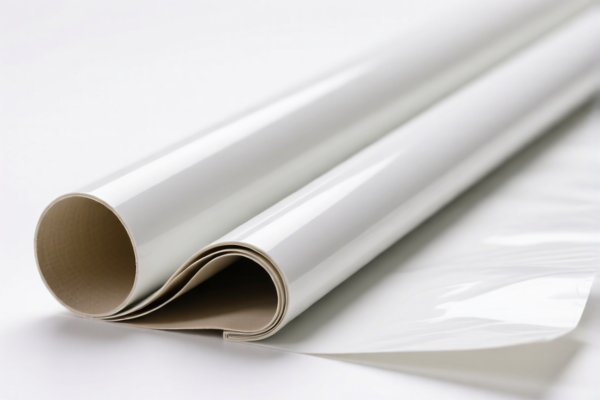
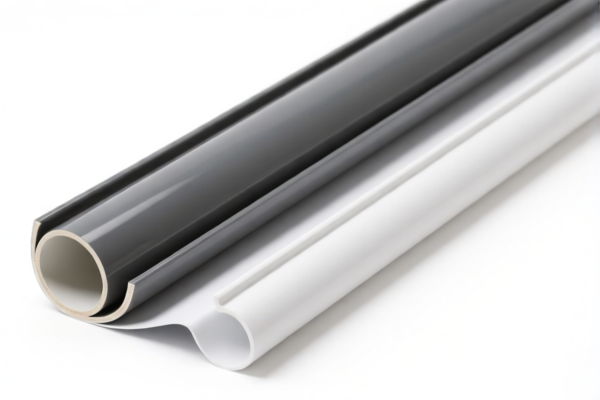
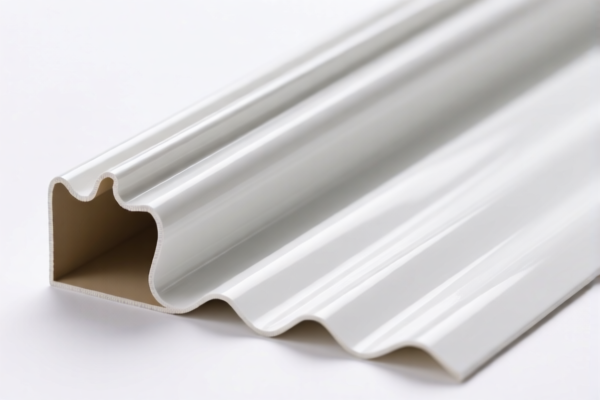
AI Analysis
🧱 PVC Wall Covering (PVC Wall Covering Films/Sheets)
🌐 HS Code Reference & Customs Clearance Guide | 2026 Latest Tariff Analysis | Professional Clearance Strategy
📌 I. Product Definition & Classification: Do You Really Understand "PVC Wall Covering"?
PVC Wall Covering, often referred to as PVC Wallpaper or PVC Wall Film, is a decorative building material widely used in interior design. In international trade, its classification depends heavily on the base material, manufacturing process, and physical form (e.g., self-adhesive vs. non-adhesive, textile-backed vs. paper-backed vs. pure plastic).
The core ambiguity lies in whether the product is considered: 1. Impregnated/Coated Textile Fabric: If it has a textile base and is impregnated with PVC. 2. Coated Paper: If it has a paper/cellulose base coated with plastic. 3. Self-Adhesive Plastic Sheet: If it is primarily a plastic sheet with an adhesive backing, regardless of the base.
⚠️ Key Distinction Point:
- If the product is primarily a textile fabric impregnated/coated with PVC → Chapter 59
- If the product is primarily paper coated with PVC → Chapter 48
- If the product is a self-adhesive plastic sheet/film (often used as wallpaper) → Chapter 39
📦 II. HS Code Classification Details (2026 Latest Tariff Authority Cross-Reference)
| HS Code | Product Description | Applicable Scenario | Base Material/Feature |
|---|---|---|---|
5903.10.20.90 |
Textile fabric impregnated, coated, covered or laminated with PVC; other than those of heading 5602, 5603, 5902 or 5911 | PVC Wall Covering where the primary identity is a textile fabric impregnated/coated with PVC. | ✅ Textile Base + PVC |
5903.10.20.10 |
Textile fabric impregnated, coated, covered or laminated with PVC; of a weight per square meter exceeding 1,500 g/m² | Similar to above, but specific weight/structure criteria met. Often used for heavy-duty wall coverings with high plastic content (>70%). | ✅ Textile Base + High PVC Weight |
3919.90.50.60 |
Self-adhesive plates, sheets, film, foil, strip and other flat shapes, of plastics | Self-adhesive PVC Wall Film/Sheet. Classified as plastic product due to the self-adhesive nature and plastic composition. | ✅ Plastic Base + Self-Adhesive |
3919.90.50.40 |
Self-adhesive plates, sheets, film, foil, strip and other flat shapes, of plastics | Standard self-adhesive PVC Wall Film. Fits the material and form characteristics of self-adhesive plastic sheets. | ✅ Plastic Base + Self-Adhesive |
4811.59.60.00 |
Paper, paperboard, cellulose wadding and webs of cellulose fibrous material, coated, impregnated, covered, surface-coloured, surface-decorated or printed, other than those of heading 4803 to 4809 | PVC Wall Covering where the base is paper or cellulose-based, covered/coated with plastic. | ✅ Paper/Cellulose Base + PVC Coating |
🔍 Key Reminder:
- The primary material determines the chapter. If the textile base is essential to the product's identity, use 5903. If it's a plastic film with adhesive, use 3919. If it's paper with a plastic surface, use 4811. - Self-adhesive products are heavily scrutinized under 3919. Misclassifying a self-adhesive plastic sheet as a simple textile or paper product can lead to significant tariff discrepancies.
💰 III. 2026 Latest Tariff Rate Breakdown (Including Surcharges & Policy Add-ons)
✅ Applicable Country: United States (US)
✅ Origin: China (CN)
✅ Effective Date: 2025/2026 (Includes subsequent imports)
🎯 1. 5903.10.20.90 & 5903.10.20.10 —— Textile Fabric Impregnated/Coated with PVC
| Item | Content |
|---|---|
| Basic Tariff | 0.0% (ad valorem) |
| USITC Additional Tariff (Section 301) | +25.0% |
| IEEPA Additional Tariff (Section 122/China-Specific) | +10.0% |
| Total Tariff Rate | 35.0% |
| Tax Calculation | CIF Value × 35.0% |
| De Minimis Eligibility | ❌ Not Eligible (deny_de_minimis) |
| Legal Basis Path | USITC:5903.10.20.10 → FOOTNOTE:301 → IEEPA:China-Specific |
📌 Explanation:
- Although the Basic Tariff is 0%, the Section 301 Tariff (25%) and IEEPA Tariff (10%) apply, resulting in a total effective rate of 35%. - These tariffs are cumulative. Do not assume "0% basic tariff" means low cost. - Crucial for Clearance: Ensure the description clearly states "Textile fabric impregnated with PVC" to align with this classification. Misclassification as3919would increase the basic tariff to 5.8%.
🎯 2. 4811.59.60.00 —— Paper/Cellulose Coated with PVC
| Item | Content |
|---|---|
| Basic Tariff | 0.0% (ad valorem) |
| USITC Additional Tariff (Section 301) | +25.0% |
| IEEPA Additional Tariff (Section 122/China-Specific) | +10.0% |
| Total Tariff Rate | 35.0% |
| Tax Calculation | CIF Value × 35.0% |
| De Minimis Eligibility | ❌ Not Eligible (deny_de_minimis) |
| Legal Basis Path | USITC:4811.59.60.00 → FOOTNOTE:301 → IEEPA:China-Specific |
📌 Explanation:
- Similar to the textile category, the Basic Tariff is 0%, but the Additional Tariffs (35% total) apply. - This classification is appropriate if the product is paper-based with a PVC coating. Verify the base material carefully.
🎯 3. 3919.90.50.60 & 3919.90.50.40 —— Self-Adhesive Plastic Sheets/Films
| Item | Content |
|---|---|
| Basic Tariff | 5.8% (ad valorem) |
| USITC Additional Tariff (Section 301) | +25.0% |
| IEEPA Additional Tariff (Section 122/China-Specific) | +10.0% |
| Total Tariff Rate | 40.8% |
| Tax Calculation | CIF Value × 40.8% |
| De Minimis Eligibility | ❌ Not Eligible (deny_de_minimis) |
| Legal Basis Path | USITC:3919.90.50.40/60 → FOOTNOTE:301 → IEEPA:China-Specific |
📌 Explanation:
- This category has a higher Basic Tariff (5.8%) compared to Chapters 48 and 59. - Total Rate: 40.8% (5.8% + 25% + 10%). - This classification applies if the product is a self-adhesive plastic film (even if used as wallpaper). The "self-adhesive" feature triggers Chapter 39. - Cost Impact: This is 5.8% more expensive than the5903or4811classifications due to the higher basic rate.
🛠️ IV. Customs Clearance Practical Advice (Battle-Tested Pitfall Avoidance Guide)
✅ 1. Preparation Checklist (Missing items are not allowed)
| Document | Required | Description |
|---|---|---|
| ✅ Product Specification Sheet | ✔️ | Must specify Base Material (Textile, Paper, or Plastic), Coating/Impregnation Material (PVC), and Form (Self-adhesive or not). |
| ✅ Material Composition Report | ✔️ | Details the percentage of PVC vs. base material. Critical for distinguishing between 5903, 4811, and 3919. |
| ✅ Product Photos (Including Label) | ✔️ | Show the texture, backing (if visible), and any "Self-Adhesive" labeling. |
| ✅ Commercial Invoice | ✔️ | Must accurately describe the product as "PVC Wall Covering" or "PVC Wallpaper" and include the HS Code. |
| ✅ Packing List | ✔️ | Clearly list quantities, weights, and dimensions. |
| ✅ Certificate of Origin (CO) | ✔️ | Essential for proving Chinese origin to apply the correct additional tariffs. |
✅ 2. Declaration Tips (Key Mantra)
🔥 “Base Material Determines Chapter, Self-Adhesive Triggers Plastic, Tariff Differs by 5.8%!”
| Scenario | Correct Declaration | Incorrect Practice |
|---|---|---|
| Textile-based PVC Wallpaper | 5903.10.20.90 or 5903.10.20.10 |
Declare as 3919 → Higher Tax (40.8%) |
| Paper-based PVC Wallpaper | 4811.59.60.00 |
Declare as 3919 → Higher Tax (40.8%) |
| Self-Adhesive PVC Film (Plastic Base) | 3919.90.50.60 or 3919.90.50.40 |
Declare as 5903 or 4811 → Misclassification Risk |
| Non-Adhesive PVC Sheet | Check 5903 or 3920 (not in data) |
Do not use 3919 if not self-adhesive |
📌 Note:
- Self-adhesive is the key keyword for3919. If the product is not self-adhesive (e.g., it requires glue to be applied separately), it should not be classified under3919. - For5903and4811, emphasize the impregnation/coating process.
✅ 3. Special Cases Handling
| Scenario | Handling Advice |
|---|---|
| Mixed Materials | If the product has a mixed base (e.g., fabric + paper), determine the essential character. If fabric dominates, use 5903. |
| Patterned vs. Plain | Pattern does not change the HS Code classification in this context. Focus on material. |
| Sample vs. Bulk | Samples are still subject to tariffs. Do not use "Sample" to evade deny_de_minimis rules. |
| OEM/Private Label | Provide OEM agreement if needed, but classification remains based on product characteristics. |
🌍 V. Global Market Clearance Comparison (2026 Latest)
| Country/Region | Recommended HS Code | Tariff (China Origin) | Certification Requirements | Remarks |
|---|---|---|---|---|
| 🇺🇸 USA | 5903.10.20.90 / 3919.90.50.40 |
35.0% / 40.8% | FCC (if electronic components), Prop 65 | High tariffs due to Section 301 & IEEPA. |
| 🇨🇳 China | 5903.10.20 / 3919.90 |
~5-13% | CCC (if applicable) | No Section 301 tariffs. |
| 🇪🇺 EU | 5903.10 / 3919.90 |
6.5% - 10% | CE, REACH | No additional punitive tariffs. |
| 🇬🇧 UK | 5903.10 / 3919.90 |
6.5% - 10% | UKCA | Post-Brexit tariffs apply. |
| 🇦🇺 Australia | 5903.10 / 3919.90 |
5% | RCM | No major additional tariffs. |
📌 Conclusion:
- USA is the most complex market due to cumulative tariffs (35-40.8%). - Accurate Material Declaration is critical to avoid overpayment (e.g., paying 40.8% instead of 35%). - Other Markets (EU, UK, AU, Asia) generally have lower tariffs, making them more cost-effective for export.
📌 VI. Common Errors & Pitfall Avoidance Guide (Lessons from Blood and Tears)
❌ Error 1: Classifying Self-Adhesive PVC Film as 5903 (Textile)
👉 Consequence: Customs may reclassify to 3919 → Back Taxes + Penalties. The basic tariff difference (5.8%) plus potential delays.
❌ Error 2: Classifying Non-Adhesive PVC Wallcovering as 3919
👉 Consequence: 3919 requires "Self-Adhesive". Misclassification leads to Customs Inspection, delays, and potential rejection. Use 5903 or 3920 instead.
❌ Error 3: Ignoring the IEEPA 10% Surcharge
👉 Consequence: Even if the basic tariff is 0%, failing to account for the 10% IEEPA tariff leads to underpayment. Total cost is 35% or 40.8%, not 25%.
❌ Error 4: Vague Product Description
👉 Consequence: "PVC Sheet" is too vague. Customs cannot determine if it's textile-based, paper-based, or plastic-based. Must specify: "PVC Wall Covering, Textile Base, Impregnated with PVC, Non-Self-Adhesive".
✅ Correct Declaration Example:
"PVC Wall Covering, Textile Base Impregnated with PVC, Non-Self-Adhesive, Model ABC, Origin China"
HS Code:5903.10.20.90
Rate: 35.0%
🎯 VII. Conclusion: Precise Classification Saves Money!
🎯 Key Takeaways:
🔹 "Base Material Rules: Textile/Paper → 35%, Self-Adhesive Plastic → 40.8%"
🔹 "Don't Forget the 10% IEEPA Surcharge on Top of 25% Section 301"
🔹 "Clear Description Prevents Delays: Specify Base, Coating, and Adhesive Status"
📌 Pro Tip:
If you are exporting to the USA, consider Pre-Clearance Rulings to confirm the HS Code, especially for ambiguous products.
For non-US markets, enjoy lower tariffs and simpler clearance processes.
📣 Immediate Action:
📞 Consult a Customs Broker to verify your product's base material.
📄 Update Product Descriptions in your commercial invoices.
💡 Calculate Landed Cost using 35% or 40.8% for US imports.
✨ Professional Clearance Starts with Accurate Classification!
💼 Every Percentage Point Matters in International Trade!
Customer Reviews
About HS Code Classification
The Harmonized System (HS) is an internationally standardized nomenclature developed by the World Customs Organization (WCO) to classify traded products. Over 200 countries use the HS system as the basis for customs tariffs, trade statistics, and import/export regulations.
Each HS code follows a hierarchical structure:
- Chapter (2 digits) — Broad category of goods (e.g., Chapter 84: Machinery and Mechanical Appliances)
- Heading (4 digits) — More specific grouping within the chapter
- Subheading (6 digits) — Internationally standardized breakdown, used by all WCO member countries
- National subdivisions (8-10 digits) — Country-specific extensions for further classification, such as US HTSUS 10-digit codes
Correct HS code classification is essential for smooth customs clearance, accurate duty payment, and compliance with trade regulations. Misclassification can lead to customs delays, overpayment of duties, or penalties.
When importing from CN to US, the applicable tariff rates may include:
- Most-Favored-Nation (MFN) rate — The standard duty rate applied to WTO members
- General rate — Applied to countries without trade agreements
- Trade remedy duties — Additional tariffs such as Section 301 (anti-dumping), Section 232 (national security), or countervailing duties
The information provided on this page is for reference purposes only. For official classification, please consult with your local customs authority or a licensed customs broker.