Padlock Buckle
CN → US| HS编码 | 关税税率 | 原产国 | 目的国 | 文档 |
|---|---|---|---|---|
| 8301106080 | 23.6% | CN | US | 官方文档 |
| 7326908688 | 87.9% | CN | US | 官方文档 |
| 8301108000 | 22.3% | CN | US | 官方文档 |
| 7326190080 | 87.9% | CN | US | 官方文档 |
| 8301106080 | 23.6% | CN | US | 官方文档 |
商品图片
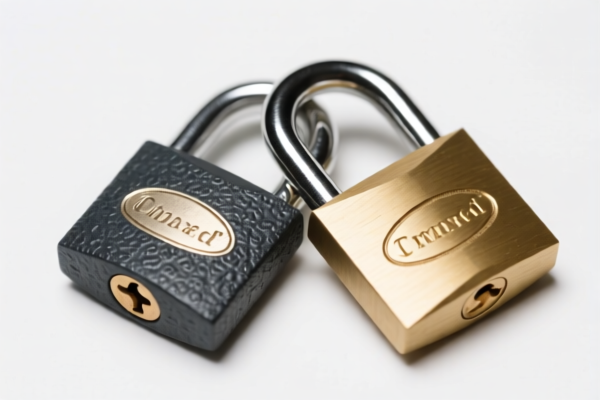
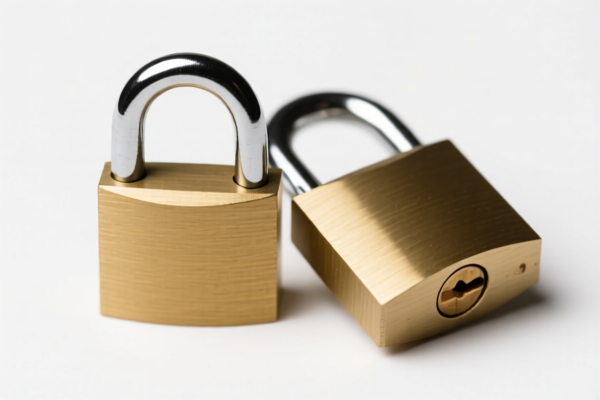
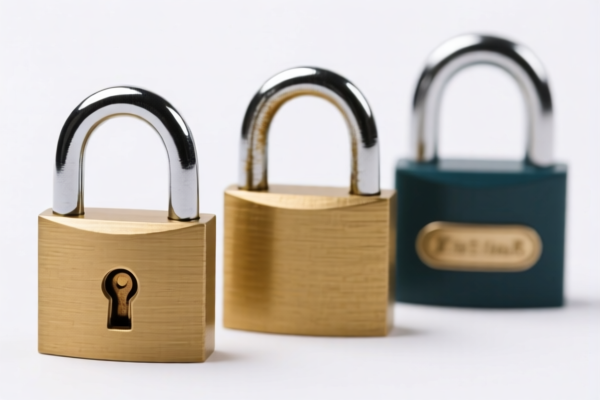

AI分析
🔒 Padlock Buckle (Hang Locks & Metal Locking Accessories)
🌐 HS Code Reference & Clearance Guide | 2026 Latest Tariff Analysis | Professional-Level Customs Strategy
📌 I. Product Definition & Classification: Do You Truly Understand "Padlocks"?
A "Padlock Buckle" (commonly referred to as a Padlock or Hanging Lock) is a portable lock designed to be used with hasps, staples, or chains. In international trade, the classification hinges strictly on Material Composition and Functional Design:
-
Precious Metal vs. Base Metal:
- If made of precious metals (gold, silver, etc.), it falls under Chapter 71.
- Most common trade scenario: Made of Base Metals (brass, zinc alloy, iron, steel, aluminum). These fall under Chapter 83 (Articles of base metal).
-
Specialized vs. General:
- 8301.10: Specifically for Padlocks (挂锁). These have a fixed body and a shackle (buckle) that passes through a loop.
- 7326.90 / 7326.19: If the item is technically a "metal fitting" or "fastener" rather than a complete locking mechanism with a shackle, or if it is a generic steel/iron product, it may fall under Chapter 73. However, for true padlocks, 8301 is the primary heading.
⚠️ Critical Distinction:
- If the item is a complete Padlock (body + shackle + key cylinder) → Chapter 83 (8301.xx)
- If the item is a Steel/Iron component or a generic metal fixture not classified as a specific lock → Chapter 73 (7326.xx)
- Note: The provided data shows significant tariff differences based on this classification due to US trade policies.
📦 II. HS Code Classification Details (Based on Provided Data)
According to the <DATA> provided, there are two distinct categories for Padlocks and related metal products. The key differentiator is the specific HS Code assigned by the customs authority, which drastically affects the tax burden.
| HS Code | Product Description | Material | Tax Rate | Primary Risk Factor |
|---|---|---|---|---|
8301.10.60.80 |
Padlock, Base Metal | Base Metal (e.g., Brass, Zinc) | 23.6% | Standard Base Metal Lock |
8301.10.80.00 |
Padlock, Base Metal | Base Metal (General) | 22.3% | General Base Metal Lock |
7326.90.86.88 |
Other Articles of Iron/Steel | Iron or Steel | 87.9% | ⚠️ High Penalty: Subject to 50% Steel/Aluminum/Copper Surcharge |
7326.19.00.80 |
Other Articles of Steel | Steel | 87.9% | ⚠️ High Penalty: Subject to 50% Steel/Aluminum/Copper Surcharge |
🔍 Analysis of the Data:
The data contains duplicates (e.g.,8301.10.60.80appears twice). The core conflict is between Chapter 83 (Specialized Base Metal Articles) and Chapter 73 (General Iron/Steel Articles).
- Chapter 83 codes attract moderate tariffs (~22-24%).
- Chapter 73 codes attract severe tariffs (87.9%) due to the combination of Section 232 (Steel/Aluminum) duties and Section 301/122 duties.
💰 III. Detailed Tariff Breakdown (2026 Latest)
✅ Applicable Jurisdiction: United States (US)
✅ Origin: China (CN) (Implied by "122 Clause" and high surcharges typical of US-China trade tensions)
✅ Effective Time: Current active rates
🎯 1. 8301.10.60.80 & 8301.10.80.00 —— Padlocks (Base Metal)
These codes refer to standard padlocks made of non-precious metals.
| Item | Content |
|---|---|
| Base Tariff | 4.8% - 6.1% (Ad Valorem) |
| Additional Tariff (Section 301/122) | 7.5% |
| 122-Clause Tariff | 10% |
| Total Tax Rate | 22.3% - 23.6% |
| Tax Calculation | CIF Value × Total Rate |
| De Minimis Exemption? | ❌ No (Typically denied for high-tariff goods from China) |
📌 Explanation:
- The 23.6% rate for8301.10.60.80is composed of: Base (6.1%) + Additional (7.5%) + 122-Clause (10%).
- The 22.3% rate for8301.10.80.00is composed of: Base (4.8%) + Additional (7.5%) + 122-Clause (10%).
- These are considered "Standard Padlocks". As long as they are not primarily classified as "Steel Articles" under Section 232, the rate is manageable.
🎯 2. 7326.90.86.88 & 7326.19.00.80 —— Iron/Steel Products (Non-Specialized)
These codes apply if the padlock is deemed a generic "Article of Iron or Steel" rather than a specialized "Base Metal Article." This triggers the harshest penalties.
| Item | Content |
|---|---|
| Base Tariff | 2.9% |
| Additional Tariff (Section 301) | 25.0% |
| 122-Clause Tariff | 10% |
| Section 232 Surcharge (Steel/Al/Cu) | 50% |
| Total Tax Rate | 87.9% |
| Tax Calculation | CIF Value × 87.9% |
| De Minimis Exemption? | ❌ No |
📌 Critical Warning:
- The 50% surcharge for "Steel, Aluminum, and Copper Products" is the killer here.
- If your padlock is made of steel and is misclassified or broadly classified as a "Steel Article" (7326), you will pay 87.9% instead of ~23%.
- Why the difference?8301is for specific base metal articles (locks).7326is for general articles of iron/steel. Customs may reclassify a steel padlock to7326if it doesn't meet specific "lock" definitions in Chapter 83 or if the importer fails to prove it is a "specialized" lock.
🛠️ IV. Customs Clearance Practical Advice (Avoiding Pitfalls)
✅ 1. Material Declaration Strategy
| Strategy | Action | Impact on Tax |
|---|---|---|
| Use Base Metals | Manufacture padlocks using Brass, Zinc Alloy, or Aluminum instead of plain Steel. | ✅ Qualifies for 8301 (~23%) |
| Avoid Pure Steel | Do not use plain carbon steel if it can be classified under 7326. |
❌ Triggers 87.9% if classified as Steel Article |
| Precise Description | Describe as "Padlock, Brass Body, Zinc Shackle" rather than "Metal Lock." | ✅ Helps prove Chapter 83 eligibility |
✅ 2. Documentation Checklist
| Document | Requirement | Why? |
|---|---|---|
| Product Specification Sheet | Must specify Material Composition (e.g., Brass, Zinc Alloy). | Proves it is not "General Steel" (7326). |
| Commercial Invoice | Clearly state "Padlock" and HS Code 8301.xx. |
Prevents customs from defaulting to 7326. |
| Photos of Product | Show the locking mechanism (shackle, body, keyhole). | Proves it is a functional lock (8301), not just a metal bracket. |
| Material Certificate | From manufacturer confirming alloy type. | Critical if customs suspects steel content. |
✅ 3. Classification Optimization (The "8301 vs 7326" Battle)
| Scenario | Recommended HS Code | Reason |
|---|---|---|
| Brass/Zinc Padlock | 8301.10.60.80 or 8301.10.80.00 |
Base metal lock. Lower tax (~23%). |
| Steel Padlock (Specialized) | 8301.10.xx (if possible) |
Argue it is a "Specialized Article of Base Metal." |
| Steel Padlock (Generic) | 7326.90.86.88 |
High Risk. If deemed a general steel article, tax is 87.9%. |
⚠️ Note: Even if made of steel, try to argue for
8301if it is a specialized lock. However, if it is a simple steel latch or clip,7326is likely. Switching to Brass or Zinc Alloy is the safest way to secure the 23% rate.
🌍 V. Global Market Comparison (2026)
| Market | Recommended HS Code | Estimated Tax | Key Requirement |
|---|---|---|---|
| 🇺🇸 USA | 8301.10.60.80 |
23.6% | Avoid 7326 (87.9%) |
| 🇺🇸 USA (Steel) | 7326.90.86.88 |
87.9% | Avoid this classification! |
| 🇪🇺 EU | 8301.10 |
~2.7% | No Section 301/232 equivalents. |
| 🇨🇳 China | 8301.10 |
~6.1% | Import tax only. |
📌 Conclusion for US Market:
The difference between 23.6% and 87.9% is massive.
- Do not use generic "Steel Padlock" descriptions.
- Use "Brass Padlock" or "Zinc Alloy Padlock" to ensure classification under8301.
- If you must use steel, consult a customs broker to see if it can still qualify as8301(specialized article) rather than7326(general article).
📌 VI. Common Errors & Pitfalls (Lessons Learned)
❌ Error 1: Shipping Steel Padlocks without specifying "Specialized Lock."
👉 Result: Customs classifies as 7326 → 87.9% Tax → Huge Loss!
❌ Error 2: Using "Metal Buckle" as the product name.
👉 Result: Ambiguity leads to misclassification. Use "Padlock" in all documents.
❌ Error 3: Ignoring the "122 Clause" and Section 232.
👉 Result: Unprepared for the 50% steel surcharge.
✅ Correct Action:
"Padlock, Brass Body, Zinc Alloy Shackle, Model XYZ. HS Code: 8301.10.60.80."
🎯 VII. Conclusion: Professional Classification Saves Money
🎯 Key Takeaway:
🔹 "Base Metal (Brass/Zinc) = 23% Tax"
🔹 "Generic Steel = 88% Tax"
🔹 "Change Material, Change Destiny!"
📌 Advice:
If you are currently paying 87.9%, immediately switch to Brass or Zinc Alloy padlocks. The material cost increase is negligible compared to the 64% tax saving. For US imports, this is the single most effective cost-saving measure for padlock shipments.
✨ Professional Clearance Starts with Precise Classification!
💼 Your Profit Margin Depends on the First Two Digits of the HS Code!
用户评价
关于 HS 编码归类
协调制度(HS)是由世界海关组织(WCO)制定的国际贸易商品分类标准。全球 200 多个国家采用 HS 系统作为海关关税、贸易统计和进出口监管的基础。
每个 HS 编码遵循以下层级结构:
- 章(2 位)——商品大类(例如:第 84 章:机器和机械设备)
- 品目(4 位)——章内的更具体分类
- 子目(6 位)——国际通用细分,所有 WCO 成员国统一使用
- 本国细分(8-10 位)——各国自行扩展的细分编码,如美国 HTSUS 10 位编码
正确的 HS 编码归类对于顺利通关、准确缴纳关税和遵守贸易法规至关重要。错误归类可能导致海关延误、多缴关税或罚款。
从CN进口到US时,适用的关税税率可能包括:
- 最惠国(MFN)税率——适用于 WTO 成员国的标准关税税率
- 普通税率——适用于无贸易协定国家
- 贸易救济关税——附加关税,如 301 条款(反倾销)、232 条款(国家安全)或反补贴税
本页内容仅供参考。如需正式归类,请咨询当地海关或持牌报关代理。