Paint Palette
CN → US| HS编码 | 关税税率 | 原产国 | 目的国 | 文档 |
|---|---|---|---|---|
| 4421919880 | 38.3% | CN | US | 官方文档 |
| 4421999880 | 38.3% | CN | US | 官方文档 |
| 6914908000 | 40.6% | CN | US | 官方文档 |
| 6914108000 | 44.0% | CN | US | 官方文档 |
| 9603306000 | 10.0% | CN | US | 官方文档 |
商品图片
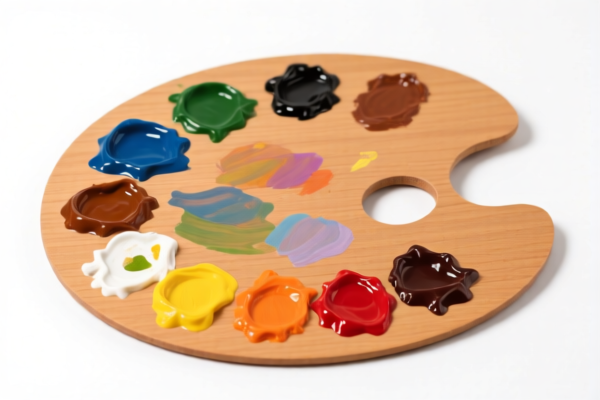


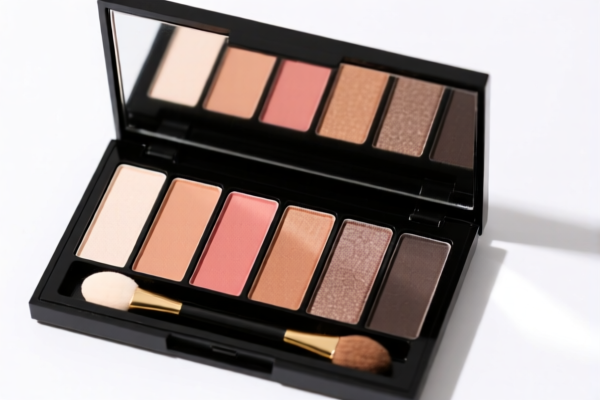
AI分析
🎨 Paint Palettes: HS Code Classification & US Customs Clearance Guide (2026)
🌐 HS Code Reference & Clearance Strategy | 2026 Latest Tariff Analysis | Professional Compliance
📌 I. Product Definition: What Exactly is a "Paint Palette"?
A paint palette is a flat surface used by artists to mix colors while painting. In international trade, the classification depends entirely on the material and design of the object. It is not a single unified product in customs terms.
Key Distinctions: * Traditional Palettes: Flat boards (wood, ceramic, plastic) used for mixing oils/acrylics. * Artists' Brushes/Tools: Includes specialized tools like foldable palettes that integrate mixing surfaces with handle-like structures or are categorized under specific art supply headers.
⚠️ Critical Classification Point:
- If it is a flat surface made of ceramic → Go to Chapter 69 (Ceramics).
- If it is a flat surface made of wood/bamboo → Go to Chapter 44 (Wood).
- If it is foldable and considered an "artist's brush or similar tool" → Go to Chapter 96 (Miscellaneous Manufactured Articles).
📦 II. HS Code Classification Details (2026 Latest Tariff Authority)
Based on the provided data, here are the four precise classifications for Paint Palettes, sorted by material and type:
| HS Code | Product Description | Material/Type | Summary Classification |
|---|---|---|---|
6914.10.80.00 |
Ceramic Paint Palette | Ceramic | Other Ceramic Articles |
6914.90.80.00 |
Ceramic Paint Palette | Ceramic | Other Ceramic Articles |
4421.91.98.80 |
Wooden or Bamboo Palette | Wood/Bamboo | Other Wood Articles |
4421.99.98.80 |
Wooden or Plastic Palette | Wood/Plastic | Other Wood Articles (Catch-all) |
9603.30.60.00 |
Foldable Palette | Art Tool | Artists' Brushes & Similar Tools |
🔍 Key Insight:
- Ceramic palettes are split into two sub-headings (6914.10vs6914.90) likely based on specific manufacturing processes or exclusions, resulting in different tax rates.
- Wooden/Bamboo palettes fall under "Other articles of wood" (4421).
- Foldable palettes are uniquely classified under9603(Brushes), which offers the lowest tax burden.
💰 III. 2026 US Tariff Rate Breakdown (Detailed Tax Clauses)
✅ Applicable Country: United States (US)
✅ Origin: China (CN)
✅ Effective Date: Post-2025 Policy Implementation (Section 301 + IEEPA)
🎯 1. 6914.10.80.00 — Ceramic Paint Palette (Specific Ceramic)
| Item | Detail |
|---|---|
| Base Tariff | 9.0% (Ad Valorem) |
| Section 301 Add-on | 25.0% (Trade Act of 1974, Section 301) |
| IEEPA Section 122 | 10.0% (International Emergency Economic Powers Act) |
| Total Tax Rate | 44.0% |
| Calculation | CIF Value × 44% |
| De Minimis Eligibility | ❌ No (Denied for China origin) |
📌 Explanation:
- This is a high-tax category. The 9% base tariff reflects the value of ceramic goods.
- The additional 35% (25% + 10%) significantly increases costs.
- Legal Path:USITC:6914.10.80.00→FOOTNOTE:301→IEEPA:122.
🎯 2. 6914.90.80.00 — Ceramic Paint Palette (Other Ceramic)
| Item | Detail |
|---|---|
| Base Tariff | 5.6% (Ad Valorem) |
| Section 301 Add-on | 25.0% |
| IEEPA Section 122 | 10.0% |
| Total Tax Rate | 40.6% |
| Calculation | CIF Value × 40.6% |
| De Minimis Eligibility | ❌ No |
📌 Comparison:
- Slightly cheaper than6914.10.80.00by 3.4% due to a lower base tariff (5.6% vs 9.0%).
- Still subject to the same punitive tariffs.
🎯 3. 4421.91.98.80 & 4421.99.98.80 — Wooden/Bamboo/Plastic Palettes
| Item | Detail |
|---|---|
| Base Tariff | 3.3% (Ad Valorem) |
| Section 301 Add-on | 25.0% |
| IEEPA Section 122 | 10.0% |
| Total Tax Rate | 38.3% |
| Calculation | CIF Value × 38.3% |
| De Minimis Eligibility | ❌ No |
📌 Details for Both Codes:
-4421.91.98.80: Specifically for Wooden or Bamboo palettes.
-4421.99.98.80: A "catch-all" for wooden or plastic palettes that don't fit other specific wood subheadings.
- Note: Both have the same total rate (38.3%). The choice between them depends on whether the product is strictly wood/bamboo or includes plastic components.
🎯 4. 9603.30.60.00 — Foldable Palette (Artist Tool)
| Item | Detail |
|---|---|
| Base Tariff | 0.0% (Ad Valorem) |
| Section 301 Add-on | 0.0% |
| IEEPA Section 122 | 10.0% |
| Total Tax Rate | 10.0% |
| Calculation | CIF Value × 10.0% |
| De Minimis Eligibility | ❌ No (But much lower absolute cost) |
📌 Why is it so low?
- Base Tariff: 0% (Art supplies often have preferential base rates).
- Section 301: 0% (This specific HS code is excluded from the 301 tariff list).
- IEEPA 122: 10% (Applies to most Chinese goods unless exempted).
- 💡 Strategic Advantage: This is the most cost-effective classification, nearly 34-30% cheaper than ceramic/wooden options.
🛠️ IV. Customs Clearance Practical Advice
✅ 1. Pre-shipment Documentation Checklist
| Document | Required? | Purpose |
|---|---|---|
| Product Specifications | ✅ Yes | Must clearly state material (Ceramic, Wood, Plastic) and type (Foldable vs. Flat). |
| Photographs | ✅ Yes | Must show the product’s structure. Is it rigid? Does it fold? |
| Commercial Invoice | ✅ Yes | Description must match HS Code exactly (e.g., "Foldable Artist Palette" vs. "Ceramic Mixing Board"). |
| Material Declaration | ✅ Yes | Specifically for Wooden/Bamboo items, confirm no invasive pests (ISPM 15 compliance may apply if raw wood). |
| Design Sketch (if Foldable) | ✅ Recommended | To prove it falls under 9603 (Brushes/Tools) rather than general household goods. |
✅ 2. Classification Strategy & Risk Mitigation
| Scenario | Recommended HS Code | Risk Level | Reason |
|---|---|---|---|
| Product is Foldable | 9603.30.60.00 |
🟢 Low | 10% tax only. Best for profit margin. |
| Product is Ceramic (High-end) | 6914.10.80.00 |
🔴 High | 44% tax. High cost, check if value justifies. |
| Product is Ceramic (Basic) | 6914.90.80.00 |
🔴 High | 40.6% tax. Still high, but slightly better. |
| Product is Wood/Bamboo | 4421.91.98.80 |
🟡 Medium | 38.3% tax. Ensure it is not plastic. |
| Product is Wood + Plastic | 4421.99.98.80 |
🟡 Medium | 38.3% tax. Used as a fallback. |
⚠️ Crucial Warning:
Do not misclassify a rigid ceramic palette as9603.30.60.00. If customs inspects the goods and finds it is not foldable or not a tool, you will face:
- Back taxes (difference between 10% and 40.6%+)
- Penalties
- Potential seizure of goods.
✅ 3. Special Tips for 2026
- Material Accuracy: For
4421codes, ensure the product is genuinely wood/bamboo. If it’s plastic, it might still fall under4421.99.98.80as a "catch-all," but verify if plastic palettes have a better classification elsewhere (not in this dataset). - Foldable Design Proof: If you want to use the 10% rate (
9603.30.60.00), your product must be foldable. Include a photo showing the hinge/folding mechanism in your shipping documents. - Section 301 Exclusion: The fact that
9603.30.60.00has 0% Section 301 tariff is a key advantage. Many other art supplies are subject to 25%. This makes9603a strategic choice if the product design allows.
🌍 V. Global Market Comparison (2026)
| Market | Recommended HS Code | Estimated Tax (China Origin) | Key Requirement |
|---|---|---|---|
| 🇺🇸 USA | 9603.30.60.00 (Foldable) |
10.0% | Proof of foldable design |
| 🇺🇸 USA | 6914.10.80.00 (Ceramic) |
44.0% | Standard ceramic declaration |
| 🇪🇺 EU | Varies by NC Code | ~0-6.5% | CE Marking, REACH Compliance |
| 🇬🇧 UK | Varies by UK Schedule | ~0-6.5% | UKCA Marking |
📌 Conclusion for US Importers:
- If your palette can be foldable, design it that way to qualify for9603.30.60.00and save ~30-34% in taxes compared to rigid materials.
- If rigid ceramic is required, budget for 40-44% duty.
- Wooden palettes sit in the middle at 38.3%.
📌 VI. Common Mistakes & Pitfalls
❌ Mistake 1: Calling all palettes "Art Supplies" and using one HS Code.
👉 Result: Customs will reject incorrect classification. Each material/type has a specific code.
❌ Mistake 2: Misclassifying a rigid ceramic plate as 9603.30.60.00.
👉 Result: Audited findings, back taxes of ~30%, and penalties.
❌ Mistake 3: Ignoring the IEEPA 122 Clause (10%).
👉 Result: Underestimating total landed cost. Even 9603 has 10% tax!
✅ Best Practice:
"Paint Palette, Foldable, 12-compartment, Plastic/Wood Composite, Model: ArtistPro F1, Origin: China."
HS Code:9603.30.60.00
Rate: 10%
🎯 VII. Conclusion: Optimize Your Tariff Strategy
🎯 Key Takeaway:
Design for Duty: If possible, choose foldable designs to access the 10% tax bracket (
9603.30.60.00).
Material Matters: Ceramic and Wood carry 38-44% taxes.
Documentation is Key: Clear photos and descriptions prevent misclassification audits.
📣 Immediate Action:
- Review your product design: Can it be foldable?
- Confirm material composition: Is it pure ceramic, wood, or mixed?
- Apply for Pre-Ruling from US Customs if the classification is ambiguous.
🚀 Smart Classification = Lower Costs = Higher Profits!
✨ Professional Clearance, Starting with Accurate Classification!
💼 Every percentage point of tax saved is pure profit!
用户评价
关于 HS 编码归类
协调制度(HS)是由世界海关组织(WCO)制定的国际贸易商品分类标准。全球 200 多个国家采用 HS 系统作为海关关税、贸易统计和进出口监管的基础。
每个 HS 编码遵循以下层级结构:
- 章(2 位)——商品大类(例如:第 84 章:机器和机械设备)
- 品目(4 位)——章内的更具体分类
- 子目(6 位)——国际通用细分,所有 WCO 成员国统一使用
- 本国细分(8-10 位)——各国自行扩展的细分编码,如美国 HTSUS 10 位编码
正确的 HS 编码归类对于顺利通关、准确缴纳关税和遵守贸易法规至关重要。错误归类可能导致海关延误、多缴关税或罚款。
从CN进口到US时,适用的关税税率可能包括:
- 最惠国(MFN)税率——适用于 WTO 成员国的标准关税税率
- 普通税率——适用于无贸易协定国家
- 贸易救济关税——附加关税,如 301 条款(反倾销)、232 条款(国家安全)或反补贴税
本页内容仅供参考。如需正式归类,请咨询当地海关或持牌报关代理。