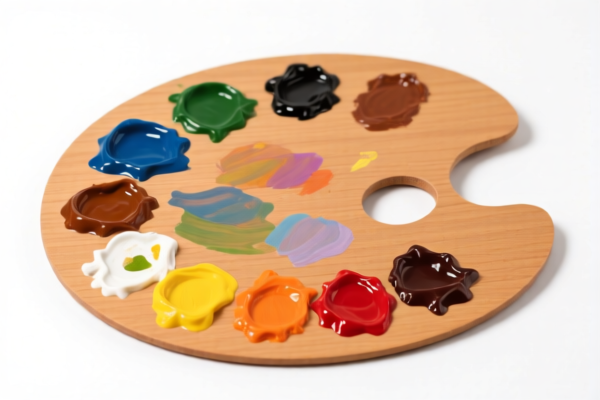
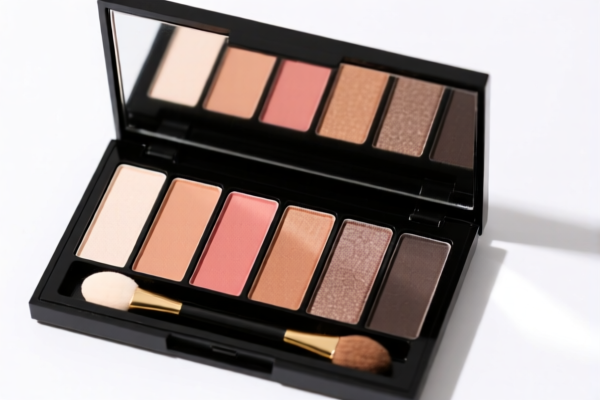
Paint Palette
CN → US| HS Code | Tariff Rate | Origin | Destination | Doc |
|---|---|---|---|---|
| 4421919880 | 38.3% | CN | US | Official Doc |
| 4421999880 | 38.3% | CN | US | Official Doc |
| 6914908000 | 40.6% | CN | US | Official Doc |
| 6914108000 | 44.0% | CN | US | Official Doc |
| 9603306000 | 10.0% | CN | US | Official Doc |
Product Images


AI Analysis
🎨 Paint Palettes: HS Code Classification & US Customs Clearance Guide (2026)
🌐 HS Code Reference & Clearance Strategy | 2026 Latest Tariff Analysis | Professional Compliance
📌 I. Product Definition: What Exactly is a "Paint Palette"?
A paint palette is a flat surface used by artists to mix colors while painting. In international trade, the classification depends entirely on the material and design of the object. It is not a single unified product in customs terms.
Key Distinctions: * Traditional Palettes: Flat boards (wood, ceramic, plastic) used for mixing oils/acrylics. * Artists' Brushes/Tools: Includes specialized tools like foldable palettes that integrate mixing surfaces with handle-like structures or are categorized under specific art supply headers.
⚠️ Critical Classification Point:
- If it is a flat surface made of ceramic → Go to Chapter 69 (Ceramics).
- If it is a flat surface made of wood/bamboo → Go to Chapter 44 (Wood).
- If it is foldable and considered an "artist's brush or similar tool" → Go to Chapter 96 (Miscellaneous Manufactured Articles).
📦 II. HS Code Classification Details (2026 Latest Tariff Authority)
Based on the provided data, here are the four precise classifications for Paint Palettes, sorted by material and type:
| HS Code | Product Description | Material/Type | Summary Classification |
|---|---|---|---|
6914.10.80.00 |
Ceramic Paint Palette | Ceramic | Other Ceramic Articles |
6914.90.80.00 |
Ceramic Paint Palette | Ceramic | Other Ceramic Articles |
4421.91.98.80 |
Wooden or Bamboo Palette | Wood/Bamboo | Other Wood Articles |
4421.99.98.80 |
Wooden or Plastic Palette | Wood/Plastic | Other Wood Articles (Catch-all) |
9603.30.60.00 |
Foldable Palette | Art Tool | Artists' Brushes & Similar Tools |
🔍 Key Insight:
- Ceramic palettes are split into two sub-headings (6914.10vs6914.90) likely based on specific manufacturing processes or exclusions, resulting in different tax rates.
- Wooden/Bamboo palettes fall under "Other articles of wood" (4421).
- Foldable palettes are uniquely classified under9603(Brushes), which offers the lowest tax burden.
💰 III. 2026 US Tariff Rate Breakdown (Detailed Tax Clauses)
✅ Applicable Country: United States (US)
✅ Origin: China (CN)
✅ Effective Date: Post-2025 Policy Implementation (Section 301 + IEEPA)
🎯 1. 6914.10.80.00 — Ceramic Paint Palette (Specific Ceramic)
| Item | Detail |
|---|---|
| Base Tariff | 9.0% (Ad Valorem) |
| Section 301 Add-on | 25.0% (Trade Act of 1974, Section 301) |
| IEEPA Section 122 | 10.0% (International Emergency Economic Powers Act) |
| Total Tax Rate | 44.0% |
| Calculation | CIF Value × 44% |
| De Minimis Eligibility | ❌ No (Denied for China origin) |
📌 Explanation:
- This is a high-tax category. The 9% base tariff reflects the value of ceramic goods.
- The additional 35% (25% + 10%) significantly increases costs.
- Legal Path:USITC:6914.10.80.00→FOOTNOTE:301→IEEPA:122.
🎯 2. 6914.90.80.00 — Ceramic Paint Palette (Other Ceramic)
| Item | Detail |
|---|---|
| Base Tariff | 5.6% (Ad Valorem) |
| Section 301 Add-on | 25.0% |
| IEEPA Section 122 | 10.0% |
| Total Tax Rate | 40.6% |
| Calculation | CIF Value × 40.6% |
| De Minimis Eligibility | ❌ No |
📌 Comparison:
- Slightly cheaper than6914.10.80.00by 3.4% due to a lower base tariff (5.6% vs 9.0%).
- Still subject to the same punitive tariffs.
🎯 3. 4421.91.98.80 & 4421.99.98.80 — Wooden/Bamboo/Plastic Palettes
| Item | Detail |
|---|---|
| Base Tariff | 3.3% (Ad Valorem) |
| Section 301 Add-on | 25.0% |
| IEEPA Section 122 | 10.0% |
| Total Tax Rate | 38.3% |
| Calculation | CIF Value × 38.3% |
| De Minimis Eligibility | ❌ No |
📌 Details for Both Codes:
-4421.91.98.80: Specifically for Wooden or Bamboo palettes.
-4421.99.98.80: A "catch-all" for wooden or plastic palettes that don't fit other specific wood subheadings.
- Note: Both have the same total rate (38.3%). The choice between them depends on whether the product is strictly wood/bamboo or includes plastic components.
🎯 4. 9603.30.60.00 — Foldable Palette (Artist Tool)
| Item | Detail |
|---|---|
| Base Tariff | 0.0% (Ad Valorem) |
| Section 301 Add-on | 0.0% |
| IEEPA Section 122 | 10.0% |
| Total Tax Rate | 10.0% |
| Calculation | CIF Value × 10.0% |
| De Minimis Eligibility | ❌ No (But much lower absolute cost) |
📌 Why is it so low?
- Base Tariff: 0% (Art supplies often have preferential base rates).
- Section 301: 0% (This specific HS code is excluded from the 301 tariff list).
- IEEPA 122: 10% (Applies to most Chinese goods unless exempted).
- 💡 Strategic Advantage: This is the most cost-effective classification, nearly 34-30% cheaper than ceramic/wooden options.
🛠️ IV. Customs Clearance Practical Advice
✅ 1. Pre-shipment Documentation Checklist
| Document | Required? | Purpose |
|---|---|---|
| Product Specifications | ✅ Yes | Must clearly state material (Ceramic, Wood, Plastic) and type (Foldable vs. Flat). |
| Photographs | ✅ Yes | Must show the product’s structure. Is it rigid? Does it fold? |
| Commercial Invoice | ✅ Yes | Description must match HS Code exactly (e.g., "Foldable Artist Palette" vs. "Ceramic Mixing Board"). |
| Material Declaration | ✅ Yes | Specifically for Wooden/Bamboo items, confirm no invasive pests (ISPM 15 compliance may apply if raw wood). |
| Design Sketch (if Foldable) | ✅ Recommended | To prove it falls under 9603 (Brushes/Tools) rather than general household goods. |
✅ 2. Classification Strategy & Risk Mitigation
| Scenario | Recommended HS Code | Risk Level | Reason |
|---|---|---|---|
| Product is Foldable | 9603.30.60.00 |
🟢 Low | 10% tax only. Best for profit margin. |
| Product is Ceramic (High-end) | 6914.10.80.00 |
🔴 High | 44% tax. High cost, check if value justifies. |
| Product is Ceramic (Basic) | 6914.90.80.00 |
🔴 High | 40.6% tax. Still high, but slightly better. |
| Product is Wood/Bamboo | 4421.91.98.80 |
🟡 Medium | 38.3% tax. Ensure it is not plastic. |
| Product is Wood + Plastic | 4421.99.98.80 |
🟡 Medium | 38.3% tax. Used as a fallback. |
⚠️ Crucial Warning:
Do not misclassify a rigid ceramic palette as9603.30.60.00. If customs inspects the goods and finds it is not foldable or not a tool, you will face:
- Back taxes (difference between 10% and 40.6%+)
- Penalties
- Potential seizure of goods.
✅ 3. Special Tips for 2026
- Material Accuracy: For
4421codes, ensure the product is genuinely wood/bamboo. If it’s plastic, it might still fall under4421.99.98.80as a "catch-all," but verify if plastic palettes have a better classification elsewhere (not in this dataset). - Foldable Design Proof: If you want to use the 10% rate (
9603.30.60.00), your product must be foldable. Include a photo showing the hinge/folding mechanism in your shipping documents. - Section 301 Exclusion: The fact that
9603.30.60.00has 0% Section 301 tariff is a key advantage. Many other art supplies are subject to 25%. This makes9603a strategic choice if the product design allows.
🌍 V. Global Market Comparison (2026)
| Market | Recommended HS Code | Estimated Tax (China Origin) | Key Requirement |
|---|---|---|---|
| 🇺🇸 USA | 9603.30.60.00 (Foldable) |
10.0% | Proof of foldable design |
| 🇺🇸 USA | 6914.10.80.00 (Ceramic) |
44.0% | Standard ceramic declaration |
| 🇪🇺 EU | Varies by NC Code | ~0-6.5% | CE Marking, REACH Compliance |
| 🇬🇧 UK | Varies by UK Schedule | ~0-6.5% | UKCA Marking |
📌 Conclusion for US Importers:
- If your palette can be foldable, design it that way to qualify for9603.30.60.00and save ~30-34% in taxes compared to rigid materials.
- If rigid ceramic is required, budget for 40-44% duty.
- Wooden palettes sit in the middle at 38.3%.
📌 VI. Common Mistakes & Pitfalls
❌ Mistake 1: Calling all palettes "Art Supplies" and using one HS Code.
👉 Result: Customs will reject incorrect classification. Each material/type has a specific code.
❌ Mistake 2: Misclassifying a rigid ceramic plate as 9603.30.60.00.
👉 Result: Audited findings, back taxes of ~30%, and penalties.
❌ Mistake 3: Ignoring the IEEPA 122 Clause (10%).
👉 Result: Underestimating total landed cost. Even 9603 has 10% tax!
✅ Best Practice:
"Paint Palette, Foldable, 12-compartment, Plastic/Wood Composite, Model: ArtistPro F1, Origin: China."
HS Code:9603.30.60.00
Rate: 10%
🎯 VII. Conclusion: Optimize Your Tariff Strategy
🎯 Key Takeaway:
Design for Duty: If possible, choose foldable designs to access the 10% tax bracket (
9603.30.60.00).
Material Matters: Ceramic and Wood carry 38-44% taxes.
Documentation is Key: Clear photos and descriptions prevent misclassification audits.
📣 Immediate Action:
- Review your product design: Can it be foldable?
- Confirm material composition: Is it pure ceramic, wood, or mixed?
- Apply for Pre-Ruling from US Customs if the classification is ambiguous.
🚀 Smart Classification = Lower Costs = Higher Profits!
✨ Professional Clearance, Starting with Accurate Classification!
💼 Every percentage point of tax saved is pure profit!
Customer Reviews
About HS Code Classification
The Harmonized System (HS) is an internationally standardized nomenclature developed by the World Customs Organization (WCO) to classify traded products. Over 200 countries use the HS system as the basis for customs tariffs, trade statistics, and import/export regulations.
Each HS code follows a hierarchical structure:
- Chapter (2 digits) — Broad category of goods (e.g., Chapter 84: Machinery and Mechanical Appliances)
- Heading (4 digits) — More specific grouping within the chapter
- Subheading (6 digits) — Internationally standardized breakdown, used by all WCO member countries
- National subdivisions (8-10 digits) — Country-specific extensions for further classification, such as US HTSUS 10-digit codes
Correct HS code classification is essential for smooth customs clearance, accurate duty payment, and compliance with trade regulations. Misclassification can lead to customs delays, overpayment of duties, or penalties.
When importing from CN to US, the applicable tariff rates may include:
- Most-Favored-Nation (MFN) rate — The standard duty rate applied to WTO members
- General rate — Applied to countries without trade agreements
- Trade remedy duties — Additional tariffs such as Section 301 (anti-dumping), Section 232 (national security), or countervailing duties
The information provided on this page is for reference purposes only. For official classification, please consult with your local customs authority or a licensed customs broker.