Painted and Dyed Wooden Fence Posts
CN → US| HS编码 | 关税税率 | 原产国 | 目的国 | 文档 |
|---|---|---|---|---|
| 4407110002 | 35.0% | CN | US | 官方文档 |
| 4407120002 | 35.0% | CN | US | 官方文档 |
商品图片
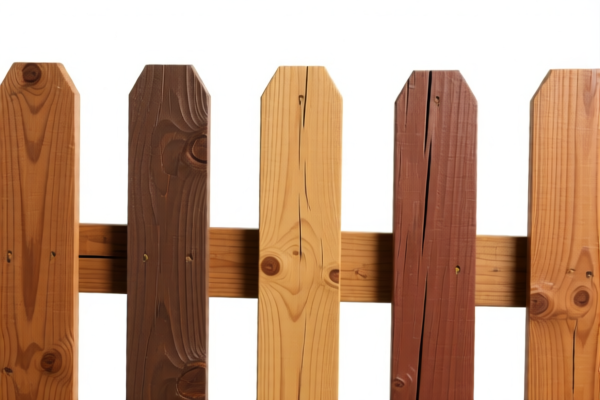
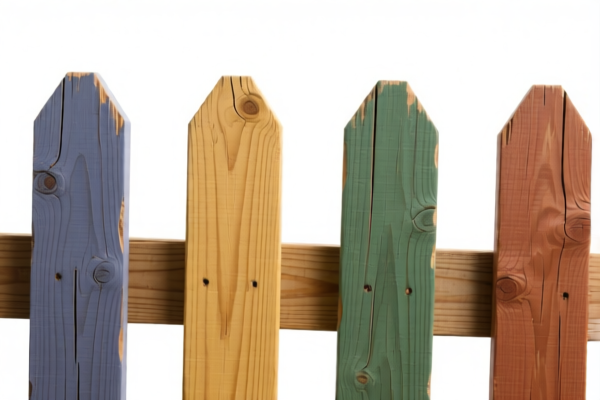
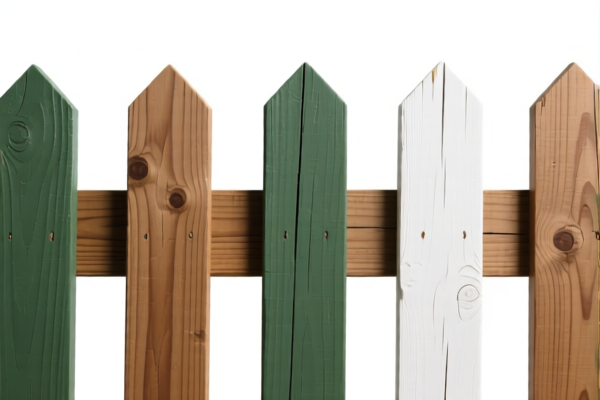
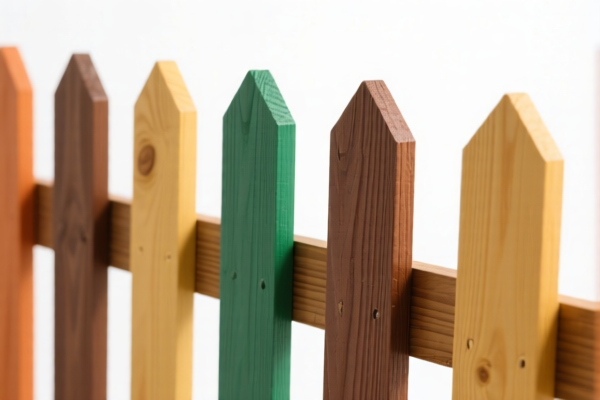
AI分析
🌲 Painted and Dyed Wooden Fence Posts
🌐 HS Code Reference & Customs Clearance Guide | 2026 Latest Tariff Analysis | Professional Entry Strategy
📌 I. Product Definition & Classification: Do You Really Understand "Wooden Fence Posts"?
Wooden fence posts, specifically those that are sawn, planed, or treated and have a thickness exceeding 6 mm, fall under Chapter 44 of the Harmonized System. The critical distinction lies in the wood species (Coniferous vs. Non-Coniferous) and the treatment method.
Since your product is "Painted and Dyed," it is explicitly classified as "Treated with paint, stain, creosote or other preservative."
⚠️ Key Distinction:
- If the wood is Coniferous (Pine, Fir, Spruce, etc.) → It falls under heading 4407.
- If the wood is Non-Coniferous (Hardwoods like Oak, Teak, etc.) → It falls under heading 4407 but with different sub-codes (not covered in this specific dataset).
- Thickness Matters: Posts must be >6mm thick to be classified as "sawn wood" rather than simple raw timber. Fence posts typically exceed this.
📦 II. HS Code Classification Details (2026 Latest Tariff Authority Comparison)
Based on the provided , we analyze the two most common coniferous types used for fence posts. Both require treatment (paint/dye) for durability.
| HS Code | Product Description | Typical Wood Type | Treatment Status | Key Feature |
|---|---|---|---|---|
4407.11.00.02 |
Sawn wood, coniferous, of Pine (Pinus spp.) | Pine | Treated with paint, stain, creosote, or other preservative | Most common for general fencing |
4407.12.00.02 |
Sawn wood, coniferous, of Fir (Abies spp.) and Spruce (Picea spp.) | Fir / Spruce | Treated with paint, stain, creosote, or other preservative | Often used for outdoor structures due to density |
🔍 Critical Note:
- The suffix .02 in the provided HS codes explicitly denotes "Treated with paint, stain, creosote or other preservative."
- If the posts were untreated, they would likely fall under .00 or .01 (if applicable), but since they are "Painted and Dyed," .02 is the mandatory classification.
- Misclassification as "untreated wood" can lead to severe penalties and shipment delays.
💰 III. 2026 Latest Tariff Rate Details (Including Surcharges & Policy Add-ons)
✅ Applicable Country: United States (US)
✅ Origin: China (CN)
✅ Effective Time: Current rates apply (subject to 301 Tariff List)
🎯 1. 4407.11.00.02 — Sawn Wood of Pine (Pinus spp.), Treated
| Item | Content |
|---|---|
| Basic Tariff | 0.0% (Ad Valorem) |
| Additional Tariff (Section 301) | +25.0% |
| Total Tariff | 25.0% |
| Tax Calculation | CIF Value × 25% |
| De Minimis Exemption | ❌ Not Applicable |
| Legal Basis Path | USITC:4407.11.00.02 → Footnote: 301 Tariff List |
📌 Explanation:
- Base Rate: Pine wood sawn >6mm has a low base rate (0%) to encourage import of raw materials.
- Section 301 Tariff: Wooden products from China are subject to a 25% surcharge under US Trade Law Section 301.
- Total Burden: You must budget for a 25% duty on the total landed value.
🎯 2. 4407.12.00.02 — Sawn Wood of Fir & Spruce, Treated
| Item | Content |
|---|---|
| Basic Tariff | 0.0% (Ad Valorem) |
| Additional Tariff (Section 301) | +25.0% |
| Total Tariff | 25.0% |
| Tax Calculation | CIF Value × 25% |
| De Minimis Exemption | ❌ Not Applicable |
| Legal Basis Path | USITC:4407.12.00.02 → Footnote: 301 Tariff List |
📌 Note:
- Fir and Spruce posts face the same 25% tariff as Pine.
- Even though the wood species differs, the treatment status (painted/dyed) and origin (China) trigger the identical tax burden.
- Do not attempt to claim a lower rate by misidentifying the species; customs will verify via DNA or physical inspection.
🛠️ IV. Customs Clearance Practical Advice (Battle-Tested Pitfall Guide)
✅ 1. Documentation Checklist (Non-negotiable)
| Document | Required? | Notes |
|---|---|---|
| ✅ Commercial Invoice | ✔️ | Must explicitly state: "Sawn Wood, Thickness >6mm, Treated with Paint/Dye" |
| ✅ Packing List | ✔️ | Detail weight, dimensions, and number of posts per pallet |
| ✅ Species Declaration | ✔️ | Explicitly state "Pinus spp." or "Abies/Picea spp." |
| ✅ Treatment Certificate | ✔️ | Proof of painting/dyeing/preservative treatment (critical for HS .02) |
| ✅ Fumigation Phytosanitary Certificate | ✔️ | Mandatory for all wood products entering the US |
| ✅ Bill of Lading/Air Waybill | ✔️ | Standard shipping documents |
✅ 2. Declaration Tips (Key Mantra)
🔥 "Species Clear, Treatment Stated, Thickness Verified, Tariff Avoided!"
| Scenario | Correct Declaration | Wrong Action | Consequence |
|---|---|---|---|
| Pine Posts | 4407.11.00.02 |
Mislabel as "Raw Timber" | 25% back-duty + fines |
| Fir/Spruce Posts | 4407.12.00.02 |
Mislabel as "Pine" | Potential classification error, delays |
| Untreated Posts | Different HS Code | Declare as "Treated" | Overpayment of tax (if rate differs) or underpayment if base rate changes |
| Thickness <6mm | Different HS Code | Declare as "Sawn Wood" | Wrong classification → Penalty |
📌 Critical Advice:
- Ensure the invoice describes the product as "Painted Wooden Fence Posts" or "Preservative-Treated Pine/Fir Posts."
- Vague terms like "Wooden Posts" are rejected.
- Specify HS Code 4407.11.00.02 or 4407.12.00.02 directly on the invoice to avoid ambiguity.
✅ 3. Special Circumstances Handling
| Situation | Handling Suggestion |
|---|---|
| Mixed Species in One Shipment | Separate pine from fir/spruce. If mixed, the higher scrutiny or most specific code may apply. Best to split shipments. |
| Chemical Safety (TSCA) | Ensure paints/dyes comply with US Toxic Substances Control Act. Provide SDS if requested. |
| Phytosanitary Compliance | Wood must be heat-treated or fumigated. Missing phytosanitary certificate = Shipment Rejected/Destroyed. |
| Value Fluctuation | Tariff is ad valorem (25%). Keep detailed proof of CIF value to avoid customs valuation disputes. |
🌍 V. Global Market Comparison (2026 Latest)
| Country/Region | Recommended HS Code | Tariff Rate | Certification Required | Notes |
|---|---|---|---|---|
| 🇺🇸 USA | 4407.11.00.02 / 4407.12.00.02 |
25% | Phytosanitary + TSCA | High duty due to Section 301 |
| 🇨🇳 China | 4407.11.00 / 4407.12.00 |
~0-2% | None | Low import tax for domestic production |
| 🇪🇺 EU | 4407.10 series |
0-5% | FSC/PEFC (Optional but recommended) | Green standards strict; no 301 tariff |
| 🇨🇦 Canada | 4407.10 series |
0-5% | Phytosanitary | Free trade (CUSMA) if Canadian origin |
| 🇲🇽 Mexico | 4407.10 series |
0% (if origin MX) | Phytosanitary | USMCA benefits for local goods |
📌 Conclusion:
- The 25% US tariff is the major cost driver.
- If possible, consider sourcing from non-China origins (e.g., Vietnam, Canada, or EU) to avoid the 301 surcharge.
- For US imports, budget 25% duty + shipping + insurance.
📌 VI. Common Mistakes & Pitfalls (Blood-Sweet Lessons)
❌ Mistake 1: Declaring "Wooden Posts" without specifying species or treatment.
👉 Consequence: Customs holds shipment for classification review → Delays.
❌ Mistake 2: Omitting "Painted/Treated" from the description.
👉 Consequence: Risk of being classified as raw wood (different HS) → Misclassification Penalty.
❌ Mistake 3: No Phytosanitary Certificate.
👉 Consequence: Shipment Rejected at US Border → Total loss of goods.
❌ Mistake 4: Under-declaring value to reduce 25% tariff.
👉 Consequence: Fraud charges, heavy fines, and blacklisting.
✅ Correct Practice:
"2400mm x 100mm x 100mm Painted Pine (Pinus spp.) Fence Posts, Heat-Treated, Phytosanitary Certified, HS 4407.11.00.02"
🎯 VII. Conclusion: Professional Declaration, Cost Control, Efficiency!
🎯 Remember the Mantra:
🔹 "Species matters, Treatment defines the code, 25% is the US price, Phyto is the key!"
🔹 "HS Code determines destiny, a 1% error can cost thousands in duties!"
📌 Pro Tip:
If your fence posts are originated from Vietnam, Canada, or Mexico, you can apply for preferential tariffs (0%~5%) under various trade agreements.
Recommend applying for a Pre-Ruling (Advance Ruling) from US Customs (CBP) to confirm the exact HS Code and tariff liability before shipping.
📣 Immediate Action:
📞 Contact a licensed US Customs Broker + Provide Product Specs + Request HS Code Pre-Ruling
🚀 Let your wooden fence posts pass smoothly, clear efficiently, and maximize your profit margin!
✨ Professional Customs Clearance Starts with Accurate Classification!
💼 Every Dollar of Your Cost Deserves Precise Calculation!
用户评价
关于 HS 编码归类
协调制度(HS)是由世界海关组织(WCO)制定的国际贸易商品分类标准。全球 200 多个国家采用 HS 系统作为海关关税、贸易统计和进出口监管的基础。
每个 HS 编码遵循以下层级结构:
- 章(2 位)——商品大类(例如:第 84 章:机器和机械设备)
- 品目(4 位)——章内的更具体分类
- 子目(6 位)——国际通用细分,所有 WCO 成员国统一使用
- 本国细分(8-10 位)——各国自行扩展的细分编码,如美国 HTSUS 10 位编码
正确的 HS 编码归类对于顺利通关、准确缴纳关税和遵守贸易法规至关重要。错误归类可能导致海关延误、多缴关税或罚款。
从CN进口到US时,适用的关税税率可能包括:
- 最惠国(MFN)税率——适用于 WTO 成员国的标准关税税率
- 普通税率——适用于无贸易协定国家
- 贸易救济关税——附加关税,如 301 条款(反倾销)、232 条款(国家安全)或反补贴税
本页内容仅供参考。如需正式归类,请咨询当地海关或持牌报关代理。