Painted and Dyed Wooden Fence Posts
CN → US| HS Code | Tariff Rate | Origin | Destination | Doc |
|---|---|---|---|---|
| 4407110002 | 35.0% | CN | US | Official Doc |
| 4407120002 | 35.0% | CN | US | Official Doc |
Product Images
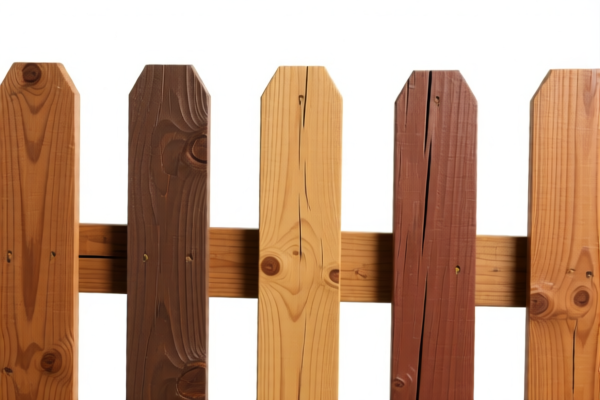
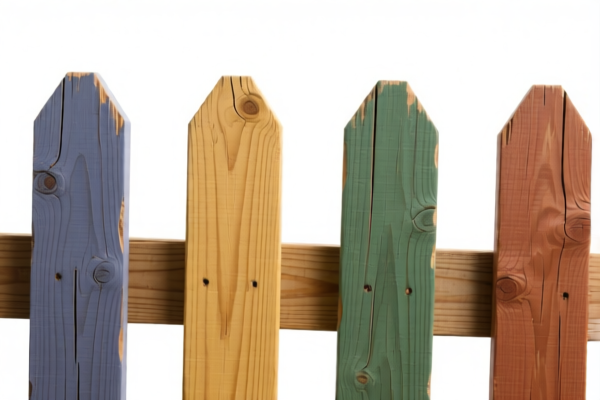
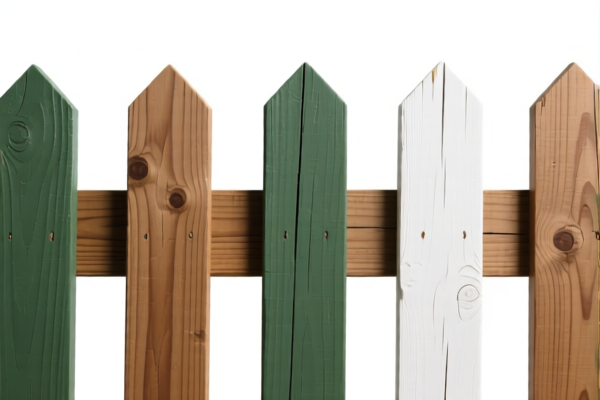
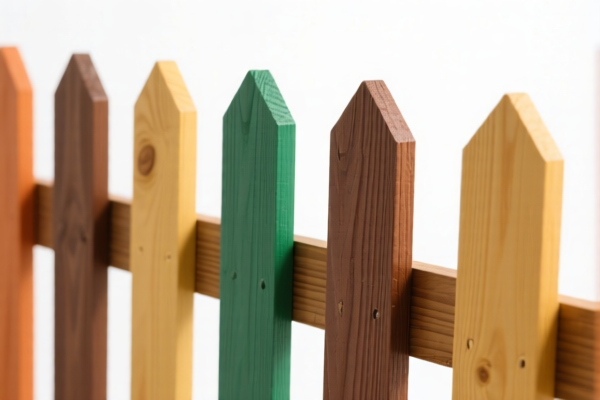
AI Analysis
🌲 Painted and Dyed Wooden Fence Posts
🌐 HS Code Reference & Customs Clearance Guide | 2026 Latest Tariff Analysis | Professional Entry Strategy
📌 I. Product Definition & Classification: Do You Really Understand "Wooden Fence Posts"?
Wooden fence posts, specifically those that are sawn, planed, or treated and have a thickness exceeding 6 mm, fall under Chapter 44 of the Harmonized System. The critical distinction lies in the wood species (Coniferous vs. Non-Coniferous) and the treatment method.
Since your product is "Painted and Dyed," it is explicitly classified as "Treated with paint, stain, creosote or other preservative."
⚠️ Key Distinction:
- If the wood is Coniferous (Pine, Fir, Spruce, etc.) → It falls under heading 4407.
- If the wood is Non-Coniferous (Hardwoods like Oak, Teak, etc.) → It falls under heading 4407 but with different sub-codes (not covered in this specific dataset).
- Thickness Matters: Posts must be >6mm thick to be classified as "sawn wood" rather than simple raw timber. Fence posts typically exceed this.
📦 II. HS Code Classification Details (2026 Latest Tariff Authority Comparison)
Based on the provided , we analyze the two most common coniferous types used for fence posts. Both require treatment (paint/dye) for durability.
| HS Code | Product Description | Typical Wood Type | Treatment Status | Key Feature |
|---|---|---|---|---|
4407.11.00.02 |
Sawn wood, coniferous, of Pine (Pinus spp.) | Pine | Treated with paint, stain, creosote, or other preservative | Most common for general fencing |
4407.12.00.02 |
Sawn wood, coniferous, of Fir (Abies spp.) and Spruce (Picea spp.) | Fir / Spruce | Treated with paint, stain, creosote, or other preservative | Often used for outdoor structures due to density |
🔍 Critical Note:
- The suffix .02 in the provided HS codes explicitly denotes "Treated with paint, stain, creosote or other preservative."
- If the posts were untreated, they would likely fall under .00 or .01 (if applicable), but since they are "Painted and Dyed," .02 is the mandatory classification.
- Misclassification as "untreated wood" can lead to severe penalties and shipment delays.
💰 III. 2026 Latest Tariff Rate Details (Including Surcharges & Policy Add-ons)
✅ Applicable Country: United States (US)
✅ Origin: China (CN)
✅ Effective Time: Current rates apply (subject to 301 Tariff List)
🎯 1. 4407.11.00.02 — Sawn Wood of Pine (Pinus spp.), Treated
| Item | Content |
|---|---|
| Basic Tariff | 0.0% (Ad Valorem) |
| Additional Tariff (Section 301) | +25.0% |
| Total Tariff | 25.0% |
| Tax Calculation | CIF Value × 25% |
| De Minimis Exemption | ❌ Not Applicable |
| Legal Basis Path | USITC:4407.11.00.02 → Footnote: 301 Tariff List |
📌 Explanation:
- Base Rate: Pine wood sawn >6mm has a low base rate (0%) to encourage import of raw materials.
- Section 301 Tariff: Wooden products from China are subject to a 25% surcharge under US Trade Law Section 301.
- Total Burden: You must budget for a 25% duty on the total landed value.
🎯 2. 4407.12.00.02 — Sawn Wood of Fir & Spruce, Treated
| Item | Content |
|---|---|
| Basic Tariff | 0.0% (Ad Valorem) |
| Additional Tariff (Section 301) | +25.0% |
| Total Tariff | 25.0% |
| Tax Calculation | CIF Value × 25% |
| De Minimis Exemption | ❌ Not Applicable |
| Legal Basis Path | USITC:4407.12.00.02 → Footnote: 301 Tariff List |
📌 Note:
- Fir and Spruce posts face the same 25% tariff as Pine.
- Even though the wood species differs, the treatment status (painted/dyed) and origin (China) trigger the identical tax burden.
- Do not attempt to claim a lower rate by misidentifying the species; customs will verify via DNA or physical inspection.
🛠️ IV. Customs Clearance Practical Advice (Battle-Tested Pitfall Guide)
✅ 1. Documentation Checklist (Non-negotiable)
| Document | Required? | Notes |
|---|---|---|
| ✅ Commercial Invoice | ✔️ | Must explicitly state: "Sawn Wood, Thickness >6mm, Treated with Paint/Dye" |
| ✅ Packing List | ✔️ | Detail weight, dimensions, and number of posts per pallet |
| ✅ Species Declaration | ✔️ | Explicitly state "Pinus spp." or "Abies/Picea spp." |
| ✅ Treatment Certificate | ✔️ | Proof of painting/dyeing/preservative treatment (critical for HS .02) |
| ✅ Fumigation Phytosanitary Certificate | ✔️ | Mandatory for all wood products entering the US |
| ✅ Bill of Lading/Air Waybill | ✔️ | Standard shipping documents |
✅ 2. Declaration Tips (Key Mantra)
🔥 "Species Clear, Treatment Stated, Thickness Verified, Tariff Avoided!"
| Scenario | Correct Declaration | Wrong Action | Consequence |
|---|---|---|---|
| Pine Posts | 4407.11.00.02 |
Mislabel as "Raw Timber" | 25% back-duty + fines |
| Fir/Spruce Posts | 4407.12.00.02 |
Mislabel as "Pine" | Potential classification error, delays |
| Untreated Posts | Different HS Code | Declare as "Treated" | Overpayment of tax (if rate differs) or underpayment if base rate changes |
| Thickness <6mm | Different HS Code | Declare as "Sawn Wood" | Wrong classification → Penalty |
📌 Critical Advice:
- Ensure the invoice describes the product as "Painted Wooden Fence Posts" or "Preservative-Treated Pine/Fir Posts."
- Vague terms like "Wooden Posts" are rejected.
- Specify HS Code 4407.11.00.02 or 4407.12.00.02 directly on the invoice to avoid ambiguity.
✅ 3. Special Circumstances Handling
| Situation | Handling Suggestion |
|---|---|
| Mixed Species in One Shipment | Separate pine from fir/spruce. If mixed, the higher scrutiny or most specific code may apply. Best to split shipments. |
| Chemical Safety (TSCA) | Ensure paints/dyes comply with US Toxic Substances Control Act. Provide SDS if requested. |
| Phytosanitary Compliance | Wood must be heat-treated or fumigated. Missing phytosanitary certificate = Shipment Rejected/Destroyed. |
| Value Fluctuation | Tariff is ad valorem (25%). Keep detailed proof of CIF value to avoid customs valuation disputes. |
🌍 V. Global Market Comparison (2026 Latest)
| Country/Region | Recommended HS Code | Tariff Rate | Certification Required | Notes |
|---|---|---|---|---|
| 🇺🇸 USA | 4407.11.00.02 / 4407.12.00.02 |
25% | Phytosanitary + TSCA | High duty due to Section 301 |
| 🇨🇳 China | 4407.11.00 / 4407.12.00 |
~0-2% | None | Low import tax for domestic production |
| 🇪🇺 EU | 4407.10 series |
0-5% | FSC/PEFC (Optional but recommended) | Green standards strict; no 301 tariff |
| 🇨🇦 Canada | 4407.10 series |
0-5% | Phytosanitary | Free trade (CUSMA) if Canadian origin |
| 🇲🇽 Mexico | 4407.10 series |
0% (if origin MX) | Phytosanitary | USMCA benefits for local goods |
📌 Conclusion:
- The 25% US tariff is the major cost driver.
- If possible, consider sourcing from non-China origins (e.g., Vietnam, Canada, or EU) to avoid the 301 surcharge.
- For US imports, budget 25% duty + shipping + insurance.
📌 VI. Common Mistakes & Pitfalls (Blood-Sweet Lessons)
❌ Mistake 1: Declaring "Wooden Posts" without specifying species or treatment.
👉 Consequence: Customs holds shipment for classification review → Delays.
❌ Mistake 2: Omitting "Painted/Treated" from the description.
👉 Consequence: Risk of being classified as raw wood (different HS) → Misclassification Penalty.
❌ Mistake 3: No Phytosanitary Certificate.
👉 Consequence: Shipment Rejected at US Border → Total loss of goods.
❌ Mistake 4: Under-declaring value to reduce 25% tariff.
👉 Consequence: Fraud charges, heavy fines, and blacklisting.
✅ Correct Practice:
"2400mm x 100mm x 100mm Painted Pine (Pinus spp.) Fence Posts, Heat-Treated, Phytosanitary Certified, HS 4407.11.00.02"
🎯 VII. Conclusion: Professional Declaration, Cost Control, Efficiency!
🎯 Remember the Mantra:
🔹 "Species matters, Treatment defines the code, 25% is the US price, Phyto is the key!"
🔹 "HS Code determines destiny, a 1% error can cost thousands in duties!"
📌 Pro Tip:
If your fence posts are originated from Vietnam, Canada, or Mexico, you can apply for preferential tariffs (0%~5%) under various trade agreements.
Recommend applying for a Pre-Ruling (Advance Ruling) from US Customs (CBP) to confirm the exact HS Code and tariff liability before shipping.
📣 Immediate Action:
📞 Contact a licensed US Customs Broker + Provide Product Specs + Request HS Code Pre-Ruling
🚀 Let your wooden fence posts pass smoothly, clear efficiently, and maximize your profit margin!
✨ Professional Customs Clearance Starts with Accurate Classification!
💼 Every Dollar of Your Cost Deserves Precise Calculation!
Customer Reviews
About HS Code Classification
The Harmonized System (HS) is an internationally standardized nomenclature developed by the World Customs Organization (WCO) to classify traded products. Over 200 countries use the HS system as the basis for customs tariffs, trade statistics, and import/export regulations.
Each HS code follows a hierarchical structure:
- Chapter (2 digits) — Broad category of goods (e.g., Chapter 84: Machinery and Mechanical Appliances)
- Heading (4 digits) — More specific grouping within the chapter
- Subheading (6 digits) — Internationally standardized breakdown, used by all WCO member countries
- National subdivisions (8-10 digits) — Country-specific extensions for further classification, such as US HTSUS 10-digit codes
Correct HS code classification is essential for smooth customs clearance, accurate duty payment, and compliance with trade regulations. Misclassification can lead to customs delays, overpayment of duties, or penalties.
When importing from CN to US, the applicable tariff rates may include:
- Most-Favored-Nation (MFN) rate — The standard duty rate applied to WTO members
- General rate — Applied to countries without trade agreements
- Trade remedy duties — Additional tariffs such as Section 301 (anti-dumping), Section 232 (national security), or countervailing duties
The information provided on this page is for reference purposes only. For official classification, please consult with your local customs authority or a licensed customs broker.