Palm Leaf Clutch
CN → US| HS编码 | 关税税率 | 原产国 | 目的国 | 文档 |
|---|---|---|---|---|
| 4602192500 | 53.0% | CN | US | 官方文档 |
| 4202921500 | 41.3% | CN | US | 官方文档 |
| 4202922000 | 40.7% | CN | US | 官方文档 |
| 4602192300 | 44.0% | CN | US | 官方文档 |
| 4602192500 | 53.0% | CN | US | 官方文档 |
商品图片
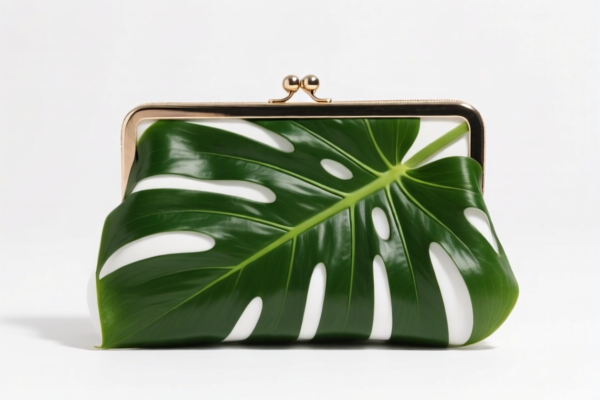
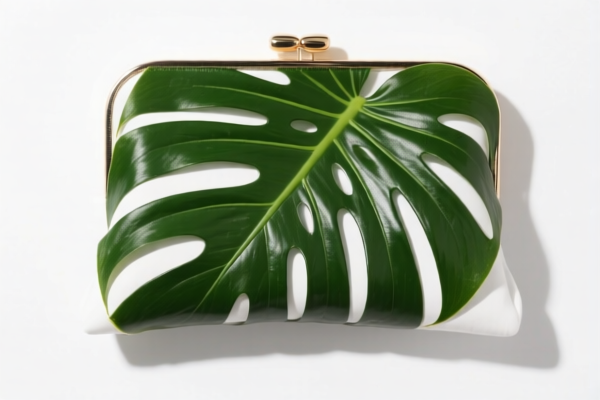
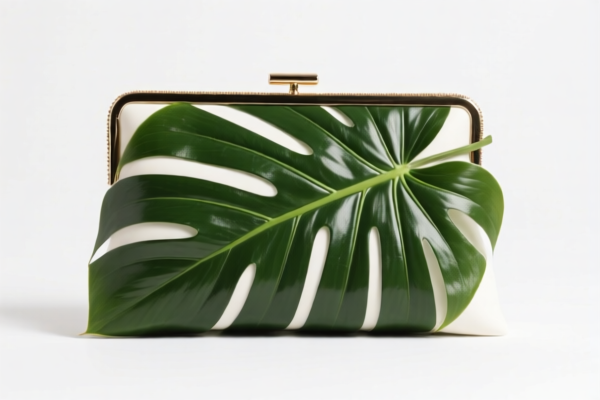
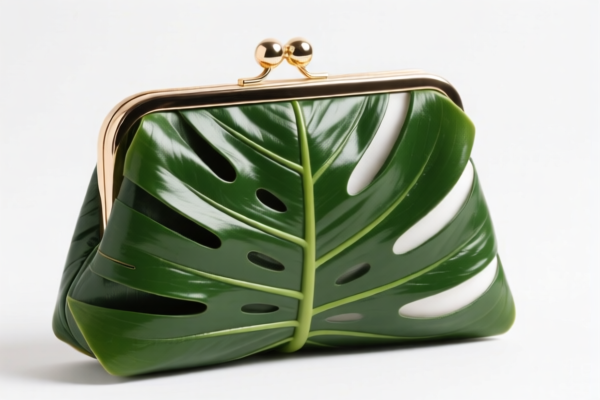
AI分析
🌿 Palm Leaf Clutch (Woven Palm Leaf Handbag)
🌐 HS Code Reference & Customs Clearance Guide | 2024-2026 Latest Tariff Analysis | Professional Clearance Strategy
📌 I. Product Definition & Classification: Do You Really Understand "Palm Leaf Clutch"?
A Palm Leaf Clutch is a type of fashion accessory made from woven natural fibers. In international trade, it is classified based on its material composition (vegetable plaiting materials vs. other materials) and its function (bag/glove/purse). The classification is critical because palm leaf products fall into two major chapters:
1. Chapter 46 (Products of Plaiting Materials):
Items primarily made from plaiting materials (like palm leaves, bamboo, rattan) that are assembled but not classified as articles of Chapter 42 (articles of leather or travel goods).
Key Feature: The structural integrity comes from the woven material itself.
2. Chapter 42 (Articles of Leather; Saddle & Harness; Travel Goods):
Items that are bags, suitcases, or handbags, regardless of whether the surface is made of leather, synthetic, or vegetable materials (like palm leaf), provided they have a specific "bag" structure (lining, handles, zippers, etc.).
⚠️ Critical Distinction:
- If the item is considered a "Handbag" or "Clutch" (Chapter 42) → Usually lower base tariff, but subject to Section 301/122.
- If the item is considered a "Basket" or "Woven Article" (Chapter 46) → Higher base tariff due to material specificity.
📦 II. HS Code Classification Details (2024-2026 Latest Tariff Authority)
| HS Code | Product Description | Applicable Scenario | Material Structure |
|---|---|---|---|
4202.92.15.00 |
Palm Leaf Plant Fiber Handbag, fits bag usage | Fashion clutches, woven handbags with lining/handles | ✅ Yes (Plant fiber, shaped as bag) |
4202.92.20.00 |
Palm Leaf Plant Fiber Bag, non-velvety structure | Similar to above, but specifically excludes velvety/plush types | ✅ Yes (Plant fiber, structured) |
4602.19.23.00 |
Palm Leaf Material Handbag, fits form & use | Woven palm leaf bags not classified as standard leather goods | ✅ Yes (Plaiting material) |
4602.19.25.00 |
Palm Leaf Material Handbag, matches classification | General woven palm leaf items/bags | ✅ Yes (Plaiting material, high tax) |
4602.19.25.00 |
Palm Leaf Material Bag, successful match | Duplicate listing for high-tariff woven goods | ✅ Yes |
🔍 Key Reminder:
- "Handbag" (Chapter 42) is often preferred by importers due to lower base tariffs (6.3% or 5.7%) compared to Chapter 46 (9.0% or 18.0%).
- However, both chapters are subject to Section 301 (25%) and Section 122 (10%) tariffs for Chinese origin.
💰 III. 2024-2026 Latest Tariff Rate Details (Including Surtaxes & Policy Surcharges)
✅ Applicable Country: United States (US)
✅ Origin: China (CN)
✅ Effective Date: Current applicable rates for Chinese imports
🎯 1. 4202.92.15.00 —— Palm Leaf Plant Fiber Handbag (Chapter 42)
| Item | Content |
|---|---|
| Base Tariff | 6.3% (ad valorem) |
| Section 301 Surtax | +25.0% (USITC Footnote 9903.88.01 / Trade Act 301) |
| Section 122 Surtax | +10.0% (IEEPA/Trade Act 122 - Specific to certain consumer goods) |
| Total Tax Rate | 41.3% |
| Tax Calculation | CIF Value × 41.3% |
| De Minimis Exemption | ❌ No (Value > $800 usually required; even if <$800, classification risk is high) |
| Legal Basis Path | HTSUS:4202.92.15.00 → Section 301: +25% → Section 122: +10% |
📌 Explanation:
- This is the most favorable classification for palm leaf clutches.
- Base 6.3% is significantly lower than Chapter 46.
- Total 41.3% includes all punitive tariffs.
🎯 2. 4202.92.20.00 —— Palm Leaf Plant Fiber Bag, Non-Velvety (Chapter 42)
| Item | Content |
|---|---|
| Base Tariff | 5.7% (ad valorem) |
| Section 301 Surtax | +25.0% |
| Section 122 Surtax | +10.0% |
| Total Tax Rate | 40.7% |
| Tax Calculation | CIF Value × 40.7% |
| De Minimis Exemption | ❌ No |
| Legal Basis Path | HTSUS:4202.92.20.00 → Section 301: +25% → Section 122: +10% |
📌 Note:
- Lowest Base Tariff (5.7%) among all options.
- Suitable for structured palm leaf bags that do not have a plush/velvety interior.
- Total 40.7% is the most cost-effective option if the product qualifies.
🎯 3. 4602.19.23.00 —— Palm Leaf Handbag, Fits Form & Use (Chapter 46)
| Item | Content |
|---|---|
| Base Tariff | 9.0% (ad valorem) |
| Section 301 Surtax | +25.0% |
| Section 122 Surtax | +10.0% |
| Total Tax Rate | 44.0% |
| Tax Calculation | CIF Value × 44.0% |
| De Minimis Exemption | ❌ No |
| Legal Basis Path | HTSUS:4602.19.23.00 → Section 301: +25% → Section 122: +10% |
📌 Note:
- Chapter 46 is often used when the item is considered more of a "woven article" than a "bag."
- Higher base tariff than Chapter 42.
🎯 4. 4602.19.25.00 —— Palm Leaf Material Bag (Chapter 46)
| Item | Content |
|---|---|
| Base Tariff | 18.0% (ad valorem) |
| Section 301 Surtax | +25.0% |
| Section 122 Surtax | +10.0% |
| Total Tax Rate | 53.0% |
| Tax Calculation | CIF Value × 53.0% |
| De Minimis Exemption | ❌ No |
| Legal Basis Path | HTSUS:4602.19.25.00 → Section 301: +25% → Section 122: +10% |
📌 Warning:
- Highest Tariff (53.0%)!
- This classification is applied when the item is strictly viewed as a "plaiting material article" without bag-specific features or when it doesn't fit the narrower Chapter 42 subheadings.
- Avoid this classification if possible unless the product strictly resembles a basket or decorative woven item rather than a fashion clutch.
🛠️ IV. Customs Clearance Practical Advice (Real-World Pitfall Guide)
✅ 1. Preparation Checklist (Missing Items = Delays)
| Material | Required | Explanation |
|---|---|---|
| ✅ Product Specifications | ✔️ | Include dimensions, weaving technique, lining material (fabric vs. none), closure type (zipper/magnet). |
| ✅ Product Photos | ✔️ | Front, back, interior (showing lining), hardware details. |
| ✅ Material Declaration | ✔️ | Explicitly state: "Made of woven palm leaves with [fabric/leather] lining." |
| ✅ Commercial Invoice | ✔️ | Describe as "Palm Leaf Woven Handbag" or "Palm Leaf Clutch," NOT "Woven Basket." |
| ✅ Packing List | ✔️ | Indicate if items are packed individually or bulk. |
✅ 2. Declaration Strategy (Key Mantras)
🔥 "Bag First, Woven Second! Line It, Tag It, Lower the Rate!"
| Scenario | Correct Declaration | Wrong Practice |
|---|---|---|
| Palm Leaf Clutch with Lining & Hardware | 4202.92.15.00 or 4202.92.20.00 |
Calling it "Woven Basket" → 4602... (53% tax) |
| Palm Leaf Clutch WITHOUT Lining | 4602.19.23.00 (Check if it can still be argued as bag) |
Assuming it's automatically 4202 |
| Decorative Palm Leaf Weaving (Not a Bag) | 4602.19.25.00 |
Trying to force it into 4202 → Rejection/Amendment |
📌 Pro Tip:
- If the clutch has a zipper, button, or fabric lining, emphasize these features in the description. This strongly supports Chapter 42 classification.
- If it is just woven leaves tied together with no lining/hardware, it may fall to Chapter 46.
✅ 3. Special Case Handling
| Situation | Handling Advice |
|---|---|
| OEM Custom Palm Leaf Bag | Provide design sketches showing it is a "handbag" shape, not a basket. |
| Mixed Materials (e.g., Palm Leaf + Leather Strap) | Still classify as 4202.92.xxxx because the essential character is the bag, and leather/plant mix often falls under travel goods. |
| "Eco-Friendly" Claim | Do NOT rely on "eco-friendly" for tariff reduction. Tariffs are based on HS Code, not green claims. |
| Section 122 Eligibility | Confirm if the product is on the specific exclusion list for Section 122. Most fashion accessories are NOT excluded. |
🌍 V. Global Market Comparison (2024-2026)
| Country/Region | Recommended HS Code | Tariff (China Origin) | Certification | Notes |
|---|---|---|---|---|
| 🇺🇸 USA | 4202.92.15.00 / 4202.92.20.00 |
41.3% - 40.7% | None specific | High punitive tariffs (301+122) |
| 🇪🇺 EU | 4202.92.00 / 4602.19.00 |
6.5% - 8.0% | CE (if applicable) | No Section 301/122. Much cheaper. |
| 🇨🇳 China | 4202.92.00 / 4602.19.00 |
10% - 14% | N/A | Import tariffs for foreign goods. |
| 🇬🇧 UK | 4202.92.00 |
6.5% | UKCA | Post-Brexit tariff structure. |
| 🇨🇦 Canada | 4202.92.00 |
10.0% | None | FTAA benefits may apply for non-China origin. |
📌 Conclusion:
- USA is the most expensive market due to punitive tariffs.
- EU/UK offer significantly lower tariffs (~6.5%) for similar goods.
- Consider supply chain diversification (e.g., manufacturing in Vietnam or Indonesia) to avoid US punitive tariffs if exporting to the US.
📌 VI. Common Errors & Pitfalls (Lessons Learned)
❌ Error 1: Classifying a lined palm leaf clutch as 4602.19.25.00 (53%)
👉 Consequence: Overpaying ~12% in taxes unnecessarily.
👉 Fix: Use 4202.92.15.00 (41.3%).
❌ Error 2: Describing the item as "Woven Basket" in the invoice
👉 Consequence: Customs may accept the wrong code, leading to audits and penalties later.
👉 Fix: Always use "Handbag," "Clutch," or "Purse."
❌ Error 3: Ignoring Section 122 Surtax
👉 Consequence: Underestimating total landed cost by 10%.
👉 Fix: Always add 10% to the calculation for Chinese-origin fashion accessories.
✅ Correct Practice:
"Woven Palm Leaf Clutch, with fabric lining and magnetic closure, Fashion Accessory"
🎯 VII. Conclusion: Precise Classification Saves Money!
🎯 Remember:
🔹 "Bag vs. Basket: It's About Lining and Hardware!"
🔹 "4202 is Cheaper Than 4602! Avoid 53% at All Costs!"
🔹 "Section 301 + 122 = 35% Extra! Budget Accordingly!"
📌 Tips:
- If your palm leaf clutch is originating from Vietnam, Thailand, or India, you may avoid US Section 301/122 tariffs, reducing the rate to 0-8% (depending on FTA).
- Apply for an Advance Ruling from US Customs (CBP) if you are uncertain about the Chapter 42 vs. 46 classification.
- Keep product samples and photos ready for customs inspection.
📣 Immediate Action:
📞 Consult a licensed customs broker
📸 Provide clear product images showing lining/hardware
📝 Declare accurately as "Palm Leaf Handbag/Clutch"
🚀 Clear Customs Smoothly, Minimize Tariffs, Maximize Profit!
✨ Professional Clearance Starts with Precise Classification!
💼 Every Cent Counts in International Trade!
用户评价
关于 HS 编码归类
协调制度(HS)是由世界海关组织(WCO)制定的国际贸易商品分类标准。全球 200 多个国家采用 HS 系统作为海关关税、贸易统计和进出口监管的基础。
每个 HS 编码遵循以下层级结构:
- 章(2 位)——商品大类(例如:第 84 章:机器和机械设备)
- 品目(4 位)——章内的更具体分类
- 子目(6 位)——国际通用细分,所有 WCO 成员国统一使用
- 本国细分(8-10 位)——各国自行扩展的细分编码,如美国 HTSUS 10 位编码
正确的 HS 编码归类对于顺利通关、准确缴纳关税和遵守贸易法规至关重要。错误归类可能导致海关延误、多缴关税或罚款。
从CN进口到US时,适用的关税税率可能包括:
- 最惠国(MFN)税率——适用于 WTO 成员国的标准关税税率
- 普通税率——适用于无贸易协定国家
- 贸易救济关税——附加关税,如 301 条款(反倾销)、232 条款(国家安全)或反补贴税
本页内容仅供参考。如需正式归类,请咨询当地海关或持牌报关代理。