Palm Leaf Clutch
CN → US| HS Code | Tariff Rate | Origin | Destination | Doc |
|---|---|---|---|---|
| 4602192500 | 53.0% | CN | US | Official Doc |
| 4202921500 | 41.3% | CN | US | Official Doc |
| 4202922000 | 40.7% | CN | US | Official Doc |
| 4602192300 | 44.0% | CN | US | Official Doc |
| 4602192500 | 53.0% | CN | US | Official Doc |
Product Images
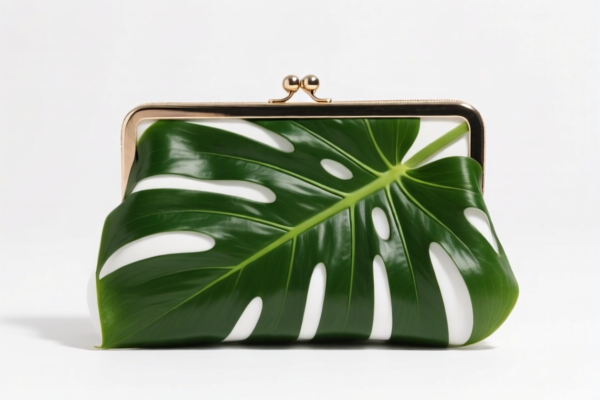
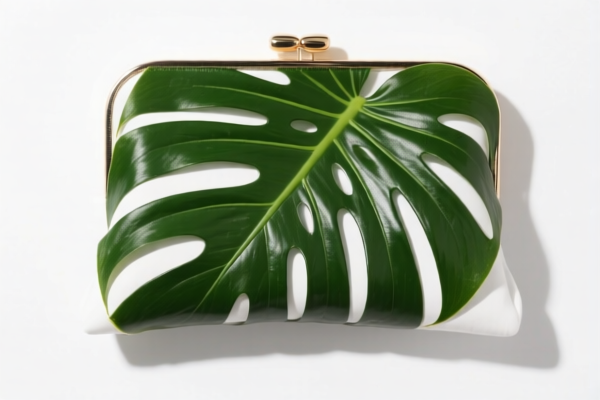
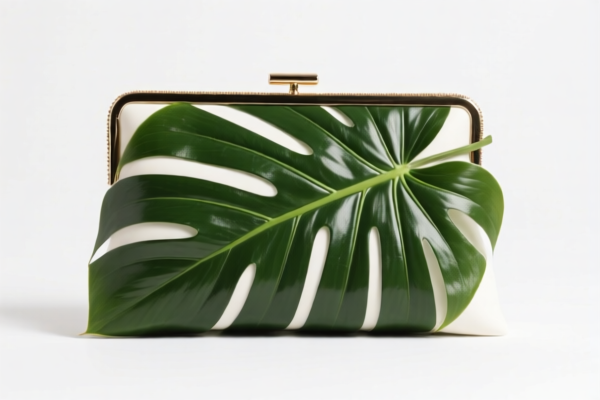
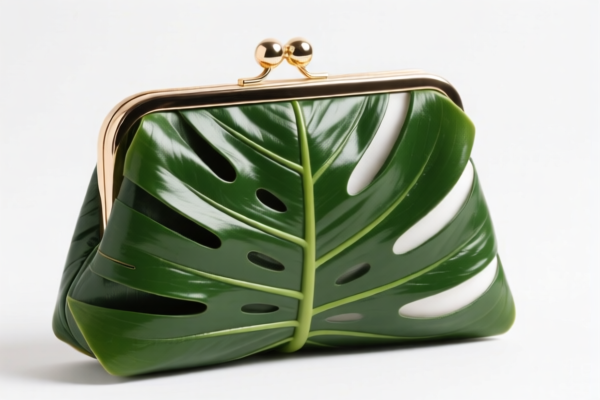
AI Analysis
🌿 Palm Leaf Clutch (Woven Palm Leaf Handbag)
🌐 HS Code Reference & Customs Clearance Guide | 2024-2026 Latest Tariff Analysis | Professional Clearance Strategy
📌 I. Product Definition & Classification: Do You Really Understand "Palm Leaf Clutch"?
A Palm Leaf Clutch is a type of fashion accessory made from woven natural fibers. In international trade, it is classified based on its material composition (vegetable plaiting materials vs. other materials) and its function (bag/glove/purse). The classification is critical because palm leaf products fall into two major chapters:
1. Chapter 46 (Products of Plaiting Materials):
Items primarily made from plaiting materials (like palm leaves, bamboo, rattan) that are assembled but not classified as articles of Chapter 42 (articles of leather or travel goods).
Key Feature: The structural integrity comes from the woven material itself.
2. Chapter 42 (Articles of Leather; Saddle & Harness; Travel Goods):
Items that are bags, suitcases, or handbags, regardless of whether the surface is made of leather, synthetic, or vegetable materials (like palm leaf), provided they have a specific "bag" structure (lining, handles, zippers, etc.).
⚠️ Critical Distinction:
- If the item is considered a "Handbag" or "Clutch" (Chapter 42) → Usually lower base tariff, but subject to Section 301/122.
- If the item is considered a "Basket" or "Woven Article" (Chapter 46) → Higher base tariff due to material specificity.
📦 II. HS Code Classification Details (2024-2026 Latest Tariff Authority)
| HS Code | Product Description | Applicable Scenario | Material Structure |
|---|---|---|---|
4202.92.15.00 |
Palm Leaf Plant Fiber Handbag, fits bag usage | Fashion clutches, woven handbags with lining/handles | ✅ Yes (Plant fiber, shaped as bag) |
4202.92.20.00 |
Palm Leaf Plant Fiber Bag, non-velvety structure | Similar to above, but specifically excludes velvety/plush types | ✅ Yes (Plant fiber, structured) |
4602.19.23.00 |
Palm Leaf Material Handbag, fits form & use | Woven palm leaf bags not classified as standard leather goods | ✅ Yes (Plaiting material) |
4602.19.25.00 |
Palm Leaf Material Handbag, matches classification | General woven palm leaf items/bags | ✅ Yes (Plaiting material, high tax) |
4602.19.25.00 |
Palm Leaf Material Bag, successful match | Duplicate listing for high-tariff woven goods | ✅ Yes |
🔍 Key Reminder:
- "Handbag" (Chapter 42) is often preferred by importers due to lower base tariffs (6.3% or 5.7%) compared to Chapter 46 (9.0% or 18.0%).
- However, both chapters are subject to Section 301 (25%) and Section 122 (10%) tariffs for Chinese origin.
💰 III. 2024-2026 Latest Tariff Rate Details (Including Surtaxes & Policy Surcharges)
✅ Applicable Country: United States (US)
✅ Origin: China (CN)
✅ Effective Date: Current applicable rates for Chinese imports
🎯 1. 4202.92.15.00 —— Palm Leaf Plant Fiber Handbag (Chapter 42)
| Item | Content |
|---|---|
| Base Tariff | 6.3% (ad valorem) |
| Section 301 Surtax | +25.0% (USITC Footnote 9903.88.01 / Trade Act 301) |
| Section 122 Surtax | +10.0% (IEEPA/Trade Act 122 - Specific to certain consumer goods) |
| Total Tax Rate | 41.3% |
| Tax Calculation | CIF Value × 41.3% |
| De Minimis Exemption | ❌ No (Value > $800 usually required; even if <$800, classification risk is high) |
| Legal Basis Path | HTSUS:4202.92.15.00 → Section 301: +25% → Section 122: +10% |
📌 Explanation:
- This is the most favorable classification for palm leaf clutches.
- Base 6.3% is significantly lower than Chapter 46.
- Total 41.3% includes all punitive tariffs.
🎯 2. 4202.92.20.00 —— Palm Leaf Plant Fiber Bag, Non-Velvety (Chapter 42)
| Item | Content |
|---|---|
| Base Tariff | 5.7% (ad valorem) |
| Section 301 Surtax | +25.0% |
| Section 122 Surtax | +10.0% |
| Total Tax Rate | 40.7% |
| Tax Calculation | CIF Value × 40.7% |
| De Minimis Exemption | ❌ No |
| Legal Basis Path | HTSUS:4202.92.20.00 → Section 301: +25% → Section 122: +10% |
📌 Note:
- Lowest Base Tariff (5.7%) among all options.
- Suitable for structured palm leaf bags that do not have a plush/velvety interior.
- Total 40.7% is the most cost-effective option if the product qualifies.
🎯 3. 4602.19.23.00 —— Palm Leaf Handbag, Fits Form & Use (Chapter 46)
| Item | Content |
|---|---|
| Base Tariff | 9.0% (ad valorem) |
| Section 301 Surtax | +25.0% |
| Section 122 Surtax | +10.0% |
| Total Tax Rate | 44.0% |
| Tax Calculation | CIF Value × 44.0% |
| De Minimis Exemption | ❌ No |
| Legal Basis Path | HTSUS:4602.19.23.00 → Section 301: +25% → Section 122: +10% |
📌 Note:
- Chapter 46 is often used when the item is considered more of a "woven article" than a "bag."
- Higher base tariff than Chapter 42.
🎯 4. 4602.19.25.00 —— Palm Leaf Material Bag (Chapter 46)
| Item | Content |
|---|---|
| Base Tariff | 18.0% (ad valorem) |
| Section 301 Surtax | +25.0% |
| Section 122 Surtax | +10.0% |
| Total Tax Rate | 53.0% |
| Tax Calculation | CIF Value × 53.0% |
| De Minimis Exemption | ❌ No |
| Legal Basis Path | HTSUS:4602.19.25.00 → Section 301: +25% → Section 122: +10% |
📌 Warning:
- Highest Tariff (53.0%)!
- This classification is applied when the item is strictly viewed as a "plaiting material article" without bag-specific features or when it doesn't fit the narrower Chapter 42 subheadings.
- Avoid this classification if possible unless the product strictly resembles a basket or decorative woven item rather than a fashion clutch.
🛠️ IV. Customs Clearance Practical Advice (Real-World Pitfall Guide)
✅ 1. Preparation Checklist (Missing Items = Delays)
| Material | Required | Explanation |
|---|---|---|
| ✅ Product Specifications | ✔️ | Include dimensions, weaving technique, lining material (fabric vs. none), closure type (zipper/magnet). |
| ✅ Product Photos | ✔️ | Front, back, interior (showing lining), hardware details. |
| ✅ Material Declaration | ✔️ | Explicitly state: "Made of woven palm leaves with [fabric/leather] lining." |
| ✅ Commercial Invoice | ✔️ | Describe as "Palm Leaf Woven Handbag" or "Palm Leaf Clutch," NOT "Woven Basket." |
| ✅ Packing List | ✔️ | Indicate if items are packed individually or bulk. |
✅ 2. Declaration Strategy (Key Mantras)
🔥 "Bag First, Woven Second! Line It, Tag It, Lower the Rate!"
| Scenario | Correct Declaration | Wrong Practice |
|---|---|---|
| Palm Leaf Clutch with Lining & Hardware | 4202.92.15.00 or 4202.92.20.00 |
Calling it "Woven Basket" → 4602... (53% tax) |
| Palm Leaf Clutch WITHOUT Lining | 4602.19.23.00 (Check if it can still be argued as bag) |
Assuming it's automatically 4202 |
| Decorative Palm Leaf Weaving (Not a Bag) | 4602.19.25.00 |
Trying to force it into 4202 → Rejection/Amendment |
📌 Pro Tip:
- If the clutch has a zipper, button, or fabric lining, emphasize these features in the description. This strongly supports Chapter 42 classification.
- If it is just woven leaves tied together with no lining/hardware, it may fall to Chapter 46.
✅ 3. Special Case Handling
| Situation | Handling Advice |
|---|---|
| OEM Custom Palm Leaf Bag | Provide design sketches showing it is a "handbag" shape, not a basket. |
| Mixed Materials (e.g., Palm Leaf + Leather Strap) | Still classify as 4202.92.xxxx because the essential character is the bag, and leather/plant mix often falls under travel goods. |
| "Eco-Friendly" Claim | Do NOT rely on "eco-friendly" for tariff reduction. Tariffs are based on HS Code, not green claims. |
| Section 122 Eligibility | Confirm if the product is on the specific exclusion list for Section 122. Most fashion accessories are NOT excluded. |
🌍 V. Global Market Comparison (2024-2026)
| Country/Region | Recommended HS Code | Tariff (China Origin) | Certification | Notes |
|---|---|---|---|---|
| 🇺🇸 USA | 4202.92.15.00 / 4202.92.20.00 |
41.3% - 40.7% | None specific | High punitive tariffs (301+122) |
| 🇪🇺 EU | 4202.92.00 / 4602.19.00 |
6.5% - 8.0% | CE (if applicable) | No Section 301/122. Much cheaper. |
| 🇨🇳 China | 4202.92.00 / 4602.19.00 |
10% - 14% | N/A | Import tariffs for foreign goods. |
| 🇬🇧 UK | 4202.92.00 |
6.5% | UKCA | Post-Brexit tariff structure. |
| 🇨🇦 Canada | 4202.92.00 |
10.0% | None | FTAA benefits may apply for non-China origin. |
📌 Conclusion:
- USA is the most expensive market due to punitive tariffs.
- EU/UK offer significantly lower tariffs (~6.5%) for similar goods.
- Consider supply chain diversification (e.g., manufacturing in Vietnam or Indonesia) to avoid US punitive tariffs if exporting to the US.
📌 VI. Common Errors & Pitfalls (Lessons Learned)
❌ Error 1: Classifying a lined palm leaf clutch as 4602.19.25.00 (53%)
👉 Consequence: Overpaying ~12% in taxes unnecessarily.
👉 Fix: Use 4202.92.15.00 (41.3%).
❌ Error 2: Describing the item as "Woven Basket" in the invoice
👉 Consequence: Customs may accept the wrong code, leading to audits and penalties later.
👉 Fix: Always use "Handbag," "Clutch," or "Purse."
❌ Error 3: Ignoring Section 122 Surtax
👉 Consequence: Underestimating total landed cost by 10%.
👉 Fix: Always add 10% to the calculation for Chinese-origin fashion accessories.
✅ Correct Practice:
"Woven Palm Leaf Clutch, with fabric lining and magnetic closure, Fashion Accessory"
🎯 VII. Conclusion: Precise Classification Saves Money!
🎯 Remember:
🔹 "Bag vs. Basket: It's About Lining and Hardware!"
🔹 "4202 is Cheaper Than 4602! Avoid 53% at All Costs!"
🔹 "Section 301 + 122 = 35% Extra! Budget Accordingly!"
📌 Tips:
- If your palm leaf clutch is originating from Vietnam, Thailand, or India, you may avoid US Section 301/122 tariffs, reducing the rate to 0-8% (depending on FTA).
- Apply for an Advance Ruling from US Customs (CBP) if you are uncertain about the Chapter 42 vs. 46 classification.
- Keep product samples and photos ready for customs inspection.
📣 Immediate Action:
📞 Consult a licensed customs broker
📸 Provide clear product images showing lining/hardware
📝 Declare accurately as "Palm Leaf Handbag/Clutch"
🚀 Clear Customs Smoothly, Minimize Tariffs, Maximize Profit!
✨ Professional Clearance Starts with Precise Classification!
💼 Every Cent Counts in International Trade!
Customer Reviews
About HS Code Classification
The Harmonized System (HS) is an internationally standardized nomenclature developed by the World Customs Organization (WCO) to classify traded products. Over 200 countries use the HS system as the basis for customs tariffs, trade statistics, and import/export regulations.
Each HS code follows a hierarchical structure:
- Chapter (2 digits) — Broad category of goods (e.g., Chapter 84: Machinery and Mechanical Appliances)
- Heading (4 digits) — More specific grouping within the chapter
- Subheading (6 digits) — Internationally standardized breakdown, used by all WCO member countries
- National subdivisions (8-10 digits) — Country-specific extensions for further classification, such as US HTSUS 10-digit codes
Correct HS code classification is essential for smooth customs clearance, accurate duty payment, and compliance with trade regulations. Misclassification can lead to customs delays, overpayment of duties, or penalties.
When importing from CN to US, the applicable tariff rates may include:
- Most-Favored-Nation (MFN) rate — The standard duty rate applied to WTO members
- General rate — Applied to countries without trade agreements
- Trade remedy duties — Additional tariffs such as Section 301 (anti-dumping), Section 232 (national security), or countervailing duties
The information provided on this page is for reference purposes only. For official classification, please consult with your local customs authority or a licensed customs broker.