Palm Leaf Woven Floor Mat
CN → US| HS编码 | 关税税率 | 原产国 | 目的国 | 文档 |
|---|---|---|---|---|
| 4602191600 | 40.0% | CN | US | 官方文档 |
| 4602191400 | 35.0% | CN | US | 官方文档 |
商品图片
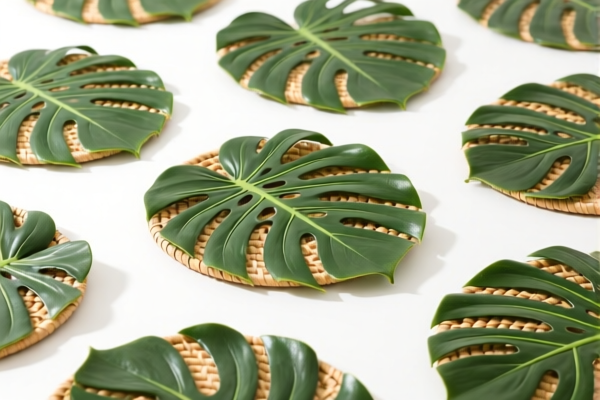
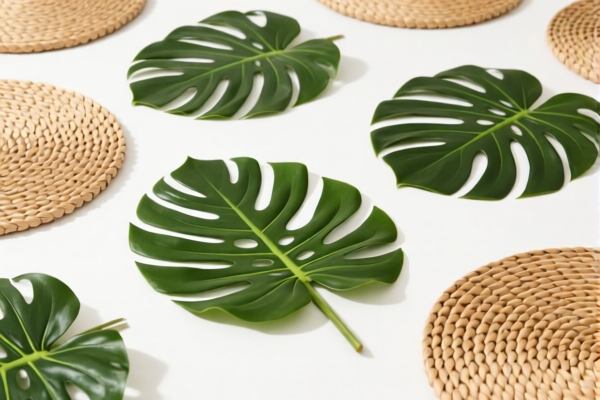
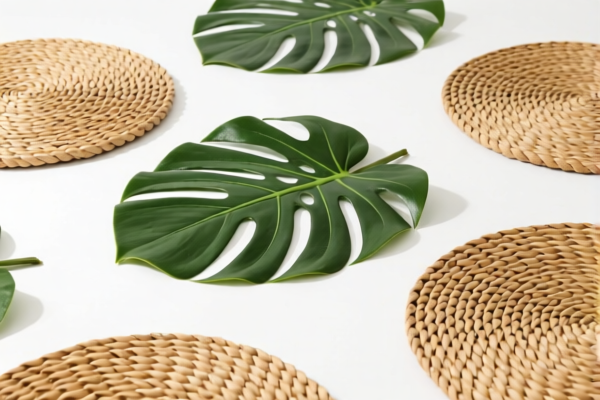
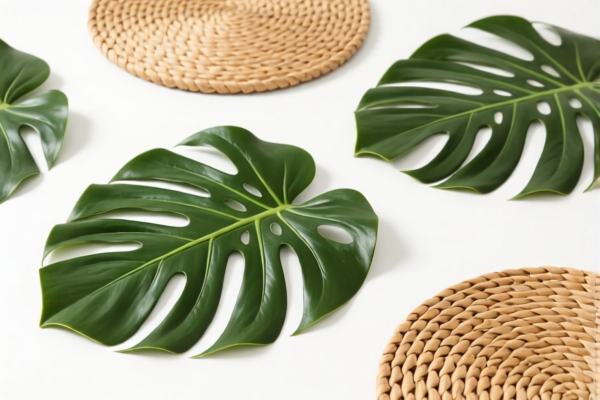
AI分析
🌴 Palm Leaf Woven Floor Mat (Basketwork & Wickerwork)
🌐 HS Code Reference & Customs Clearance Guide | 2026 Updated Tariff Analysis | Strategic Entry Strategy
📌 I. Product Definition & Classification: Do You Know "Palm Leaf Floor Mats"?
Palm leaf woven floor mats are traditional household items used for decoration, ventilation, or flooring. In international trade, they fall under Chapter 46: Manufactures of plaiting materials or of straw, alfa, esparto or other weaving materials.
Crucially, the classification depends on whether the item is considered a "finished article" made directly to shape or part of "wickerwork" (which often implies a specific structural rigidity or frame). The provided data distinguishes between two specific sub-categories based on the exact nature of the weaving and structure:
1. General Baskets/Bags (Other): Often applied to flexible mats or items not strictly defined as "wickerwork" in the traditional sense of rigid framing.
2. Wickerwork: Applied to items that fit the specific definition of wicker articles, which may include certain types of tightly woven, structured mats or panels.
⚠️ Key Distinction Point:
- If the mat is considered "Other" (not specifically wickerwork), it may fall under 4602.19.16.00 (Base Tax: 0%).
- If the mat is classified as "Wickerwork", it falls under 4602.19.14.00 (Base Tax: 0%, but Subject to Additional Tax).
- Note: The description explicitly states "Of palm leaf: Other" vs "Of palm leaf: Wickerwork". This is a critical legal distinction in tariff sub-headings.
📦 II. HS Code Classification Details (2026 Latest Tariff Authority Comparison)
| HS Code | Product Description | Application Scenario | Tax Structure |
|---|---|---|---|
4602.19.16.00 |
Other baskets and bags, whether or not lined: Of palm leaf: Other | Flexible palm leaf mats, non-rigid floor coverings, general woven articles not meeting "wicker" definition | ✅ Base: 0% ✅ Additional: 0% |
4602.19.14.00 |
Other baskets and bags, whether or not lined: Of palm leaf: Wickerwork | Structured palm leaf mats, rigid or semi-rigid wicker-style floor panels | ✅ Base: 0% ⚠️ Additional: 25% |
🔍 Critical Reminder:
- Both codes start with 0% Base Tariff. The difference lies entirely in the Additional Tax.
- "Wickerwork" (14.00) incurs a 25% Additional Tax, likely due to Section 301 or similar trade measures against specific Chinese textile/basketry goods.
- "Other" (16.00) incurs 0% Additional Tax.
- Misclassification Risk: Declaring a flexible mat as "Wickerwork" to avoid scrutiny could lead to penalties if customs determines it does not meet the strict definition of wickerwork. Conversely, declaring a rigid wicker item as "Other" to save 25% is high-risk.
💰 III. 2026 Latest Tariff Rate Details (Including Additional Taxes)
✅ Applicable Country: United States (US) (Inferred from the 25% additional tax pattern common in current US-China trade)
✅ Origin: China (CN) (Implied by the high additional tax rate)
✅ Effective Time: Current Trade Policy (2024-2026)
🎯 1. 4602.19.16.00 —— Palm Leaf Woven Floor Mat (Other)
| Item | Content |
|---|---|
| Base Tariff | 0% (ad valorem) |
| Additional Tax | 0% |
| Total Tax Rate | 0% |
| Tax Calculation | CIF Value × 0% = $0 |
| De Minimis Eligibility | ✅ Yes (Generally, goods under $800 may enter duty-free under Section 321, but check if specific exclusions apply to palm/wicker products) |
| Legal Basis Path | HTSUS:4602.19.16.00 → USTR Exclusion List: No Exclusion |
📌 Explanation:
- This code represents 0% duty.
- It is the most favorable classification if the product can be legitimately argued as "Other" rather than "Wickerwork".
- Strategic Advantage: Zero tariff cost improves competitiveness significantly.
🎯 2. 4602.19.14.00 —— Palm Leaf Woven Floor Mat (Wickerwork)
| Item | Content |
|---|---|
| Base Tariff | 0% |
| Additional Tax | +25% |
| Total Tax Rate | 25% |
| Tax Calculation | CIF Value × 25% |
| De Minimis Eligibility | ❌ No (Section 301 goods are generally excluded from de minimis treatment in the US) |
| Legal Basis Path | HTSUS:4602.19.14.00 → USTR Section 301: List 4B / Footnote 9903.88.01 equivalent |
📌 Explanation:
- "Additional Tax 25%" comes from US Trade Law (Section 301) targeting specific Chinese goods.
- Total 25% is a high tariff, significantly impacting profit margins.
- Strict Definition: This code applies if the mat is rigid, framed, or fits the "wickerwork" definition in US customs rulings.
🛠️ IV. Customs Clearance Practical Advice (Battle-Tested Pitfall Guide)
✅ 1. Required Documentation Checklist (Essential)
| Document | Must Provide | Purpose |
|---|---|---|
| ✅ Product Photos | ✔️ | Clear images showing flexibility/rigidity. Show texture, edge treatment, and any frames. |
| ✅ Material Composition Statement | ✔️ | Confirm 100% Palm Leaf. No synthetic blends. |
| ✅ Commercial Invoice | ✔️ | Must clearly state: "Palm Leaf Woven Floor Mat, HS Code 4602.19.16.00 (or 14.00)" |
| ✅ Product Description | ✔️ | Use terms like "flexible mat," "woven panel," or "rigid wicker frame" depending on the intended HS code. |
| ✅ Origin Certificate | ✔️ | Required for US entry to verify country of origin (China vs. Vietnam/Indonesia). |
✅ 2. Declaration Strategy (Key Mantra)
🔥 "Rigid is Wicker, Flexible is Other. Choose Wisely, Avoid Disaster!"
| Scenario | Correct Declaration | Error Consequence |
|---|---|---|
| Flexible, Pliable Mat | 4602.19.16.00 ("Other") |
Misdeclaring as "Other" when it's rigid → 0% saved, but risk of penalty if proven rigid. |
| Rigid, Framed Panel | 4602.19.14.00 ("Wickerwork") |
Misdeclaring as "Other" to save 25% → 25% Back Tax + Penalties + Possible Seizure. |
| Mixed Materials | Not Covered in Data | If contains plastic/synthetic, may shift to Chapter 39 or 63 → Higher taxes. |
| Small Samples (<$800) | Check De Minimis Rules | If classified as Section 301 ("Wickerwork"), no de minimis exemption → Still 25% tax. |
✅ 3. Special Cases & Mitigation
| Case | Handling Advice |
|---|---|
| Ambiguous Structure | If the mat is semi-rigid, provide a technical explanation to customs brokers highlighting flexibility, aiming for 4602.19.16.00. |
| Origin Diversification | If sourced from Vietnam or Indonesia, Section 301 additional taxes (25%) may not apply. Check preferential trade agreements (e.g., ASEAN-US). |
| Pre-Ruling | For large volumes, apply for a US Customs Ruling to secure classification certainty. Avoids retroactive fines. |
| Packaging | Do not over-pack in rigid containers that imply "wickerwork" if the item is actually flexible. |
🌍 V. Global Market Clearance Comparison (2026 Latest)
| Country/Region | Recommended HS Code | Tariff Rate | Certification | Notes |
|---|---|---|---|---|
| 🇺🇸 USA | 4602.19.16.00 |
0% | None | Best outcome if classified as "Other" |
| 🇺🇸 USA | 4602.19.14.00 |
25% | None | High cost. Avoid if possible. |
| 🇨🇳 China | 4602.19.16.00 |
0% | None | Export to China not relevant for this data set |
| 🇪🇺 EU | 4602.19.16.00 |
Varies | None | EU tariffs differ; check CN 4602.19 |
| 🇬🇧 UK | 4602.19.16.00 |
Varies | None | Post-Brexit rules apply |
📌 Conclusion:
- The US is the critical market where this 25% differential matters most.
- Classification as "Other" (16.00) is the strategic goal for US imports to avoid the 25% tariff.
- Evidence of flexibility (e.g., photos, material specs) supports the "Other" classification.
📌 VI. Common Errors & Pitfall Guide (Lessons Learned)
❌ Error 1: Calling a rigid, framed palm leaf panel "Woven Mat" to force HS Code 16.00
👉 Consequence: Customs inspector examines rigidity, reclassifies to 14.00, demands 25% tax + penalties.
❌ Error 2: Assuming all "Floor Mats" are 0% duty
👉 Consequence: Ignoring the "Wickerwork" distinction leads to unexpected 25% bill upon arrival.
❌ Error 3: Using "Basket" in description for a flat floor mat
👉 Consequence: Customs may reject "Basket" classification, leading to delays or misclassification into broader, higher-tariff headings.
❌ Error 4: Not declaring origin correctly
👉 Consequence: If origin is China, and code is 14.00, 25% tax applies. If origin is Vietnam, tax may be lower, but misdeclaration of origin is fraud.
✅ Correct Action:
"Palm Leaf Floor Mat, Flexible, Hand-Woven, No Rigid Frame, HS Code 4602.19.16.00"
(Ensure the physical product matches this description)
🎯 VII. Conclusion: Professional Declaration, Save Costs, Avoid Risks!
🎯 Remember the Mantra:
🔹 "Flexible = Other (0%). Rigid = Wicker (25%). Evidence is King!"
🔹 "HS Code determines your cost. 25% difference can make or break your profit!"
📌 Pro Tip:
If your palm leaf mats are sourced from Vietnam, Indonesia, or India, they may NOT be subject to the 25% Section 301 additional tax, even if classified as "Wickerwork."
Recommendation:
1. Diversify Sourcing: Consider non-China origins for the US market.
2. Document Flexibility: Provide clear photos/specs proving the item is not rigid "wickerwork" to support HS Code4602.19.16.00.
3. Pre-Ruling: For high-volume shipments, file an Application for Pre-Ruling with US Customs and Border Protection (CBP) to lock in the 0% rate.
📣 Immediate Action:
📞 Consult a US Customs Broker with product photos.
🚀 Clarify Classification Now to avoid 25% surprises at the port.
💼 Your profit margin depends on accurate HS Code selection!
✨ Professional Customs Clearance Starts with Precise Classification!
💼 Every Dollar Saved in Tariffs is Pure Profit!
用户评价
关于 HS 编码归类
协调制度(HS)是由世界海关组织(WCO)制定的国际贸易商品分类标准。全球 200 多个国家采用 HS 系统作为海关关税、贸易统计和进出口监管的基础。
每个 HS 编码遵循以下层级结构:
- 章(2 位)——商品大类(例如:第 84 章:机器和机械设备)
- 品目(4 位)——章内的更具体分类
- 子目(6 位)——国际通用细分,所有 WCO 成员国统一使用
- 本国细分(8-10 位)——各国自行扩展的细分编码,如美国 HTSUS 10 位编码
正确的 HS 编码归类对于顺利通关、准确缴纳关税和遵守贸易法规至关重要。错误归类可能导致海关延误、多缴关税或罚款。
从CN进口到US时,适用的关税税率可能包括:
- 最惠国(MFN)税率——适用于 WTO 成员国的标准关税税率
- 普通税率——适用于无贸易协定国家
- 贸易救济关税——附加关税,如 301 条款(反倾销)、232 条款(国家安全)或反补贴税
本页内容仅供参考。如需正式归类,请咨询当地海关或持牌报关代理。