Palm Leaf Woven Floor Mat
CN → US| HS Code | Tariff Rate | Origin | Destination | Doc |
|---|---|---|---|---|
| 4602191600 | 40.0% | CN | US | Official Doc |
| 4602191400 | 35.0% | CN | US | Official Doc |
Product Images
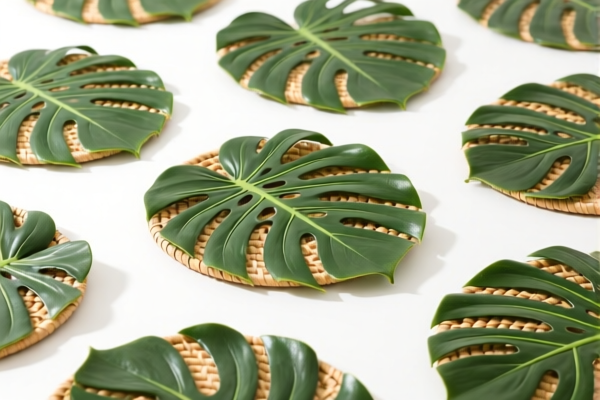

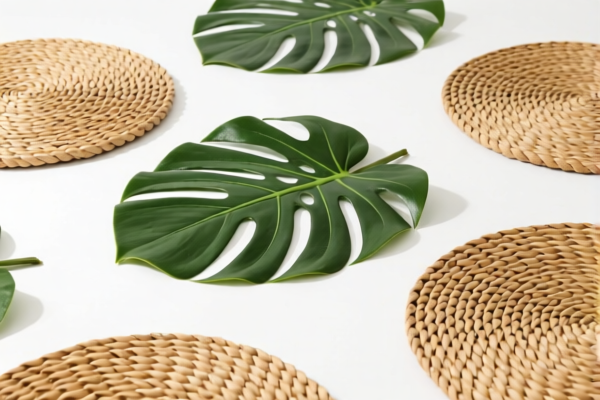
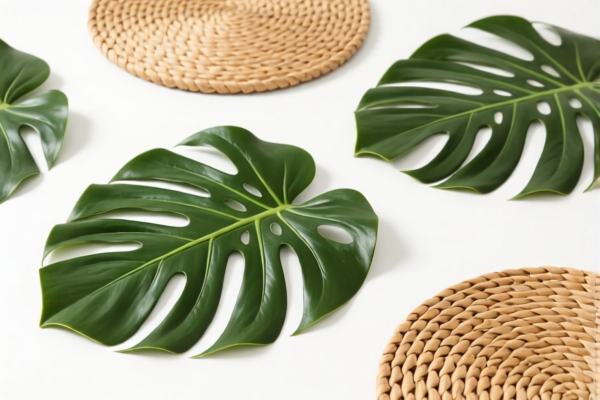
AI Analysis
🌴 Palm Leaf Woven Floor Mat (Basketwork & Wickerwork)
🌐 HS Code Reference & Customs Clearance Guide | 2026 Updated Tariff Analysis | Strategic Entry Strategy
📌 I. Product Definition & Classification: Do You Know "Palm Leaf Floor Mats"?
Palm leaf woven floor mats are traditional household items used for decoration, ventilation, or flooring. In international trade, they fall under Chapter 46: Manufactures of plaiting materials or of straw, alfa, esparto or other weaving materials.
Crucially, the classification depends on whether the item is considered a "finished article" made directly to shape or part of "wickerwork" (which often implies a specific structural rigidity or frame). The provided data distinguishes between two specific sub-categories based on the exact nature of the weaving and structure:
1. General Baskets/Bags (Other): Often applied to flexible mats or items not strictly defined as "wickerwork" in the traditional sense of rigid framing.
2. Wickerwork: Applied to items that fit the specific definition of wicker articles, which may include certain types of tightly woven, structured mats or panels.
⚠️ Key Distinction Point:
- If the mat is considered "Other" (not specifically wickerwork), it may fall under 4602.19.16.00 (Base Tax: 0%).
- If the mat is classified as "Wickerwork", it falls under 4602.19.14.00 (Base Tax: 0%, but Subject to Additional Tax).
- Note: The description explicitly states "Of palm leaf: Other" vs "Of palm leaf: Wickerwork". This is a critical legal distinction in tariff sub-headings.
📦 II. HS Code Classification Details (2026 Latest Tariff Authority Comparison)
| HS Code | Product Description | Application Scenario | Tax Structure |
|---|---|---|---|
4602.19.16.00 |
Other baskets and bags, whether or not lined: Of palm leaf: Other | Flexible palm leaf mats, non-rigid floor coverings, general woven articles not meeting "wicker" definition | ✅ Base: 0% ✅ Additional: 0% |
4602.19.14.00 |
Other baskets and bags, whether or not lined: Of palm leaf: Wickerwork | Structured palm leaf mats, rigid or semi-rigid wicker-style floor panels | ✅ Base: 0% ⚠️ Additional: 25% |
🔍 Critical Reminder:
- Both codes start with 0% Base Tariff. The difference lies entirely in the Additional Tax.
- "Wickerwork" (14.00) incurs a 25% Additional Tax, likely due to Section 301 or similar trade measures against specific Chinese textile/basketry goods.
- "Other" (16.00) incurs 0% Additional Tax.
- Misclassification Risk: Declaring a flexible mat as "Wickerwork" to avoid scrutiny could lead to penalties if customs determines it does not meet the strict definition of wickerwork. Conversely, declaring a rigid wicker item as "Other" to save 25% is high-risk.
💰 III. 2026 Latest Tariff Rate Details (Including Additional Taxes)
✅ Applicable Country: United States (US) (Inferred from the 25% additional tax pattern common in current US-China trade)
✅ Origin: China (CN) (Implied by the high additional tax rate)
✅ Effective Time: Current Trade Policy (2024-2026)
🎯 1. 4602.19.16.00 —— Palm Leaf Woven Floor Mat (Other)
| Item | Content |
|---|---|
| Base Tariff | 0% (ad valorem) |
| Additional Tax | 0% |
| Total Tax Rate | 0% |
| Tax Calculation | CIF Value × 0% = $0 |
| De Minimis Eligibility | ✅ Yes (Generally, goods under $800 may enter duty-free under Section 321, but check if specific exclusions apply to palm/wicker products) |
| Legal Basis Path | HTSUS:4602.19.16.00 → USTR Exclusion List: No Exclusion |
📌 Explanation:
- This code represents 0% duty.
- It is the most favorable classification if the product can be legitimately argued as "Other" rather than "Wickerwork".
- Strategic Advantage: Zero tariff cost improves competitiveness significantly.
🎯 2. 4602.19.14.00 —— Palm Leaf Woven Floor Mat (Wickerwork)
| Item | Content |
|---|---|
| Base Tariff | 0% |
| Additional Tax | +25% |
| Total Tax Rate | 25% |
| Tax Calculation | CIF Value × 25% |
| De Minimis Eligibility | ❌ No (Section 301 goods are generally excluded from de minimis treatment in the US) |
| Legal Basis Path | HTSUS:4602.19.14.00 → USTR Section 301: List 4B / Footnote 9903.88.01 equivalent |
📌 Explanation:
- "Additional Tax 25%" comes from US Trade Law (Section 301) targeting specific Chinese goods.
- Total 25% is a high tariff, significantly impacting profit margins.
- Strict Definition: This code applies if the mat is rigid, framed, or fits the "wickerwork" definition in US customs rulings.
🛠️ IV. Customs Clearance Practical Advice (Battle-Tested Pitfall Guide)
✅ 1. Required Documentation Checklist (Essential)
| Document | Must Provide | Purpose |
|---|---|---|
| ✅ Product Photos | ✔️ | Clear images showing flexibility/rigidity. Show texture, edge treatment, and any frames. |
| ✅ Material Composition Statement | ✔️ | Confirm 100% Palm Leaf. No synthetic blends. |
| ✅ Commercial Invoice | ✔️ | Must clearly state: "Palm Leaf Woven Floor Mat, HS Code 4602.19.16.00 (or 14.00)" |
| ✅ Product Description | ✔️ | Use terms like "flexible mat," "woven panel," or "rigid wicker frame" depending on the intended HS code. |
| ✅ Origin Certificate | ✔️ | Required for US entry to verify country of origin (China vs. Vietnam/Indonesia). |
✅ 2. Declaration Strategy (Key Mantra)
🔥 "Rigid is Wicker, Flexible is Other. Choose Wisely, Avoid Disaster!"
| Scenario | Correct Declaration | Error Consequence |
|---|---|---|
| Flexible, Pliable Mat | 4602.19.16.00 ("Other") |
Misdeclaring as "Other" when it's rigid → 0% saved, but risk of penalty if proven rigid. |
| Rigid, Framed Panel | 4602.19.14.00 ("Wickerwork") |
Misdeclaring as "Other" to save 25% → 25% Back Tax + Penalties + Possible Seizure. |
| Mixed Materials | Not Covered in Data | If contains plastic/synthetic, may shift to Chapter 39 or 63 → Higher taxes. |
| Small Samples (<$800) | Check De Minimis Rules | If classified as Section 301 ("Wickerwork"), no de minimis exemption → Still 25% tax. |
✅ 3. Special Cases & Mitigation
| Case | Handling Advice |
|---|---|
| Ambiguous Structure | If the mat is semi-rigid, provide a technical explanation to customs brokers highlighting flexibility, aiming for 4602.19.16.00. |
| Origin Diversification | If sourced from Vietnam or Indonesia, Section 301 additional taxes (25%) may not apply. Check preferential trade agreements (e.g., ASEAN-US). |
| Pre-Ruling | For large volumes, apply for a US Customs Ruling to secure classification certainty. Avoids retroactive fines. |
| Packaging | Do not over-pack in rigid containers that imply "wickerwork" if the item is actually flexible. |
🌍 V. Global Market Clearance Comparison (2026 Latest)
| Country/Region | Recommended HS Code | Tariff Rate | Certification | Notes |
|---|---|---|---|---|
| 🇺🇸 USA | 4602.19.16.00 |
0% | None | Best outcome if classified as "Other" |
| 🇺🇸 USA | 4602.19.14.00 |
25% | None | High cost. Avoid if possible. |
| 🇨🇳 China | 4602.19.16.00 |
0% | None | Export to China not relevant for this data set |
| 🇪🇺 EU | 4602.19.16.00 |
Varies | None | EU tariffs differ; check CN 4602.19 |
| 🇬🇧 UK | 4602.19.16.00 |
Varies | None | Post-Brexit rules apply |
📌 Conclusion:
- The US is the critical market where this 25% differential matters most.
- Classification as "Other" (16.00) is the strategic goal for US imports to avoid the 25% tariff.
- Evidence of flexibility (e.g., photos, material specs) supports the "Other" classification.
📌 VI. Common Errors & Pitfall Guide (Lessons Learned)
❌ Error 1: Calling a rigid, framed palm leaf panel "Woven Mat" to force HS Code 16.00
👉 Consequence: Customs inspector examines rigidity, reclassifies to 14.00, demands 25% tax + penalties.
❌ Error 2: Assuming all "Floor Mats" are 0% duty
👉 Consequence: Ignoring the "Wickerwork" distinction leads to unexpected 25% bill upon arrival.
❌ Error 3: Using "Basket" in description for a flat floor mat
👉 Consequence: Customs may reject "Basket" classification, leading to delays or misclassification into broader, higher-tariff headings.
❌ Error 4: Not declaring origin correctly
👉 Consequence: If origin is China, and code is 14.00, 25% tax applies. If origin is Vietnam, tax may be lower, but misdeclaration of origin is fraud.
✅ Correct Action:
"Palm Leaf Floor Mat, Flexible, Hand-Woven, No Rigid Frame, HS Code 4602.19.16.00"
(Ensure the physical product matches this description)
🎯 VII. Conclusion: Professional Declaration, Save Costs, Avoid Risks!
🎯 Remember the Mantra:
🔹 "Flexible = Other (0%). Rigid = Wicker (25%). Evidence is King!"
🔹 "HS Code determines your cost. 25% difference can make or break your profit!"
📌 Pro Tip:
If your palm leaf mats are sourced from Vietnam, Indonesia, or India, they may NOT be subject to the 25% Section 301 additional tax, even if classified as "Wickerwork."
Recommendation:
1. Diversify Sourcing: Consider non-China origins for the US market.
2. Document Flexibility: Provide clear photos/specs proving the item is not rigid "wickerwork" to support HS Code4602.19.16.00.
3. Pre-Ruling: For high-volume shipments, file an Application for Pre-Ruling with US Customs and Border Protection (CBP) to lock in the 0% rate.
📣 Immediate Action:
📞 Consult a US Customs Broker with product photos.
🚀 Clarify Classification Now to avoid 25% surprises at the port.
💼 Your profit margin depends on accurate HS Code selection!
✨ Professional Customs Clearance Starts with Precise Classification!
💼 Every Dollar Saved in Tariffs is Pure Profit!
Customer Reviews
About HS Code Classification
The Harmonized System (HS) is an internationally standardized nomenclature developed by the World Customs Organization (WCO) to classify traded products. Over 200 countries use the HS system as the basis for customs tariffs, trade statistics, and import/export regulations.
Each HS code follows a hierarchical structure:
- Chapter (2 digits) — Broad category of goods (e.g., Chapter 84: Machinery and Mechanical Appliances)
- Heading (4 digits) — More specific grouping within the chapter
- Subheading (6 digits) — Internationally standardized breakdown, used by all WCO member countries
- National subdivisions (8-10 digits) — Country-specific extensions for further classification, such as US HTSUS 10-digit codes
Correct HS code classification is essential for smooth customs clearance, accurate duty payment, and compliance with trade regulations. Misclassification can lead to customs delays, overpayment of duties, or penalties.
When importing from CN to US, the applicable tariff rates may include:
- Most-Favored-Nation (MFN) rate — The standard duty rate applied to WTO members
- General rate — Applied to countries without trade agreements
- Trade remedy duties — Additional tariffs such as Section 301 (anti-dumping), Section 232 (national security), or countervailing duties
The information provided on this page is for reference purposes only. For official classification, please consult with your local customs authority or a licensed customs broker.